Moonstone Jewelry RS3: 2026 Fantasycore Style Trends
Discover how moonstone jewelry RS3 aesthetics are driving 2026 fantasycore trends. Explore adularescence grades, setting styles, and pricing guides.

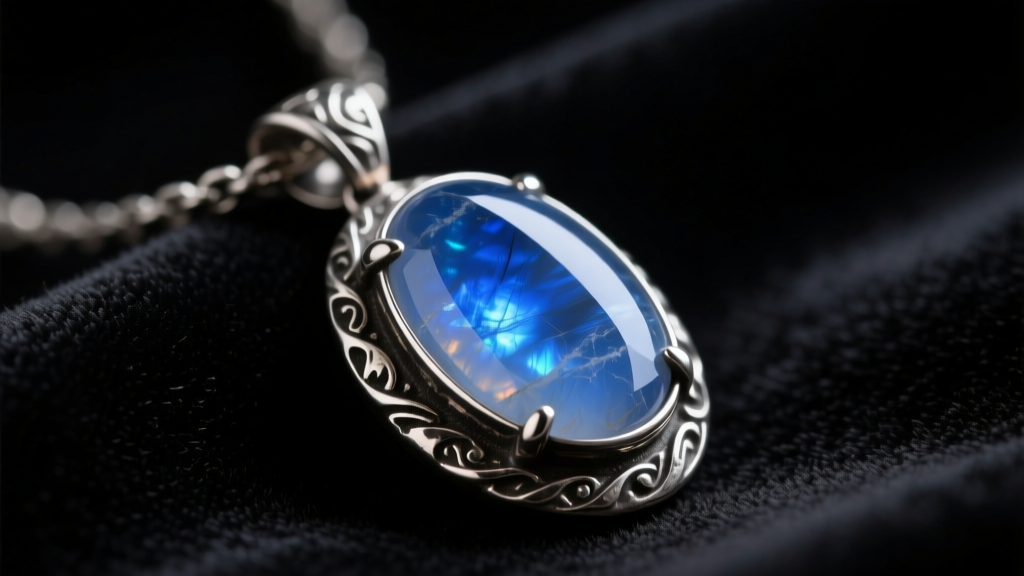
The Intersection of MMORPG Lore and High Jewelry
The boundary between digital fantasy worlds and physical fashion has never been as porous as it is in 2026. When analyzing the surge in moonstone jewelry RS3 inspired designs, we are witnessing a direct correlation between the mystical, lunar-themed aesthetics of massive multiplayer online role-playing games (like RuneScape 3's Lunar Diplomacy and mystic regalia) and the mainstream explosion of "Fantasycore" and "Lunarcore" jewelry. Modern consumers are no longer just looking for delicate, minimalist gemstone studs; they are seeking heavy, lore-accurate, talismanic pieces that evoke a sense of ancient magic and digital nostalgia.
This trend analysis dives deep into the gemological realities of moonstone, the specific metal pairings that define the RS3-inspired fantasy aesthetic, and the practical considerations for wearing these ethereal stones in the real world. Whether you are a collector of high-adularescence gems or a jeweler looking to tap into the lucrative fantasy-gaming demographic, understanding the material science behind the magic is essential.
Decoding the Moonstone: Adularescence and Gem Grades
To authentically replicate the mystical glow seen in fantasy gaming interfaces, jewelers must source moonstones with exceptional adularescence. According to the Gemological Institute of America (GIA), adularescence is a billowy light effect caused by the scattering of light between microscopic, alternating layers of two feldspar minerals: orthoclase and albite. The thinner and more regular these layers, the stronger the visual schiller.
Grading the "Mystic" Sheen
Not all moonstones are created equal, and the Fantasycore market heavily favors specific visual profiles that mimic in-game magical artifacts:
- Ceylon Blue Sheen: The most prized variety. Features a semi-transparent body with a vivid, electric blue sheen. Prices for high-quality, clean cabochons range from $50 to $150+ per carat.
- Rainbow Moonstone (Labradorite):strong> Technically a variety of labradorite, this stone exhibits a multi-colored schiller. It is heavily used in bohemian and fantasy designs, typically pricing between $10 and $30 per carat.
- White/Peach Moonstone: Offers a softer, more diffused glow. While less "magical" in appearance, it is frequently used in carved cameos and intricate runic pendants.
Design Elements: The "RS3" Aesthetic in Metalwork
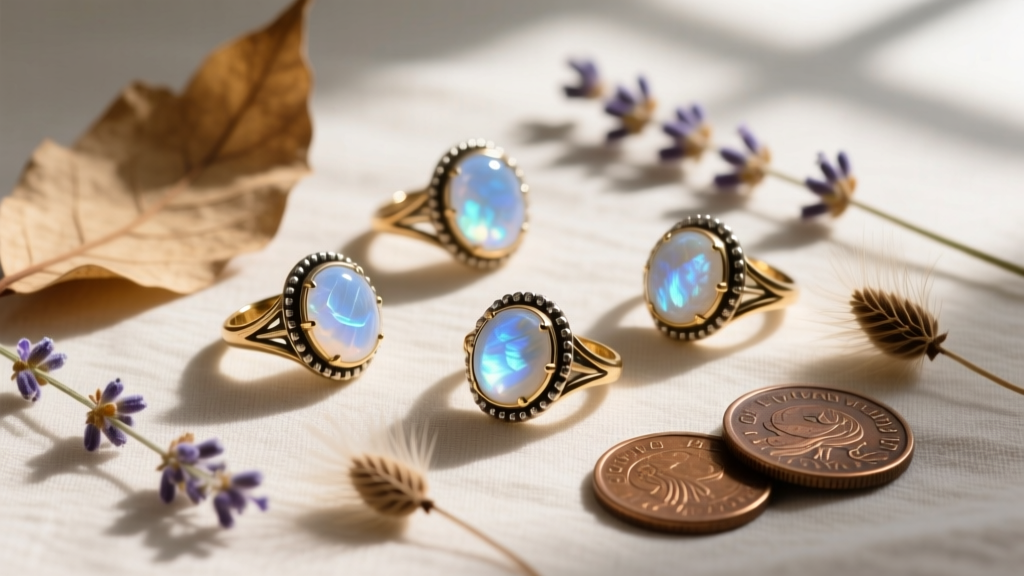
The fantasy-gaming aesthetic rejects the high-polish, flawless perfection of traditional bridal jewelry. Instead, the moonstone jewelry RS3 trend relies on textures that suggest age, craftsmanship, and arcane origins. Oxidized metals, hammered finishes, and heavy bezel settings are the standard.
Material Pairings and Price Matrix
Selecting the right metal is crucial for both the aesthetic and the structural integrity of the piece. Moonstone ranks at 6 to 6.5 on the Mohs hardness scale and possesses perfect cleavage in two directions, making it highly susceptible to chipping if subjected to the pressure of traditional prong settings.
| Metal / Material | Aesthetic Fit | Avg. Price Range (Setting) | Durability & Setting Notes |
|---|---|---|---|
| Oxidized 925 Sterling Silver | High (Mimics aged iron/pewter) | $80 - $250 | Requires heavy bezel or 18-gauge wire wrapping to protect cleavage planes. |
| Antiqued Bronze / Brass | Very High (Earthy, dwarven lore) | $40 - $120 | Can cause skin verdigris; best for pendants or outer-clothing brooches. |
| Black Rhodium-Plated Gold | Medium (Modern dark fantasy) | $300 - $800+ | Plating wears off on rings; excellent for high-end protective amulets. |
| Titanium (Anodized Dark) | Niche (Sci-fi fantasy crossover) | $150 - $400 | Extremely durable, but difficult to resize or adjust bezels post-casting. |
For wire-wrappers and artisan jewelers targeting this niche, using 18-gauge to 20-gauge dead-soft sterling silver allows for secure, custom-fitted bezel wraps that absorb impact without transferring stress to the gemstone's internal fracture lines.
Durability and Failure Modes: Wearing Moonstone IRL
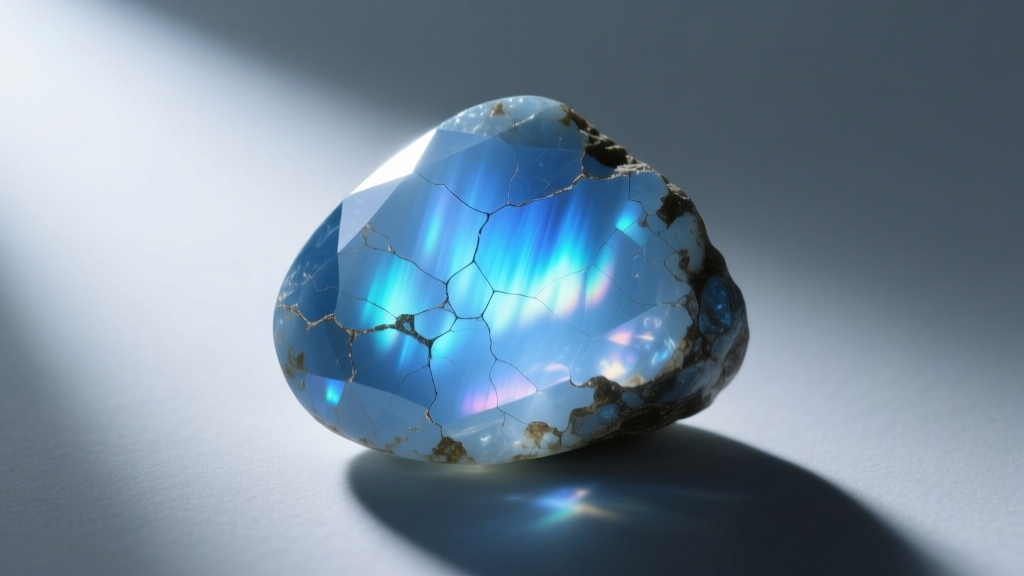
A common failure mode in fantasy-style jewelry is prioritizing the "raw" or "uncut" look at the expense of structural stability. Raw, unpolished moonstone chunks are incredibly popular in the RS3-inspired market, but their natural jagged edges are prone to micro-fractures.
According to the American Gem Society, moonstone is highly sensitive to sudden temperature changes and sharp blows. If a jeweler attempts to set a raw moonstone using a torch for soldering after the stone is placed, the thermal shock will almost certainly cause the stone to split along its cleavage planes. All soldering must be completed prior to stone setting. Furthermore, ultrasonic and steam cleaners are strictly forbidden; the high-frequency vibrations will shatter the internal albite layers, permanently destroying the adularescence.
Sourcing and Authenticity: Avoiding Synthetic Fakes
The explosion of the fantasycore trend has flooded the market with cheap imitations. The most common offender is Opalite, a man-made glass that is frequently mislabeled as "synthetic moonstone" or "sea opal."
How to Spot Opalite vs. True Moonstone
- Inclusions: Natural moonstone often contains tiny tension cracks known as "centipedes" or subtle veils. Opalite is entirely flawless and uniform.
- The Sheen Test: Opalite exhibits the same milky, uniform glow regardless of the background color. True moonstone's adularescence is directional; the blue or rainbow sheen will shift, disappear, and reappear as you rotate the stone under a single light source.
- Price Indicators: If a massive, perfectly clear "blue moonstone" pendant with complex silver filigree is selling for $15 on a marketplace, it is almost certainly Opalite glass set in plated alloy.
Final Verdict on the Lunar Trend
The moonstone jewelry RS3 phenomenon is more than a fleeting internet micro-trend; it represents a fundamental shift in how younger demographics interact with gemstones. They are not buying moonstone for its traditional associations with bridal wear or subtle elegance. They are buying it for its tactile, mystical properties and its ability to serve as a real-world anchor to their favorite fantasy universes. For jewelers and collectors alike, mastering the balance between authentic gemological quality and rugged, lore-inspired design is the key to capturing this highly engaged market in 2026 and beyond.


