Tanzanite Jewelry Properties: Sapphire, Iolite & Topaz Compared
Compare tanzanite jewelry properties against sapphire, iolite, and topaz. Discover hardness, grading, and best setting choices for daily wear.

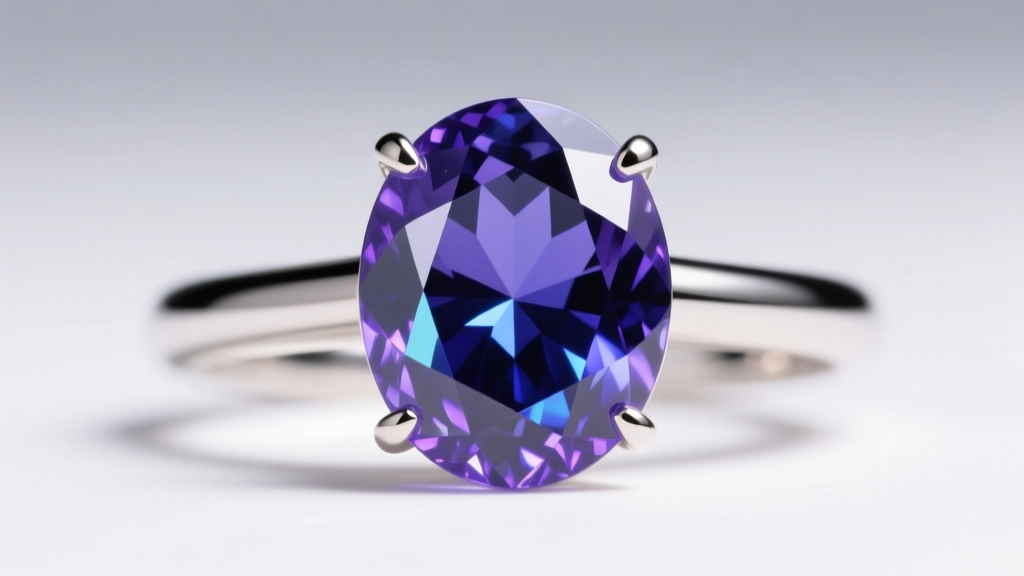
The Allure and Reality of Tanzanite Jewelry
When evaluating colored gemstones for fine jewelry, buyers are often captivated by the intense violet-blue hues of tanzanite. Discovered in the Merelani Hills of Tanzania in 1967, this calcium aluminum hydroxy sorosilicate (a variety of the mineral zoisite) remains a single-source gemstone, making it exceptionally rare. However, designing and purchasing tanzanite jewelry requires a pragmatic understanding of its physical and optical properties. Unlike diamonds or corundum, tanzanite presents unique structural challenges that dictate how it should be cut, set, and worn. In this guide, we deconstruct tanzanite’s material properties and compare them directly against its most common blue-violet market alternatives: blue sapphire, iolite, and blue topaz.
Mineralogy and the Mohs Hardness Matrix
The most critical factor in gemstone jewelry design is durability, which is a combination of hardness (scratch resistance), toughness (resistance to chipping and breaking), and stability (resistance to heat and chemicals). Tanzanite registers between 6.5 and 7 on the Mohs scale of mineral hardness. While this makes it harder than glass and most common dust particles (which contain quartz at a 7), it is significantly softer than sapphire.
Hardness and Cleavage Breakdown
- Tanzanite (Zoisite): Mohs 6.5 - 7.0. Exhibits perfect cleavage in one direction, meaning a sharp blow can cause the stone to split cleanly along a structural plane. Toughness is considered fair to poor.
- Blue Sapphire (Corundum): Mohs 9.0. No true cleavage, though it can exhibit parting. Exceptional toughness, making it ideal for daily-wear engagement rings.
- Iolite (Cordierite): Mohs 7.0 - 7.5. Distinct cleavage in one direction. Slightly harder than tanzanite but still vulnerable to sharp impacts.
- Swiss Blue Topaz: Mohs 8.0. Perfect basal cleavage. Highly scratch-resistant but notoriously prone to splitting if struck at the wrong angle.
Because of its perfect cleavage and relatively modest hardness, tanzanite jewelry requires protective settings. Prong settings that leave the girdle and culet exposed are high-risk for tanzanite rings worn daily, whereas sapphires easily withstand standard four-prong or six-prong mounts.
Optical Properties: Trichroism vs. Dichroism
Beyond durability, the optical behavior of these stones dictates how a lapidary must orient the rough crystal during cutting. Tanzanite is strongly trichroic. This means it displays three different colors depending on the crystallographic axis from which it is viewed: blue, violet, and burgundy (or brownish-red). To achieve the highly prized violet-blue face-up color, cutters must carefully orient the table facet, often sacrificing carat weight yield to maximize the optimal color axis.
In contrast, iolite is strongly dichroic (showing violet-blue and pale yellow/gray), which makes it challenging to cut without showing a 'dead' or grayish window if the stone is poorly proportioned. Blue sapphire, while sometimes exhibiting weak dichroism, is generally cut to maximize brilliance and color saturation without the extreme pleochroic constraints of tanzanite or iolite. Blue topaz is generally non-pleochroic, allowing cutters to focus purely on light return and precision faceting patterns.
Grading Standards and Market Pricing Comparison
Unlike diamonds, which are governed by the strict GIA 4Cs, colored gemstones rely heavily on trade grading systems. It is vital to understand that while the Gemological Institute of America (GIA) provides identification and origin reports, the commercial market uses a letter-grade system (AAA, AA, A) for tanzanite jewelry pricing. Below is a comparative matrix of current market properties and estimated pricing for calibrated 1.00 to 2.00-carat oval faceted stones.
| Property | Tanzanite (AAA Grade) | Blue Sapphire (Heated) | Iolite (Gem Quality) | Swiss Blue Topaz |
|---|---|---|---|---|
| Top Color Profile | Intense Violet-Blue | Royal Blue / Cornflower | Deep Violet-Blue | Vivid Swiss Blue |
| Clarity Expectation | Eye-Clean (Type I) | Eye-Clean (Type II) | Eye-Clean (Type I) | Eye-Clean (Type I) |
| Rarity Factor | High (Single Source) | Moderate to High | Low (Abundant) | Very Low (Treated) |
| Price per Carat (1-2ct) | $350 - $600 | $800 - $2,500+ | $40 - $90 | $15 - $35 |
| Universal Treatment | Heat (to remove brown) | Heat (to improve color) | None | Irradiation & Heat |
Expert Insight: When purchasing tanzanite jewelry, be highly skeptical of 'AAAA' or 'Heirloom' grading labels. These are marketing inventions used by television and online retailers to inflate perceived value. The industry standard peaks at AAA, representing the top 10% of production with rich saturation and no visible inclusions to the naked eye.
Setting Recommendations and Wearability Protocols
The structural vulnerabilities of tanzanite demand specific jewelry engineering. If you are designing a custom piece or selecting a finished item, adhere to these material-specific guidelines:
Ring Settings
For tanzanite rings intended for occasional or evening wear, a full bezel or semi-bezel setting in 14k or 18k gold is mandatory. The metal rim protects the girdle—the widest and most vulnerable edge of the stone—from lateral impacts. Avoid high-set cathedral prongs. If prongs must be used, opt for six or eight sturdy, rounded prongs rather than delicate claw prongs that can snag and lever the stone out of its seat.
Pendants and Earrings
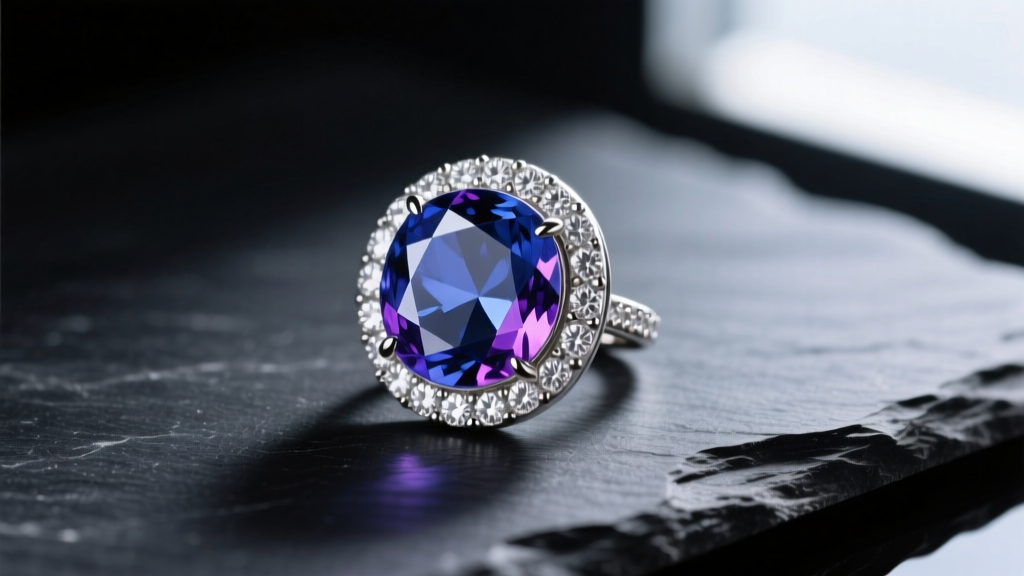
Tanzanite excels in pendants and earrings. These applications subject the gemstone to minimal kinetic impact and abrasion. Drop earrings featuring tanzanite surrounded by a micro-pave diamond halo are not only visually striking but structurally sound, as the diamond halo acts as a physical bumper shield for the softer center stone.
Care, Maintenance, and Chemical Stability
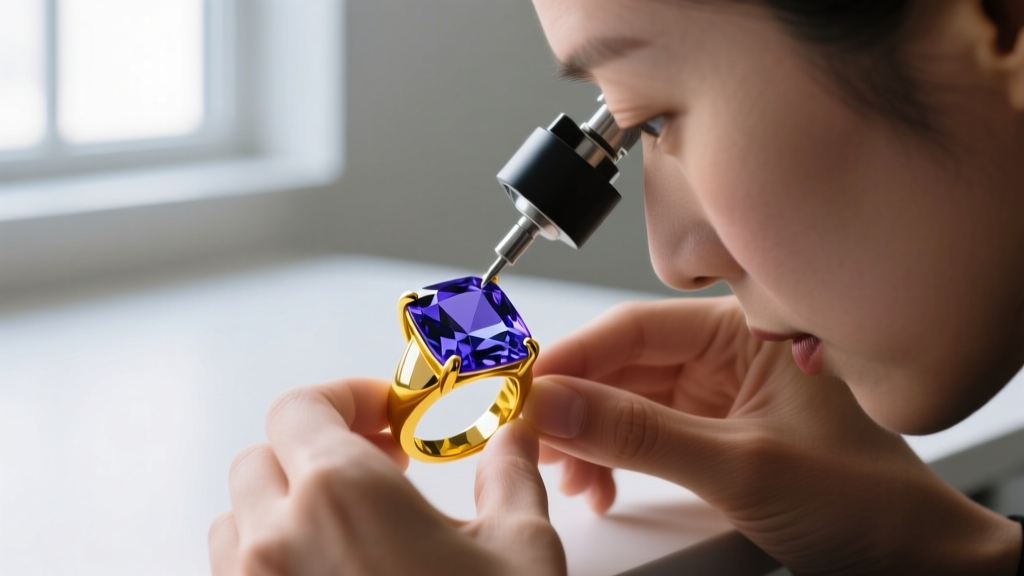
Proper maintenance of tanzanite jewelry diverges sharply from standard diamond or sapphire care routines. Because tanzanite is sensitive to sudden temperature changes and possesses perfect cleavage, ultrasonic and steam cleaners are strictly prohibited. The high-frequency vibrations of an ultrasonic tank can easily cause internal fractures to propagate, splitting the stone in half.
Furthermore, while tanzanite is generally stable against light and normal chemicals, it can be damaged by hydrochloric acid and sudden thermal shock. The only approved cleaning method for tanzanite jewelry is a lukewarm bath of distilled water and a few drops of pH-neutral dish soap, gently agitated with a soft baby toothbrush. Always dry the piece with a lint-free microfiber cloth and store it in a separate, fabric-lined compartment to prevent harder gemstones (like diamonds or sapphires) from scratching its surface.
Final Verdict: Choosing Your Blue Gemstone
Selecting between tanzanite, sapphire, iolite, and topaz ultimately hinges on your lifestyle and budget. If you require a stone for a daily-wear engagement ring, blue sapphire is the only geologically sound choice among the four. However, if you are seeking an extraordinary, rare gemstone with unparalleled trichroic depth for cocktail rings, pendants, or special-occasion wear, tanzanite jewelry offers a level of violet-blue saturation that neither iolite nor treated topaz can replicate. By respecting its Mohs hardness and utilizing protective setting architectures, tanzanite will remain a breathtaking heirloom for generations.