What Does 585 Mean on Gold Jewelry? The 14K Buyer Guide
Discover what the 585 stamp means on gold jewelry. Learn how 14K gold purity affects durability, pricing, and value in our expert buying guide.

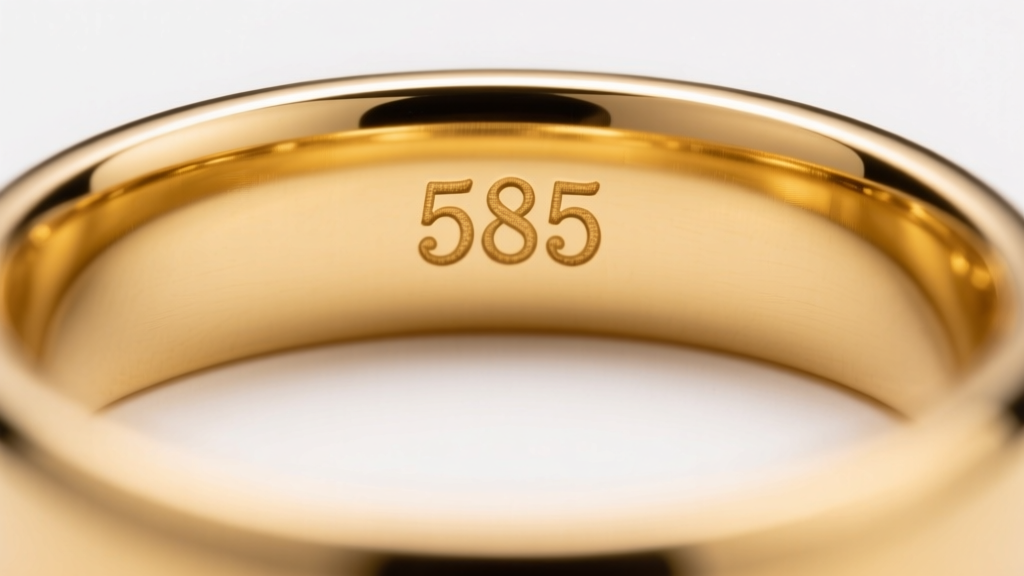
When shopping for fine jewelry, deciphering the tiny stamps engraved on the inside of a ring band or the clasp of a necklace can feel like learning a foreign language. Among the most common yet frequently misunderstood markings is the number 585. If you have ever found yourself asking, 'what does 585 mean on gold jewelry?', you are not alone. This specific numerical hallmark is the international standard for 14-karat gold, a metal alloy that dominates the fine jewelry market due to its perfect balance of intrinsic value and everyday durability.
As a buyer in 2026, understanding these hallmarks is critical to ensuring you pay a fair price and receive the exact metal quality you expect. In this comprehensive buying guide, we will decode the 585 stamp, explore the metallurgy behind 14K gold, and provide actionable frameworks for verifying authenticity and assessing value before you make a purchase.
The Secret Behind the 585 Stamp: Decoding Gold Purity
To understand the 585 stamp, we must first look at how gold purity is measured globally. In the United States, gold is traditionally measured in karats (K), where 24K represents 100% pure gold. However, much of Europe and the international market relies on the millesimal fineness system, which measures purity in parts per thousand.
Pure gold is incredibly soft, rating only a 2.5 on the Mohs hardness scale—meaning it can be scratched by a copper coin and easily bent out of shape. To make it suitable for jewelry, pure gold is alloyed with other metals like copper, silver, zinc, and palladium.
Mathematically, 14-karat gold consists of 14 parts pure gold and 10 parts alloy metals, which equals 58.33% pure gold. However, according to the Federal Trade Commission (FTC) Jewelry Guides and international hallmarking conventions, manufacturers round this up to 585 to guarantee that the piece meets or slightly exceeds the minimum 14K threshold. Therefore, a 585 stamp is the universal guarantee that your jewelry contains at least 58.5% pure gold.
585 Gold vs. Other Karats: A Comparative Breakdown
When deciding if 585 gold is right for you, it helps to see how it stacks up against other common purities. The table below outlines the practical differences you will encounter when shopping.
| Stamp / Hallmark | Karat Equivalent | Pure Gold Content | Durability & Hardness | Best Use Case |
|---|---|---|---|---|
| 999 | 24K | 99.9% | Very Soft (Mohs 2.5) | Investment bullion, ceremonial pieces |
| 750 | 18K | 75.0% | Moderate (Mohs 3.0) | High-end engagement rings, luxury watches |
| 585 | 14K | 58.5% | High (Mohs 3.5 - 4.0) | Everyday wear, active lifestyle jewelry |
| 417 | 10K | 41.7% | Very High (Mohs 4.5) | Budget-friendly fashion jewelry, class rings |
Why Jewelers Prefer 585 (14K) Gold for Everyday Wear
While 18K (750) gold boasts a richer, deeper yellow hue and higher intrinsic value, 585 gold remains the undisputed king of the American and European everyday jewelry markets. The reason lies entirely in metallurgy and structural integrity.
The Alloy Advantage: Prong Security and Scratch Resistance
When you set a diamond or precious gemstone into a ring, the metal prongs holding the stone in place are subjected to immense daily friction. According to the Gemological Institute of America (GIA), 18K gold prongs can wear down or bend over decades of daily wear, potentially leading to stone loss. The additional alloy metals in 585 gold—typically a mix of copper for strength and silver or zinc for malleability—create a rigid crystalline structure that resists abrasion and holds gemstones securely for a lifetime.
Color Versatility in 585 Gold
The 41.5% alloy content in 585 gold is not just for strength; it is the canvas for color manipulation. Because there is a higher ratio of alloy metals compared to 18K or 24K gold, jewelers can create distinct and vibrant color variations:
- 585 Yellow Gold: Alloyed with an equal mix of silver and copper to maintain a warm, classic tone without the orange tint found in lower karats.
- 585 White Gold: Alloyed with palladium, nickel, or manganese, and almost always plated with rhodium to achieve a bright, reflective silver-white finish.
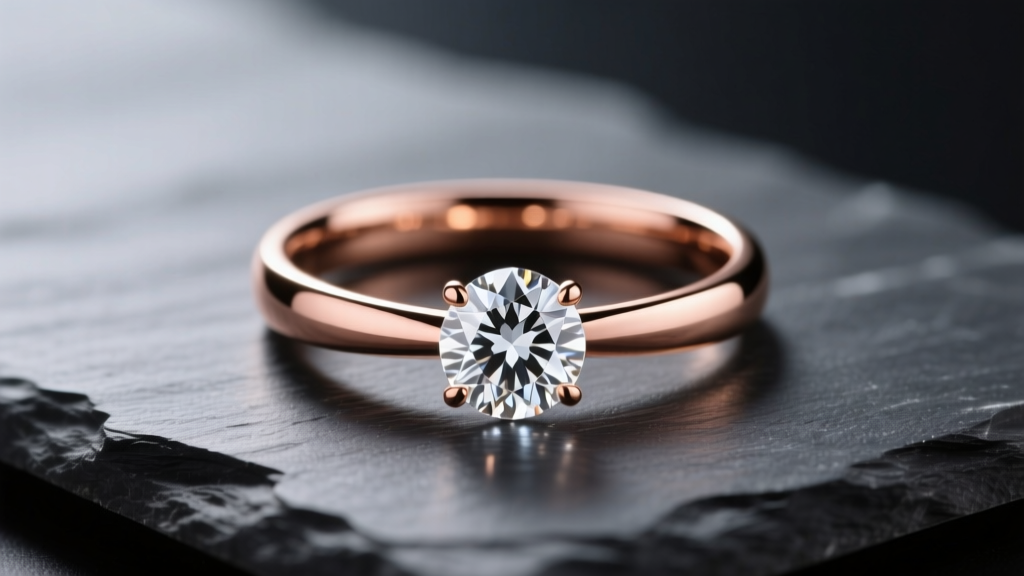
- 585 Rose Gold: Alloyed with a heavy concentration of copper (and a touch of silver) to produce the highly sought-after pinkish-red hue.
Buying Guide: What to Look For When Purchasing 585 Gold
Knowing what the stamp means is only the first step. To ensure you are making a smart investment, apply this three-point checklist when evaluating 585 gold jewelry.
1. Verify the Hallmark and Maker's Mark
A legitimate 585 stamp should rarely appear alone. Look for a secondary stamp known as the maker's mark or assay mark. In the US, the FTC requires that any piece stamped with a quality mark (like 585 or 14K) must also bear the registered trademark of the manufacturer. In Europe, you might see an assay office symbol, such as an eagle's head or a specific geometric shape, alongside the 585 millesimal mark. If a piece only has a deeply stamped '585' with no other identifying marks, proceed with caution.
2. Assess the Price Premium
Gold jewelry pricing is based on the spot price of gold plus a manufacturing premium. Because 585 gold contains roughly 22% less pure gold than 18K (750) gold, the raw material cost is significantly lower. If a jeweler is pricing a 585 gold chain at the same weight-based multiple as an 18K chain, you are overpaying. Always ask for the gram weight of the piece and compare it against the daily spot price of 14K gold (which is exactly 58.5% of the pure 24K spot price).
3. Check for Nickel Allergies in White Gold
If you are buying 585 white gold, inquire about the specific alloy used. Historically, nickel was the primary bleaching agent used to create white gold. However, nickel is a common contact allergen. Many premium modern jewelers now use palladium-based alloys for their 585 white gold, which is hypoallergenic. Always ask the retailer for the alloy breakdown if you have sensitive skin.
Pro Tip: When buying vintage 585 gold from estate sales or online marketplaces, use a strong neodymium magnet. Pure gold and standard gold alloys are entirely non-magnetic. If the clasp or the chain exhibits a strong magnetic pull, the piece is likely gold-plated over a ferrous base metal, regardless of the stamp.
Troubleshooting: Is Your 585 Gold Real?
Stamps can be easily forged or transferred from genuine pieces to counterfeit ones. If you are buying second-hand or from an unverified online vendor, you must look beyond the engraving.
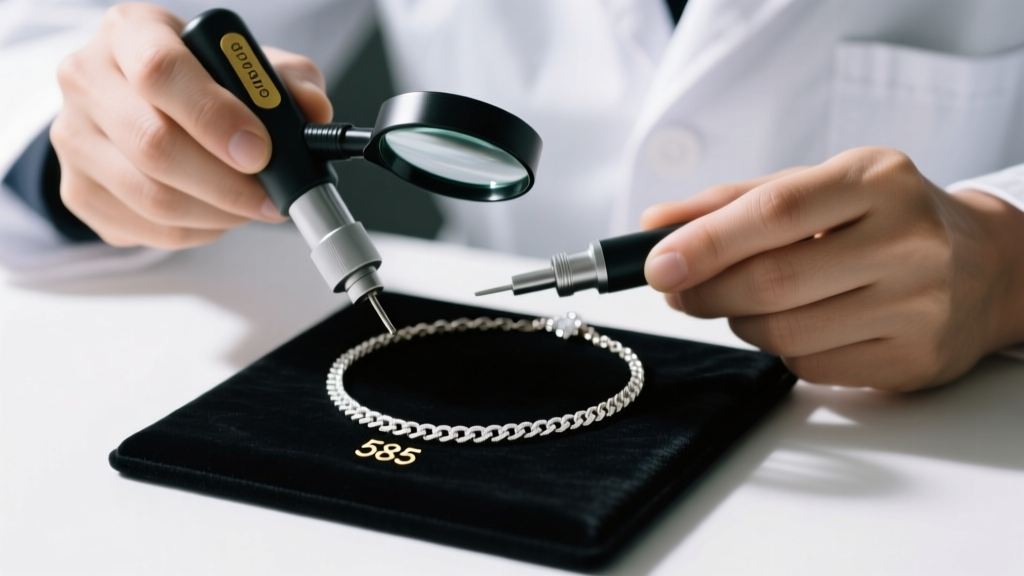
The most reliable non-destructive method used by professional jewelers today is X-ray Fluorescence (XRF) scanning. An XRF machine shoots X-rays into the metal and measures the specific wavelengths of light emitted by the atoms, providing an exact elemental breakdown down to the decimal point. This will instantly reveal if a piece stamped '585' is actually a 417 (10K) piece that has been fraudulently marked, or a gold-plated brass item.
If you do not have access to an XRF scanner, a traditional acid test is the next best option. A jeweler will file a tiny, inconspicuous notch into the metal and apply 14K nitric acid. If the metal dissolves or turns green, it is below 14K purity or plated. If the reaction remains clear or slightly brown, the 585 purity is verified.
Final Verdict: Is 585 Gold Right for You?
Understanding what the 585 stamp means on gold jewelry empowers you to make purchases based on facts rather than marketing hype. For heirloom pieces that will be worn in a safe, climate-controlled environment, 18K (750) gold offers a luxurious, deep color. However, for engagement rings, daily wear chains, and bracelets subjected to the rigors of modern life, 585 (14K) gold is the superior choice. It provides the perfect intersection of lasting structural integrity, beautiful color variations, and accessible pricing, ensuring your jewelry remains as stunning in fifty years as it is on the day you buy it.


