African Gold Jewelry: Material Properties & Alloy Comparisons
Explore the metallurgy of African gold jewelry. Compare traditional 22k and 24k alloys, Vickers hardness, and care tips for artisanal pieces.

The Metallurgy of African Gold Jewelry: Beyond the Aesthetic
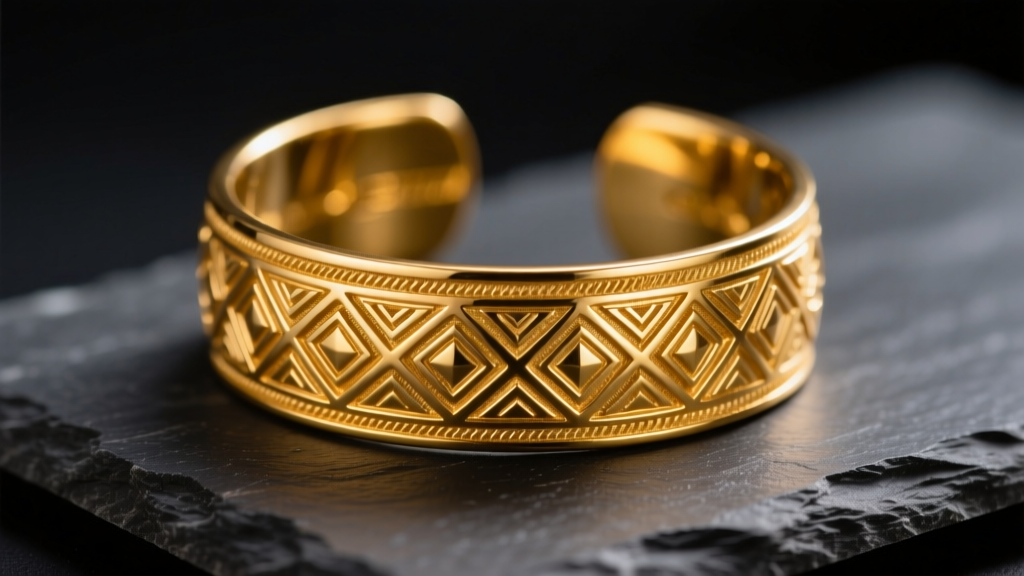
When collectors, investors, and jewelry enthusiasts explore the global market in 2026, the appeal of African gold jewelry extends far beyond its striking cultural motifs and historical significance. Unlike the highly standardized 14k and 18k alloys mass-produced in Western commercial markets, traditional goldsmithing across the African continent relies on localized alloying techniques, varying karat purities, and distinct, centuries-old casting methods. The term "African gold jewelry" encompasses a vast material spectrum, from the heavy, high-karat castings of the Ashanti Empire in West Africa to the delicate, silver-gold blended filigree of the Swahili Coast.
Understanding the material science and metallurgical realities of these pieces is critical for authentication, valuation, and long-term preservation. The alloy compositions found in artisanal African gold often deviate from Western norms, resulting in unique physical properties regarding hardness, tensile strength, melting points, and tarnish resistance. By analyzing these material properties, we can better appreciate the engineering mastery of traditional African goldsmiths and make informed decisions when acquiring these heritage pieces.
Traditional Alloys vs. Western Standards: A Hardness Comparison
The durability of any gold alloy is primarily dictated by its karat purity and the specific ratio of alloying metals, typically copper, silver, and sometimes zinc or palladium. Pure 24k gold has a Vickers Hardness (HV) of roughly 25 to 30, making it so malleable that it can be dented by a fingernail. Traditional West African goldsmiths frequently work in 22k (approximately 91.6% gold), which raises the hardness to about 70 HV, while maintaining the deep, rich yellow hue prized in regional ceremonies. In contrast, Western 14k gold (58.5% gold) achieves a hardness of 150 to 200 HV, prioritizing structural durability for daily wear over color saturation.
| Alloy Profile | Karat | Gold Content | Vickers Hardness (HV) | Dominant Alloy Metals | Structural Integrity |
|---|---|---|---|---|---|
| Ashanti Traditional | 22k - 24k | 91.6% - 99.9% | 25 - 70 HV | Copper, Trace Silver | Low (Prone to warping) |
| Saharan Blend | 18k - 20k | 75.0% - 83.3% | 90 - 120 HV | High Copper, Zinc | Medium (Tarnishes easily) |
| Swahili Filigree | 18k - 21k | 75.0% - 87.5% | 110 - 130 HV | Silver, Palladium traces | High (Drawn wire strength) |
| Western Standard | 14k - 18k | 58.5% - 75.0% | 120 - 160 HV | Copper, Silver, Zinc | Very High (Mass production) |
According to metallurgical data published by the Gemological Institute of America (GIA), the specific ratio of copper to silver in the alloy matrix dramatically alters not just the color, but the workability of the gold during the casting and forging processes. African artisans have historically manipulated these ratios based on the intended function of the jewelry, whether it is a rigid ceremonial cuff or a flexible, woven mesh necklace.

Regional Material Profiles and Casting Techniques
West African High-Karat: Ashanti and Baule Traditions
In Ghana and the Ivory Coast, the dominant technique for creating gold jewelry is cire perdue, or lost-wax casting. Artisans carve intricate designs into beeswax, encase them in clay, and burn out the wax before pouring molten gold into the mold. Because traditional West African pieces are often 22k or 24k, the melting point of the alloy is exceptionally high (approximately 1,040°C to 1,064°C). The rapid cooling of high-karat gold in traditional sand-and-clay molds can trap gases, leading to microscopic porosity within the metal. While this porosity does not necessarily compromise the visual beauty of the piece, it significantly affects the metal's density and makes it more susceptible to internal stress fractures if subjected to modern mechanical polishing.
North African and Saharan Blends: Tuareg and Berber Metallurgy
While the Tuareg and Berber peoples of the Sahara are globally renowned for their oxidized silverwork, their use of gold reveals a fascinating approach to material contrast. When gold is incorporated into Saharan jewelry, it is typically an 18k to 20k alloy heavily mixed with copper. This high copper content (sometimes exceeding 15% of the total alloy) serves two purposes: it increases the tensile strength of the gold to withstand the harsh, abrasive desert environment, and it shifts the gold's color to a deep reddish-orange. This warm hue provides a striking visual contrast against the dark, oxidized silver and indigo dyes commonly used in regional adornments. However, the elevated copper levels make these specific alloys highly reactive to sulfur and moisture, leading to rapid cuprous oxide tarnishing.
East African and Swahili Coast Filigree
The Swahili Coast, encompassing historic trade hubs like Lamu and Zanzibar, features gold jewelry heavily influenced by centuries of Arab and Indian Ocean trade routes. The preferred material here is often a 21k gold alloy with a higher silver-to-copper ratio than West African gold. This specific metallurgical choice creates a paler, slightly greenish-yellow hue and, crucially, lowers the viscosity of the molten gold. This increased fluidity is an absolute necessity for the region's signature filigree work, where goldsmiths draw wires down to ultra-fine gauges of 0.2mm to 0.3mm (approximately 28 to 30 AWG). The silver content ensures the wire remains ductile enough to be twisted into microscopic granulation patterns without snapping under tension.

Testing and Authenticating Unmarked Artisanal Gold
Because traditional artisanal pieces rarely feature Western laser hallmarks (such as "750" or "916"), buyers and appraisers must rely on advanced material science to verify authenticity and karat purity. The World Gold Council emphasizes the importance of non-destructive testing when dealing with heritage pieces, as traditional patinas and tool marks hold significant historical value.
- X-Ray Fluorescence (XRF) Spectrometry: This is the gold standard for authenticating African gold. XRF penetrates the surface layer to provide an exact elemental breakdown of the alloy. It is particularly vital for identifying the specific copper-silver ratios that can trace a piece back to a specific regional tradition.
- Specific Gravity Testing: Using the Archimedes principle, appraisers measure the density of the piece (24k gold has a specific gravity of 19.32, while 22k is roughly 17.5). However, appraisers must account for the microscopic porosity caused by traditional lost-wax casting, which can trap air bubbles and artificially lower the calculated specific gravity, leading to inaccurate karat estimations if the tester is unaware of the casting method.
- Acid Testing Limitations: Traditional nitric acid scratch tests are highly discouraged for high-karat African pieces. The acid can aggressively eat away the copper-rich surface matrix of a 22k piece, leaving a permanently pitted texture and destroying the artisan's original surface finish.
Care Protocols for High-Copper and Porous Alloys
Maintaining the material integrity of African gold jewelry requires a departure from standard Western cleaning protocols. The high copper content in Saharan and some West African alloys means these pieces are prone to developing a dark patina. While some collectors value this aged look as part of the piece's historical narrative, those wishing to restore the original luster must avoid harsh chemical dips or abrasive polishing cloths, which will strip the softer, high-karat surface layers.
Furthermore, ultrasonic cleaners should be strictly avoided. The high-frequency vibrations can exacerbate existing micro-fractures caused by the rapid cooling of traditional sand-cast molds. More importantly, ultrasonic solutions can become trapped within the microscopic porosity of the gold, leading to internal corrosion and eventual structural failure of the piece. Instead, the safest and most effective cleaning method involves soaking the jewelry in a lukewarm bath of distilled water and a pH-neutral, non-ionic surfactant, followed by gentle agitation with a soft-bristled, natural-fiber brush. By respecting the unique metallurgical properties of these alloys, collectors can ensure that these masterpieces of African material culture survive for generations to come.