Evaluating Ancient Gold Jewelry: Value & Pricing Guide
Discover how to evaluate ancient gold jewelry. Learn 2026 market pricing, authentication methods, and budget tiers for Greek, Roman, and Etruscan pieces.

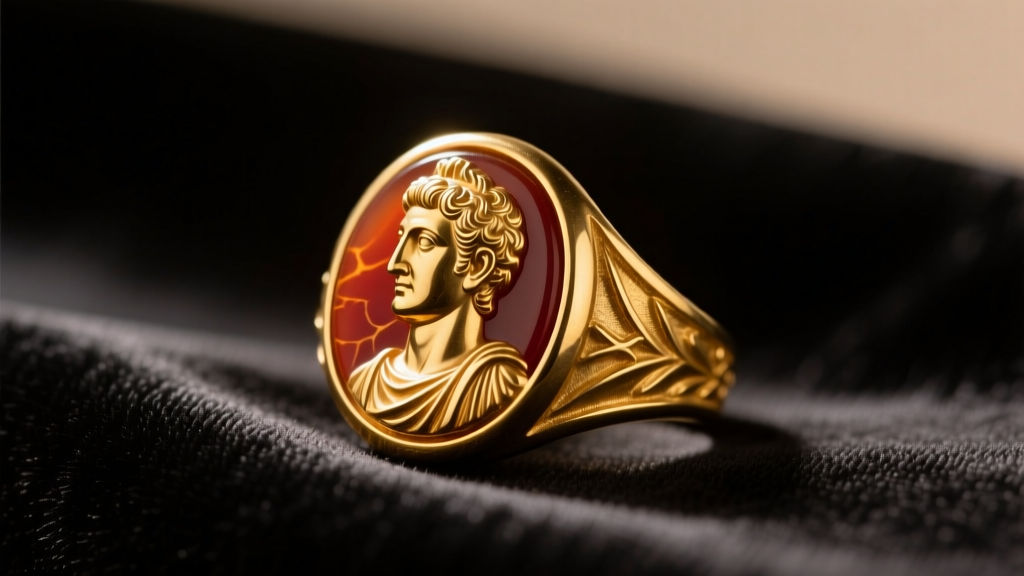
The Economics of Antiquity: Beyond Melt Value
In the realm of high-end collectibles, ancient gold jewelry occupies a unique intersection of precious metal investment and historical artifact. Unlike modern 18k or 24k gold pieces, where value is heavily tethered to the daily spot price of gold plus a markup for craftsmanship, ancient gold jewelry derives the vast majority of its value from its archaeological significance, rarity, and provenance. A 10-gram Roman gold signet ring from the 2nd century AD contains roughly $650 worth of intrinsic gold, yet its market value in 2026 easily ranges from $3,500 to over $10,000. Understanding this artifact premium is the first step in accurately assessing budget and value in the antiquities market.
For serious collectors and investors, navigating this market requires a firm grasp of historical metallurgy, international patrimony laws, and the nuanced pricing tiers that separate common provincial artifacts from museum-grade masterpieces. According to data from Sotheby's Antiquities Department, the demand for wearable, high-purity ancient gold has surged over the last decade, driven by buyers seeking tangible, historically significant assets that exist outside traditional financial markets.
2026 Market Pricing Tiers for Ancient Gold
The market for ancient gold jewelry is broadly segmented by civilization, complexity of craftsmanship, and condition. Below is a structural breakdown of current market valuations for authenticated, legally exported pieces.
| Civilization / Era | Typical Artifact | Estimated 2026 Market Range | Rarity & Investment Factor |
|---|---|---|---|
| Roman Imperial (1st - 3rd C. AD) | Gold signet rings, simple hoop earrings | $2,500 - $8,000 | High volume, excellent entry-level investment |
| Hellenistic Greek (3rd - 1st C. BC) | Elaborate earrings, Heracles knot bracelets | $12,000 - $45,000 | Superior craftsmanship, high collector demand |
| Etruscan (7th - 5th C. BC) | Granulated pendants, rosette fibulae | $30,000 - $120,000+ | Extremely rare, museum-tier investment |
| Byzantine (6th - 10th C. AD) | Cloisonné enamel pendants, openwork rings | $8,000 - $35,000 | Moderate rarity, highly dependent on enamel survival |
| Ancient Egyptian (Middle/New Kingdom) | Amulets, broadcollar elements, signets | $15,000 - $80,000+ | Heavily restricted by modern patrimony laws |
When budgeting, collectors must also factor in the auction house buyer’s premium, which in 2026 typically adds 25% to 30% on top of the hammer price at major houses like Christie's and Bonhams.
Provenance vs. Intrinsic Gold Value
In the antiquities market, provenance—the documented history of ownership—is not just a matter of prestige; it is a vital legal and financial safeguard. The 1970 UNESCO Convention on the Means of Prohibiting and Preventing the Illicit Import, Export and Transfer of Ownership of Cultural Property fundamentally altered the trade of ancient artifacts. Any piece of ancient gold jewelry lacking a verifiable paper trail predating 1970 (or the specific patrimony laws of its country of origin) carries immense legal risk and is virtually unsellable through reputable channels.
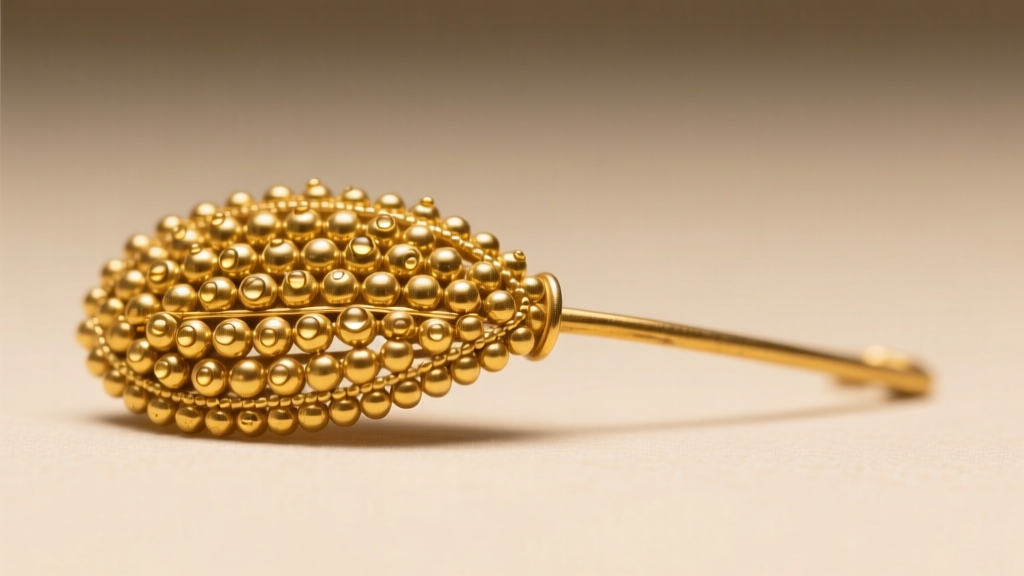
A documented pedigree from a recognized 19th-century aristocratic collection or a prominent early 20th-century excavation can increase a piece's market value by 40% to 60%. For instance, a Hellenistic gold wreath with a documented history from the collection of a known European antiquarian will command a massive premium over an identical but "unprovenanced" piece. Reputable buyers always cross-reference potential acquisitions against the Art Loss Register and demand compliance with the IADAA (International Association of Dealers in Ancient, Oriental and Tribal Art) code of ethics.
Authentication: The Science of Ancient Gold
The market is unfortunately saturated with high-quality forgeries, particularly originating from Eastern European and Middle Eastern workshops. Authenticating ancient gold jewelry requires moving beyond basic acid tests and employing advanced archaeometallurgical techniques. As highlighted by research from The Gemological Institute of America (GIA), historical goldsmithing techniques leave distinct microscopic and chemical signatures that modern forgers struggle to replicate perfectly.
The Trap of Depletion Gilding and XRF Scanners
One of the most common pitfalls for amateur collectors is relying solely on handheld XRF (X-ray Fluorescence) scanners to determine karat purity. Ancient artisans frequently employed a technique known as "depletion gilding." By repeatedly heating the gold alloy and quenching it in acidic solutions (like salt and alum), they leached copper and silver from the surface layer, leaving behind a porous, highly pure gold crust.
If you scan the surface of a depletion-gilded Hellenistic bracelet, an XRF scanner might read 22k or 23k gold. However, the core alloy may actually be 14k or 16k. Modern forgers artificially replicate this using harsh chemical baths. True authentication requires examining cross-sections or using specific gravity testing alongside XRF to detect the discrepancy between the surface crust and the core alloy.
Microscopic Tooling and Solder Analysis
Under 50x magnification, the difference between ancient and modern manufacturing becomes stark. Ancient goldsmiths shaped metal through laborious hammering and annealing, leaving microscopic, multidirectional striations and subtle variations in metal thickness. Modern fakes are often cast using the lost-wax method or stamped from machine-rolled sheets, resulting in unnaturally uniform thickness and parallel polishing lines.

Furthermore, examining the solder joints is critical. Ancient goldsmiths used "hard solders"—alloys of gold and copper that melted at temperatures very close to the base metal, requiring immense skill to apply without melting the entire piece. Modern forgers often rely on cadmium-bearing soft solders, which melt at much lower temperatures and leave distinct elemental traces that are easily flagged by lab-grade spectrometry.
Budgeting Strategies for New Collectors
Entering the ancient gold jewelry market does not require a museum-level budget, provided you target the right historical niches. For collectors with a budget between $1,500 and $5,000, the most strategic acquisitions are Roman provincial jewelry and late Roman/early Byzantine band rings.
- Roman Gold Band Rings: Often featuring simple inscriptions or geometric patterns, these are abundant enough to be affordable but old enough to carry significant historical weight.
- Roman Gold Bullae (Amulets): Small, hollow, locket-like pendants worn for protection. While often found crushed, intact examples are highly desirable and relatively accessible.
- Byzantine Gold Wire Earrings: Featuring intricate filigree and semi-precious stone inlays (like garnet or lapis lazuli), these offer incredible visual impact for under $4,000.
Expert Insight: Avoid "coin jewelry"—ancient gold solidi or aurei that have been drilled or fitted with modern bezels to be worn as pendants. While the coin itself may be authentic, the alteration destroys its numismatic value, and the modern jewelry setting adds zero historical premium. Always prioritize artifacts that were originally crafted as adornment.
Where to Buy: Vetting the Marketplace
The venue of purchase drastically impacts both the price and the authenticity guarantee. Major auction houses like Sotheby's and Christie's offer ironclad provenance and authenticity guarantees, but their buyer's premiums severely compress your investment margins. Conversely, specialized antiquities dealers often provide better pricing and deeper scholarly context, but require the buyer to perform more rigorous due diligence.
When evaluating a dealer, demand full documentation of the piece's export history. A reputable dealer will readily provide past auction catalog references, old collection inventory numbers, or export licenses from the country of origin. If a dealer is evasive about a piece's history prior to the 1990s, walk away. The financial risk of purchasing looted or forged ancient gold jewelry far outweighs the potential reward.
Final Verdict on Investment Value
Ancient gold jewelry remains one of the most resilient alternative asset classes in the luxury market. Its value is insulated from the daily fluctuations of the gold spot market, protected instead by the finite supply of surviving antiquities and the growing global appetite for wearable history. By prioritizing impeccable provenance, relying on archaeometallurgical authentication over superficial testing, and targeting historically significant niches, collectors can build a portfolio that is as financially rewarding as it is historically profound.


