Antique Gold Jewelry: A Beginner's Guide to Eras and Hallmarks
Learn how to identify, evaluate, and buy authentic antique gold jewelry. Discover era-specific hallmarks, karat guides, and pricing tips for beginners.

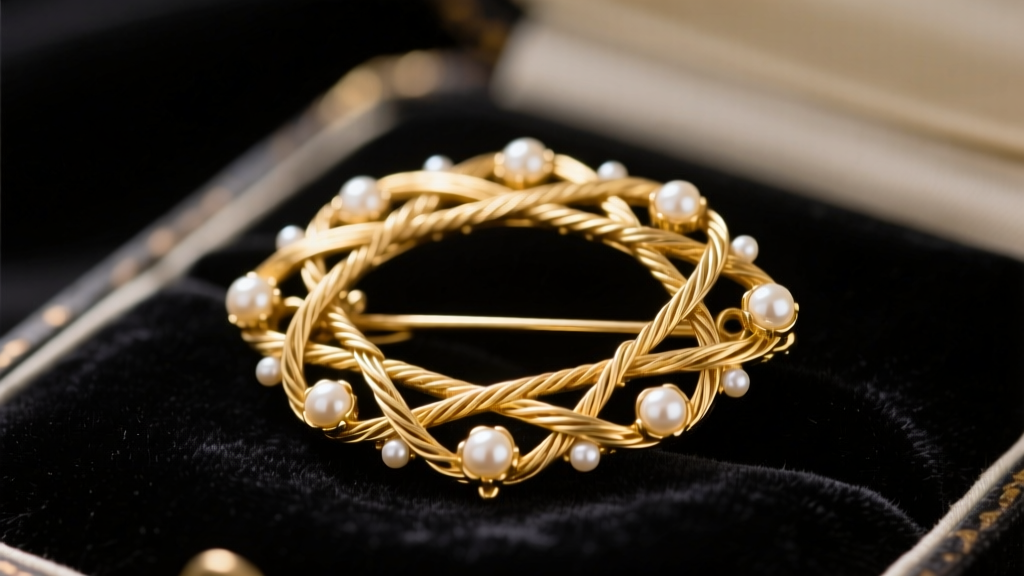
What Qualifies as Antique Gold Jewelry?
In the gemological and auction worlds, the term "antique" is not merely a marketing buzzword; it is a strict chronological classification. For a piece to be officially categorized as antique gold jewelry, it must be at least 100 years old. This means that as of 2026, any piece crafted in 1926 or earlier earns the antique designation. Pieces between 20 and 99 years old are classified as "vintage," while "estate" simply means the item was previously owned, regardless of its age. Understanding this distinction is your first line of defense against misleading listings and overpriced reproductions.
Buying antique gold jewelry offers a unique opportunity to own a tangible piece of history. Unlike modern mass-produced jewelry, antique pieces were often hand-fabricated, featuring intricate metalwork, hand-cut gemstones, and alloy compositions that are rarely used today. However, navigating this market requires a solid grasp of historical eras, hallmarking systems, and authentication techniques.
The Big Three: Victorian, Edwardian, and Art Deco Eras
When shopping for antique gold jewelry, you will primarily encounter pieces from three major design periods. Each era has distinct metallurgical preferences and stylistic motifs that serve as vital clues for dating and authentication.
Victorian (1837–1901)
The Victorian era is broadly divided into the Romantic, Grand, and Aesthetic periods. Yellow gold and rose gold were the dominant metals, largely due to the California and Australian gold rushes. Early Victorian jewelry often featured intricate repoussé work (hammered relief designs), while the Grand period (following the death of Prince Albert) popularized heavy, somber mourning jewelry made from dark gold alloys, jet, and vulcanite. Look for motifs like serpents (symbolizing eternity), clasped hands, and floral acrostic designs where the first letter of each gemstone spelled out a secret message.
Edwardian (1901–1915)
The Edwardian era marked a dramatic shift toward lightness and elegance. While platinum became the premier metal for its strength and ability to hold delicate diamond pavé, gold was still heavily utilized, often as a backing for platinum-topped settings to prevent skin discoloration. When you find solid gold Edwardian pieces, they are typically 18k or higher, featuring incredibly fine milgrain detailing, scrollwork, and lace-like filigree. Garlands, bows, and lace motifs are the hallmarks of this aristocratic period.
Art Deco (1920–1935)
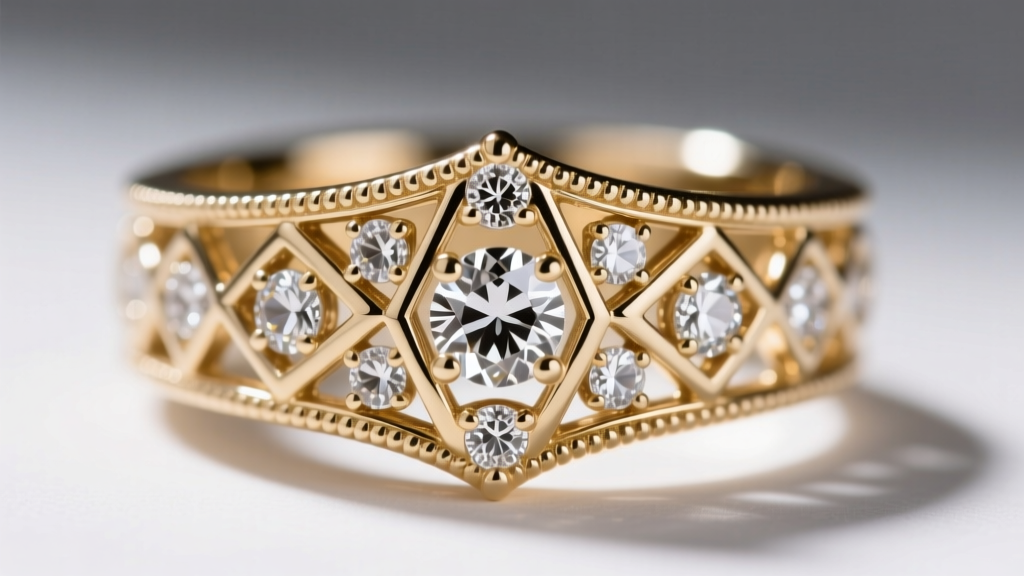
Art Deco rebelled against the flowing curves of the Edwardian and Art Nouveau periods, embracing the machine age with sharp geometric lines, bold color contrasts, and architectural symmetry. This era saw the rise of white gold, which was alloyed with nickel or palladium to mimic the look of platinum at a lower cost. Rose gold was also frequently used as an accent metal to create striking two-tone designs. If you are examining an Art Deco gold ring, expect to see step-cut gemstones (like emeralds or baguettes), calibré-cut sapphires, and bold, symmetrical onyx inlays.
Decoding Antique Gold Hallmarks and Karats
Hallmarks are the DNA of antique gold jewelry. They tell you where a piece was made, what year it was assayed, and exactly how pure the gold is. However, hallmarking laws varied wildly by country, which often confuses beginners.
In the United States, the Federal Trade Commission Jewelry Guides historically required only a karat stamp (e.g., "14K") and a maker's mark, though enforcement in the 19th century was notoriously lax. Consequently, many authentic American antique pieces bear no stamps at all, or simply feature the maker's trademark.
The United Kingdom, however, has maintained a rigorous, legally mandated assay system for centuries. According to the London Assay Office, a full British hallmark includes a sponsor's mark, a standard mark (purity), an assay office mark (e.g., an anchor for Birmingham, a leopard's head for London), and a date letter.
The 15k Gold Anomaly: One of the most critical E-E-A-T data points for dating British antique gold is the 15k standard. From 1854 until 1932, the UK legally recognized 15-karat gold (62.5% pure). In 1932, this was abolished and replaced by the 14k standard to align with international markets. If you find a piece stamped "15" or "15k" alongside a British crown mark, you can confidently date it between 1854 and 1932. If a seller claims a 15k piece is from 1940, it is either a fake or misidentified.
| Era / Region | Common Karats | Key Hallmarks & Stamps |
|---|---|---|
| Victorian (UK) | 15k, 18k, 22k | Crown, 15 or 18, Assay Office Symbol, Date Letter |
| Victorian (US) | 10k, 14k | Often unmarked, or simple "14K" / Maker's Patent Date |
| Edwardian (UK) | 15k, 18k | Crown, 15 or 18, Assay Office Symbol (Pre-1932) |
| Art Deco (UK) | 14k, 18k | Crown, 14 or 18 (Post-1932 transition) |
| Art Deco (US) | 14k, 18k White Gold | "14K", "18K", sometimes "White Gold" stamped |
How to Authenticate and Avoid Fakes
The market is flooded with "antique-style" reproductions. To protect your investment, you must look beyond the gold stamp and examine the physical construction of the piece. Here is a practical framework for authentication:
- Inspect the Clasps: The hardware is a dead giveaway for age. Pre-1900 brooches almost exclusively feature a simple "C-clasp" without a rolling safety catch. The pin stem often extends slightly past the C-catch. Trombone clasps (push-pull tubes) were common in European pieces from the late 1800s to the 1920s. If you see a modern lobster claw or a lightweight spring-ring clasp on a piece billed as Victorian, the clasp has either been replaced, or the piece is a modern reproduction.
- Examine Wear Patterns: Century-old gold jewelry has been worn for decades. Use a 10x or 20x jeweler's loupe to inspect the inside of ring shanks, the edges of brooches, and the links of chains. Authentic antique gold will show soft, rounded wear, and hallmarks may be slightly rubbed down. If a piece looks pristine with sharp, factory-crisp edges and perfectly legible stamps, be highly suspicious.
- Check for Soldering and Repairs: Antique pieces were repaired using traditional lead or low-temperature solders, which often leave a slightly different color trace under a loupe. Modern laser welding was not available, so if you see perfectly flush, invisible repairs on a piece from 1890, it has likely been heavily restored or is a modern cast copy.
- Beware of "Rolled Gold" and "Gold Filled": Many Victorian and Edwardian pieces were made using rolled gold plate (RGP) or gold-filled techniques to make jewelry affordable for the working class. These are highly collectible in their own right, but they should not be sold as solid gold. Look for microscopic stamps like "1/20 12K GF" or "RGP" hidden near the clasp or inside the shank.

Pricing Expectations and Where to Buy
Pricing antique gold jewelry is complex because you are paying for both the intrinsic melt value of the gold and the historical premium of the craftsmanship. As a beginner, it is best to start with accessible categories before moving into high-end signed pieces.
Entry-Level ($150 – $400): In this range, you can find excellent Victorian 9k or 10k gold Albert watch chains, simple Edwardian 15k gold wedding bands, and small Art Deco gold-filled lockets. These pieces offer historical charm without a massive financial commitment.
Mid-Tier ($500 – $1,500): This is the sweet spot for serious collectors. Expect to find solid 15k and 18k Victorian mourning brooches with seed pearls, 14k Art Deco filigree rings with small single-cut diamonds, and enameled Edwardian pendants.
Investment Grade ($2,000+): Pieces in this tier feature high-karat gold (22k), rare historical motifs, or are signed by prestigious houses like Boucheron, Cartier, or Tiffany & Co. Heavy Victorian gold link bracelets and intricate Art Deco geometric rings with calibré-cut sapphires dominate this price bracket.
For sourcing, reputable online platforms like 1stDibs and Ruby Lane vet their sellers and offer buyer protection. The Victoria and Albert Museum also provides excellent digital archives that you can use to cross-reference designs and motifs when browsing auction house catalogs like Sotheby's or Bonhams.
Caring for Century-Old Gold
Antique gold requires a gentler touch than modern jewelry. The alloys used in the 19th century can sometimes be more brittle, and the gemstone settings were often hand-cut and less secure than modern prong work.
Never use ultrasonic cleaners. The high-frequency vibrations can easily shatter foil-backed gemstones (common in Georgian and early Victorian jewelry) or shake loose the delicate diamond pavé in Edwardian pieces. Furthermore, avoid harsh chemical dips, which can strip the natural patina that gives antique gold its warm, rich luster.
Instead, clean your antique gold jewelry using a few drops of mild, phosphate-free dish soap in lukewarm water. Gently agitate the water, let the piece soak for five minutes, and use a brand-new, ultra-soft baby toothbrush to lightly sweep away dirt from behind the settings. Pat dry with a lint-free microfiber cloth. Store your pieces individually in soft cotton pouches to prevent the gold from scratching against harder modern gemstones or other metals.
By understanding the historical context, mastering the nuances of hallmarks, and employing careful authentication techniques, you can confidently build a collection of antique gold jewelry that is as historically significant as it is beautiful.


