What to Clean Gold Jewelry With: Expert Step-by-Step Guide
Discover exactly what to clean gold jewelry with using our expert step-by-step guide. Safe methods for solid, vermeil, and gemstone pieces.

The Chemistry of Gold Tarnish and Dirt Buildup
Before deciding what to clean gold jewelry with, it is crucial to understand why it loses its luster in the first place. Pure 24-karat gold is a noble metal, meaning it does not oxidize or tarnish. However, fine jewelry is rarely crafted from pure gold because it is too soft for daily wear. Instead, jewelers alloy it with metals like copper, silver, and zinc to create 14k (58.5% gold) and 18k (75% gold) variants. These alloy metals are highly reactive to sulfur, oxygen, and the acidic pH of human sweat.
Furthermore, modern environments introduce a secondary layer of dullness. Daily application of cosmetics, lotions, sebum, and hard water minerals creates a microscopic film over the jewelry's surface. This film traps dead skin cells and environmental dust, refracting light poorly and making the gold appear cloudy or tarnished. Understanding this dual-layer of chemical oxidation and physical grime dictates the exact cleaning agents and mechanical tools you should use.
What to Clean Gold Jewelry With: The Safe Solutions Matrix
Not all gold jewelry is created equal. A cleaning solution that perfectly restores a solid 14k gold band might permanently strip a gold-plated brass necklace. Use the matrix below to select the appropriate chemical agent based on your jewelry's material composition.
| Cleaning Agent | Solid Gold (14k, 18k, 24k) | Gold Vermeil / Plated | Porous Gemstones |
|---|---|---|---|
| Mild Dish Soap (Phosphate-Free) | Highly Safe | Safe (No Soaking) | Safe (Surface Wipe) |
| Diluted Ammonia (1:6 Ratio) | Safe (Diamonds/Sapphires only) | Destructive | Destructive |
| Baking Soda Paste | Risky (Micro-scratches) | Destructive | Destructive |
| Whitening Toothpaste | Destructive | Destructive | Destructive |
| Commercial Gold Dip | Safe (With extreme caution) | Destructive | Destructive |
Step-by-Step: Cleaning Solid Gold (14k, 18k, 24k)
The Dish Soap Soak Method
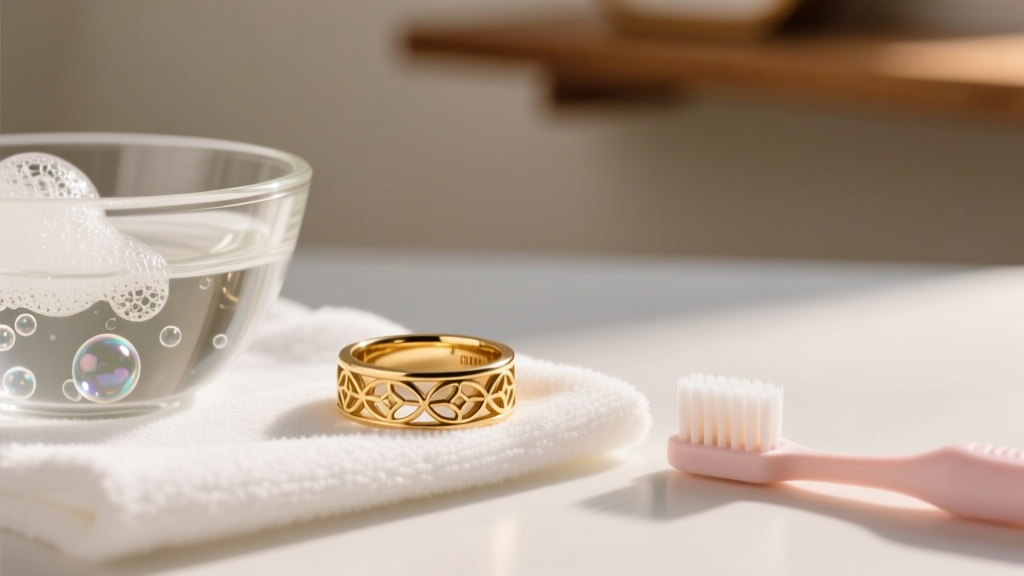
For solid gold pieces without fragile gemstones, a mild surfactant is the most effective way to break down sebum and cosmetic films without attacking the alloy metals.
- Prepare the Solution: Mix exactly 3 drops of a phosphate-free, mild dish soap (such as Dawn Ultra) into 1 cup of lukewarm water. The water temperature must be between 85°F and 95°F (29°C - 35°C). Hot water can cause thermal shock to certain gemstone treatments.
- Soak: Submerge the solid gold jewelry for 15 to 20 minutes. This allows the surfactant to lift the lipid barrier.
- Agitate: Using an infant toothbrush with ultra-soft 0.12mm nylon bristles, gently brush the piece. Pay special attention to the backs of settings and the interior of ring bands where skin contact is highest.
- Rinse: Rinse under a gentle stream of lukewarm water. Always use a plugged sink or a mesh strainer to prevent catastrophic loss down the drain.
Drying and Polishing Protocols
Never air-dry gold jewelry, as hard water minerals will leave calcium spots. Pat the piece dry using a lint-free microfiber cloth with a minimum density of 300 GSM (grams per square meter). Avoid paper towels entirely; their wood pulp fibers possess a Mohs hardness that can induce microscopic marring on high-polish gold finishes over time.
Step-by-Step: Cleaning Gold Vermeil and Gold Plated Pieces
Why Soaking is Forbidden
Gold vermeil consists of a sterling silver base plated with at least 2.5 microns of gold, while standard gold-plated jewelry features a brass or copper base with a mere 0.5 microns of gold. Submerging these pieces in liquid allows water to penetrate microscopic pores in the gold layer. Once trapped between the gold and the base metal, osmosis and oxidation occur, causing the base metal to corrode and the gold plating to blister and flake off permanently.
The Damp Cloth Wipe Technique
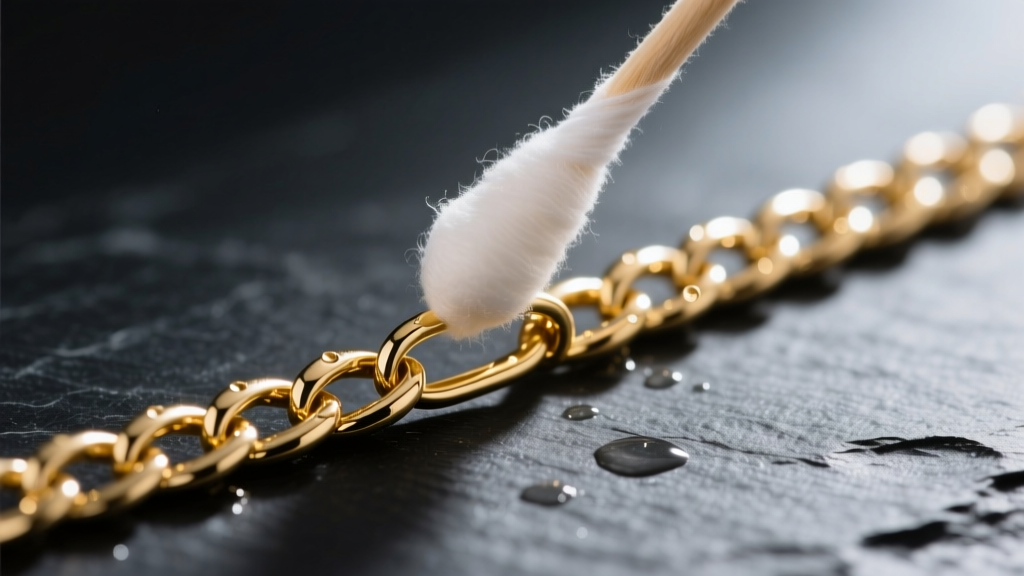
To clean vermeil and plated jewelry, you must rely on surface-level mechanical action rather than chemical soaking.
Pro Tip: Dampen a cotton swab or a microfiber cloth with distilled water and a microscopic drop of mild soap. Gently trace the contours of the jewelry, avoiding any vigorous rubbing that could wear through the micron-thin gold layer. Dry immediately with a separate, bone-dry cloth.
The Danger Zone: What NEVER to Use on Gold
When researching what to clean gold jewelry with, the internet is rife with destructive DIY hacks. Avoid these common household items at all costs:
- Whitening Toothpaste: Toothpaste contains hydrated silica abrasives designed to strip enamel plaque. Silica ranks at a 7 on the Mohs hardness scale, while gold alloys sit between 2.5 and 3. Scrubbing gold with toothpaste guarantees a network of permanent micro-scratches, resulting in a dull, matte finish.
- Chlorine and Bleach: Chlorine is the ultimate enemy of gold alloys. It triggers a metallurgical reaction known as stress corrosion cracking. The chlorine attacks the grain boundaries of the copper and zinc within the gold alloy, making the jewelry incredibly brittle and prone to shattering or snapping under minor pressure.
- Baking Soda: While often touted as a natural cleaner, baking soda is highly alkaline and abrasive. It will strip the rhodium plating off white gold and scratch high-polish yellow gold.
Special Protocols for Porous Gemstones in Gold Settings
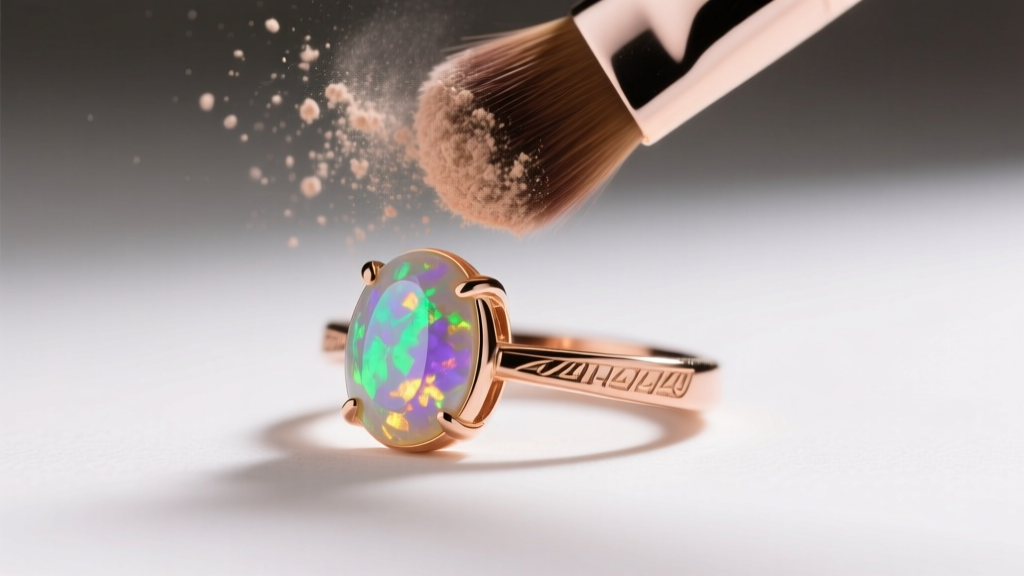
If your gold jewelry features organic or porous gemstones, the rules change entirely. Stones like pearls, opals, turquoise, and emeralds require specialized care. According to the Gemological Institute of America (GIA) Pearl Care guidelines, pearls are highly sensitive to acids and dry environments; they should never be submerged in water or cleaned with commercial jewelry dips, as this will dissolve their nacreous surface.
Similarly, the GIA Opal Care Guide warns that opals contain up to 20% water. Exposure to harsh chemicals or sudden temperature changes can cause 'crazing'—a network of internal fractures that ruins the stone's structural integrity. For gold settings housing these delicate gems, use a dry, ultra-soft makeup brush to gently sweep away dust, and wipe the gold band only with a barely damp cloth, carefully avoiding the gemstone itself. The American Gem Society (AGS) also recommends having emerald jewelry professionally re-oiled every few years, as ultrasonic cleaners will strip the cedar oil used to fill their natural surface-reaching fissures.
Professional Maintenance and Ultrasonic Considerations
Ultrasonic cleaners use high-frequency sound waves to create microscopic cavitation bubbles that blast dirt from crevices. While highly effective for solid gold and diamond pieces, they are strictly prohibited for fracture-filled stones, plated jewelry, and any gemstone with a Mohs hardness below 7. If your gold jewelry features intricate filigree or heavy diamond pavé that an infant toothbrush cannot reach, take it to a professional jeweler. They can safely utilize industrial ultrasonics and steamers to restore the piece's original brilliance without risking structural damage.


