How to Care for Gold Filled Jewelry: An Expert Maintenance Guide
Learn exactly how to care for gold filled jewelry with our expert metallurgical guide. Discover cleaning protocols, chemical risks, and storage tips.

The Metallurgy of Gold-Filled: Why Care Protocols Differ
To understand how to care for gold filled jewelry, you must first understand its physical construction. Unlike gold-plated jewelry, which features a microscopic flash of gold (usually less than 0.05% of the total weight) applied via electroplating, gold-filled (GF) material is created through a rigorous mechanical bonding process. According to the Federal Trade Commission's Jewelry Guides, a piece can only be legally stamped and sold as 'gold filled' if the solid gold layer constitutes at least 1/20th (5%) of the total weight of the item.
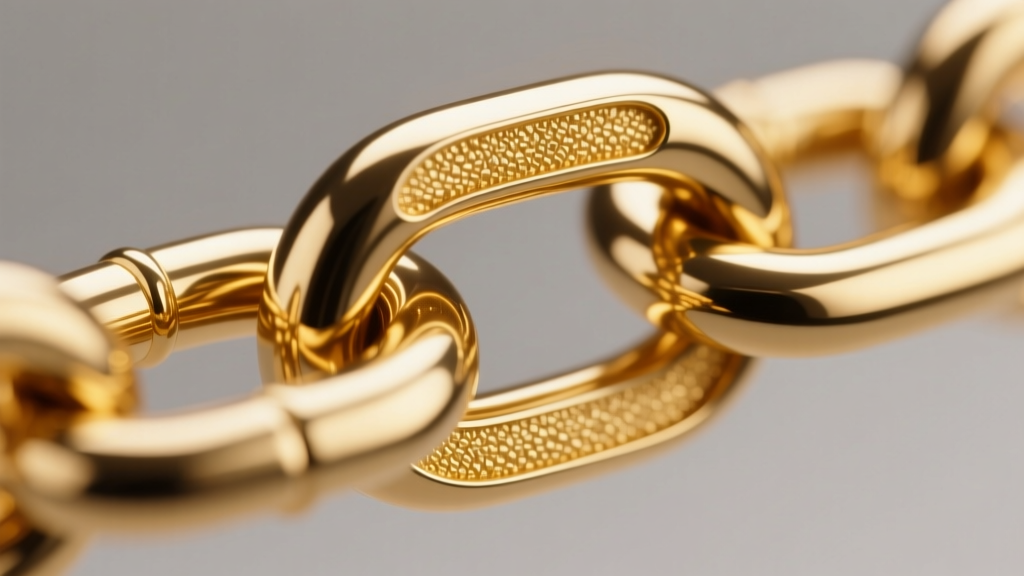
This 5% threshold is not just a legal technicality; it represents a massive difference in volumetric thickness. A standard 14k gold-filled wire contains a core of jeweler's brass (an alloy of roughly 70% copper and 30% zinc) that is sandwiched between two outer layers of solid 14k gold using extreme heat and pressure. This 'double-clad' structure means the gold layer is hundreds of times thicker than standard plating. However, because the core is a reactive base metal, the primary goal of your maintenance routine is to protect the integrity of the outer gold shell and prevent any micro-abrasions that could expose the brass beneath.
Single-Clad vs. Double-Clad Vulnerabilities
While most wire and chain findings are double-clad, flat sheet metal used for stamped pendants or bezel cups is often 'single-clad,' meaning the 5% gold layer is only on the top face. The exposed brass edges of single-clad pieces are highly susceptible to oxidation. When caring for these specific items, you must pay special attention to the edges, ensuring they are thoroughly dried after cleaning to prevent localized galvanic corrosion.
The 4 Fatal Chemical Threats to Gold-Filled Layers
Solid gold is highly noble and unreactive, but the alloys mixed into 14k and 18k gold (like copper and silver), as well as the brass core beneath, are vulnerable to specific chemical compounds. Understanding these threats is the cornerstone of expert-level jewelry maintenance.
| Chemical Threat | Common Sources | Metallurgical Reaction | Prevention Protocol |
|---|---|---|---|
| Chlorine | Swimming pools, hot tubs, bleach-based household cleaners | Forms gold chloride, which dissolves the gold layer and severely weakens the brass core's structural integrity. | Never wear GF jewelry in chlorinated water. Remove before cleaning with bleach. |
| Sulfur Compounds | Hot springs, rubber bands, certain wool felts, egg yolks | Reacts with copper/silver alloys in the karat gold to form dark silver sulfide or copper sulfide tarnish. | Avoid hot springs. Never store jewelry wrapped in rubber bands. |
| Titanium Dioxide | Physical sunscreens, mineral makeup, tinted moisturizers | Acts as a micro-abrasive (Mohs hardness 6.0+), slowly sanding away the gold layer through friction. | Apply sunscreen, wait 20 minutes for absorption, then put on jewelry. |
| Lactic & Uric Acid | Heavy perspiration, high-intensity workouts | Lowers surface pH, accelerating the oxidation of the brass core if microscopic scratches are present. | Remove during heavy cardio. Wipe with a damp cloth immediately after wear. |
Step-by-Step Cleaning Protocol for 14k and 18k Gold-Filled Pieces
Commercial jewelry dips and ultrasonic cleaners are strictly forbidden for gold-filled items. Ultrasonic waves can cause delamination if the mechanical bond has been compromised, and harsh chemical dips will strip the alloyed metals from the gold surface, leaving it porous and brittle. Instead, rely on this precise, manual cleaning methodology.
Required Materials
- Distilled Water: Tap water contains dissolved minerals (calcium, magnesium) that leave hard water spots and can trap moisture against the metal.
- pH-Neutral Surfactant: A basic, non-lotion dish soap (like original Dawn). Avoid soaps with added moisturizers or exfoliating beads.
- 300+ GSM Microfiber Cloth: High-density microfiber traps dust particles without dragging them across the gold surface.
- Soft-Bristle Baby Toothbrush: The ultra-fine nylon bristles can reach into chain links without scratching the 14k gold (Mohs hardness ~3.5).
The 5-Minute Wash Technique
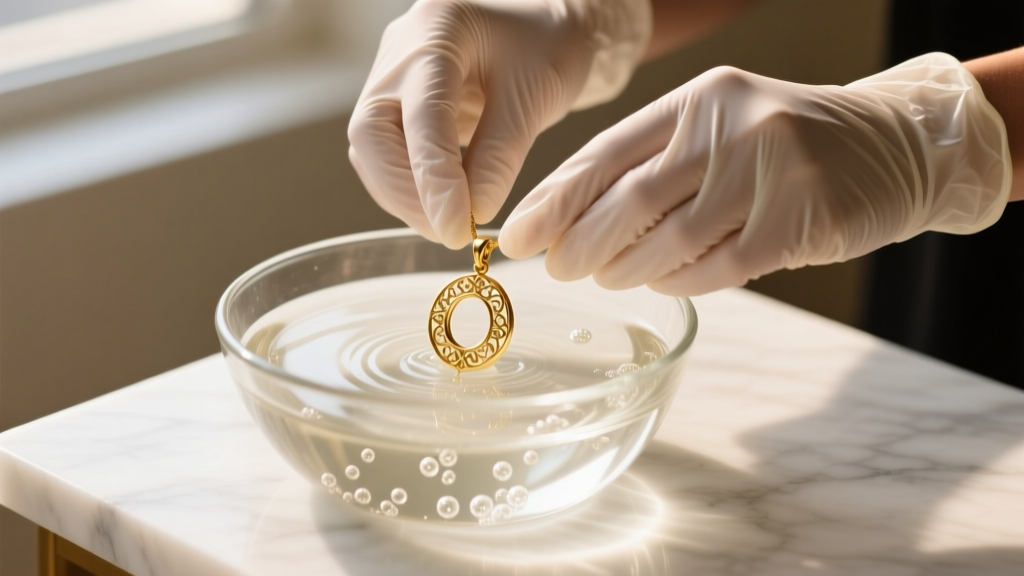
- Prepare the Bath: Fill a glass bowl with lukewarm distilled water (approximately 85°F / 29°C). Hot water can expand the brass core at a different rate than the gold shell, causing microscopic stress fractures over time.
- Lather: Add a single drop of pH-neutral soap and agitate with your fingers to create suds.
- Soak: Submerge the jewelry for exactly 3 to 5 minutes. This loosens sebum and cosmetic buildup without prolonged water exposure.
- Agitate Gently: Use the baby toothbrush to lightly sweep the bristles over the surface, paying special attention to the back of pendants and the interior of ring bands where dead skin cells accumulate.
- Rinse and Dry: Rinse under a gentle stream of distilled water. Immediately pat dry with the microfiber cloth.
Expert Drying Tip: Never 'rub' the jewelry dry. Rubbing creates friction that can catch on microscopic burrs. Instead, use a pressing and patting motion. For intricate chain links, use a hair dryer on the 'cool' setting to blow water out of the crevices before storing.
Mechanical Wear: Preventing Micro-Abrasions
While the gold layer on a GF piece is thick, it is still fundamentally a surface layer. The Mohs hardness of 14k gold is roughly 3.5 to 4.0. By comparison, common environmental dust contains quartz particles (Mohs 7.0), and steel clasps or rings rank around 5.5 to 6.0. This means that everyday friction is the silent killer of gold-filled longevity.
To mitigate mechanical wear, practice 'strategic layering.' If you wear a gold-filled chain necklace, avoid pairing it with a heavier stainless steel or solid tungsten pendant bail, which will act like a file against the gold links. Similarly, stack gold-filled rings only with other gold-filled or solid gold rings. Mixing GF with harder metals like platinum or tungsten carbide will result in the GF piece being visibly worn down to the brass core within a matter of months.
Long-Term Storage: Humidity and Tarnish Prevention
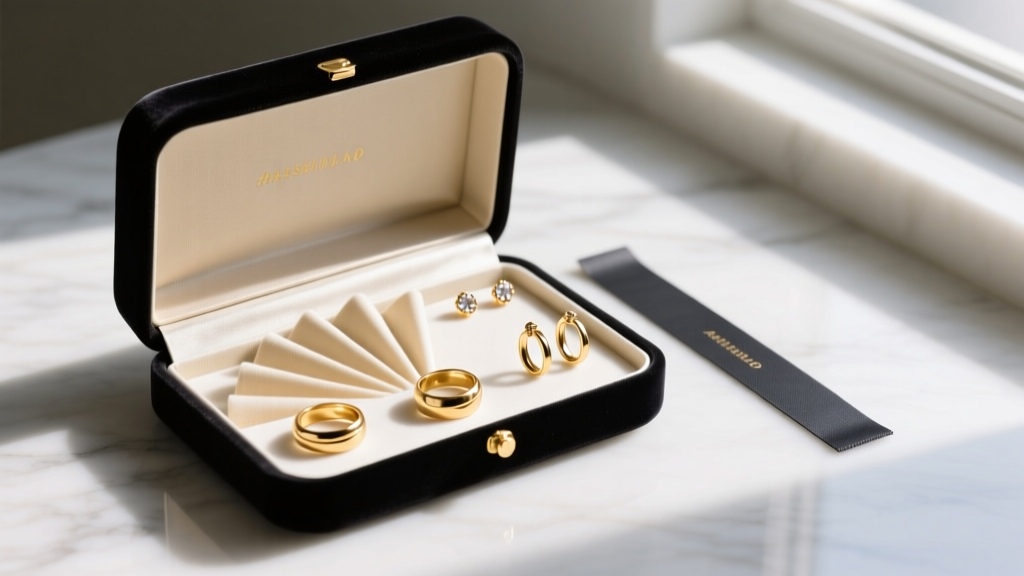
When gold-filled jewelry is not being worn, its environment dictates its lifespan. The brass core is highly reactive to atmospheric humidity and sulfur gases. Even though the gold shell protects the core, any microscopic scratch or exposed edge (common in stamped blanks) will allow moisture to penetrate.
According to gemological care standards outlined by the Gemological Institute of America (GIA), proper storage is just as critical as cleaning. Store your pieces in individual, airtight polyethylene zip-lock bags. Polyethylene is chemically inert and does not off-gas sulfur compounds (unlike some cheap rubber bands or low-grade plastics). Inside each bag, place a 3M anti-tarnish strip. These strips contain activated carbon and specialized metal salts that absorb hydrogen sulfide and sulfur dioxide gases from the trapped air, effectively neutralizing the environment and preventing the copper alloys from oxidizing.
When to Seek Professional Re-finishing
One of the most common questions in jewelry maintenance is whether a worn gold-filled piece can be restored. The short answer is: it is highly complex and often cost-prohibitive. Unlike white gold, which can be easily re-rhodium plated, or sterling silver, which can be aggressively polished, gold-filled items cannot simply be 're-dipped.'
Limitations of Gold-Filled Restoration
If the brass core has been exposed due to severe abrasion, electroplating a new layer of gold over the brass will result in a standard 'gold-plated' finish, not a gold-filled one. The new layer will be microscopic and will wear off quickly. Furthermore, attempting to aggressively buff out deep scratches on a gold-filled item will often remove the remaining gold layer entirely. If a cherished gold-filled piece has worn through to the brass, the only true metallurgical fix is to have a master jeweler laser-weld a new sheet of gold-filled material over the damaged area, a service that usually exceeds the replacement cost of the item itself. Therefore, rigorous adherence to the preventative care protocols detailed above is your most effective strategy for ensuring a 20-to-30-year lifespan for your gold-filled collection.