How Can You Tell If Your Jewelry Is Gold? Expert Testing Guide
Learn how can you tell if your jewelry is gold with our expert deep dive into hallmarks, acid tests, XRF analysis, and specific gravity checks.


When evaluating precious metals, the question of authenticity is paramount. Counterfeiting techniques have evolved far beyond simple brass or copper alloys. Today, sophisticated manufacturing allows for gold-plated tungsten cores, micro-layered electroplating, and deceptive hallmark stamping. If you are asking, how can you tell if your jewelry is gold, you must move past outdated internet myths and rely on metallurgical science. This expert guide dissects the technical methodologies used by gemologists and assayers to verify gold purity, ranging from non-destructive metrology to chemical verification.
The Limitations of Visual, Magnetic, and Acoustic Inspections
Many consumers begin their authentication journey with the magnet test or the acoustic 'ping' test. While these methods have a basis in physics, they are fundamentally inadequate for modern jewelry verification.
Diamagnetism and the Neodymium Fallacy
Pure gold is diamagnetic, meaning it creates a very weak, opposing magnetic field when exposed to a magnet. However, the base metals commonly alloyed with gold—such as copper, silver, and zinc—are also non-magnetic. A standard ferrite magnet will not attract a 14k gold chain, but it will also fail to attract a brass or copper counterfeit. While sliding a high-grade N52 neodymium magnet down a thick gold coin or bullion bar will produce a noticeable 'eddy current' braking effect due to gold's high electrical conductivity, this effect is entirely imperceptible on thin chains, rings, or hollow jewelry. Therefore, magnetic testing yields an unacceptable rate of false negatives in jewelry applications.
The Acoustic Resonance Test
The 'ping' test relies on the specific acoustic resonance of gold alloys. When struck, a solid gold coin emits a long, high-frequency ringing tone. However, this test is practically useless for gem-set jewelry, chains, or items with structural solder joints, which dampen acoustic resonance. Relying on sound is subjective and easily mimicked by specific bronze alloys.
Decoding Hallmarks: Micro-Stamp Analysis
A hallmark is a microscopic stamp indicating the metal's fineness. Under a 10x or 20x jeweler's loupe, genuine hallmarks exhibit sharp, clean edges, often accompanied by a maker's mark or an assay office symbol (such as the leopard's head for the London Assay Office).
According to the Federal Trade Commission Jewelry Guides, gold sold in the United States must be accurately marked for its karatage, with a permissible variance of no more than 3/1000ths of a karat (or 3 parts per thousand) for items without solder, and 7/1000ths for items with solder.
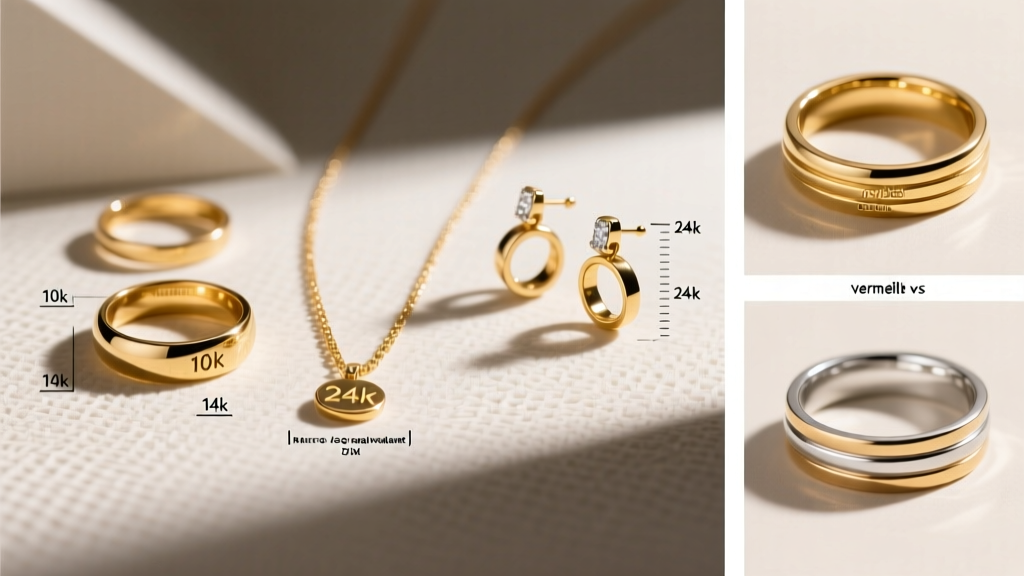
- 416 or 10K: 41.6% pure gold. Highly durable, pale yellow hue.
- 585 or 14K: 58.5% pure gold. The industry standard for fine jewelry, balancing color and tensile strength.
- 750 or 18K: 75.0% pure gold. Rich, saturated yellow color, but softer and more prone to scratching.
- 999 or 24K: 99.9% pure gold. Used almost exclusively in investment bullion or specific cultural bridal jewelry; too malleable for daily wear.
Expert Warning: Beware of stamps that include letters such as 'HGE' (Heavy Gold Electroplate), 'GF' (Gold Filled), or 'RGP' (Rolled Gold Plate). A stamp reading '18K HGE' indicates a base metal core with a microscopic outer layer of 18k gold, not a solid gold item.
Chemical Verification: The Acid Test Protocol
For definitive, low-cost verification, the nitric acid scratch test remains a staple in the jeweler's toolkit. This is a destructive test, albeit minimally so, as it requires filing a microscopic notch into the item to bypass any surface plating.
Preparing the Testing Stone
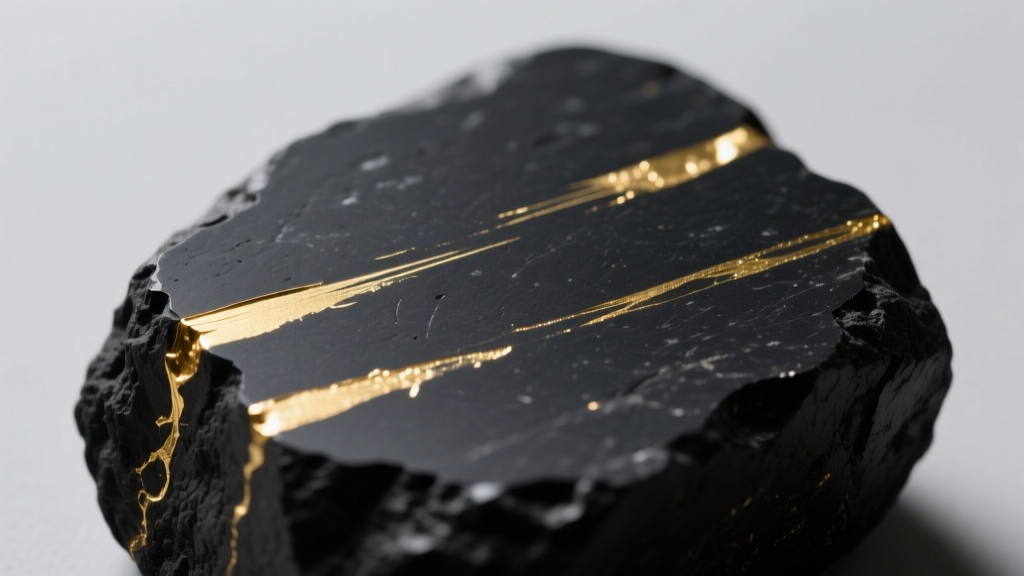
Using a black basalt or novaculite testing stone, rub the jewelry item firmly to leave a visible metallic streak. Crucially, you must use a needle file to create a small notch in an inconspicuous area of the jewelry, and then rub the interior of that notch against the stone. This ensures you are testing the core metal, not a superficial gold-plated layer.
Interpreting Nitric Acid Reactions
Testing acids are formulated with specific concentrations of nitric acid (HNO3) and sometimes hydrochloric acid (HCl) to target specific karat thresholds. When a drop of acid is applied to the streak:
- No Reaction: The metal meets or exceeds the karat rating of the acid used.
- Slow Dissolution / Brown Residue: The metal is gold, but of a lower karat than the acid's target threshold.
- Rapid Dissolution / Green Reaction: The metal is a base alloy (like copper or brass). The green color is caused by the creation of copper nitrate.
- Milky White Reaction: Indicates the presence of silver in the alloy, common in lower-karat white gold or silver-gilt counterfeits.
For an in-depth look at gold alloy chemistry and how different metals affect color and durability, the Gemological Institute of America (GIA) provides extensive metallurgical resources.
Advanced Metrology: Specific Gravity Testing
Specific gravity (SG) testing leverages Archimedes' principle to determine a metal's density without damaging the piece. This method is highly effective for solid chains, heavy bangles, and coins, provided they contain no hollow voids or non-metallic gemstones.
The formula is straightforward: SG = Weight in Air / (Weight in Air - Weight in Water).

Pure 24k gold has a specific gravity of 19.32 g/cm³. Because alloying metals like copper (8.96 g/cm³) and silver (10.49 g/cm³) are significantly lighter, the SG drops predictably as karatage decreases:
| Gold Karatage | Approximate Specific Gravity (g/cm³) | Primary Alloying Metals |
|---|---|---|
| 24K (99.9%) | 19.32 | None (Pure) |
| 22K (91.6%) | 17.7 - 18.2 | Silver, Copper |
| 18K (75.0%) | 15.2 - 15.9 | Copper, Silver, Palladium |
| 14K (58.5%) | 12.9 - 13.6 | Copper, Silver, Zinc |
| 10K (41.6%) | 11.0 - 11.6 | Copper, Silver, Nickel |
The Tungsten Threat
Specific gravity testing has one critical blind spot: Tungsten. Tungsten has a specific gravity of 19.25 g/cm³, nearly identical to pure gold. Sophisticated counterfeiters will cast a tungsten core and electroplate it with thick 24k gold. A specific gravity test will yield a reading of ~19.3, falsely passing the item as genuine. To defeat tungsten counterfeits, one must combine SG testing with ultrasonic thickness testing or XRF analysis.
Professional Grade: X-Ray Fluorescence (XRF) Spectrometry
When absolute certainty is required without destroying the piece, industry professionals and assay offices rely on X-Ray Fluorescence (XRF) spectrometry. An XRF analyzer fires primary X-rays at the jewelry, exciting the atoms within the metal. As the atoms return to their stable state, they emit secondary (fluorescent) X-rays at energy levels unique to their specific atomic structure.
The XRF sensor reads these emissions and instantly calculates the exact elemental composition down to 0.01%. It will immediately flag a gold-plated tungsten core, identify the exact percentages of copper, zinc, and nickel in a 14k white gold alloy, and detect hazardous elements like lead or cadmium that violate modern safety regulations. While XRF machines cost upwards of $15,000, most reputable pawnshops, jewelers, and precious metal refiners offer XRF testing for a nominal fee or free of charge if you intend to sell.
Summary Framework: Choosing Your Testing Method
To accurately determine how can you tell if your jewelry is gold, select the testing method that aligns with your required level of certainty and the physical characteristics of the item.
- For quick sorting of large batches: Visual hallmark inspection combined with a rare-earth magnet slide test to eliminate obvious steel/iron fakes.
- For solid, un-stamped scrap or broken chains: The nitric acid scratch test provides the most cost-effective and definitive karat verification.
- For high-value, solid investment pieces (coins/bars): Specific gravity testing combined with precise dimensional caliper measurements.
- For gem-set, antique, or high-karat jewelry where damage is unacceptable: Professional XRF spectrometry is the only scientifically sound choice.
By understanding the metallurgical properties of gold and the physical limitations of amateur testing methods, you can confidently verify the authenticity and purity of your precious metals, protecting your investments from increasingly sophisticated counterfeits.