Cash For Gold MSM Jewelry: 2026 Scrap & Value Guide
Learn how to evaluate cash for gold MSM jewelry in 2026. We break down scrap values, hollow vs. solid chains, and where to sell for maximum payout.

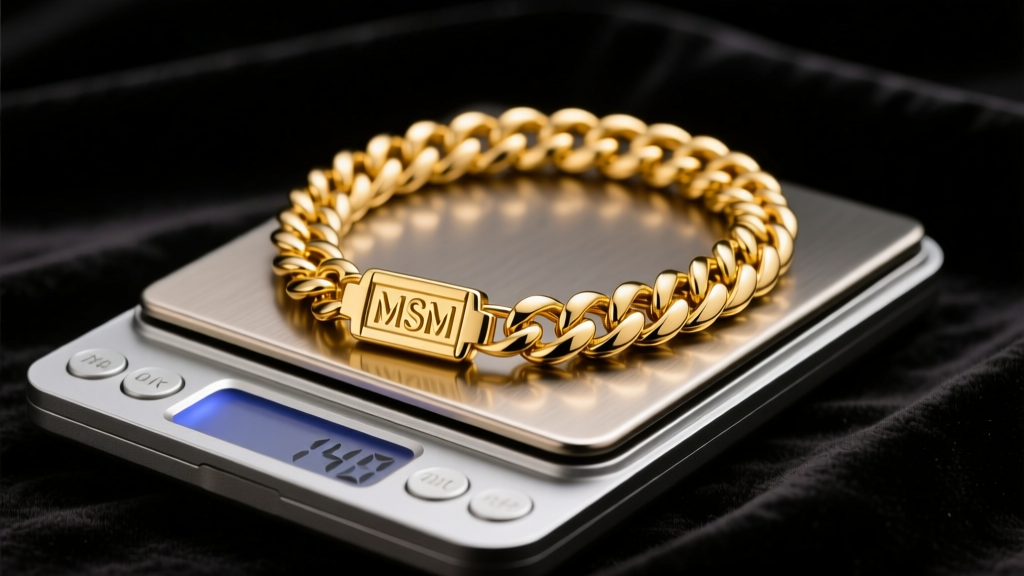
The Secondary Market for Urban Gold Staples
MSM Jewelry has long been a staple in the New York Diamond District and the broader urban jewelry market, renowned for supplying heavyweight Miami Cuban links, rope chains, and Franco chains at highly competitive wholesale and retail price points. But what happens when you need liquidity? The "cash for gold" industry is flooded with mail-in kits and pawn shop offers, but evaluating the true liquidation value of MSM pieces requires a nuanced understanding of their specific manufacturing techniques, karat purities, and structural integrity. In 2026, with gold spot prices hovering near historic highs, knowing the exact melt value versus the retail premium of your MSM jewelry is the difference between getting scammed and securing a fair payout.
Understanding the MSM Gold Ecosystem
Before you take your chain to a refiner or a pawn broker, you must accurately identify what you actually own. MSM Jewelry produces a wide spectrum of chains, and not all of them hold intrinsic scrap value. Their catalog generally falls into three categories:
- Solid Gold (10K, 14K, 18K): The core of their high-end inventory. These pieces hold direct melt value tied to the daily spot price of gold.
- Gold Vermeil & Plated Sterling Silver: MSM offers heavy gold plating over .925 sterling silver. While the gold layer has virtually zero scrap value, the underlying silver holds a modest melt value based on the silver spot price.
- Gold-Plated Brass/Base Metal: Often sold as budget-friendly "icy" alternatives. These have absolutely zero cash-for-gold value and will be rejected by any reputable refiner.
According to hallmarking standards enforced by the Jewelers of America, authentic solid gold pieces must bear a clear karat stamp (e.g., 10K, 14K) alongside the manufacturer's trademark. On genuine MSM solid gold chains, you will typically find the "MSM" stamp located on the back of the lobster clasp or the connecting O-ring.
The Math: Scrap Value vs. Retail Premium
When you search for "cash for gold MSM jewelry," you are essentially looking for the melt value. Gold buyers do not care about the brand name, the craftsmanship of the diamond-cut links, or the current streetwear trends. They care about the pure gold content. To calculate this, we use the troy ounce weight, convert it to grams, and multiply by the purity percentage and the current spot price.
2026 Estimated Payout Table
The following table uses a baseline 2026 gold spot price of $2,350 per troy ounce (approx. $75.56 per gram of 24k pure gold). Note that pawn shops typically offer 60% to 75% of the actual melt value to account for their overhead and refining costs.
| Chain Style (MSM) | Weight | Karat / Purity | Est. Retail Value | True Melt (Scrap) Value | Typical Pawn Offer (70%) |
|---|---|---|---|---|---|
| 5mm Miami Cuban | 45g | 10K (41.7%) | $1,450 | $1,417 | $991 |
| 4mm Rope Chain | 35g | 14K (58.5%) | $2,300 | $1,549 | $1,084 |
| 3mm Franco Chain | 25g | 18K (75.0%) | $2,600 | $1,416 | $991 |
Note: Retail values reflect purchasing new from authorized urban jewelry retailers, while melt values represent the raw material worth.

The Hollow Chain Trap: A Warning for Sellers
One of the most critical E-E-A-T insights regarding MSM and similar diamond-district wholesalers is the prevalence of hollow and semi-solid chains. To make thick, imposing chains (like 10mm or 12mm Cubans) affordable for budget-conscious buyers, manufacturers sometimes use a hollow-tube construction or a resin-filled core.
Why Cash-for-Gold Buyers Hate Hollow Chains
If you attempt to sell a hollow MSM chain, you will run into severe friction at the buying counter. Here is why:
- Specific Gravity Tests Fail: Refiners use water displacement to verify gold purity. A hollow chain traps air or contains hidden resin, completely skewing the density test and making the piece read as fake.
- Refining Contamination: The resins and solders used to seal hollow chains create toxic fumes and slag when melted in a crucible, forcing the refiner to spend extra time and chemicals fluxing the impurities.
- Weight Deception: A hollow chain might look like it should weigh 80 grams but actually weighs only 30 grams. Buyers will aggressively discount the offer or refuse the piece entirely.
Pro-Tip: Before taking your chain to a buyer, perform the "tap test." Gently tap the links against a glass surface. Solid gold produces a dense, high-pitched clink, while hollow chains emit a dull, muffled thud. Alternatively, compare the chain's width-to-weight ratio against a known solid chain of the exact same millimeter width.
Authentication: Proving Your MSM Piece is Solid
The secondary market is flooded with counterfeit chains bearing fake MSM stamps. If you bought your jewelry secondhand, or from an unverified social media vendor, you must authenticate it before expecting a cash payout. Reputable buyers will perform an XRF (X-Ray Fluorescence) scan or an electronic acid test, but you can do preliminary checks at home.

Visual and Chemical Hallmarks
Inspect the lobster clasp and the welded O-rings under a 10x jeweler's loupe. Authentic MSM stamps are laser-engraved or deeply struck, featuring crisp, clean typography. Counterfeit stamps often look blurry, shallow, or misaligned. Furthermore, if you use a standard gold testing acid kit (available for under $20 online), scratch the chain on a testing stone and apply 14K acid. If the scratch mark dissolves immediately, the piece is either heavily plated or a lower karat than stamped. For authoritative guidelines on how precious metals are legally marked and sold in the US, refer to the Federal Trade Commission's Jewelry Guides.
Where to Sell for Maximum Cash in 2026
Not all cash-for-gold avenues are created equal. The venue you choose will dictate whether you walk away with 50% or 90% of your chain's true melt value.
- Mail-In "Cash for Gold" Kits (Avoid): These companies rely on volume and opacity. They often melt the items before you can verify the weight, resulting in payouts that are 40% to 60% below actual market value.
- Local Pawn Shops (Convenient but Costly): Pawn shops offer immediate cash, but they must cover retail overhead, rent, and resale risk. Expect offers ranging from 60% to 75% of the daily spot melt value. They are best for emergency liquidity.
- Precious Metal Refiners & Coin Dealers (Best Value): Dedicated bullion dealers and local refineries operate on high volume and low margins. They will typically pay 90% to 98% of the true melt value for verified solid gold MSM chains. Check daily spot prices on Kitco before walking into a refinery so you know the exact mathematical baseline.
- Private Resale (Grailed, eBay, Facebook Groups): If your MSM chain is a highly sought-after style (like a pristine, diamond-cut 14K Miami Cuban) and is in flawless condition, selling directly to an end-consumer can yield 10% to 20% over the scrap value. However, this requires dealing with shipping insurance, authentication disputes, and platform fees.
Final Verdict: Budget Assessment for Liquidation
When evaluating cash for gold MSM jewelry, your primary focus must be on the raw material weight and purity, stripping away the brand prestige. MSM offers excellent entry points into solid gold urban jewelry, but they are not "investment grade" pieces that appreciate over time like high-horology watches. They are commodities. By understanding the difference between solid and hollow constructions, verifying the karat stamps, and bypassing predatory mail-in services in favor of direct local refiners, you can ensure that when it is time to liquidate your gold, you capture the maximum possible value of your asset.


