Beginner Guide to Buying an Antique Gold Jewelry Box
Learn how to choose, restore, and safely use an antique gold jewelry box to store your precious metals without causing tarnish or damage.

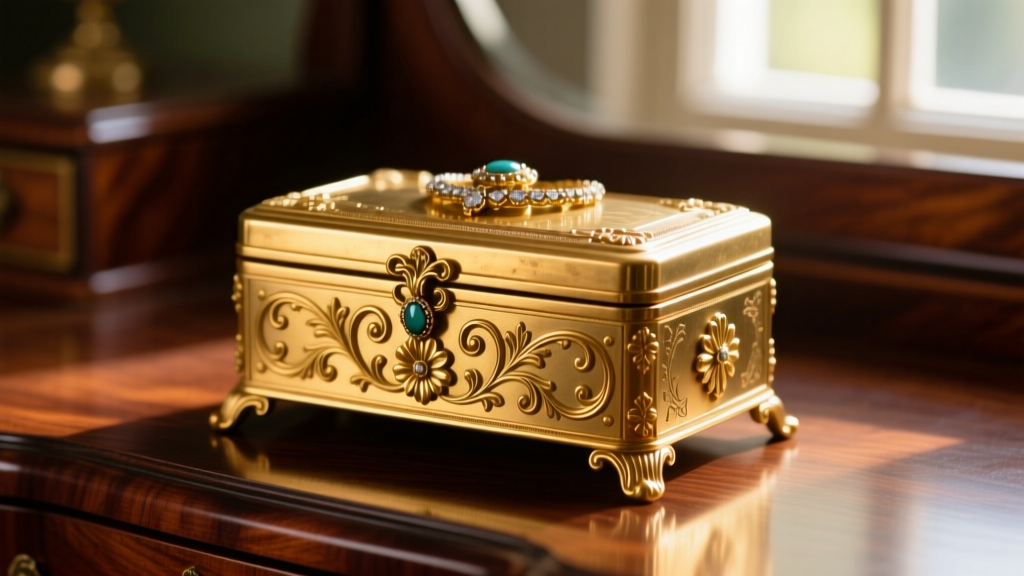
For collectors and enthusiasts, storing precious metals is about more than just organization; it is about preservation. While modern acrylic or leather cases are functional, nothing commands a room quite like an antique gold jewelry box. However, transitioning from a modern jewelry pouch to a 19th-century estate piece requires a deep understanding of historical materials, wood chemistry, and metal alloys. If you place a delicate 14k or 18k gold chain into an un-restored Victorian box, you might pull it out a month later coated in a stubborn, dark tarnish.
This beginner-friendly explainer will walk you through the anatomy of antique gold boxes, the hidden chemical threats lurking in vintage linings, and the exact restoration protocols required to make them safe for your modern gold collection.
What Qualifies as an "Antique Gold" Jewelry Box?
When browsing estate sales or auction houses, the term "gold" is frequently misused. With very few exceptions, an antique gold jewelry box is not forged from solid 18k or 24k gold. A solid gold box of substantial size would weigh upwards of 30 pounds and cost well into the six figures. Instead, "gold" refers to the exterior finish, the hardware, or the interior wash. Understanding these distinctions is critical for accurate valuation and proper care.
Ormolu and Gilt Bronze
Originating in France, ormolu (from the French or moulu, meaning ground gold) is a technique where a gold-mercury amalgam is applied to bronze and heated to vaporize the mercury, leaving a pure gold finish. According to the Metropolitan Museum of Art's conservation department, mercury gilding was largely abandoned by the 1830s due to severe toxicity, replaced later by electroplating. If your box features heavy, matte-to-bright gold mounts on dark wood, you are likely looking at early 19th-century ormolu.
Gold-Leaf and Gesso
Victorian and Edwardian boxes often feature intricate gold-leaf applied over carved wood or gesso (a chalk and binder mixture). This finish is incredibly fragile and should never be polished with modern brass cleaners, which will strip the leaf entirely.
Interior Gold-Wash
High-end antique boxes often feature a "gold-wash" or silver-gilt interior. This is a microscopically thin layer of gold applied over silver or brass to prevent the interior hardware from rusting. It is highly susceptible to abrasion from heavy jewelry pieces.
The Chemical Threat: Why Old Linings Tarnish Modern Gold
A common misconception is that gold does not tarnish. While pure 24k gold is virtually inert, the gold jewelry you actually wear—10k, 14k, and 18k—is an alloy mixed with copper, silver, and zinc for durability. These alloy metals are highly reactive to sulfur and acids.
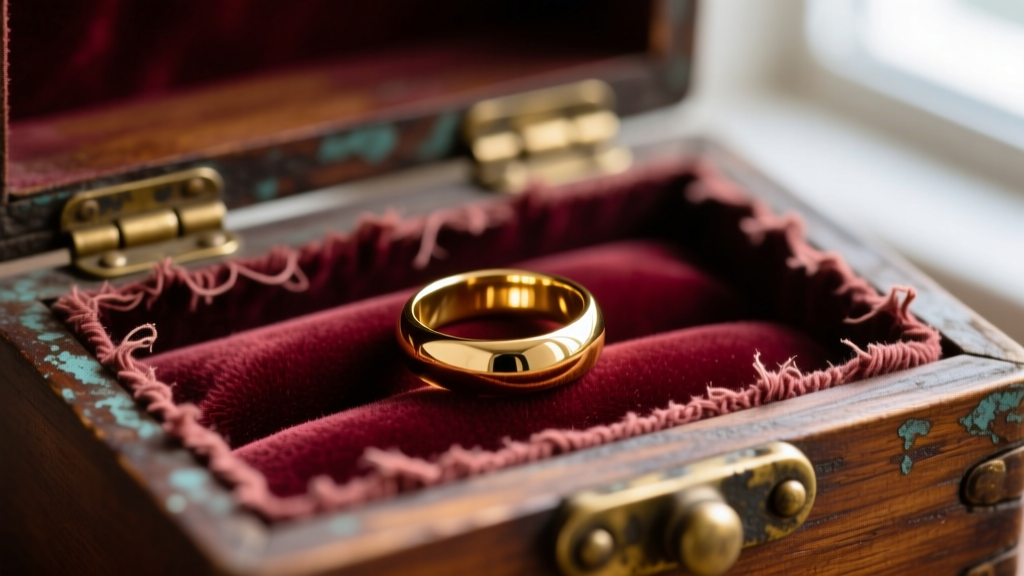
Antique boxes were lined with whatever was luxurious at the time: silk, wool felt, or cotton velvet. Over a century, these organic materials break down, creating a hostile microenvironment for your jewelry.
| Lining Material | Degradation Byproduct | Effect on 14k/18k Gold |
|---|---|---|
| Antique Silk | Acidic amino acids | Causes "gold blush" (pinkish surface corrosion) |
| Cotton Velvet | Trapped sulfur & moisture | Accelerates copper sulfide tarnish (dark brown/black) |
| Wool Felt | Sulfur gases | Rapid tarnishing of silver alloys in white/rose gold |
| Modern Pacific Cloth | None (Intercepts sulfur) | Zero tarnish; actively protects alloy metals |
Furthermore, the wooden carcass of the box itself poses a threat. Woods like oak and cedar emit acetic and formic acids as they age. The Gemological Institute of America (GIA) notes that improper storage environments are a leading cause of surface degradation in karat gold jewelry. If the interior wood is unsealed, these acids will off-gas directly into the velvet, transferring to your jewelry.
A Beginner’s Sourcing Guide: Estate Sales & Auctions
Finding the perfect antique gold jewelry box requires a keen eye and a strict inspection checklist. When evaluating a potential purchase, look past the gleaming exterior and focus on structural and chemical integrity.
- The Smell Test: Open the box and take a deep breath. A distinct musty, mildew, or sharp vinegar odor indicates active mold or severe acid off-gassing from the wood. This requires a complete, gut-level restoration.
- Hardware Functionality: Check the escutcheon (keyhole cover) and hinges. Are they original? Replacement hinges from the 1970s will often use modern steel that rusts, whereas original 19th-century hinges will be brass or bronze.
- Joint Integrity: Look for hand-cut dovetail joints on the wooden carcase. Machine-cut dovetails or simple butt joints glued together indicate a later, lower-quality reproduction.
Pricing Tiers in the 2026 Market
Depending on condition and provenance, pricing varies wildly. "Project boxes" with missing ormolu mounts and shredded silk linings can be found for $50 to $150. Intact, high-quality Victorian boxes with functional locks and pristine (but unsafe) original linings typically range from $300 to $800. Documented pieces from legendary houses like Cartier, Fabergé, or Asprey easily command $5,000 to $50,000+ at auction.
The Restoration Protocol: Making It Safe for Gold Storage
Once you have acquired your box, you must make it chemically inert before introducing your 14k or 18k gold pieces. This process requires patience and archival-grade materials.
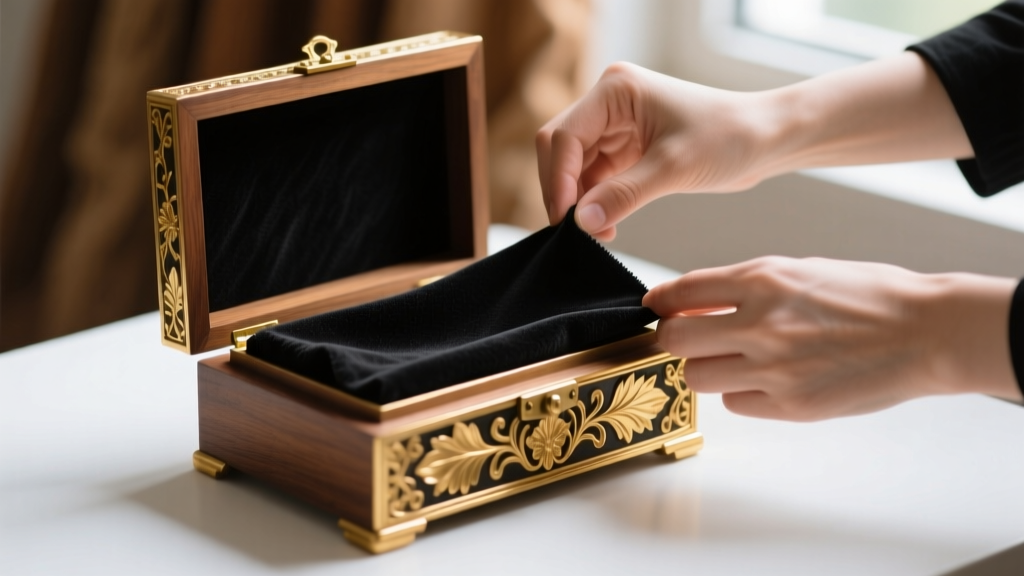
Step 1: Safe Lining Removal
Use a flexible steel spatula to gently lift the old velvet and silk. Avoid using harsh chemical solvents like acetone or paint thinner to remove the old glue, as these vapors can easily strip the delicate interior gold-wash or exterior gold-leaf. Instead, use a mild, water-based adhesive remover, applying it sparingly with a cotton swab.
Step 2: Sealing the Wood Carcass
This is the most crucial step for gold preservation. You must seal the raw wood to trap acetic and formic acids. Apply two thin coats of dewaxed shellac (such as Zinsser Bullseye) to the interior wooden compartments. Shellac is a historically accurate, natural resin that creates an impermeable vapor barrier without emitting harmful modern plasticizers.
Step 3: Archival Re-Lining
Never re-line an antique box with standard craft felt or cheap velvet. Instead, invest in Zenith Pacific Silver Cloth or an archival, acid-free suedette. Pacific cloth is woven with microscopic silver particles that act as a sacrificial anode, intercepting and neutralizing sulfur gases in the air before they can reach the copper and silver alloys in your gold jewelry. Use a pH-neutral, double-sided archival tape to secure the fabric to the sealed wood.
Ongoing Maintenance and Display
An antique gold jewelry box is a living artifact that requires specific environmental controls. To maintain both the box and the gold inside, follow these strict display rules:
Never place an antique gold-leaf or ormolu box in direct sunlight. UV radiation will not only fade your newly installed archival lining but will also cause the wood carcass to expand and contract, eventually cracking the rigid gold-leaf finish.
For humidity control, hide small, rechargeable silica gel canisters in the lower, unused compartments of the box. This keeps the ambient relative humidity below 45%, the threshold at which moisture accelerates alloy tarnishing. Finally, when dusting the exterior gold mounts, use only a soft, untreated microfiber cloth. Never apply metal polishes like Brasso or Tarn-X to antique ormolu or gold-leaf; these abrasive chemicals will strip the historical finish down to the base bronze in seconds, permanently destroying the piece's value and aesthetic.
By understanding the material science behind these beautiful artifacts, you can confidently use an antique gold jewelry box as a safe, stunning, and historically rich home for your most precious gold jewelry.


