Decoding Numbers on Gold Jewelry: A Hallmark Troubleshooting Guide
Confused by stamps? Learn how to decode numbers on gold jewelry, troubleshoot missing hallmarks, and verify karat purity like a professional appraiser.

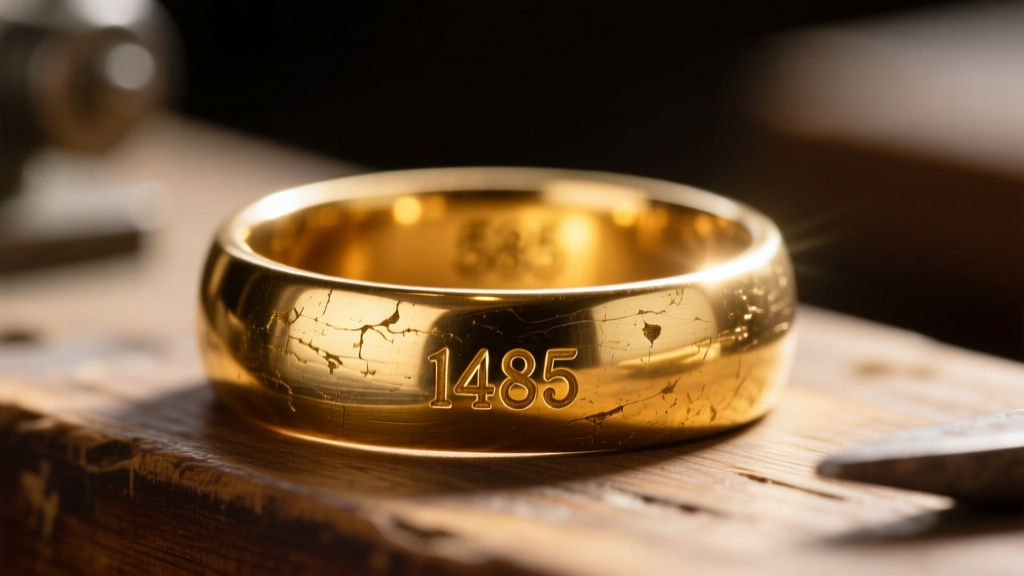
The Mystery of Hallmarks: Why Numbers on Gold Jewelry Matter
When you inspect a pre-owned or inherited piece of gold jewelry, the tiny stamps hidden inside the shank or near the clasp can feel like a secret code. These numbers on gold jewelry are not random; they are legally mandated hallmarks that indicate the precious metal purity of the piece. However, misinformation, wear and tear, and international variations often turn these stamps into a source of confusion rather than clarity.
As a jewelry appraiser, I frequently encounter clients who are panicked because their '14k' ring has no stamp, or because they found conflicting numbers on a single chain. This troubleshooting guide will decode the most common numbers on gold jewelry, explain why stamps sometimes fail, and provide actionable steps to verify your gold's authenticity when the hallmarks don't make sense.
Decoding the Standard Karat and Millesimal Stamps
Before troubleshooting, you must understand the two primary numbering systems used globally to denote gold purity: the Karat system (predominant in the US and Canada) and the Millesimal Fineness system (used in Europe, Asia, and increasingly worldwide).
- 10k (417): 41.7% pure gold. The minimum standard to be legally sold as 'gold' in the United States.
- 14k (585): 58.5% pure gold. The most popular choice for everyday jewelry due to its balance of durability and rich color.
- 18k (750): 75.0% pure gold. Highly prized for fine jewelry and engagement rings; softer and more yellow than 14k.
- 22k (916): 91.6% pure gold. Common in Indian and Middle Eastern jewelry; very soft and easily scratched.
- 24k (999): 99.9% pure gold. Almost entirely pure, used mostly in bullion and specific cultural ceremonial pieces.
According to the Gemological Institute of America (GIA), the alloy metals mixed with pure gold (like copper, silver, and zinc) not only increase durability but also dictate the color of the gold, resulting in yellow, white, or rose gold. The purity numbers, however, remain identical regardless of the color.
Troubleshooting Common Stamp Problems
When the numbers on gold jewelry contradict your expectations or are completely absent, it is time to put on your troubleshooting hat. Here are the most common issues and how to solve them.
Problem 1: The Stamp is Missing or Worn Away
The Scenario: You have a heavy, vintage yellow gold ring that tests as real gold, but the inside of the band is completely smooth with no numbers.
The Solution: Do not panic. A missing stamp does not automatically mean the jewelry is fake. There are three primary reasons for this:
- Age and Friction: Gold is a relatively soft metal. Decades of sliding a ring on and off a finger will naturally wear down a shallow stamp. If the shank has been resized or polished heavily, the stamp may have been buffed away entirely.
- Pre-1906 Manufacturing: In the US, the National Stamping Act was passed in 1906. Jewelry manufactured before this era was rarely stamped, as federal purity standards were not yet codified.
- International Origins: Some countries do not legally require purity stamps on domestic jewelry, relying instead on independent assay offices or verbal guarantees from the goldsmith.
Problem 2: Conflicting or Deceptive Stamps
The Scenario: You see '14k' stamped on a piece, but right next to it are the letters 'HGE', 'GP', or 'GF'.
The Solution: You are looking at gold-plated or gold-filled jewelry, not solid gold. Unscrupulous sellers often bank on buyers seeing the '14k' and stopping their investigation. According to the Federal Trade Commission Jewelry Guides, manufacturers must clearly indicate if a piece is not solid gold. Look for these modifiers:
- GP / GEP: Gold Plated / Gold Electroplated (a microscopic layer of gold over base metal).
- HGE: Heavy Gold Electroplate (slightly thicker than standard plating, but still not solid).
- GF: Gold Filled (a thick layer of gold mechanically bonded to a base metal core; much more durable than plating but still not solid throughout).
Problem 3: The '925' Stamp on Yellow Gold
The Scenario: You are examining a piece that looks exactly like yellow gold, but the stamp reads '925'.
The Solution: '925' is the millesimal stamp for Sterling Silver. If a yellow gold-looking piece is stamped 925, it is almost certainly gold vermeil or gold-plated sterling silver. The core of the jewelry is silver, and the yellow exterior is a gold plating. In rare cases, a manufacturing error at a casting house might result in a solid gold piece receiving a silver stamp, but you must assume it is plated silver until proven otherwise via acid or XRF testing.
International Hallmark Variations
One of the most frequent troubleshooting hurdles occurs when buyers purchase jewelry abroad. Different nations have different minimum karat laws and hallmarking systems. What is considered 'fake' or 'substandard' in one country might be perfectly legal and common in another.
| Country/Region | Minimum Legal Karat | Common Stamps | Notable Hallmark Features |
|---|---|---|---|
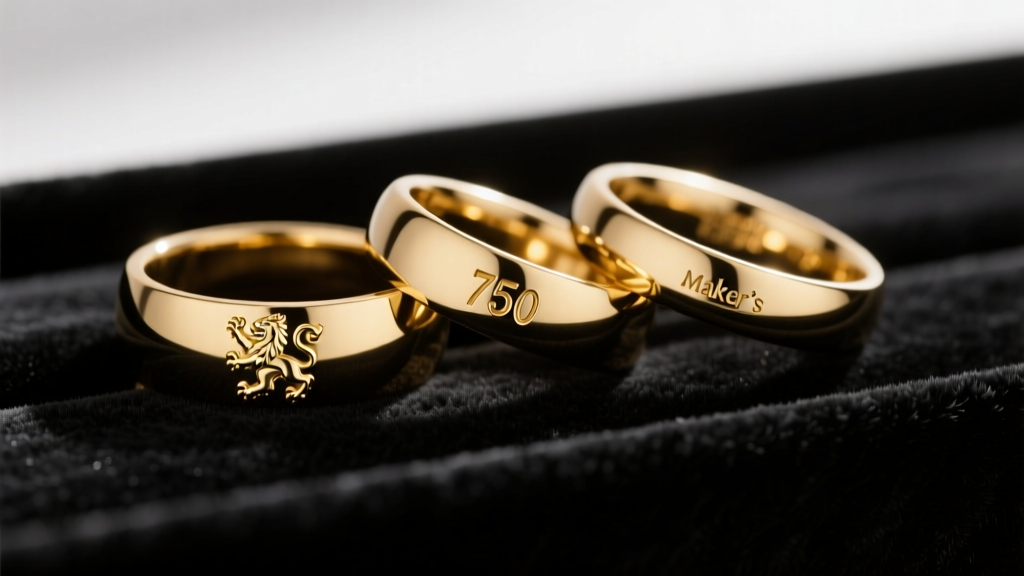
| United States | 10k | 10k, 14k, 18k | Requires a maker's mark alongside the purity stamp if a karat mark is used. |
| United Kingdom | 9k | 375, 585, 750 | Uses a complex assay system including a lion passant (for silver) or a crown (for gold). |
| Germany | 8k (333) | 333, 585, 750 | 333 (8k) is very common in vintage German jewelry but cannot be sold as 'gold' in the US. |
| India | 14k (historically 22k) | 916, 875 | The BIS (Bureau of Indian Standards) hallmark includes a 6-digit alphanumeric HUID code. |
If you find a piece stamped '333' or '375', do not assume it is fake. It is simply European 8k or 9k gold. However, be aware that US jewelers may refuse to resize or solder these lower-karat alloys because their melting points and structural properties differ significantly from standard 14k and 18k gold.
How to Verify Gold Authenticity When Stamps Fail
When the numbers on gold jewelry are missing, worn, or suspicious, you must rely on physical and chemical testing. Here is the professional troubleshooting hierarchy for verifying gold:
1. The Magnet Test (First Line of Defense)
Gold is diamagnetic, meaning it is not attracted to magnets. Take a strong neodymium magnet and hold it near the piece. If the jewelry snaps to the magnet, it contains a ferrous base metal (like iron or steel) and is absolutely not solid gold. Note: Some base metals like copper and brass are also non-magnetic, so passing the magnet test does not guarantee the piece is real gold—it only rules out steel.
2. Acid Testing (The Industry Standard)
Jewelers use nitric acid solutions calibrated to specific karats. To troubleshoot a suspicious stamp, the jeweler will rub the item on a touchstone to leave a streak of metal, then apply the acid.
- If the streak disappears immediately: The item is base metal or very low-karat gold.
- If the streak turns dark brown: It is likely 10k or 14k gold.
- If the streak remains bright and turns a reddish-orange: It is high-purity 18k or 22k gold.
- If it turns green: The item is gold-plated over brass or copper.
3. XRF Spectrometry (The Ultimate Truth)
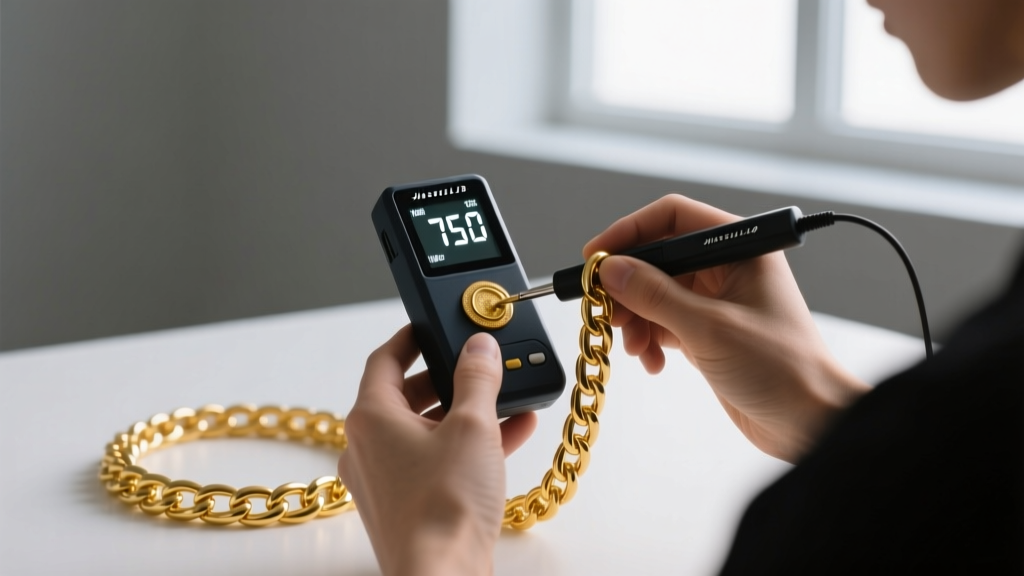
For high-value items, estate appraisals, or when non-destructive testing is required, X-Ray Fluorescence (XRF) is the gold standard. An XRF machine shoots X-rays into the metal and measures the fluorescent energy bouncing back, providing an exact elemental breakdown (e.g., 58.3% Gold, 20% Copper, 21.7% Silver). While XRF machines cost upwards of $20,000, most reputable pawn shops, estate jewelers, and precious metal refiners have them on-site and will often test a piece for free or a nominal fee.
Understanding FTC Tolerances and Legalities
When troubleshooting numbers on gold jewelry, it is vital to understand that a '14k' stamp does not mean the piece is exactly 58.5% pure gold. The Federal Trade Commission (FTC) allows for manufacturing tolerances.
For unsoldered items, the purity can be up to 3/1000ths of a karat below the stamp. For items with solder (like a chain with multiple soldered links or a ring with a soldered sizing joint), the tolerance widens to 7/1000ths of a karat. This means a 14k chain might legally test as slightly below 14k due to the lower-karat solder used to join the links. If your electronic tester reads 13.8k on a stamped 14k chain, the stamp is still legally accurate and the piece is genuine.
Final Thoughts on Gold Stamps
Numbers on gold jewelry are a vital first step in the appraisal process, but they are not infallible. Stamps can be faked, worn away, or misinterpreted across international borders. By understanding the difference between karat and millesimal marks, recognizing deceptive plating modifiers, and knowing when to escalate to acid or XRF testing, you can confidently troubleshoot any piece of gold jewelry that crosses your path. Always prioritize the physical properties of the metal over a tiny, easily forged stamp.


