The Beginner Guide to Metro Gold Jewelry Miami FL
Discover how to navigate the metro gold jewelry Miami FL market. Learn about karats, the Seybold Building, and pricing for solid Cuban links.

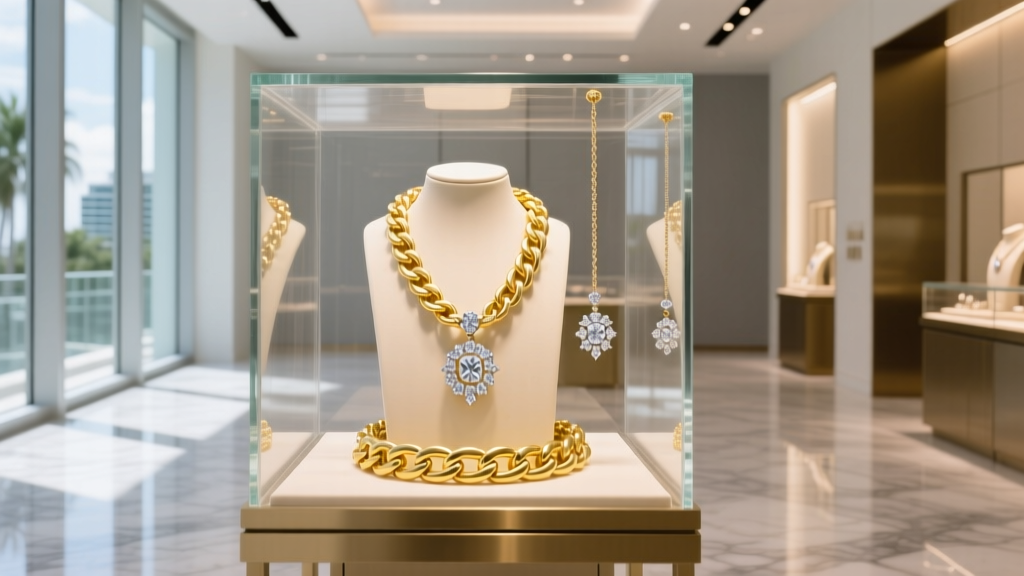
Miami is globally recognized as a premier hub for gold jewelry, famous for originating the iconic Miami Cuban link chain and fostering a vibrant, high-stakes precious metals market. For a beginner, stepping into the metro gold jewelry Miami FL scene can feel overwhelming. Between the towering wholesale hubs in Downtown and the bustling retail storefronts in Calle Ocho, knowing what to look for is the difference between securing a generational heirloom and overpaying for subpar craftsmanship. This guide breaks down the metallurgy, shopping districts, and pricing frameworks you need to navigate the Miami gold market confidently in 2026.
Understanding the Miami Gold Standard: Karats and Alloys
Unlike European markets that heavily favor 18k or 22k gold, the Miami jewelry scene is dominated by 14k and 10k gold. This is not a compromise on quality; it is a deliberate metallurgical choice driven by the local culture of heavy, everyday wear. Pure 24k gold is far too soft to support the weight of a thick Cuban link chain without stretching or snapping. By alloying gold with copper, silver, and zinc, jewelers create a durable metal capable of withstanding Miami's humid, active lifestyle.
| Karat | Purity | Durability | Best Miami Application |
|---|---|---|---|
| 10k (41.7%) | Low | Extremely High | Budget-friendly, heavy everyday chains |
| 14k (58.5%) | Medium | High | The undisputed standard for Miami Cubans |
| 18k (75.0%) | High | Medium | Luxury pieces, diamond-encrusted pendants |
| 22k (91.6%) | Very High | Low | Investment pieces, delicate wirework |
According to the Gemological Institute of America (GIA), the specific alloy mix also dictates the color. Miami jewelers often use a higher copper content in their 14k yellow gold mixes to achieve that signature warm, rich 'butter' yellow hue that contrasts beautifully with the city's vibrant fashion scene.
Navigating the Seybold Building and Downtown District
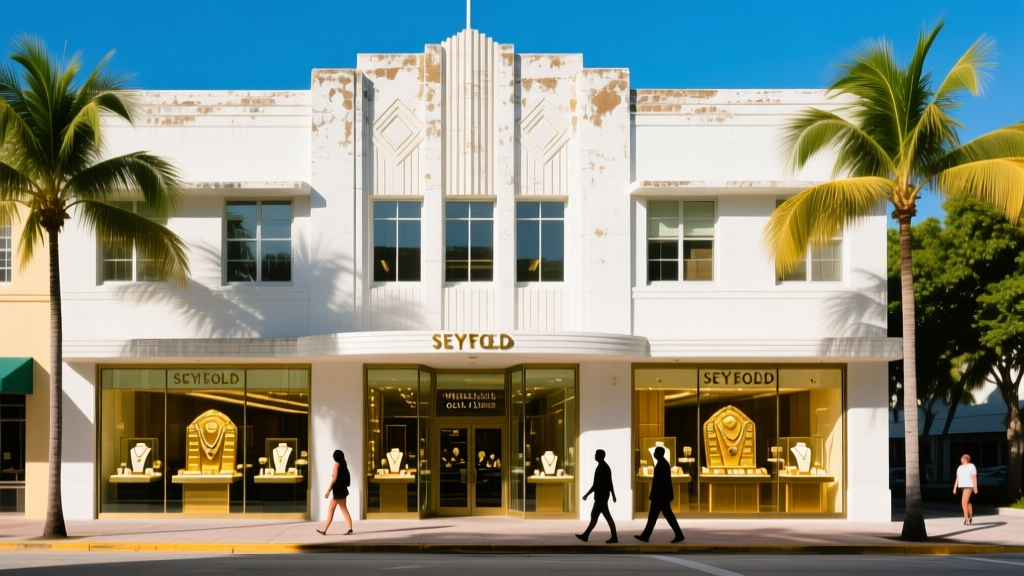
If you are serious about buying gold in Miami, you will eventually find yourself at the Seybold Building, located at 36 NE 1st Street. This historic Art Deco building is the epicenter of the local diamond and gold district. Walking into the Seybold Building as a beginner requires a specific approach.
Wholesale vs. Retail Dynamics
Many shops inside the Seybold Building operate on a wholesale model. This means they are accustomed to dealing with boutique owners buying in bulk. As a retail beginner, you must establish that you are a serious buyer. Do not ask for 'discounts' on the gold weight; instead, negotiate the premium (the labor and markup cost). Most reputable dealers here will weigh the piece on a digital scale right in front of you, calculate the exact melt value based on the daily spot price, and add a transparent premium.
Pro Tip: Always bring a form of ID. Many high-end wholesale jewelers in the Downtown Miami district require identification for first-time retail buyers due to strict local pawn and precious metals regulations.
Solid, Hollow, and Semi-Hollow: The Construction Trap
The most critical mistake beginners make in the metro gold jewelry Miami FL market is misunderstanding chain construction. A massive, 14mm Cuban link chain might look impressive, but its internal structure dictates its longevity and value.
- Solid Gold: The links are cast or machined from a solid piece of gold alloy. These are heavy, expensive, and can be repaired if they snap. A solid 10mm 24-inch Miami Cuban will weigh roughly 150 to 180 grams.
- Hollow Gold: Created using electroforming or a resin core that is later burned out. These chains look identical to solid ones but weigh a fraction of the price. They are notoriously fragile; a single drop on a tile floor can dent a hollow link permanently, and they are virtually impossible to repair.
- Semi-Hollow: A deceptive marketing term. These chains have a thin gold exterior with a lighter metal or hollow core. They offer the weight of a semi-heavy chain but lack the structural integrity of solid gold. Avoid these if you want a piece that retains intrinsic melt value.
How to Verify Authenticity in the Metro Area
While the vast majority of established Miami jewelers are highly reputable, the sheer volume of gold changing hands in South Florida attracts bad actors. The Federal Trade Commission (FTC) strictly regulates precious metal markings, requiring accurate karat stamps alongside a registered manufacturer's hallmark.
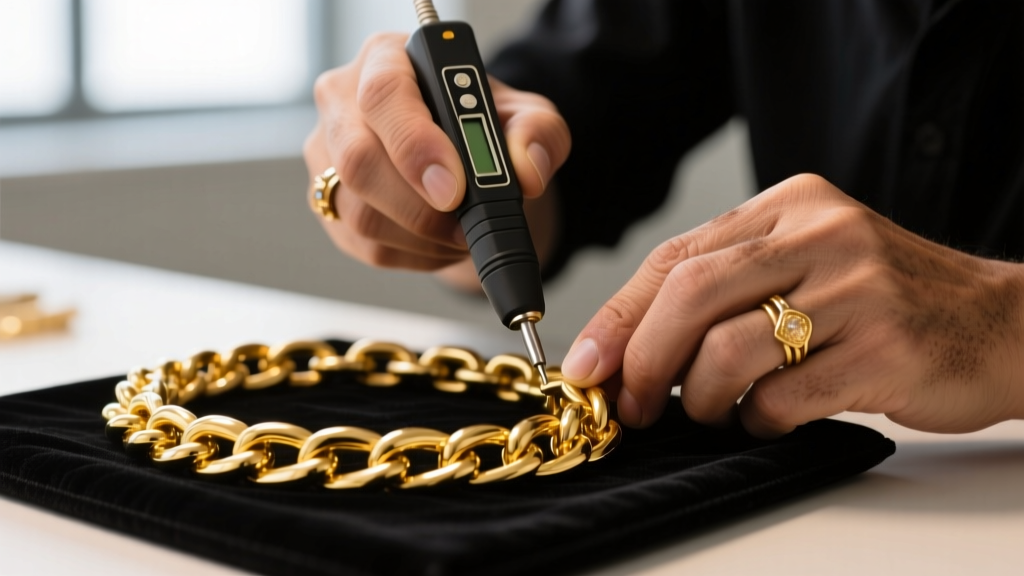
When evaluating a piece, look for the stamp (e.g., '14K', '585', '18K', '750') and the maker's mark. However, stamps can be faked. Reputable Miami jewelers will gladly test the gold in front of you using an XRF (X-ray Fluorescence) spectrometer. This non-destructive machine shoots X-rays into the metal and reads the exact elemental composition, verifying not just the karat, but detecting any hidden base metals like tungsten or brass inside the links. If a seller refuses an XRF or acid test, walk away immediately.
2026 Pricing Framework: Calculating the True Cost
Understanding how gold jewelry is priced will protect you from predatory markups. In 2026, with gold spot prices remaining historically high, the pricing formula for a custom or off-the-shelf Miami chain is straightforward:
Total Price = (Weight in Grams × Purity × Current Spot Price per Gram) + Labor Premium
Here is what you should expect regarding labor premiums in the Miami market:
- Standard Machine-Made Chains (Rope, Franco): 10% to 15% premium over melt value.
- Hand-Assembled Miami Cubans (14k): 20% to 35% premium. These require skilled artisans to file, align, and solder each link flat.
- Diamond-Cut and Iced Out Pieces: 50% to 200%+ premium, heavily dependent on the clarity, carat weight, and setting technique (prong vs. pave) of the diamonds.
By checking the daily gold spot price on your phone before walking into a Downtown Miami or Coral Gables jeweler, you can instantly calculate the baseline melt value of any piece. This knowledge transforms you from a vulnerable tourist into an educated collector, ensuring your investment in Miami's legendary gold culture is both authentic and fairly priced.


