Fred Gold Jewelry: A Technical Deep Dive Into Force 10
Explore the technical specifications, 18k gold alloys, and cable construction of Fred gold jewelry, focusing on the iconic Force 10 collection.

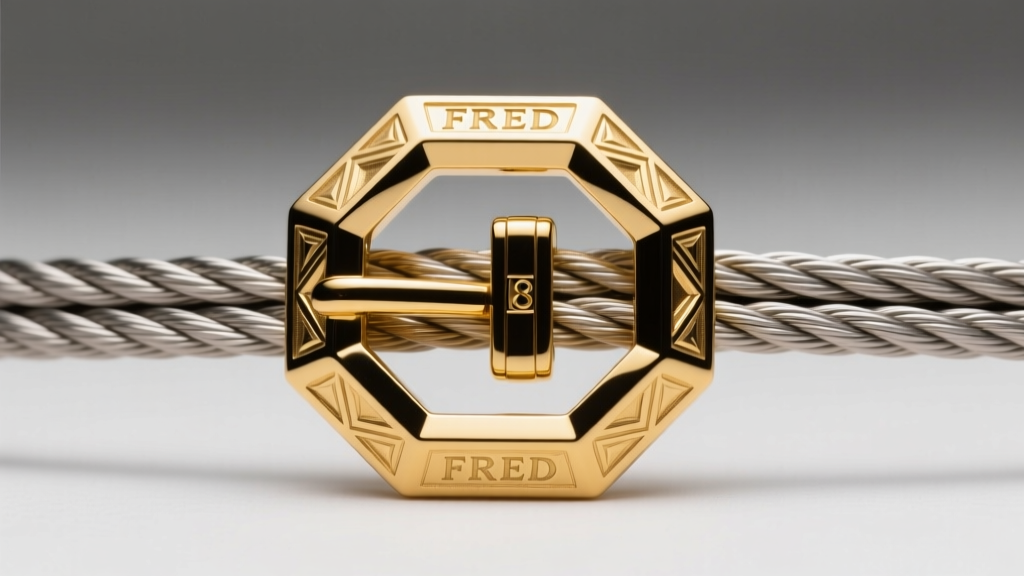
When evaluating luxury horology and fine jewelry, few maisons bridge the gap between nautical utility and high-end metallurgy as seamlessly as Fred. Founded in 1936 by Fred Samuel, the brand's acquisition by LVMH in 1995 propelled its technical capabilities. Today, Fred's position within the LVMH portfolio allows for uncompromising material sourcing. For collectors and horologists, understanding Fred gold jewelry requires looking past the aesthetic appeal of the iconic Force 10 collection and examining the precise metallurgical compositions, mechanical tolerances, and hallmarking standards that define the brand's manufacturing.
The Metallurgy of Fred's 18k Gold Alloys
Fred exclusively utilizes 18-karat gold (stamped 750) for its fine jewelry lines, adhering to strict French assay standards. Pure 24k gold is too malleable for the structural demands of interchangeable clasps and daily-wear cables. According to the Gemological Institute of America (GIA), 18k gold consists of 75% pure gold and 25% alloy metals. However, the exact proprietary ratios of these alloy metals dictate the color, tensile strength, and tarnish resistance of the final piece.
Yellow, White, and Rose Formulations
- Yellow Gold: Fred's yellow gold alloy typically balances silver and copper in a near 1:1 ratio alongside the 75% gold. This prevents the reddish tint seen in higher-copper alloys while maintaining a warm, classic hue that resists surface oxidation.
- Rose Gold: To achieve the brand's signature warm rose tone, the copper content is elevated to approximately 20%, with silver making up the remaining 5%. This higher copper content marginally increases the Vickers hardness of the alloy, making it highly resistant to micro-scratches on the polished bevels of the buckle.
- White Gold: Fred's white gold relies on a palladium and silver mix rather than nickel, ensuring hypoallergenic properties. The pieces are finished with a thick rhodium plating (typically 0.5 to 1.0 microns) to achieve a brilliant, mirror-like white finish.
Force 10 Architecture: Cable and Buckle Mechanics
The genius of the Fred Force 10 collection lies in its modularity. Inspired by sailing shackles and winch cables, the architecture is split into two distinct components: the rigid octagonal buckle and the flexible braided cable. The engineering challenge is creating a friction-fit mechanism that secures the cable without the need for tools, while withstanding lateral sheer forces.
The internal spring mechanism of the 18k gold buckle is machined to a tolerance of less than 0.05 millimeters. When the cable's gold-fitted end-caps are pressed into the buckle's receiving channels, a micro-spring engages a recessed groove in the cap. This audible click confirms the mechanical lock. The cables themselves are constructed from multi-strand 316L marine-grade stainless steel, chosen for its high molybdenum content which prevents pitting corrosion from saltwater and sweat.
Evolution of the Interchangeable Clasp System
The original 1966 design, conceptualized by Henri Samuel (Fred's son), relied on a simpler, purely friction-based fit. While elegant, early iterations were susceptible to accidental disengagement if subjected to sharp lateral impacts. Modern CNC (Computer Numerical Control) machining has allowed Fred to integrate a spring-loaded detent mechanism directly into the 18k gold housing.
This modern detent system is engineered to withstand up to 45 Newtons of lateral shear force before the mechanism slips, ensuring the bracelet remains secure during rigorous physical activity. The transition from hand-finished friction caps to CNC-milled detent grooves represents a significant leap in the brand's manufacturing precision, reducing the failure rate of the clasp system by an estimated 80% in stress-test environments.
Technical Specifications and Tolerances
| Component | Material Specification | Average Weight (Medium) | Tensile Yield / Hardness |
|---|---|---|---|
| Buckle Housing | 18k (750) Gold | 8.5g - 12.2g | ~130 HV (Vickers) |
| Cable Core | 316L Marine Steel | 14.0g | ~500 MPa |
| Cable End-Caps | 18k Gold / Polymer | 1.2g (per cap) | N/A |
| Pave Diamonds | VS Clarity, F-G Color | 0.15ct - 0.45ct | 10 Mohs |
Gem-Setting Techniques on the Octagonal Buckle
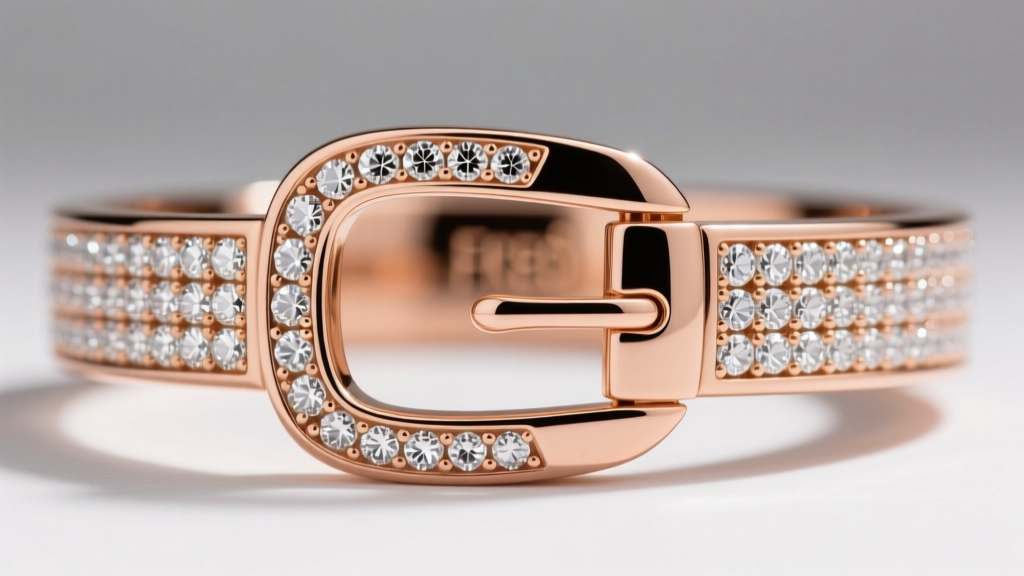
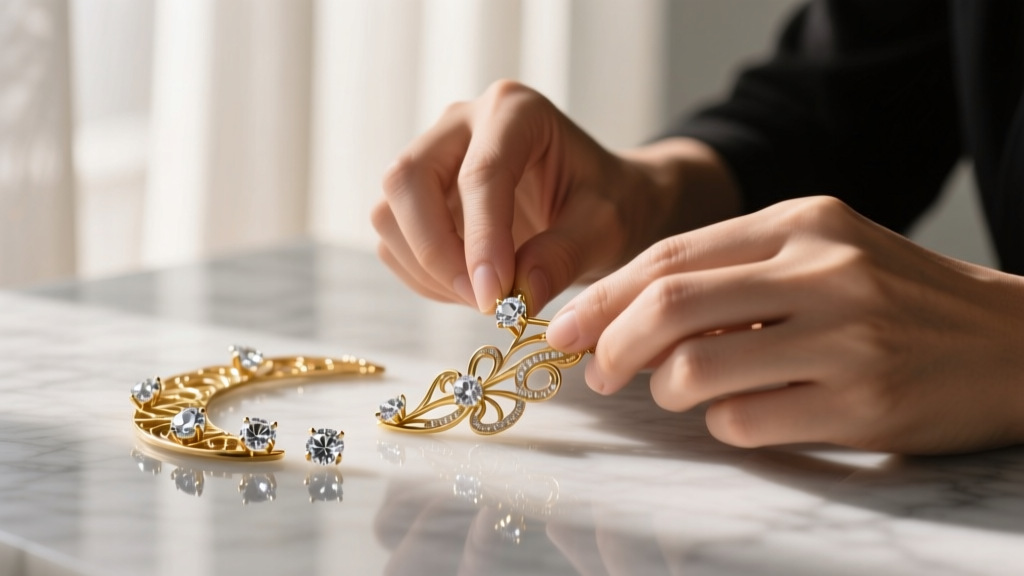
Fred employs master jewelers to execute the gem-setting on its gold buckles, primarily utilizing the serti pavé (pavé setting) and serti clos (bezel setting) techniques. For the diamond-encrusted Force 10 buckles, the brand typically selects melee diamonds ranging from 0.8mm to 1.2mm in diameter, strictly graded at F-G color and VS clarity to ensure maximum light return against the 18k gold backdrop.
In the pavé setting process, artisans use a graver to displace the 18k gold, forming microscopic beads that hold the diamonds in place. On white gold models, this presents a unique challenge: the rhodium plating must be carefully applied after the setting process. If the piece requires future re-polishing and re-rhodium plating, aggressive buffing can wear down these tiny gold beads, risking stone loss. Therefore, Fred recommends servicing diamond-set buckles exclusively at authorized ateliers.
Authentication Markers: Hallmarks and Serial Engravings
Because of the high secondary market value of Fred gold jewelry, authentication requires a technical understanding of French hallmarking laws. By law, any gold jewelry sold in France weighing over 3 grams must bear the Tête d'Aigle (Eagle Head) hallmark, which guarantees a minimum purity of 750 parts per thousand (18k).
Expert Tip: On genuine Fred buckles, the Eagle Head hallmark and the maker's mark (a stylized 'F' or the word 'FRED' within a specific geometric lozenge) are stamped using high-pressure dies, resulting in crisp, deep, and cleanly defined edges. Counterfeit pieces often use laser etching or low-pressure stamps, resulting in shallow, blurred, or doubled impressions.
Furthermore, modern Force 10 pieces feature a serialized laser engraving on the inner wall of the buckle or the interior of the gold end-caps. This serial number is registered in Fred's global database. The font used is a proprietary sans-serif typeface, etched to a depth of exactly 0.02mm to avoid compromising the structural integrity of the gold housing.
Maintenance and Micro-Abrasion Prevention
Maintaining mixed-material jewelry requires specific protocols. While 316L steel is highly corrosion-resistant, the interface where the steel cable meets the 18k gold end-caps can trap microscopic debris, sweat, and chlorides. Over time, this can lead to localized galvanic corrosion if not cleaned.
- Ultrasonic Warnings: Never place a diamond-paved Fred buckle in an ultrasonic cleaner. The high-frequency vibrations can loosen the micro-prongs holding the melee diamonds, especially if the piece has experienced previous thermal shock or physical impacts.
- Cable Care: The braided steel cables should be cleaned using a soft-bristled brush and a mild, non-ionic surfactant solution. Avoid harsh alkaline cleaners, which can degrade the synthetic polymer sheaths used in some of the colored cable variations.
- Polishing Limits: Because 18k gold is a finite layer on the surface of the buckle, aggressive polishing will round off the sharp, iconic octagonal bevels. Always request a light lapping polish rather than a heavy buff when servicing the gold components.
Understanding the precise engineering and metallurgical standards behind Fred gold jewelry transforms it from a mere fashion accessory into a masterclass of functional luxury design. Whether you are evaluating a vintage piece from the 1980s or a modern diamond-encrusted iteration, the technical markers of quality remain uncompromising.


