A Collector's Guide to Buying Authentic Gold Snake Jewelry
Discover what to look for when buying gold snake jewelry. Learn about karats, craftsmanship, pricing, and how to spot authentic vintage and modern pieces.

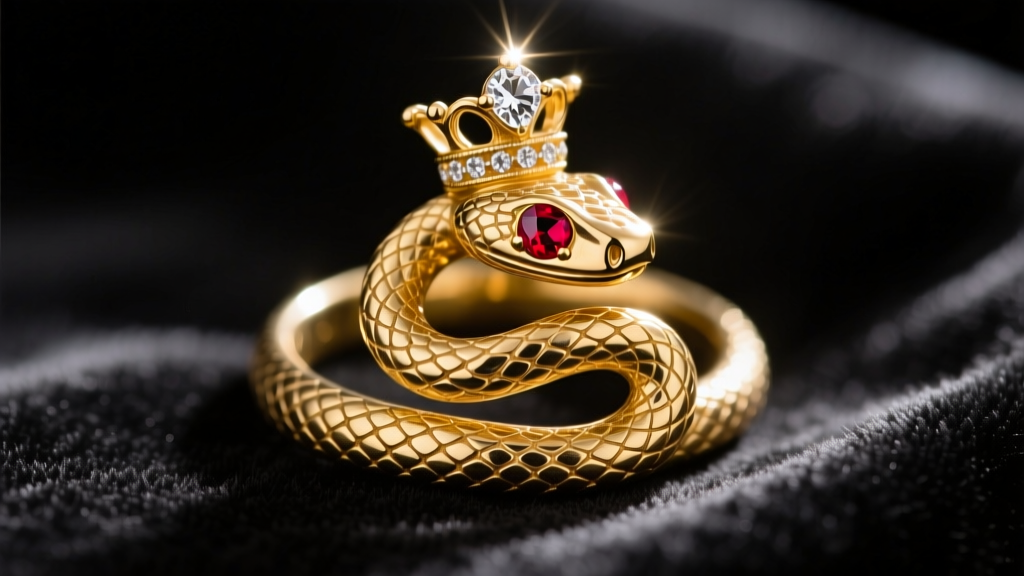
The serpent is one of the oldest and most enduring motifs in jewelry history, symbolizing eternity, rebirth, and undying love. From the ancient Egyptian Ouroboros to Queen Victoria’s iconic emerald-studded engagement ring, the snake has slithered through every major jewelry era. Today, gold snake jewelry remains a highly coveted category for collectors and everyday wearers alike. However, navigating the market requires a discerning eye for metallurgy, articulation, and historical accuracy.
Whether you are hunting for a flexible Victorian bracelet or a sleek, modern 14k gold serpent ring, this comprehensive buying guide will equip you with the technical knowledge needed to evaluate gold snake jewelry with absolute confidence.
The Anatomy of Gold Snake Jewelry: What to Look For
When evaluating any serpent-themed piece, you must break the design down into three distinct anatomical zones: the head, the body, and the tail. Each section presents unique challenges for the goldsmith and offers specific clues regarding the piece's quality and authenticity.
The Head and Gemstone Settings
The head is the focal point of the piece. High-quality gold snake jewelry features a head that is either hand-carved from wax before casting or meticulously fabricated from sheet gold. Look for precise scale texturing that doesn't look 'melted' or muddy—a common flaw in mass-produced cast pieces. If the snake features gemstone eyes (typically rubies, sapphires, or diamonds), check the settings. Antique pieces will often feature rub-over or gypsy settings, while modern iterations may use micro-prong or pavé techniques. Ensure the gemstones sit flush with the gold to prevent snagging on fabrics.
The Body and Tapering
The body should exhibit a natural, organic taper from head to tail. In rigid rings or bangles, the shank should be comfortably rounded on the interior. In flexible pieces, the tapering must be mathematically precise to allow the snake to coil naturally without kinking.
Karat Gold Selection for Serpent Designs
Not all gold is created equal, especially when it comes to the structural demands of animal motifs. According to the Gemological Institute of America (GIA), the alloy mix in gold dramatically affects its tensile strength and malleability. For gold snake jewelry, the karat weight dictates both the durability of the scales and the longevity of the articulation.
| Karat | Gold Purity | Durability & Use Case | Best For |
|---|---|---|---|
| 10k Gold | 41.7% | Extremely hard, highly scratch-resistant, but lacks the rich color and prestige desired by collectors. | Everyday wear rings, budget-friendly modern snake bands. |
| 14k Gold | 58.3% | The ideal balance of durability and color. Holds intricate scale detailing well and resists bending in flexible bracelets. | Articulated bracelets, daily-wear rings, and modern statement pieces. |
| 18k Gold | 75.0% | Rich, warm color with moderate softness. Excellent for detailed casting but requires careful wear to prevent scale compression. | High-end vintage pieces, luxury designer serpents (e.g., Bvlgari), and heirloom rings. |
| 22k/24k Gold | 91.6% - 99.9% | Too soft for complex articulation or thin scale work. Prone to warping and losing structural integrity over time. | Heavy, rigid Middle Eastern or Asian Ouroboros pendants; not recommended for rings or bracelets. |
Articulation and Movement: The Mark of Master Craftsmanship
The true hallmark of exceptional gold snake jewelry lies in its articulation—how the metal mimics the fluid, slithering movement of a living reptile. There are three primary methods used to achieve this flexibility:
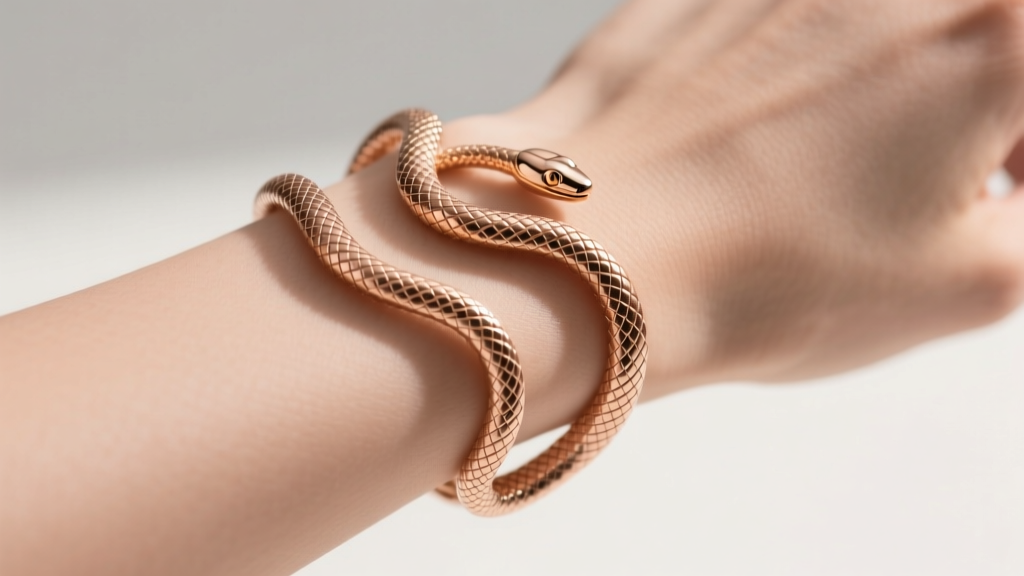
- Tube Hinges: Common in Victorian and Edwardian bracelets, this method uses tiny gold tubes riveted together. It allows for multidirectional movement but is highly susceptible to wear. When buying vintage, check for 'play' or looseness in the hinges, which indicates the need for costly restoration.
- Interlocking Scales (Link-by-Link): Each scale is a separate cast or stamped link that hooks into the next. This provides a heavier, more luxurious drape. The links must be perfectly calibrated; if they are too tight, the bracelet will be stiff; if too loose, it will pinch the skin and hair.
- Woven Mesh (Snake Chain): A continuous, flexible tube of tightly wound gold wire. While less 'scaly' in appearance, it offers unparalleled fluidity. Inspect the mesh for any kinks or crushed sections, as snake chain is notoriously difficult to repair once deformed.
The Drape Test: Always ask to see a video of a flexible snake bracelet draped over the seller's hand. It should pool and coil under its own weight like liquid metal, without any rigid 'hinge lines' breaking the illusion of a continuous body.
Vintage vs. Modern: Navigating the Market
The serpent motif has experienced several massive revivals, and knowing the hallmarks of each era is critical for authentication and valuation. The Victoria and Albert Museum notes that Queen Victoria’s serpent engagement ring sparked a massive trend in the 1840s, making Victorian snake rings some of the most heavily counterfeited items on the antique market.
Identifying True Antique Pieces
To authenticate a Victorian or Art Nouveau gold snake, examine the clasp and the hallmarks. According to the educational archives at Lang Antiques, early snake bracelets utilized simple C-clasps or push-in tube clasps. By the Retro period (1930s-1940s), the tongue-and-groove box clasp with a figure-eight safety catch became the standard for heavy gold serpents. If a piece claiming to be from 1880 features a modern lobster clasp or a laser-engraved '14k' stamp (rather than a struck maker's mark), proceed with extreme caution.
Modern Designer Serpents
In the contemporary market, brands like Bvlgari (with their Serpenti line) and David Yurman dominate the luxury space. When buying modern gold snake jewelry on the secondary market, demand original boxes, certificates of authenticity, and high-resolution macro photos of the brand's specific serial number engravings, usually hidden on the underside of the snake's head or tail.
Pricing Framework and Valuation Metrics
As we navigate the 2026 vintage and estate jewelry market, the premium for fully articulated, high-karat Victorian serpents has surged. However, pricing gold snake jewelry requires looking beyond mere scrap metal weight. Use this framework to evaluate a piece's asking price:
- Base Melt Value: Calculate the gram weight multiplied by the current daily gold spot price for the specific karat. This is the absolute floor price.
- Articulation Premium: Add a 40% to 150% premium for complex, unbroken articulation. Hand-assembled link-by-link scales command the highest tier.
- Gemstone Value: Original, untreated cabochon rubies or emeralds in the head add significant value. Replaced or synthetic stones (common in restored Victorian pieces) will lower the collector premium.
- Provenance and Era: Documented Victorian or Art Nouveau pieces carry a 200%+ historical premium over unmarked, mid-century reproduction pieces.
Sizing, Fit, and Wearability Considerations
Snake jewelry presents unique ergonomic challenges. Because the head of a snake ring is often wide and flat, it can spin on the finger or feel top-heavy. When sizing a gold snake ring, consider going up a quarter-size to accommodate the wider shank, or look for pieces that feature a 'euro-shank' (a squared-off bottom) which helps keep the heavy snake head centered on the finger.
For bracelets, ensure the tongue-and-groove clasp snaps in with a distinct, audible click. The figure-eight safety wire must have enough tension to snap securely over the pin; if the wire is stretched out, the heavy gold bracelet is at high risk of slipping off the wrist and being lost. Always factor in the cost of a jeweler tightening or replacing the safety catch when negotiating the final purchase price of a vintage gold snake bracelet.
By understanding the intricate balance of karat durability, historical articulation methods, and structural anatomy, you can confidently acquire gold snake jewelry that is not only a stunning aesthetic statement but a sound, enduring investment.


