The Best Way to Clean Gold Jewelry: A Karat-by-Karat Guide
Discover the best way to clean gold jewelry based on karat purity. Expert tips for 10k, 14k, 18k, and 24k gold to restore shine safely.

The Chemistry of Gold Tarnish: Why Your Jewelry Loses Shine
Pure gold is virtually indestructible and completely immune to tarnish. However, the gold jewelry sitting in your collection is rarely pure. To achieve the durability required for daily wear, gold is alloyed with metals like copper, silver, zinc, and nickel. It is these secondary metals—not the gold itself—that react with environmental factors to create dullness, discoloration, and tarnish. Understanding this metallurgical reality is the first step in determining the best way to clean gold jewelry without inadvertently damaging the alloy matrix.
When copper and silver alloys are exposed to sulfur compounds in the air, or to chlorine in tap water and swimming pools, they undergo a chemical reaction that forms a microscopic layer of sulfide or chloride on the surface. This layer absorbs light rather than reflecting it, resulting in the loss of that signature gold luster. According to the Gemological Institute of America (GIA), the lower the karat weight, the higher the percentage of these reactive base metals, meaning 10k and 14k gold will inherently require more frequent and targeted cleaning than 22k or 24k gold.
The Universal Soap Soak: The Gold Standard for Cleaning
While there are countless DIY hacks circulating online—ranging from baking soda pastes to toothpaste scrubs—professional jewelers universally condemn these abrasive methods. Baking soda has a Mohs hardness of 2.5, which is soft enough not to scratch pure gold, but when mixed into a paste, it can easily create micro-scratches on high-polish alloy finishes and trap residue in intricate filigree work.
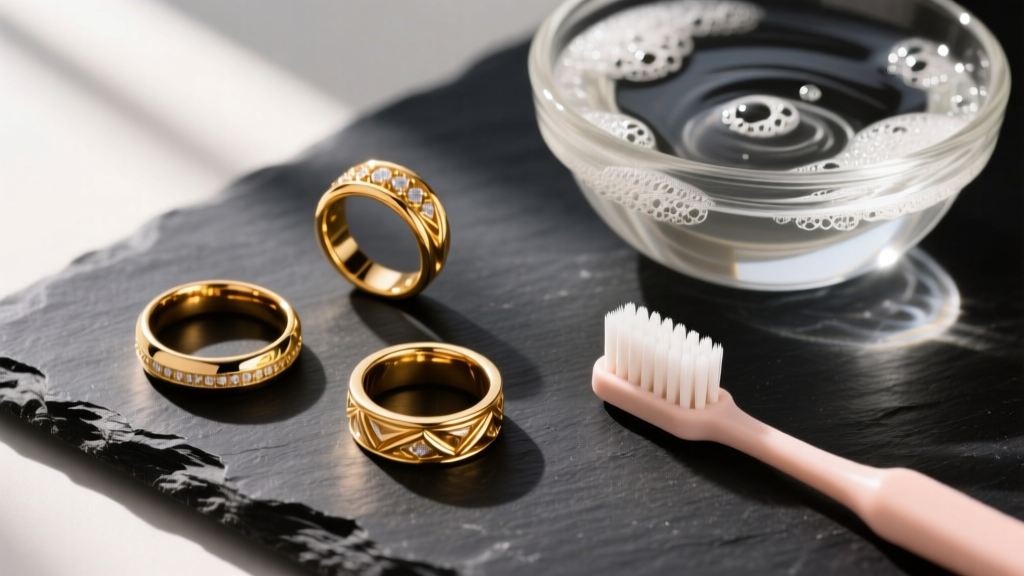
The undisputed best way to clean gold jewelry safely at home relies on a simple, pH-neutral surfactant bath. Here is the exact protocol used by high-end jewelry conservators:
Step-by-Step Execution
- The Solution: Fill a glass or ceramic bowl (never metal, which can cause galvanic reactions) with lukewarm water heated to exactly 90°F–100°F. Add three drops of a basic, lotion-free liquid dish soap. Avoid soaps with added moisturizers or citrus degreasers, as these can leave a filmy residue or react with copper alloys.
- The Soak: Submerge your solid gold jewelry completely. Allow it to soak for 15 to 20 minutes. This gives the surfactant time to break down the molecular bonds of body oils, lotions, and environmental grime trapped under prongs and within chain links.
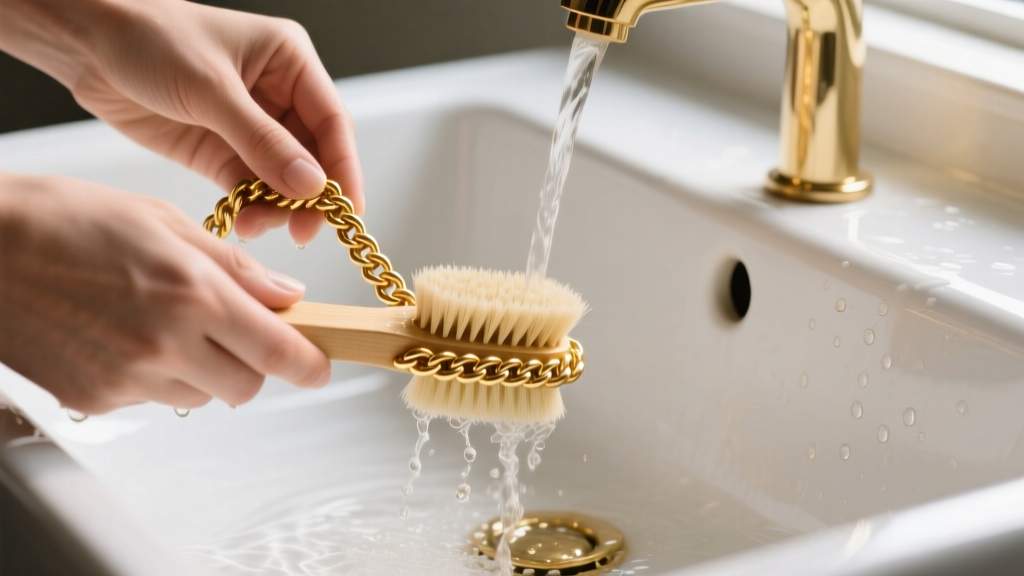
- The Agitation: Using an extra-soft baby toothbrush (bristles no thicker than 0.12mm), gently brush the jewelry. Focus on the back of settings and the interior of rings where dead skin cells and soap scum accumulate. Always brush in the direction of the metal's grain or polish lines.
- The Rinse: Rinse thoroughly under a gentle stream of lukewarm tap water. Ensure the drain is securely plugged.
- The Dry: Pat dry with a lint-free microfiber cloth. Avoid paper towels or tissues, as the wood pulp fibers can leave microscopic scratches on highly polished 18k and 22k gold surfaces.
Karat-Specific Cleaning Protocols and Vulnerabilities
Not all gold is created equal. The karat system dictates the ratio of pure gold to alloy metals, fundamentally changing how the piece reacts to cleaning agents and environmental stressors. Below is a structural breakdown of how to approach different purities.
| Karat | Gold Purity | Primary Alloys | Tarnish Risk | Cleaning Frequency | Special Considerations |
|---|---|---|---|---|---|
| 10k | 41.7% | Copper, Silver, Zinc | High | Bi-weekly | Highly prone to copper oxidation; requires regular polishing to remove dark sulfide layers. |
| 14k | 58.3% | Copper, Silver, Zinc | Moderate | Monthly | The industry standard for durability. Tolerates gentle ultrasonic cleaning well if no porous gems are present. |
| 18k | 75.0% | Copper, Silver, Palladium | Low | Bi-monthly | Sooser metal lattice; scratches easily. Avoid abrasive cloths. Rose gold variants rely heavily on copper and may darken intentionally over time. |
| 22k | 91.6% | Silver, Copper | Very Low | Quarterly | Very soft. Prone to bending and deep scratching. Clean only with a soft cloth and mild soap; never use mechanical brushes. |
| 24k | 99.9% | None | None | As needed | Will not tarnish. Smudges and fingerprints are the only issues. Wipe with a clean microfiber cloth to restore shine. |
The Danger Zone: Chemicals That Destroy Gold Alloys
Knowing what not to use is just as critical as knowing the best way to clean gold jewelry. Certain common household chemicals can cause catastrophic, irreversible damage to gold alloys through a process known as stress corrosion cracking.
Expert Warning: Never wear gold jewelry in a chlorinated swimming pool or hot tub. Chlorine reacts with the copper and silver alloys in 14k and 18k gold to form gold chloride and copper chloride. This weakens the crystalline structure of the metal, leading to microscopic fracturing that can cause prongs to snap and chains to shatter under minimal tension.
Beyond chlorine, you must strictly avoid the following:
- Bleach (Sodium Hypochlorite): Causes rapid oxidation of base metals and can permanently pit the surface of the gold.
- Ammonia: While sometimes used in commercial jewelry dips, prolonged exposure to ammonia can degrade the structural integrity of lower-karat gold alloys and strip the rhodium plating off white gold pieces.
- Mercury: Found in older thermometers and certain fluorescent bulbs, mercury causes immediate amalgamation with gold. If your gold touches mercury, it will turn silvery-white and become brittle. This requires professional retorting to fix.
- Acetone / Nail Polish Remover: While acetone will not harm solid gold, it will destroy the adhesives used in pearl settings and can strip the protective lacquers sometimes applied to lower-karat gold to prevent tarnishing.
Exceptions to the Rule: Gold Plated, Filled, and Vermeil
The universal soap soak method is designed exclusively for solid gold. If your jewelry is gold-plated, gold-filled, or gold vermeil, the rules change dramatically. These pieces consist of a base metal (usually brass, copper, or sterling silver) coated with a microscopic layer of gold.
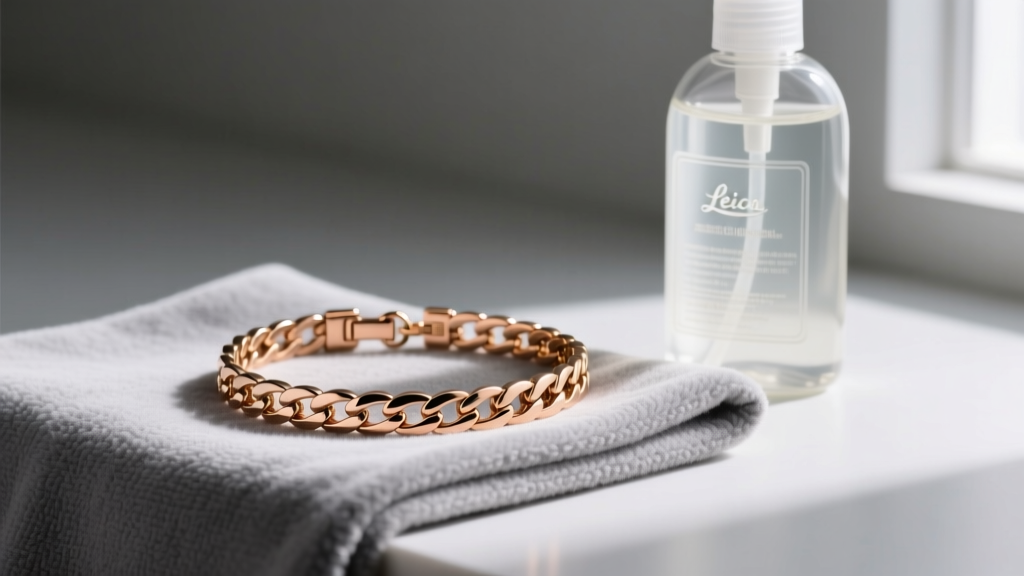
For gold-plated items (which typically have a gold layer less than 0.5 microns thick), soaking is strictly prohibited. Prolonged exposure to water can seep through microscopic pores in the plating, causing the base metal to oxidize and push the gold layer off from the inside out. The best way to clean gold jewelry of this type is to simply wipe it gently with a damp microfiber cloth after wear to remove acidic sweat and body oils, then immediately dry it. The Jewelers of America strongly advises against using any brushes or commercial liquid dips on plated jewelry, as the friction and chemicals will strip the gold layer entirely.
Advanced Maintenance: Ultrasonic and Steam Cleaners
For heavily soiled solid gold jewelry, particularly intricate 14k or 18k pieces with diamond accents, home ultrasonic cleaners offer a deeper clean. These devices use high-frequency sound waves (typically 40,000 Hz) to create microscopic cavitation bubbles in a cleaning solution. When these bubbles collapse against the jewelry, they generate localized shockwaves that blast away grime from areas a brush cannot reach.
However, ultrasonics are not a universal solution. You must never use an ultrasonic cleaner on gold jewelry set with emeralds, opals, pearls, turquoise, or tanzanite. The high-frequency vibrations can shatter these brittle or porous gems. Furthermore, if your gold jewelry features fracture-filled diamonds (diamonds that have been treated with glass-like resins to hide internal cracks), the heat and vibrations of an ultrasonic or steam cleaner will melt or cloud the filler, ruining the stone. Always consult the Federal Trade Commission Jewelry Guides regarding gemstone treatments before subjecting your pieces to mechanical cleaning.
Professional Polishing vs. DIY Buffing
Cleaning removes dirt; polishing removes metal. Every time you polish a piece of gold jewelry, you are abrading a microscopic layer of the surface to level out scratches and restore a mirror finish. Because 18k and 22k gold are exceptionally soft, aggressive DIY buffing with jeweler's rouge or motorized Dremel tools can easily round off sharp edges, thin out ring shanks, and obliterate intricate engraving.
For deep scratches, the best way to clean gold jewelry and restore its original geometry is to send it to a professional bench jeweler. They use a multi-step process involving tripoli (a mild abrasive) followed by red rouge (a fine polishing compound) on large, variable-speed buffing wheels. As a general rule, limit professional machine polishing to once every two to three years to preserve the structural mass and longevity of your solid gold heirlooms.


