How to Authenticate and Buy Handmade Gold Jewelry
Discover what to look for when buying handmade gold jewelry. Learn to verify karats, spot artisan hallmarks, and evaluate fair pricing in our expert guide.

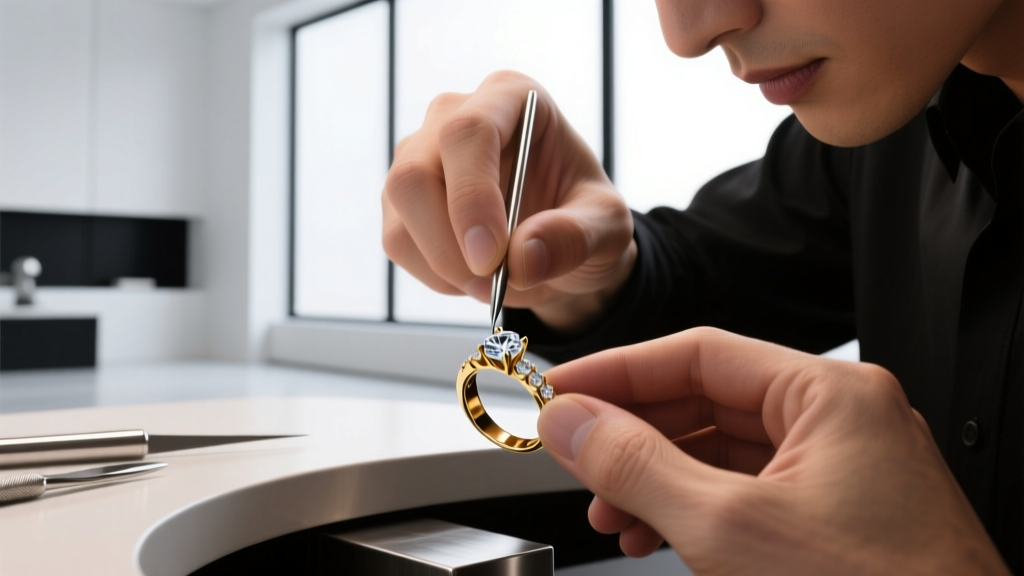
The Allure and Reality of Artisan Gold
When you invest in handmade gold jewelry, you are not merely purchasing a precious metal; you are acquiring a piece of wearable art shaped by human hands rather than mass-produced by CAD/CAM machines. True handmade pieces—fabricated from raw sheet, wire, and grain—possess a structural integrity and soul that cast jewelry simply cannot replicate. However, the unregulated nature of the artisan market means buyers must be vigilant. The term "handmade" is frequently hijacked by brands that cast 3D-printed waxes overseas and simply polish them domestically. This guide provides a rigorous, technical framework for evaluating, authenticating, and pricing genuine handmade gold pieces.
Decoding Karats: Which Gold Purity Suits Handmade Pieces?
According to the Gemological Institute of America, gold purity fundamentally dictates how a metal behaves under a jeweler's hammer and torch. While 14k gold dominates commercial markets for its durability, master artisans often prefer higher karats for specific traditional techniques. Understanding the Vickers Hardness (HV) of each alloy is critical when evaluating a maker's material choices.
| Karat | Purity | Vickers Hardness | Best Handmade Application |
|---|---|---|---|
| 14k | 58.3% | ~135 HV | Structural elements, prongs, everyday chains, and high-stress clasps. |
| 18k | 75.0% | ~125 HV | Intricate fabrication, engagement rings, heirloom pieces, and enameling. |
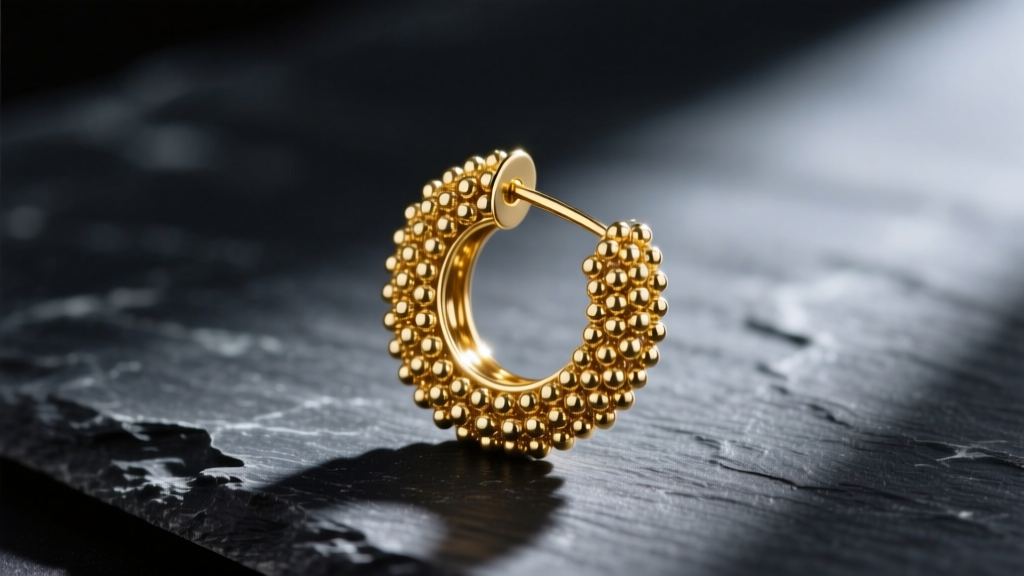
| 22k | 91.6% | ~90 HV | Granulation, repoussé, fold-forming, and traditional ethnic designs. |
| 24k | 99.9% | ~60 HV | Wire weaving, pure investment pieces (too soft for structural rings). |
If an artisan attempts to use 22k gold for a delicate micro-pavé setting or a high-stress spring ring clasp, consider it a red flag. A master jeweler matches the alloy's metallurgical properties to the structural demands of the design.
Hallmarks, Stamps, and Artisan Signatures
Authentication begins with the hallmark. The Federal Trade Commission Jewelry Guides mandate that any piece stamped with a karat mark must also bear the manufacturer's registered trademark or hallmark. In the realm of independent artisans, this translates to a unique maker's mark.

- The Quality Stamp: Look for 585 (14k), 750 (18k), or 916 (22k). European and high-end American artisans often prefer millesimal fineness stamps over fractional karat stamps for precision.
- The Maker's Mark: This is the artisan's signature, usually consisting of initials or a custom symbol inside a shield or cartouche. If a piece claims to be handmade but only bears a generic "18k" stamp with no maker's mark, its origins are highly questionable.
- Placement and Depth: Genuine hallmarks on fabricated jewelry are struck with a steel punch, resulting in crisp, deep, and slightly raised edges. Laser-engraved hallmarks, which appear flat and uniform, are often indicative of commercial casting houses.
Evaluating Craftsmanship: What Separates Masters from Amateurs
Inspecting the physical construction of the piece reveals the true skill level of the goldsmith. Handmade fabrication requires a deep understanding of metallurgy, specifically annealing and work-hardening.
Soldering and Sequential Joinery
Mass-produced cast jewelry often features weak, porous joints where components are simply fused together. A genuine handmade piece is constructed using sequential soldering. A master goldsmith will use hard solder (melting around 1490°F) for the initial structural joins, medium solder (1390°F) for secondary attachments, and easy solder (1325°F) for final sizing or repairs. Examine the seams under a loupe: they should be virtually invisible, with no pitting, discoloration, or excess solder blobs. If you see dark, oxidized pitting along a seam, the artisan failed to properly use flux or overheated the metal, compromising the joint's integrity.
Stone Setting in Soft Gold
Setting gemstones in 18k or 22k gold requires immense skill because the metal is softer and more prone to galling (tearing) under the pressure of a graver or pusher. Inspect bezels and prongs closely. The metal should be burnished smoothly against the stone's girdle without any tool marks, scratches, or gaps. If an artisan uses 22k gold for a bezel, they must perfectly anneal the metal right before pushing it over the stone; otherwise, the work-hardened gold will crack.
Pricing Framework: Are You Paying for Gold or the Maker?
One of the most common points of friction for buyers is the price tag on handmade gold jewelry. To evaluate fairness, you must deconstruct the pricing model. Artisan jewelry is not priced by the gram; it is priced by the hour.
The Artisan Pricing Formula:
(Melt Value) + (Labor Hours × Hourly Rate) + (Overhead/Margin Multiplier) = Retail Price
Let us break down a real-world example of a solid, handmade 18k yellow gold signet ring weighing 12 grams, requiring 15 hours of bench time:
- Melt Value: 12g × $65 (spot price) × 0.75 (purity) = $585
- Labor: 15 hours × $100/hr (standard master jeweler rate) = $1,500
- Base Cost: $2,085
- Retail Multiplier: Artisans typically apply a 1.5x to 2.0x multiplier to cover studio rent, insurance, tooling, and business profit. At 1.5x, the final retail price is $3,127.
If an independent jeweler offers a complex, heavy handmade 18k ring for $1,200, they are either working for below minimum wage, utilizing undocumented labor, or the piece is actually cast and hollowed out.
Red Flags When Shopping Independent Jewelers
Protect your investment by watching out for these common industry deceptions:
- "Hand-Assembled" vs. "Handmade": Hand-assembled means the jeweler bought pre-cast, mass-produced components (like a ring shank and a setting head) and soldered them together. True handmade means the metal was manipulated from a raw state.
- Disguising Porosity: Some sellers market the pitted, porous surface of poorly cast gold as a "rustic" or "organic" texture. Genuine handmade textures are deliberate, created with specific hammers, burs, or etching acids, and will feel intentional, not brittle.
- Inconsistent Wall Thickness: Use a caliper or visual inspection to check the inside of a ring band. Hand-forged bands often have a slight, deliberate taper or a perfectly uniform thickness, whereas cast bands often feature uneven, bulky areas where the CAD designer failed to optimize the model for casting shrinkage.
Final Verdict: Building an Artisan Collection
Buying handmade gold jewelry is an exercise in metallurgical appreciation and art patronage. By demanding crisp hallmarks, scrutinizing solder seams, understanding the structural limits of high-karat alloys, and respecting the mathematics of bench labor, you transition from a passive consumer to an informed collector. When you find a maker whose technical execution matches their artistic vision, you are securing a modern heirloom built to outlast the fleeting trends of commercial jewelry.


