What Cleans Gold Jewelry Best? Safe DIY & Pro Tips
Discover what cleans gold jewelry safely without damaging soft alloys or gemstones. Learn expert DIY methods, pro tips, and what harsh chemicals to avoid.

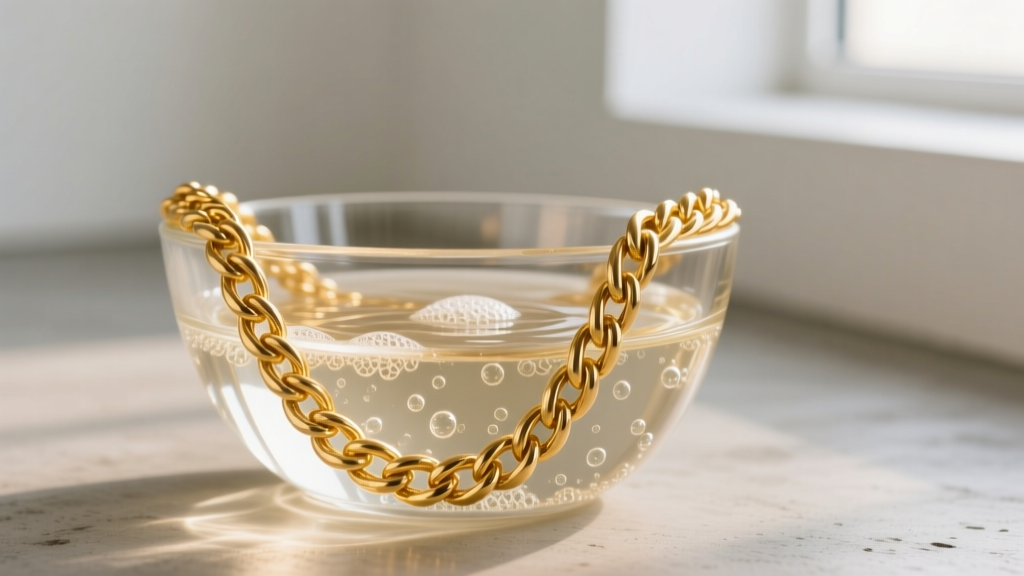
When figuring out what cleans gold jewelry effectively, it is crucial to understand that you are rarely cleaning pure gold. Instead, you are cleaning a complex metallic alloy and the delicate gemstones suspended within it. While pure 24-karat gold is virtually indestructible and immune to tarnish, the copper, silver, and zinc mixed into 10k, 14k, and 18k gold are highly reactive to environmental pollutants, cosmetics, and human sebum. Using the wrong cleaning agents can lead to irreversible stress corrosion cracking, stripped gemstone treatments, and micro-scratches that permanently dull your jewelry's luster.
In this comprehensive guide, we break down the exact chemical solutions, mechanical methods, and professional protocols required to safely restore your gold pieces, tailored specifically to their karat weight and gemstone settings.
The Science of Gold Tarnish and Dirt Accumulation
Before applying any liquid to your jewelry, you must understand the nature of the buildup. Gold jewelry dulls due to two primary factors: chemical tarnishing and physical film accumulation.
- Chemical Tarnish: The alloy metals in 10k (41.7% gold) and 14k (58.3% gold) react with sulfur and oxygen in the air, forming a microscopic layer of copper sulfate or silver sulfide on the surface.
- Physical Film: Daily wear exposes your rings and chains to lotions, dead skin cells, soap scum, and hard water minerals. This creates a physical barrier that blocks light from entering the pavilions of your gemstones, making diamonds look cloudy and gold look flat.
According to the Gemological Institute of America (GIA), the lower the karat weight, the higher the concentration of base metals, meaning 10k and 14k gold will tarnish significantly faster than 18k or 22k gold. Therefore, the cleaning solution you choose must be strong enough to lift physical grime but gentle enough not to accelerate the oxidation of the underlying alloys.
What Cleans Gold Jewelry Safely? (The Core Solutions)
When evaluating what cleans gold jewelry without causing microscopic damage, professional jewelers rely on two primary DIY methods. Both require precise temperature control and specific ratios.
1. The Surfactant Soak (Best for Everyday Grime)
Mild dish detergent is the gold standard for routine cleaning. Dish soaps contain non-ionic surfactants that break the surface tension of water, allowing it to penetrate the microscopic crevices of prongs and chain links.
- The Mix: Combine 1 cup of distilled lukewarm water with 3 to 4 drops of a mild, phosphate-free dish soap (like Dawn). Avoid tap water, as the calcium and magnesium in hard water will leave mineral spots on the gold.
- The Soak: Submerge the jewelry for exactly 15 to 20 minutes. Do not exceed 30 minutes, as prolonged exposure to moisture can weaken the adhesive in certain gemstone settings (like turquoise or opal doublets).
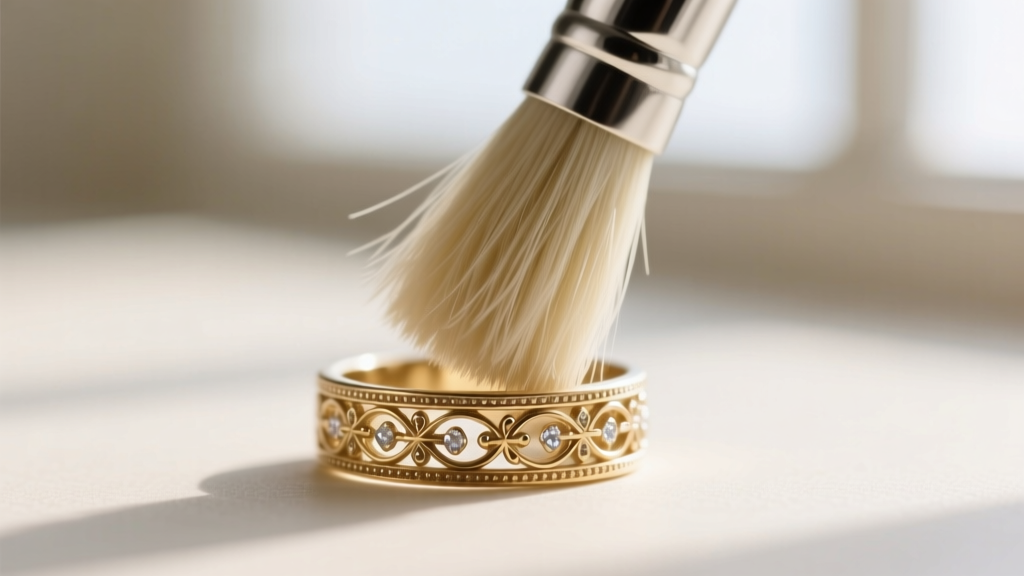
- The Agitation: Use an extra-soft baby toothbrush. Gently brush the back of the gemstones (the pavilion) where sebum accumulates. Never use a standard adult toothbrush, as the bristles are stiff enough to scratch 18k and 22k gold.
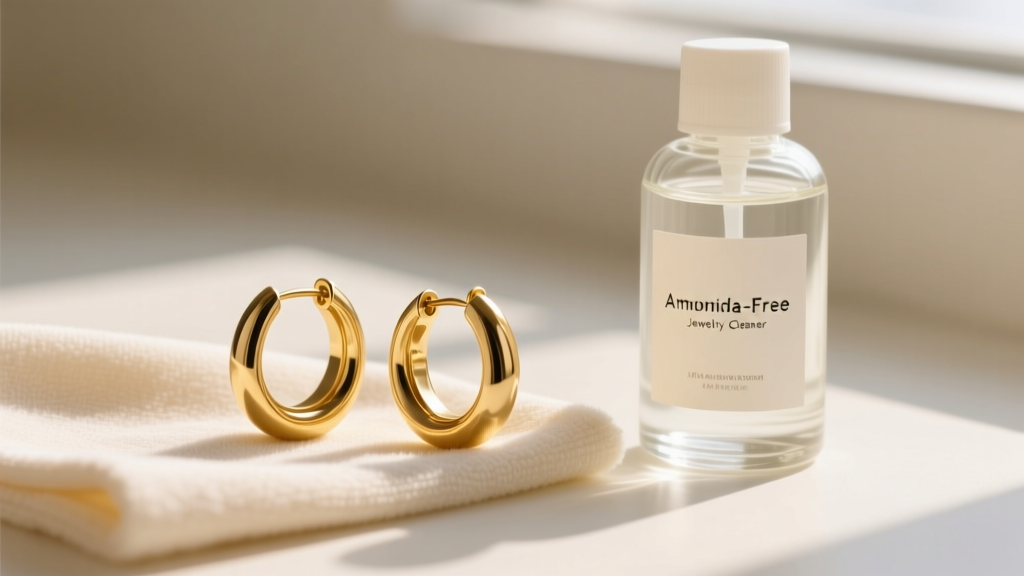
- The Rinse & Dry: Rinse under a gentle stream of distilled water and pat dry with a lint-free microfiber cloth.
2. The Ammonia Dip (Best for Heavy Tarnish & Diamonds)
Ammonia is a highly effective alkaline degreaser that can strip years of buildup from plain gold and diamond settings. However, it must be heavily diluted.
"Ammonia is a powerful tool for diamond and plain gold cleaning, but it is incredibly destructive to porous gemstones and treated diamonds. It should only be used as a targeted, infrequent deep-clean." — Jewelers of America Care Guidelines.
Mix one part clear household ammonia to six parts lukewarm distilled water. Submerge the piece for no more than 60 seconds. Remove, rinse thoroughly with distilled water, and dry immediately. Never use ammonia on pearls, emeralds, opals, or fracture-filled diamonds.
What to Avoid: Chemicals That Destroy Gold Alloys
Knowing what not to use is just as critical as knowing what cleans gold jewelry. Many popular internet 'hacks' actually cause severe metallurgical damage. Below is a breakdown of common household chemicals and their destructive effects on gold alloys.
| Chemical Agent | Effect on 10k/14k Gold | Effect on 18k/22k Gold | Gemstone Safety |
|---|---|---|---|
| Chlorine (Bleach/Pools) | Causes stress corrosion cracking; weakens prongs. | Discolors surface; creates irreversible pitting. | Highly destructive to all organic and porous stones. |
| Toothpaste | Leaves micro-scratches; dulls high-polish finishes. | Severely scratches soft 18k/22k surfaces. | Abrasives can scratch softer stones like tanzanite. |
| Baking Soda Paste | Alkaline corrosion; strips rhodium plating on white gold. | Creates a matte, scratched finish. | Traps grit in settings; damages pearl nacre. |
| Rubbing Alcohol | Safe for plain gold; dries out skin oils. | Safe for plain gold. | Strips the cedar oil from emeralds, revealing fractures. |
The most insidious of these is chlorine. When 14k gold is exposed to bleach or heavily chlorinated hot tubs, the chlorine reacts with the copper and zinc alloys to form metallic salts. This causes 'stress corrosion cracking,' where the prongs holding your diamonds become brittle and snap off without warning.
Cleaning Gold Jewelry with Gemstones: A Karat-by-Karat Guide
The answer to 'what cleans gold jewelry' changes drastically when gemstones are introduced. You must clean to the lowest common denominator of durability in the piece.
Durable Settings: Diamonds, Sapphires, and Rubies
These stones rank 8 to 10 on the Mohs hardness scale and possess no cleavage planes that are easily exploited by thermal shock. Jewelry featuring these stones set in 10k, 14k, or 18k gold can safely undergo the surfactant soak, the ammonia dip, and even ultrasonic cleaning. The primary concern here is ensuring the prongs are tight before using mechanical vibration.
Delicate Settings: Emeralds, Opals, Pearls, and Turquoise
These materials are highly porous or heavily treated. Emeralds are almost universally treated with cedar oil or synthetic resins to mask natural inclusions. Submerging an emerald ring in warm soapy water will draw the oil out of the stone, causing it to turn cloudy and white. Opals and pearls contain structural water; soaking them can cause crazing (internal cracking) or dissolve the silk thread they are strung on. For these pieces, the only safe method is to wipe the gold shank with a damp microfiber cloth, carefully avoiding the gemstone entirely.
Ultrasonic vs. Steam Cleaners: Are They Safe for Gold?
Modern at-home ultrasonic cleaners have become highly accessible, typically operating at frequencies between 40 kHz and 45 kHz. These devices use cavitation—creating millions of microscopic vacuum bubbles that implode against the jewelry—to blast dirt out of crevices that a toothbrush cannot reach.
When to use Ultrasonics: Plain 14k and 18k gold chains, wedding bands without stones, and diamond/sapphire tennis bracelets. Ultrasonics are phenomenal for removing the 'gray film' from the backs of diamond settings.
When to avoid Ultrasonics: Hollow gold jewelry (the vibrations can dent or shatter the thin metal), fracture-filled diamonds, and any stone with a hardness below 7 on the Mohs scale. Furthermore, never use an ultrasonic cleaner on white gold that is due for rhodium replating, as the vibration can accelerate the peeling of the remaining rhodium layer.
Steam cleaners, often seen in professional jewelry stores, use high-pressure, high-temperature steam to blow away debris. While highly effective for plain gold and diamonds, the sudden thermal shock can easily shatter emeralds, tanzanite, and tourmaline. Leave steam cleaning to the professionals who know how to assess a stone's internal fracture network before applying heat.
Pro Maintenance Schedule for Everyday Gold Pieces
To keep your gold jewelry looking pristine year-round, adopt this professional maintenance schedule:
- Daily: Wipe down rings and bracelets with a dry, clean microfiber cloth before bed to remove acidic sweat and lotions.
- Bi-Weekly: Perform the mild dish soap and distilled water soak for pieces worn daily, such as engagement rings and stud earrings.
- Bi-Annually: Take your primary gold pieces to a certified bench jeweler. They will inspect the prongs under a 10x loupe, check for stress corrosion cracking, and perform a professional ultrasonic clean and steam polish.
Ultimately, understanding what cleans gold jewelry safely is about respecting the metallurgy of the alloys and the geology of the gemstones. By avoiding harsh internet hacks and sticking to chemically sound, gentle surfactants, you will preserve the structural integrity and brilliance of your gold collection for generations.


