Whats Gold Filled Jewelry? A Budget & Value Guide
Discover what's gold filled jewelry, how it compares to solid gold and vermeil, and if it is worth your budget. Expert value assessment inside.

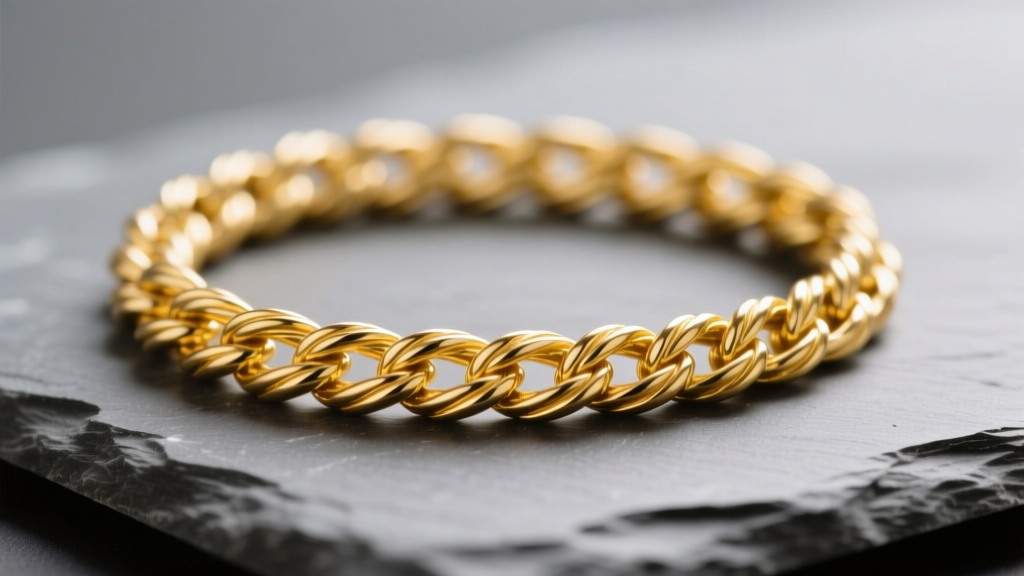
Navigating the gold jewelry market in 2026 requires a sharp eye for both metallurgy and marketing. When budget-conscious buyers ask, 'Whats gold filled jewelry?' they are usually trying to bridge the gap between the prohibitive cost of solid gold and the rapid degradation of cheap plating. As gold prices continue their historic climb, alternative gold materials have surged in popularity. However, not all alternatives are created equal. Understanding the precise manufacturing standards, failure modes, and true cost-per-wear of gold filled pieces is essential for making a financially sound jewelry investment.
The Metallurgical Reality: Whats Gold Filled Jewelry Exactly?
To understand the value proposition, we must first define the material. According to the Federal Trade Commission (FTC), for a piece to be legally stamped and sold as 'gold filled,' the gold layer must constitute at least 1/20th (or 5%) of the total weight of the item. This is not a superficial coating; it is a permanent mechanical bond.
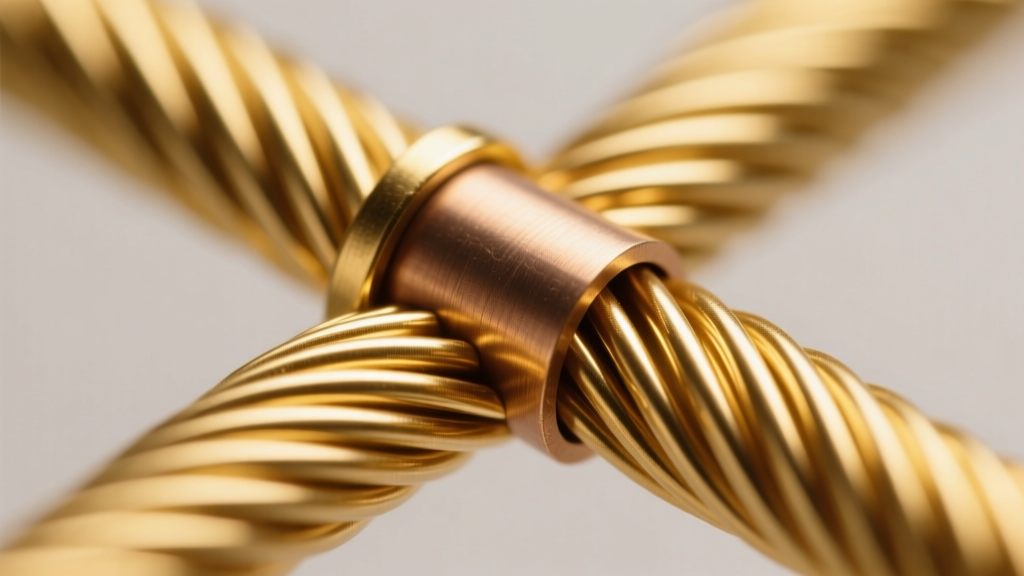
Unlike electroplating, which uses electrical currents to deposit a microscopic layer of gold onto a base metal, gold filled material is created through extreme heat and pressure. A thick sheet of karat gold (usually 12k or 14k) is physically bonded to a core of jeweler's brass or copper. This results in a gold layer that is typically between 15 to 25 microns thick—up to 100 times thicker than standard gold plating. Because the gold is mechanically forged into the brass core, it will not flake off or rub away under normal wearing conditions.
The 2026 Cost Breakdown: Gold Filled vs. Plated vs. Vermeil
When assessing budget, it is critical to compare gold filled jewelry against its direct market competitors: gold plated and gold vermeil. Below is a comparative analysis based on a standard 18-inch, 2mm rope chain in the current 2026 market.
| Material Type | Gold Layer Thickness | Base Metal Core | Avg. Price (18' Chain) | Expected Lifespan |
|---|---|---|---|---|
| Gold Plated | 0.1 - 0.5 microns | Brass, Copper, or Nickel | $25 - $45 | 3 - 6 months |
| Gold Vermeil | 2.5 - 3.0 microns | Sterling Silver (925) | $90 - $140 | 1 - 3 years |
| Gold Filled (14k) | 15 - 25+ microns | Jeweler's Brass | $65 - $110 | 10 - 30 years |
| Solid Gold (14k) | Solid throughout | N/A (Gold Alloy) | $450 - $650 | Lifetime / Heirloom |
As the data illustrates, gold filled jewelry occupies a unique middle ground. It costs significantly more than plated jewelry but remains a fraction of the price of solid gold. According to the Gemological Institute of America (GIA), the durability of the mechanical bond makes gold filled the superior choice for everyday wear among non-solid options.
Budget Assessment: Calculating Cost-Per-Wear and ROI
From a strict financial perspective, jewelry ROI (Return on Investment) can be measured in two ways: utility value (cost-per-wear) and intrinsic value (melt/resale value).
Utility Value: The Cost-Per-Wear Metric
If you purchase a solid 14k gold chain for $550 and wear it 500 times over five years, your cost-per-wear is $1.10. If you buy a high-quality 14k gold filled chain for $85 and wear it 500 times before the brass core eventually begins to show at the friction points, your cost-per-wear is just $0.17. For trend-driven pieces, seasonal wear, or items subjected to high-friction environments (like anklets or bracelets), gold filled offers a vastly superior utility ROI.
Intrinsic Value: The Resale Reality
Where gold filled fails the budget assessment is in resale value. Because the gold makes up only 5% of the item's total weight, the cost of refining and extracting the gold from the brass core exceeds the value of the gold itself. Gold filled jewelry has virtually zero melt value. If your primary goal is wealth preservation or asset accumulation, you must bypass gold filled and invest strictly in solid 14k or 18k gold.
The Failure Modes: When Gold Filled Betrays Your Budget
While gold filled is highly durable, it is not invincible. Understanding its specific failure modes will help you avoid wasting money on ruined pieces.
- Galvanic Corrosion: If the brass core is exposed to salt water or heavy sweat, it can oxidize. Because gold and brass have different electrochemical potentials, prolonged exposure to moisture can cause galvanic corrosion, leading to a greenish-black tarnish that bleeds through the gold layer.
- Delamination at Solder Points: When jewelers solder gold filled wire (for example, to close a jump ring or attach a clasp), the extreme heat of the torch can melt the gold layer into the brass core. This creates a dark, tarnished spot that cannot be polished out, compromising the structural integrity of the bond.
- Friction Wear: While the gold will not 'flake' off, decades of friction against other metals or skin can eventually wear down the 20-micron layer, particularly on the inside of rings or the clasps of necklaces.
Decoding Stamps and Verifying Authenticity
To ensure you are getting the budget value you paid for, you must verify the hallmarks. Legitimate gold filled jewelry will feature specific industry stamps. Look for:
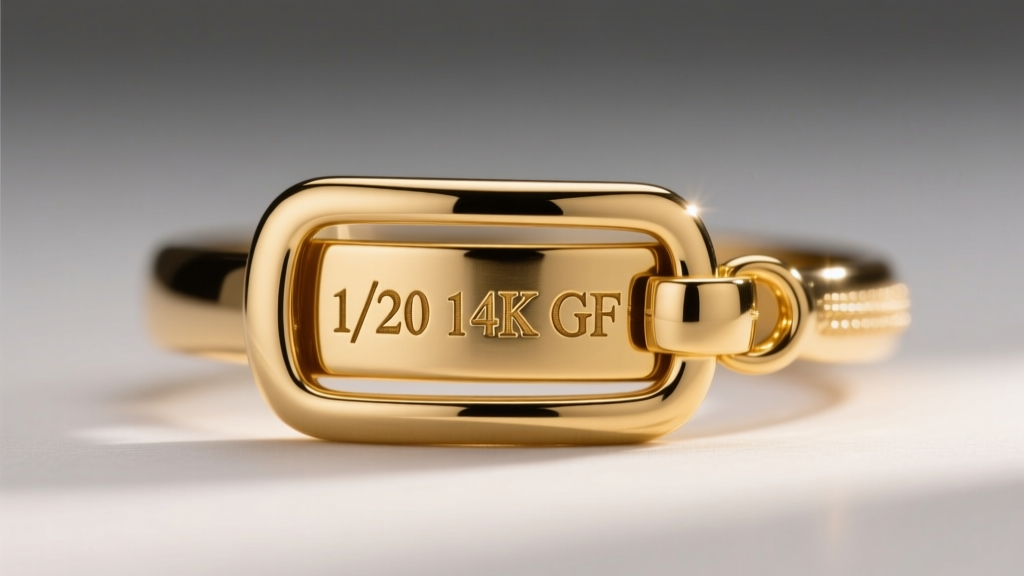
- 1/20 14K GF: The most common and reliable stamp, indicating 5% of the weight is 14k gold.
- 14/20 GF: An alternative shorthand for the same standard.
- 1/20 12K GF: Indicates the gold layer is 12 karat, which is slightly less yellow and less valuable than 14k, but still highly durable.
Warning: Avoid pieces stamped merely with 'Gold Overlay,' 'Rolled Gold,' or 'Gold Clad' without the fractional weight stamp. These terms are largely unregulated and often indicate a thickness far below the FTC's 1/20th requirement.
Care Protocols to Protect Your Investment
To maximize the lifespan of your gold filled jewelry and protect your budget, strict adherence to care protocols is required. Never use ultrasonic cleaners; the high-frequency cavitation can cause microscopic fractures in the mechanical bond, leading to peeling. Avoid all chlorine-based chemicals, including swimming pools and household bleach, as chlorine aggressively attacks the copper and zinc within the brass core, causing structural brittleness. For routine cleaning, use a few drops of mild, phosphate-free dish soap in lukewarm water, gently agitate with a soft baby toothbrush, and dry immediately with a microfiber cloth to prevent water spotting.


