Cash for Gold & Jewelry Amarillo: Technical Seller Guide
Expert guide to cash for gold & jewelry Amarillo. Learn XRF testing, exact melt value math, and how to avoid lowball offers in the Texas Panhandle.

The Amarillo Gold Market: Scrap vs. Resale Value
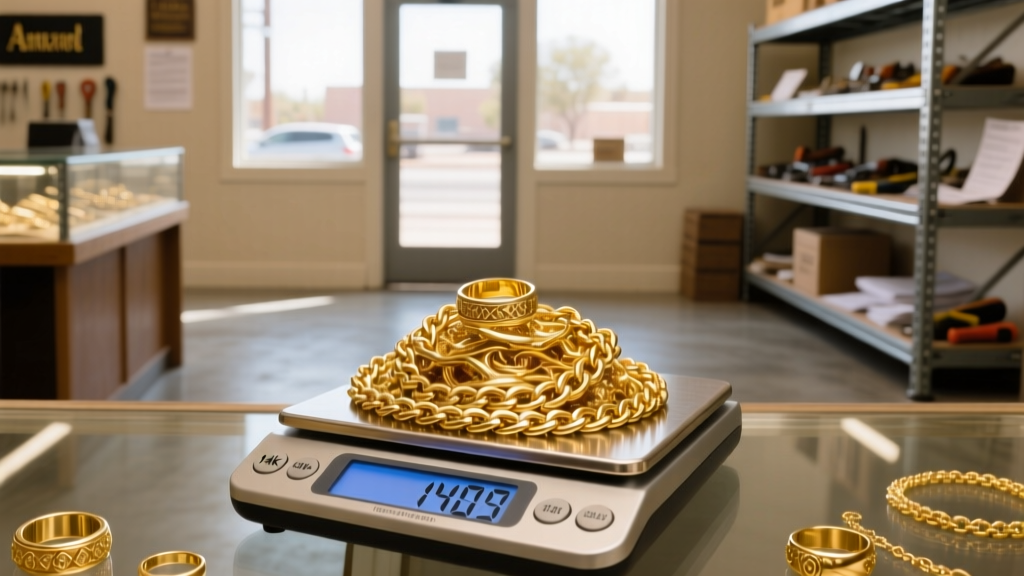
When navigating the market for cash for gold & jewelry Amarillo buyers operate in a unique regional ecosystem. The Texas Panhandle features a mix of national chain pawn shops, local independent jewelers, and specialized precious metal refiners. Understanding the technical distinction between 'scrap value' and 'resale value' is the first step in maximizing your return. Scrap value is strictly tied to the melt value of the pure gold content, dictated by global spot prices. Resale value applies to pieces with high craftsmanship, vintage appeal, or recognized designer hallmarks (like Cartier or Tiffany & Co.), which can fetch 20% to 300% above melt value. However, the vast majority of broken chains, single earrings, and outdated class rings sold in Amarillo will be evaluated purely on their metallurgical content.
Before walking into a shop on Western Street or I-40, you must understand the exact science of how your jewelry will be evaluated. Reputable buyers do not guess; they rely on precise, verifiable testing methods to determine the exact karat purity and fine gold weight of your items.
Technical Authentication: How Amarillo Buyers Test Your Gold
Gold authentication is a multi-tiered process. While amateur buyers might rely solely on a magnet and a visual inspection, expert refiners utilize a combination of non-destructive and micro-destructive tests to ensure the metal's integrity. According to the Gemological Institute of America (GIA), gold alloys can be easily manipulated, making rigorous testing essential.
X-Ray Fluorescence (XRF) Spectrometry
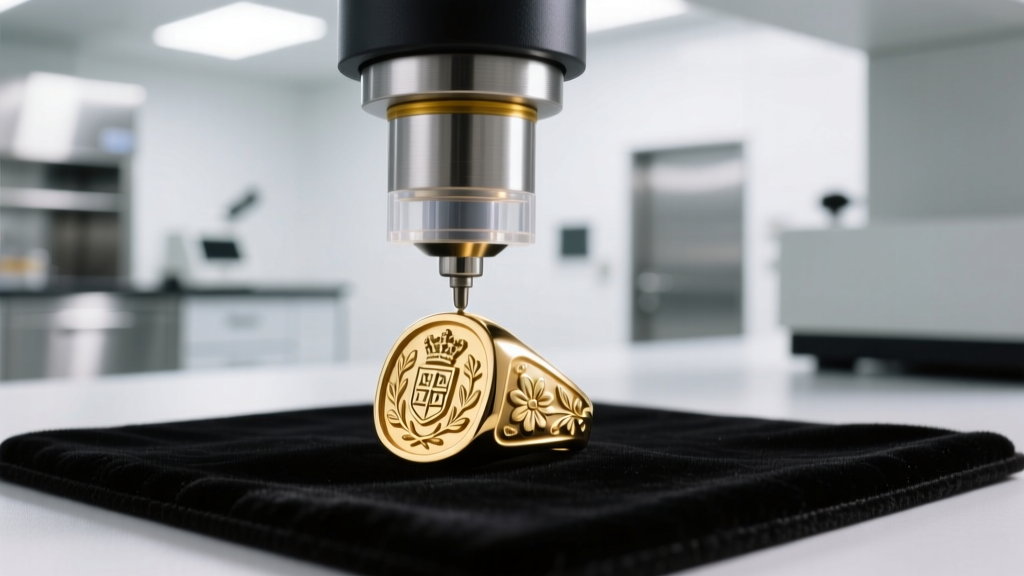
High-end Amarillo refiners use handheld XRF analyzers. This device bombards the jewelry with X-rays, causing the atoms to emit secondary fluorescent X-rays. The sensor reads the exact elemental composition, displaying a digital readout (e.g., 58.4% Au, 20.1% Ag, 21.5% Cu). Limitation: XRF only penetrates the surface (roughly 10-50 microns). It cannot detect a thick gold-plated tungsten core. Therefore, XRF must be paired with secondary testing for thick, heavy items like large men's chains or solid-looking bangles.
Specific Gravity Testing
To defeat tungsten fraud (tungsten shares a nearly identical density to gold at 19.25 g/cm³ vs 19.32 g/cm³), expert buyers use specific gravity (SG) testing based on Archimedes' principle. The item is weighed in the air, then suspended in distilled water. The formula is: SG = Weight in Air / (Weight in Air - Weight in Water). Pure 24k gold has an SG of 19.3. 14k yellow gold typically registers between 13.5 and 14.0, depending on the exact copper/silver alloy mix. If a heavy chain registers an SG of 17.5, it is almost certainly gold-plated tungsten or a heavy brass core.
The Acid Test (Touchstone Method)
The traditional touchstone test remains the gold standard for micro-destructive verification. The buyer rubs the jewelry on a black basalt stone to leave a microscopic streak of metal. They then apply specific concentrations of nitric acid or aqua regia (a mix of nitric and hydrochloric acid).
- 10k Acid (Nitric): Dissolves base metals; leaves a faint brown mark on 10k gold.
- 14k Acid: Will dissolve 10k gold completely but leave a bright mark on 14k.
- 18k Acid (Aqua Regia): Required to test high-purity alloys, as standard nitric acid will not react with 18k or 22k gold.
Calculating Melt Value: The Exact Math for 10k, 14k, and 18k
To avoid being lowballed, you must calculate the intrinsic melt value of your jewelry before negotiating. Gold is traded globally in Troy Ounces (31.103 grams), not standard avoirdupois ounces (28.35 grams). Furthermore, jewelry is measured in grams. You can track the exact daily spot price via Kitco Live Gold Charts.
The master formula for calculating melt value is:(Item Weight in Grams / 31.1035) × Purity Percentage × Current Spot Price = Pure Melt Value
| Karat | Stamp | Purity % | Fine Gold per 10g | Typical Buyer Payout |
|---|---|---|---|---|
| 10k | 417 | 41.7% | 4.17g | 70% - 85% of melt |
| 14k | 585 | 58.5% | 5.85g | 80% - 90% of melt |
| 18k | 750 | 75.0% | 7.50g | 85% - 95% of melt |
| 22k | 916 | 91.6% | 9.16g | 90% - 98% of melt |
Expert Note: In the US, 14k gold is technically 14/24 (58.33%), but the industry standard stamp is 585 (58.5%). Refiners will calculate your payout based on the exact XRF readout, which might show 58.1% if the manufacturer under-karated the alloy slightly to save costs.
Preparing Your Jewelry for the Amarillo Exchange

Do not walk into a buyer's shop with a tangled mess of jewelry. Preparation signals to the buyer that you are an educated seller who understands metallurgy. Follow this technical preparation checklist:
- Magnet Separation: Run a rare-earth neodymium magnet over your pile. Any item that sticks, or even slightly pulls, contains ferrous metals (iron, steel, nickel) and is not solid gold. Set these aside.
- Remove Non-Gold Components: Buyers will deduct weight for heavy stainless steel clasps, titanium earring posts, and rubber o-rings. If you have the tools, remove these components beforehand so your jewelry is weighed purely on its gold content.
- Separate by Color and Karat: White gold contains nickel, palladium, or silver. Rose gold contains high copper. Yellow gold is mixed with silver and copper. Refiners melt these into different ingots. Presenting your items pre-sorted by color and stamped karat expedites the XRF testing process and often results in a higher initial offer.
- Extract Large Gemstones: Diamonds over 0.25 carats should be removed by a bench jeweler before selling. Gold buyers will not pay for the stones and may accidentally damage them during the melting or acid-testing process.
Red Flags: Avoiding Predatory Tactics
The Federal Trade Commission (FTC) strictly regulates the buying and selling of precious metals, but predatory tactics still exist in local markets. Watch out for these technical red flags:
The 'Weight Deduction' Scam: A buyer weighs your 14k gold chain at 20 grams, but then claims they must deduct 15% for 'impurities and solder.' While gold solder does contain lower-karat alloys, it rarely accounts for more than 1-2% of the total weight of a chain. A 15% deduction is pure theft.
Additionally, never hand over your jewelry to be 'tested in the back room.' All XRF scanning, specific gravity testing, and weighing must occur directly in front of you across the counter. If a buyer insists on taking your items to a back office to 'run the numbers,' walk out immediately. Finally, be wary of buyers who use penny scales that are not calibrated daily with certified NIST-traceable weights.
Final Verdict: Maximizing Your Return in the Texas Panhandle
Selling your precious metals locally requires a blend of market awareness and metallurgical knowledge. By understanding the exact math behind Troy ounces, recognizing the limitations of XRF surface testing, and properly sorting your alloys, you transition from a vulnerable consumer to an informed commodity trader. When seeking cash for gold & jewelry Amarillo refiners who utilize transparent, scientific testing methods will always offer a fairer, more accurate payout than those relying on guesswork and high-pressure sales tactics.