Decoding Symbols for Gold Jewelry: Step-by-Step Hallmark Guide
Learn how to read symbols for gold jewelry. Our step-by-step guide decodes hallmarks, karat stamps, and maker's marks to verify authenticity.

Why Understanding Symbols for Gold Jewelry Matters
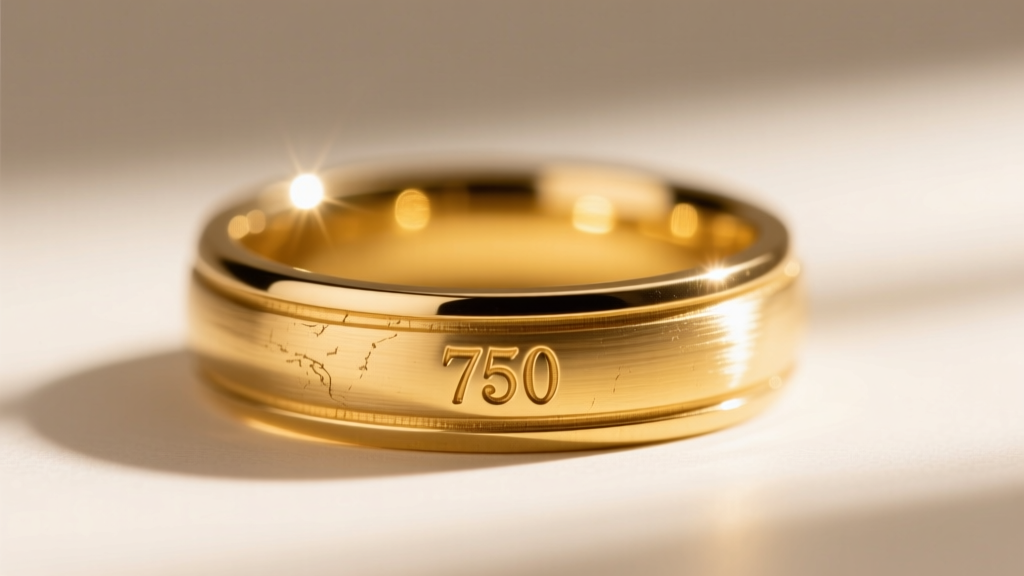
Whether you are browsing estate sales, inheriting family heirlooms, or simply verifying a recent purchase, knowing how to read the symbols for gold jewelry is an essential skill. These microscopic stamps—known as hallmarks, maker's marks, and purity stamps—are the DNA of your jewelry. They reveal the exact metallurgical composition, the country of origin, and the artisan or manufacturer responsible for the piece.
Unlike diamonds, which are graded by independent labs, gold jewelry marking systems vary wildly across the globe. In the United States, the Federal Trade Commission (FTC) mandates that any item stamped with a karat mark must also bear a registered maker's mark, and allows a strict tolerance of 3/1000 parts per thousand for unsoldered items, and 7/1000 for soldered items like chains. In Europe, government-run assay offices independently test and stamp pieces before they can be sold. Understanding these nuances prevents costly mistakes and helps you accurately appraise your collection.
Step 1: Locating the Hallmarks on Your Pieces
Before you can decode the symbols for gold jewelry, you must find them. Manufacturers place hallmarks in discreet areas to avoid marring the aesthetic design of the piece. You will need a 10x or 20x jeweler's loupe and a strong directional light source.
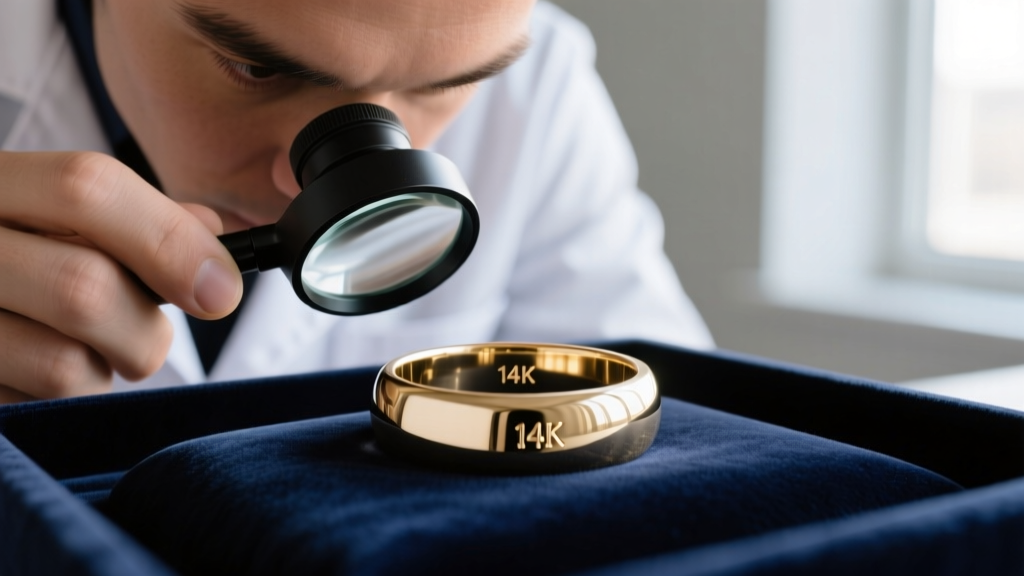
- Rings: Check the inner shank (the band). Stamps are usually placed opposite the main setting or near the solder joint where the shank was sized.
- Necklaces and Bracelets: Inspect the flat side of the clasp, the jump ring connecting the clasp to the chain, or the small metal tag (often called a 'dog tag') hanging near the closure.
- Earrings: Look at the base of the post, the back of the friction clutch (butterfly back), or the inside curve of a hoop or huggie.
- Brooches and Pins: Examine the reverse side, specifically around the pin stem hinge or the safety catch mechanism.
Pro Tip: If a piece is heavily worn, the stamp may be polished away. In vintage rings, resizing often cuts out the original hallmark, requiring you to rely on secondary testing methods.
Step 2: Decoding Karatage and Purity Stamps
The most common symbols for gold jewelry indicate purity. The United States and parts of Asia primarily use the Karat (K or kt) system, which divides pure gold into 24 parts. Europe and the Middle East favor the Millesimal Fineness system, which expresses purity in parts per thousand.
| Karat Mark | Millesimal Stamp | Gold Purity % | Common Regions & Use Cases |
|---|---|---|---|
| 24K | 999 | 99.9% | Asia, Middle East; Investment bullion, soft traditional jewelry. |
| 22K | 916 | 91.6% | India, Southeast Asia; Intricate bridal and cultural jewelry. |
| 18K | 750 | 75.0% | Europe, High-end US; Ideal balance of rich color and durability. |
| 14K | 585 | 58.5% | US, Canada, UK; The standard for everyday engagement rings. |
| 10K | 417 | 41.7% | US, Australia; The legal minimum to be sold as 'gold' in the US. |
According to the Gemological Institute of America (GIA), the alloy metals mixed with pure gold dictate the color. Copper creates rose gold, while nickel, palladium, or silver create white gold. The purity stamps (like 585 or 750) apply to the total gold content regardless of the alloy color.
Step 3: Identifying Maker's Marks and Assay Office Symbols
Beyond purity, authentic pieces feature symbols denoting who made it and who verified it. A maker's mark is a unique trademark (often initials inside a specific shape, like a shield or diamond). Assay marks are government stamps proving the metal was independently tested.
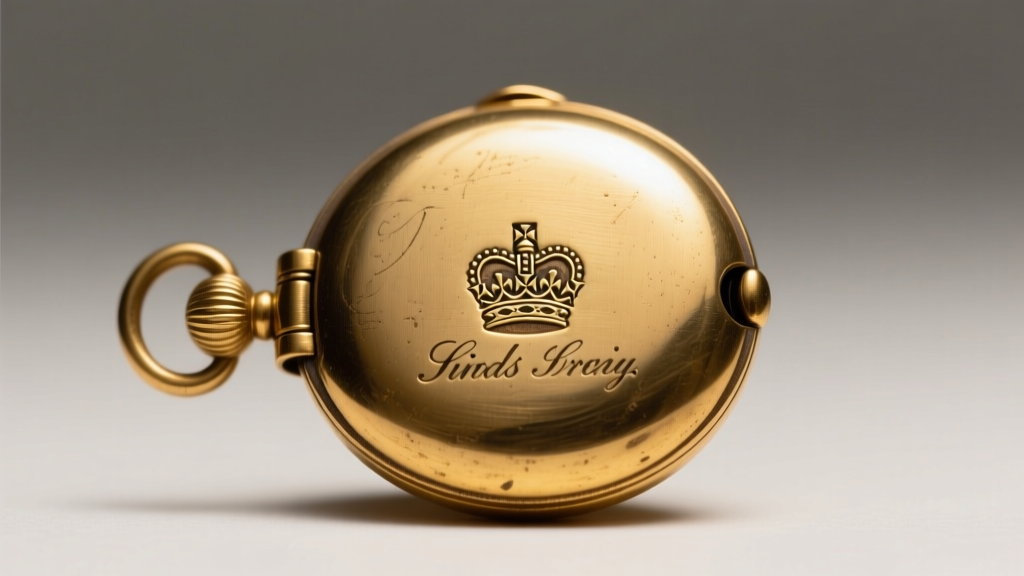
Key International Assay Symbols:
- The Crown (UK): The British Hallmarking Council uses a crown symbol to denote gold that has been tested and verified by a UK assay office (London, Birmingham, Sheffield, or Edinburgh).
- The Eagle Head (France): In France, an eagle head (tête d'aigle) facing right guarantees the piece is at least 18K (750) solid gold. A boar's head was historically used for 18K but was retired in 1994.
- The Bernese Bear & Helvetia (Switzerland): Switzerland uses a bear for 14K and 18K, and the profile of Helvetia (a female figure) for 18K and above.
- The Star of David (Israel): Often accompanied by numbers, indicating standard karatages tested by the Israeli standard institute.
Step 4: Spotting Red Flags and Plating Codes
Not all symbols for gold jewelry mean the piece is solid gold. The secondary market is flooded with gold-plated and gold-filled items stamped with misleading marks. If you see any of the following letters next to a karat stamp, the item is not solid gold throughout:
- GP or GEP (Gold Plated / Gold Electroplated): A base metal (usually brass or copper) coated with a microscopic layer of gold, often less than 0.5 microns thick. It will wear off quickly.
- HGE (Heavy Gold Electroplate): Must be at least 2.5 microns thick. While more durable than standard GP, it is still a surface treatment over base metal.
- GF (Gold Filled): A thick layer of solid gold mechanically bonded to a base metal core. By US law, the gold must constitute at least 1/20th (5%) of the item's total weight. You will often see stamps like '1/20 14K GF'.
- RGP (Rolled Gold Plate): Similar to gold filled but with a much thinner layer of gold, usually 1/30th or 1/40th of the total weight.
- Vermeil: Pronounced 'ver-may', this requires a sterling silver (.925) base plated with at least 2.5 microns of gold (usually 14K or 18K). Look for a '.925' stamp alongside the gold mark.
Warning: If a piece is stamped '14K HGE', it is not 14K solid gold. It is a base metal with a heavy layer of 14K gold plating. Always read the accompanying letters.
Step 5: Verifying Authenticity When Symbols Are Missing or Worn
What happens when you find a beautiful, heavy yellow gold chain with no stamps? Unmarked gold is common in vintage estate pieces, custom artisan work, or items originating from countries with lax hallmarking laws. Here is how to verify authenticity without symbols:
1. The Specific Gravity (SG) Test
Pure 24K gold has a specific gravity of 19.32, making it incredibly dense. 18K gold sits around 15.5, and 14K around 13.5. By weighing the piece in the air and then suspended in distilled water, you can calculate its density. If a heavy chain yields an SG of 8.5, it is likely brass or copper, not gold.
2. The Acid Test (Nitric Acid)
Jewelers use a touchstone and nitric acid solutions calibrated for 10K, 14K, 18K, and 22K. A streak of the metal is rubbed on the stone, and acid is applied. If the streak dissolves immediately and turns dark brown, it is base metal. If it turns milky, it is silver or white gold. True gold will remain unaffected by the acid matching its karat level, or react only slightly to a higher-karat acid.
3. XRF Spectrometry
For non-destructive, highly accurate analysis, professional jewelers use X-Ray Fluorescence (XRF) scanners. These machines shoot X-rays into the metal and read the energy emitted, providing an exact elemental breakdown (e.g., 58.5% Gold, 20% Silver, 21.5% Copper) in seconds, penetrating deeper than surface plating.
Summary Checklist for Your Next Estate Sale Find
- Bring a 10x loupe and a bright LED flashlight.
- Check all hidden areas: inner bands, clasps, jump rings, and earring posts.
- Identify the purity mark (Karat vs. Millesimal) and cross-reference it with the piece's weight and color.
- Look for secondary letters (GF, GP, HGE) that indicate plating or filling.
- Search for a maker's mark or assay stamp to verify the origin and legal compliance.
- If unmarked, perform a magnet test (real gold is non-magnetic) and seek an XRF or acid test from a certified gemologist.
Mastering the symbols for gold jewelry transforms you from a passive buyer into an informed collector. By understanding the metallurgy, legal tolerances, and international hallmarking systems, you can confidently navigate the secondary market and uncover genuine treasures hidden in plain sight.


