Cleaning Gold Jewelry: A Material & Karat Comparison Guide
Discover the science behind cleaning gold jewelry. Compare 10k, 14k, 18k, and plated gold properties to choose the safest, most effective cleaning methods.

The Metallurgy of Gold: Why Alloy Composition Dictates Care
When it comes to cleaning gold jewelry, a one-size-fits-all approach is a recipe for metallurgical disaster. The methodology you use must be dictated by the specific chemical and physical properties of the gold alloy in question. Pure gold (24k) is a noble metal, meaning it is highly unreactive and will never tarnish or oxidize in normal atmospheric conditions. However, pure gold is exceptionally soft, registering a mere 25 on the Vickers Hardness (HV) scale. To make gold durable enough for daily wear, jewelers alloy it with metals like copper, silver, zinc, and nickel.
These alloying metals fundamentally change the material's properties. While they increase the Vickers Hardness to a more durable 135 HV (in 14k gold), they also introduce chemical vulnerabilities. Copper reacts with sulfur in the air to form copper sulfide (tarnish), while zinc and nickel can become susceptible to stress corrosion cracking when exposed to halogens like chlorine. Therefore, understanding the exact material composition of your piece is the mandatory first step in any cleaning protocol.
Solid Gold Karats: Cleaning Protocols by Purity
The karat system measures the purity of solid gold alloys. As the gold percentage decreases, the hardness increases, but the susceptibility to chemical tarnishing and environmental damage rises proportionally. According to the Gemological Institute of America (GIA), the specific alloy mix determines not just the color of the gold, but its chemical resilience.
| Karat | Gold % | Vickers Hardness (HV) | Tarnish Risk | Primary Cleaning Threat |
|---|---|---|---|---|
| 24k | 99.9% | ~25 HV | None | Micro-scratching, Bending |
| 22k | 91.6% | ~90 HV | Very Low | Abrasive polishing |
| 18k | 75.0% | ~115 HV | Low | Harsh chemical stripping |
| 14k | 58.3% | ~135 HV | Moderate | Chlorine exposure, Tarnish |
| 10k | 41.7% | ~150 HV | High | Oxidation, Acidic cleaners |
For 18k and 22k gold, your primary concern during cleaning is physical abrasion. Because these alloys still possess a high gold content, they remain relatively soft. You must avoid stiff-bristled brushes or abrasive pastes. Conversely, 10k and 14k gold contain high amounts of copper and silver. These pieces require gentle chemical intervention to remove copper sulfide tarnish without degrading the structural integrity of the alloy matrix.
Surface Treatments: The Fragility of Plated, Filled, and Vermeil
The cleaning rules change drastically when you move from solid gold to surface-treated materials. Gold-filled jewelry consists of a thick outer layer of solid gold (legally required to be at least 5% of the total weight) mechanically bonded to a brass core. It can generally be cleaned like solid gold, provided you do not expose the brass core through aggressive polishing.
Gold vermeil and gold-plated jewelry, however, require extreme caution. Vermeil is a specific type of plating where a sterling silver base is coated with gold. Plated jewelry uses a brass or copper base. The thickness of these layers is measured in microns (µm).
According to the Federal Trade Commission (FTC) Jewelry Guides, a piece can only be legally marked as gold vermeil if the sterling silver base is coated with gold of at least 10k fineness, with a minimum equivalent thickness of 2.5 microns.
Flash-plated jewelry often features a gold layer as thin as 0.1 microns. When cleaning these ultra-thin layers, you must absolutely avoid ultrasonic cleaners. Ultrasonic machines work via cavitation—creating microscopic vacuum bubbles in the liquid that violently implode against the jewelry's surface. While this is excellent for dislodging dirt from solid gold prongs, the localized shockwaves of cavitation will instantly strip and blister a 0.5-micron gold plating, ruining the piece permanently.
Chemical Agents: What to Use and What Destroys Gold Alloys
The chemical environment you introduce to your gold jewelry dictates its lifespan. Many common household cleaners contain compounds that trigger catastrophic failure modes in gold alloys.
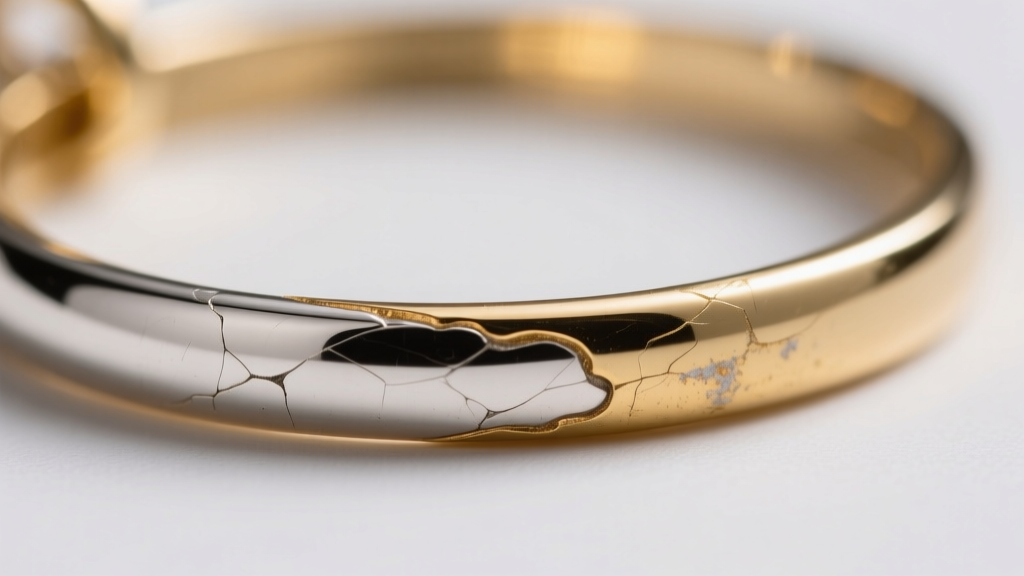
- Chlorine (Sodium Hypochlorite): Chlorine is the ultimate enemy of karat gold. When 14k or 18k gold is exposed to bleach or heavily chlorinated pool water, the chlorine reacts with the copper and silver alloys to form metallic chlorides. This causes stress corrosion cracking, a phenomenon where the alloy's internal crystalline structure fractures, leading to the sudden snapping of rings and chain links.
- Ammonia: While mild ammonia solutions are excellent for cleaning diamonds and breaking down organic oils on solid gold, ammonia will aggressively attack the copper oxides in lower-karat gold and will strip the protective anti-tarnish coatings often applied to mass-market jewelry.
- Abrasives (Toothpaste/Baking Soda): Pure gold sits at 2.5 to 3 on the Mohs scale of mineral hardness. Most commercial toothpastes contain hydrated silica, which ranks at 7 on the Mohs scale. Scrubbing gold with toothpaste is essentially sanding it with microscopic rocks, removing microns of precious metal and leaving a dull, scratched finish.
Step-by-Step Material-Specific Cleaning Framework
To safely execute the cleaning process, follow this material-specific framework designed to lift sebum, cosmetic residues, and environmental dust without compromising the metallurgical integrity of the piece.
Step 1: Identification and Preparation
Identify your material. If the piece is plated or vermeil, skip all soaking and ultrasonic steps. Prepare a lukewarm bath using distilled water and a few drops of pH-neutral, phosphate-free dish soap. Avoid hot water, as thermal shock can fracture tension-set gemstones or damage porous gems like pearls and opals often set in gold mountings.
Step 2: Targeted Agitation
For solid 14k and 18k gold, submerge the piece for 10 to 15 minutes to soften organic oils. Use an ultra-soft baby toothbrush (bristle diameter under 0.15mm) to gently agitate the areas behind the gemstone culet and inside the gallery wire where skin cells and lotions accumulate. For vermeil and plated pieces, skip the soak entirely; simply dip the soft brush in the soapy solution and lightly sweep the surface for no more than 10 seconds.
Step 3: Rinsing and Capillary Drying
Rinse solid gold under a gentle stream of lukewarm distilled water. Tap water contains dissolved minerals and trace chlorine that can leave hard water spots or initiate slow oxidation on 10k gold. To dry, do not rub the piece with a cloth, which can drag microscopic dust particles across the soft gold surface. Instead, use a can of compressed air to blow water out of the prongs, or lay the piece on a microfiber towel to allow capillary action to draw the moisture away naturally.