Crazy Jewelry by Gold Fever Baltimore MD: Gold Guide
Explore the metallurgical properties of bold statement gold pieces. A material comparison guide for crazy jewelry by Gold Fever Baltimore MD shoppers.

The Appeal of Bold Statement Gold in Baltimore
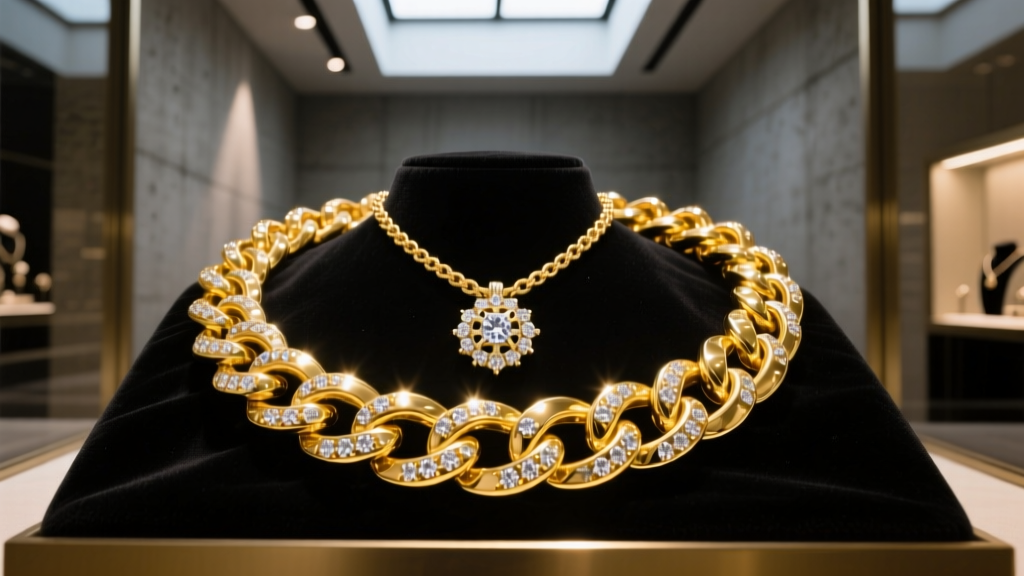
When enthusiasts search for crazy jewelry by Gold Fever Baltimore MD, they are rarely looking for delicate, minimalist bands or subtle studs. They are hunting for statement pieces: oversized Cuban links, multi-metal geometric pendants, hollow-cast figurines, and heavy, intricate grillz. The Baltimore jewelry scene, particularly around downtown and Lexington Market, is famous for these bold, custom designs. However, the sheer scale and complexity of 'crazy' statement jewelry introduce unique metallurgical challenges. A 150-gram chain experiences vastly different tensile stress than a 10-gram necklace, meaning the karat purity and alloy composition must be carefully selected to prevent structural failure.
In this 2026 material guide, we break down the exact properties of gold alloys used in heavy statement pieces. We will compare the Vickers hardness, tensile strength, and tarnish resistance of 10K, 14K, and 18K gold, providing you with the technical knowledge needed to evaluate high-end urban jewelry.
The Metallurgy of Statement Gold: Why Karat Matters for Heavy Pieces
Pure 24K gold is exceptionally malleable, with a Vickers hardness (HV) of roughly 25. This makes it entirely unsuitable for heavy, statement jewelry; a solid 24K Cuban link chain would stretch and deform under its own weight within weeks. To create durable 'crazy jewelry,' metallurgists alloy pure gold with metals like copper, silver, zinc, and sometimes palladium. These alloying elements disrupt the gold's crystal lattice, increasing its hardness and tensile strength through a process called solid solution strengthening.
The Role of Copper and Silver in 14K Alloys
For the heavy chains and oversized pendants typical of Baltimore's custom jewelers, 14K gold (58.3% pure gold) is the industry standard. The remaining 41.7% is usually a precise mix of copper and silver. Copper increases the alloy's hardness and gives it a warmer, slightly reddish hue, while silver improves the metal's ductility and workability. According to the World Gold Council, a standard 14K yellow gold alloy exhibits a Vickers hardness of approximately 140 HV and a tensile strength of around 500 MPa (megapascals). This specific balance allows jewelers to cast thick, intricate pendants without the metal becoming too brittle to polish or repair.
Structural Integrity in Oversized Chains and Pendants
The structural integrity of statement jewelry relies heavily on the manufacturing method. Heavy chains are typically either solid cast, semi-solid, or tubular (hollow). While hollow chains offer the 'crazy' oversized look at a fraction of the gold weight, they are highly susceptible to crushing and are nearly impossible to repair if dented. Solid 10K and 14K chains, however, can withstand significant daily abuse.
For complex, multi-piece pendants—such as those featuring moving parts, micro-pavé diamonds, or mixed-metal inlays—jewelers often rely on 10K gold for the structural framework. 10K gold (41.7% pure gold) boasts the highest tensile strength of the standard karats, often exceeding 550 MPa. This makes it the ideal material for the heavy bail (the loop that connects the pendant to the chain), which bears the brunt of the kinetic stress when a heavy pendant swings against the chest.
Material Comparison Chart for Custom Baltimore Gold
To help you evaluate the physical properties of statement pieces, refer to the comparison table below. This data is critical when deciding which karat is best suited for specific types of heavy, custom jewelry.
| Karat | Gold Content | Vickers Hardness (HV) | Tensile Strength (MPa) | Best Use Case in Statement Jewelry |
|---|---|---|---|---|
| 10K Gold | 41.7% | ~150 HV | ~550 MPa | Heavy structural chains, ring shanks, high-stress bails |
| 14K Gold | 58.3% | ~140 HV | ~500 MPa | Intricate custom pendants, daily-wear Cuban links, grillz |
| 18K Gold | 75.0% | ~125 HV | ~350 MPa | Luxury figurine pendants, softer detailing, high-end watches |
| 22K Gold | 91.6% | ~70 HV | ~200 MPa | Investment pieces, lightweight hammered cuffs (avoid for chains) |
Authenticity Testing for Complex, Multi-Metal Designs
When purchasing bold, complex pieces, traditional acid testing is often insufficient. 'Crazy' statement jewelry frequently involves extensive soldering. The solder used to join links in a heavy chain or attach a bail to a pendant is often a lower karat than the main body of the piece (e.g., using 10K solder on a 14K chain) to ensure a lower melting point. If a jeweler applies nitric acid to a solder joint, the piece may falsely test as 10K, leading to unwarranted disputes.
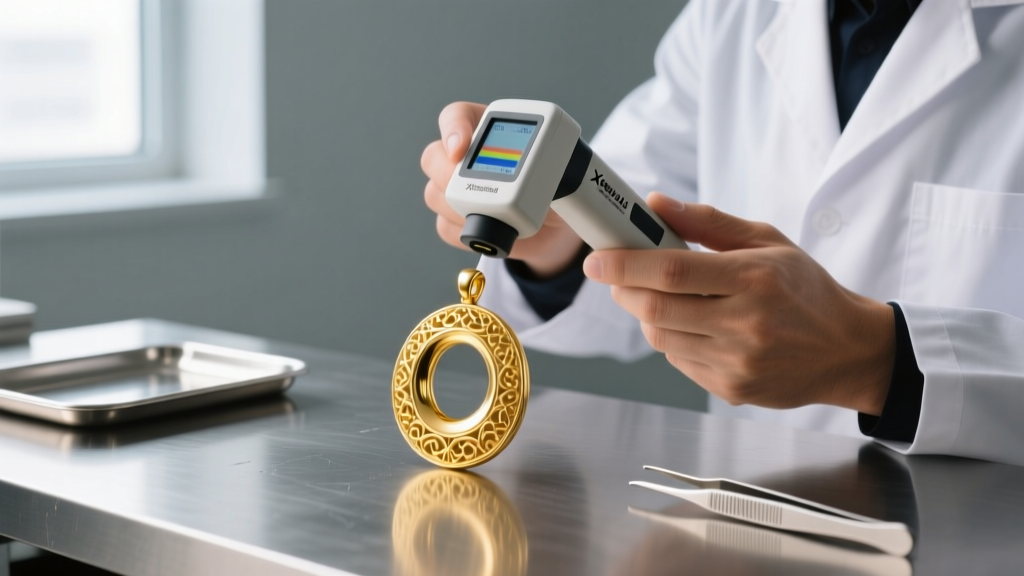
Furthermore, many oversized pendants are cast using the lost-wax method and may contain internal porosity or trapped investment material if not properly finished. The Gemological Institute of America (GIA) strongly recommends X-Ray Fluorescence (XRF) spectrometry for evaluating complex gold jewelry. XRF guns fire X-rays into the metal, exciting the atoms and measuring the fluorescent energy they emit to determine the exact elemental breakdown. This non-destructive test can differentiate between a solid 14K piece and a heavily gold-plated tungsten core, a common issue in the secondary market for heavy chains.
Expert Insight: Always ask the jeweler to perform an XRF test on multiple points of a heavy statement piece—specifically the clasp, the bail, and the center of the main pendant. A variance of more than 2% in gold content between these points indicates inconsistent casting or the use of lower-karat structural solder.
Sourcing and Verifying Local Gold Alloys
The Baltimore jewelry market is vibrant, but it requires a discerning eye. When sourcing heavy gold pieces locally, pay close attention to the weight-to-volume ratio. Gold is incredibly dense, with a specific gravity of 19.32 g/cm³. A solid 14K gold chain should feel disproportionately heavy for its size. If an oversized, thick-rope chain feels surprisingly light, it is likely tubular (hollow) or electroformed. While electroforming allows for massive, lightweight designs, these pieces are highly fragile; a single drop onto a hard surface can cause irreversible crushing.
For those investing in the highly sought-after crazy jewelry by Gold Fever Baltimore MD or similar local artisans, demand a detailed receipt that specifies not just the total gram weight, but the exact karat purity and whether the piece is solid, semi-solid, or hollow. Understanding the metallurgical realities of gold alloys ensures that your statement piece will maintain its structural integrity, brilliant luster, and resale value for decades to come. By prioritizing tensile strength in high-stress areas and utilizing XRF verification, you can confidently wear heavy, custom gold without the fear of premature failure.


