Dearborn Jewelry and Gold Factory Photos: Technical Authentication
Explore Dearborn jewelry and gold factory photos to authenticate vintage pieces, analyze mid-century casting marks, and verify karat stamps.


The intersection of historical manufacturing and modern gemology offers a fascinating lens through which we can authenticate and appreciate vintage gold. For collectors and appraisers, analyzing Dearborn jewelry and gold factory photos is not merely an exercise in nostalgia; it is a critical technical methodology. The Dearborn and greater Detroit manufacturing hub was a powerhouse of mid-century American jewelry production, pioneering specific alloy mixes, die-striking techniques, and lost-wax casting protocols that differ vastly from today's CAD/CAM and laser-welding standards.
By cross-referencing archival factory imagery with physical pieces, gemologists can identify microscopic anomalies, verify hallmark authenticity, and understand the metallurgical realities of mid-century gold. This deep dive explores the technical specifications, alloy compositions, and authentication frameworks derived from historical Dearborn manufacturing archives.
The Metallurgical Legacy of Dearborn Gold Manufacturing
During the mid-20th century, the Dearborn jewelry manufacturing sector relied heavily on localized alloying facilities. Unlike modern mass-producers who purchase pre-alloyed grain from mega-refiners, vintage factories often mixed their own copper, silver, and zinc master alloys in-house to achieve specific colors and working hardness levels. This resulted in distinct metallurgical fingerprints.
One of the most critical technical details revealed by historical factory records is the use of specific deoxidizers. In the 1950s and 60s, trace amounts of cadmium or phosphorus were occasionally introduced into the melt to prevent oxidation during the pouring of ingots. Today, cadmium is heavily restricted due to toxicity, making its presence a definitive marker of vintage origin when tested via X-ray Fluorescence (XRF) or fire assay. Furthermore, the white gold produced in these factories frequently relied on high-nickel content rather than the palladium-heavy mixes favored in 2026, resulting in a stiffer, more brittle metal that required frequent annealing during the sizing process.
Decoding Dearborn Jewelry and Gold Factory Photos
Archival photographs of factory floors provide a visual blueprint of the mechanical forces applied to the gold. When authenticating a suspected vintage Dearborn piece, appraisers look for evidence of die-striking versus centrifugal casting. Factory photos from the era prominently feature massive hydraulic drop presses and roller mills.
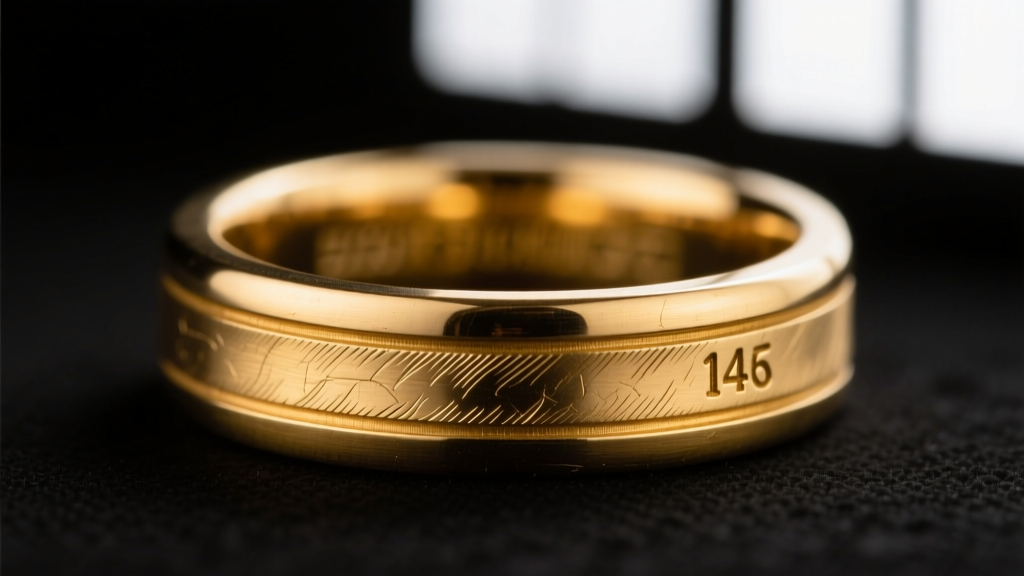
Identifying Vintage Stamping and Hallmark Anomalies
Die-striking involves compressing a sheet of gold alloy between two hardened steel dies under 50 to 100 tons of pressure. This process aligns the crystalline grain structure of the gold, increasing its tensile strength and density. When examining Dearborn factory photos, you can see the heavy fly-presses used for this exact purpose.
On a physical piece, die-struck vintage gold will exhibit specific characteristics:
- Sharp Internal Corners: Unlike cast pieces which have rounded internal angles due to surface tension, die-struck shanks feature razor-sharp internal geometry.
- Hallmark Distortion: Because hallmarks were often stamped into the flat sheet metal before the ring was formed and sized, the '14K' or maker's mark may appear slightly stretched or blurred along the curvature of the shank.
- Absence of Porosity: High-pressure stamping eliminates the microscopic gas bubbles (porosity) that are commonly seen in the shanks of cast vintage rings.
Technical Breakdown: Mid-Century Karat Alloys vs. Modern Standards
The exact recipe for 14k and 18k gold varied significantly between the mid-century Dearborn factories and modern international standards. The following table compares the typical elemental breakdown of a 1955 Dearborn 14k Yellow Gold alloy against a standard 2026 casting grain.
| Element | 1955 Dearborn 14k Yellow (Est.) | 2026 Standard 14k Yellow | Metallurgical Impact |
|---|---|---|---|
| Gold (Au) | 58.3% | 58.5% | Base precious metal content. |
| Copper (Cu) | 31.5% | 26.0% | Higher vintage copper increased hardness but made the metal prone to fire-scale during soldering. |
| Silver (Ag) | 9.2% | 13.5% | Lower silver resulted in a deeper, reddish-yellow hue typical of mid-century American gold. |
| Zinc (Zn) | 1.0% | 2.0% | Modern zinc additions act as deoxidizers and lighten the copper color. |
| Vickers Hardness (HV) | ~145 HV (Annealed) | ~125 HV (Annealed) | Vintage alloys were noticeably stiffer, making prong re-tipping more challenging. |
Understanding these alloy variations is crucial. If you test a purported vintage Dearborn piece with an XRF gun and it reads a high silver/low copper ratio, it is highly likely a modern reproduction or a recast piece using contemporary grain. For more on how gold quality factors and alloy compositions dictate durability and color, refer to the Gemological Institute of America's gold quality guidelines.
The Deception of Depletion Gilding in Vintage Authentication
One of the most vital technical insights gained from studying historical factory processes is the understanding of depletion gilding (also known as surface enrichment). Archival photos of Dearborn factory floors show large ceramic crocks filled with nitric and sulfuric acid pickling baths. After a piece was soldered or annealed, it was dropped into these acids to remove copper oxide (fire-scale) from the surface.
This aggressive acid bath dissolves the copper and silver atoms on the immediate surface, leaving behind a microscopic, spongy layer of nearly pure 24k gold.
The XRF Testing Trap
If a modern appraiser tests a vintage Dearborn ring using a handheld XRF spectrometer without properly preparing the surface, the machine will read the 24k depletion layer and incorrectly report the piece as 18k or even 22k gold. To achieve an accurate reading that reflects the true 14k core, the appraiser must:
- Use a coarse file to cut a deep notch into an inconspicuous area of the shank, bypassing the 10-20 micron depletion layer.
- Alternatively, perform a specific gravity test using distilled water and a precision carat scale, which measures the overall density of the entire object rather than just its surface chemistry.
This technical nuance is frequently overlooked by novice buyers, leading to widespread misclassification of mid-century American gold.
Authentication Framework: Using Archival Imagery to Spot Fakes
When evaluating a piece attributed to the Dearborn manufacturing era, cross-reference the physical item against the visual evidence found in factory photos. Look for the following structural hallmarks:
- Sprue Mark Remediation: If the piece was cast rather than die-struck, archival photos show workers using sharp tungsten carbide burrs to remove the sprue (the channel where gold entered the mold). On authentic vintage pieces, you will often find a slightly flattened, hand-filed area on the inner shank or beneath the gallery where the sprue was severed. Modern laser welders leave a perfectly smooth, almost concave divot.
- Seam Lines in Die-Struck Holloware: Many mid-century gold bracelets and lightweight bangles were made by stamping two halves and soldering them together. Factory photos reveal the use of low-temperature lead-tin or cadmium-bearing solders for these seams. Under 10x magnification, these vintage seams often show slight discoloration or a distinct 'step' where the two halves met, unlike the seamless hydro-forming techniques of today.
- Hand-Engraving vs. CNC Milling: Archival images of the finishing departments show artisans using flat gravers and push-scrapers. Authentic vintage engraving will have microscopic 'chatter' marks and varying depths based on the pressure of the artisan's hand. Modern fakes utilizing CNC routers will have perfectly uniform, V-shaped grooves with no tool chatter.
Caring for Vintage Dearborn Gold Pieces
The metallurgical realities of mid-century manufacturing dictate strict care protocols. Because older solders often contained cadmium, lead, or high-tin ratios to lower the melting point, these joints are highly susceptible to thermal shock and chemical degradation.
Never place vintage Dearborn gold jewelry in an ultrasonic cleaner if it features tension-set stones or heavily sized shanks. The high-frequency vibrations can fracture the brittle, high-copper vintage solder joints. Furthermore, avoid commercial cyanide-based electroplating dips, which can aggressively attack the zinc and cadmium in the old solder seams, causing the ring to literally fall apart at the sizing joint. For routine cleaning, use a soft horsehair brush, lukewarm water, and a mild, phosphate-free dish detergent, drying immediately with a microfiber cloth to prevent water spotting on the high-copper alloy surface.
For comprehensive guidelines on hallmarking and the legal requirements for gold stamping in the United States, consult the Federal Trade Commission's Jewelry Guides, which outline the tolerances and standards that apply to both vintage and modern gold commerce.
Conclusion
The study of Dearborn jewelry and gold factory photos bridges the gap between historical appreciation and rigorous gemological science. By understanding the high-copper alloys, the mechanical forces of hydraulic die-striking, and the deceptive nature of acid-induced depletion gilding, collectors and appraisers can accurately authenticate mid-century American gold. True expertise in vintage jewelry requires looking beyond the surface stamp and analyzing the metallurgical DNA forged on the factory floors decades ago.


