Restore High Quality Gold Plated Jewelry: Tarnish Fixes
Learn how to troubleshoot and restore high quality gold plated jewelry. Expert fixes for tarnish, peeling, and base metal oxidation to extend lifespan.

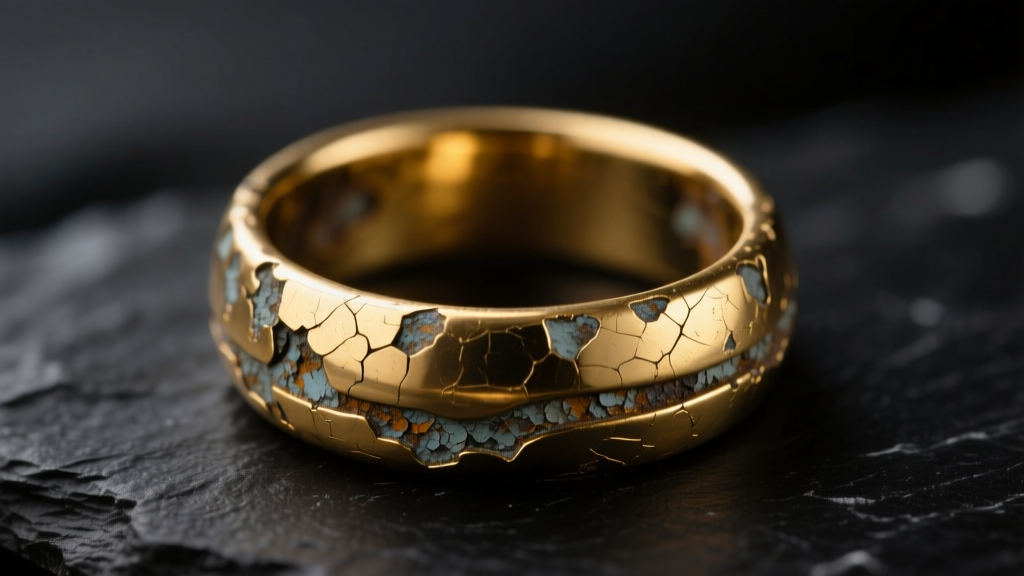
Investing in high quality gold plated jewelry offers the luxurious aesthetic of solid gold at a fraction of the cost. However, even the most meticulously crafted plated pieces are subject to environmental wear, chemical reactions, and friction. In 2026, advancements in electroplating and Physical Vapor Deposition (PVD) have significantly extended the lifespan of these pieces, yet consumers still frequently encounter issues like green skin staining, premature flaking, and dark tarnish bleeding. Troubleshooting these problems requires a fundamental understanding of metallurgy, micron thickness, and the specific chemistry of your skin. This comprehensive guide provides actionable, expert-level solutions to diagnose, treat, and restore your plated gold jewelry to its original brilliance.
The Anatomy of Plating: Why Wear Occurs
To effectively troubleshoot, you must first understand what you are working with. According to the Federal Trade Commission (FTC) Jewelry Guides, the term 'gold electroplate' requires a minimum gold thickness of 0.175 microns. However, true high quality gold plated jewelry—often labeled as 'Heavy Gold Electroplate' or 'Gold Vermeil'—boasts a thickness of 2.5 microns or more. Vermeil specifically mandates a sterling silver base, whereas standard heavy plating may use brass or copper.
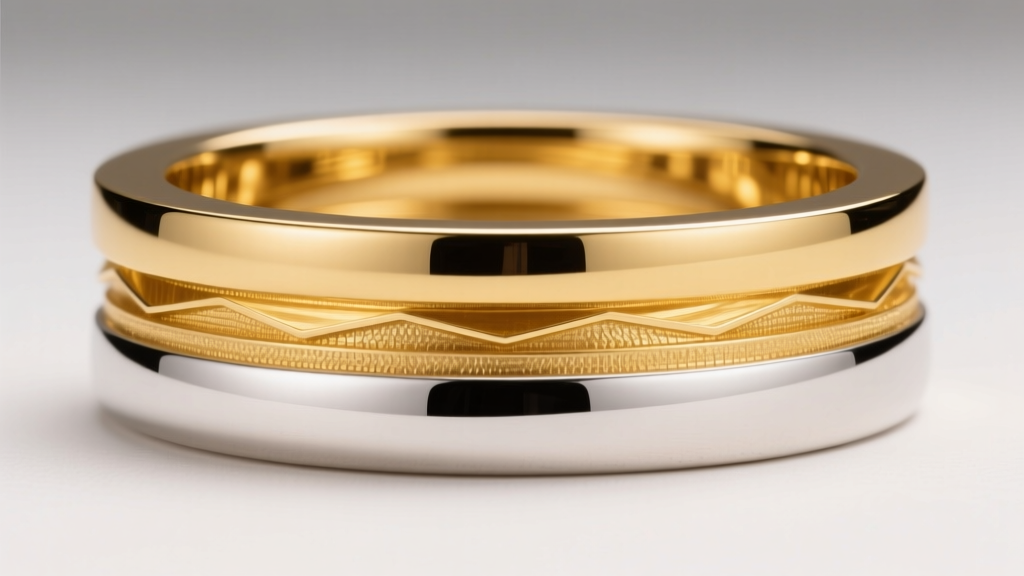
Beneath the visible gold layer lies a hidden 'strike' layer, typically composed of nickel or palladium. This barrier prevents the base metals from migrating into the gold layer and causing discoloration. When high quality gold plated jewelry fails, it is rarely the gold itself that degrades; rather, it is the underlying base metal reacting to the environment through microscopic pores in the plating, or the physical abrasion of the gold layer down to the strike layer.
Diagnostic Matrix: Identifying Your Plating Failure
Before applying any cleaning agents or polishes, you must accurately diagnose the failure mode. Using the wrong treatment on a compromised strike layer can permanently ruin the piece. Consult the diagnostic table below to identify your specific issue.
| Symptom | Root Cause | Severity | Actionable Fix |
|---|---|---|---|
| Green/Black skin staining | Copper/brass base reacting to acidic sweat | Moderate | Barrier application or professional replating |
| Dull, dark patches | Silver sulfide tarnish bleeding through pores | Low | Gentle chemical dip or specialized polish |
| Flaking in sheets | Missing strike layer or galvanic corrosion | Severe | Professional strip and replate required |
| Fading to brassy yellow | Normal friction wear of <1 micron plating | Moderate | Professional replating (2.5+ microns) |
Troubleshooting Specific Failures
Issue 1: The 'Green Finger' Phenomenon
If your ring is leaving a green or black mark on your skin, the gold layer has worn thin enough—or is porous enough—to allow your sweat to interact with the copper or brass base. Sweat contains lactic acid and sodium chloride, which react with copper to form copper chloride, a bright green salt. The Fix: For a temporary, at-home solution, apply a micro-thin layer of clear, non-yellowing polyurethane nail polish to the inside band of the ring. Allow it to cure for 24 hours before wearing. This creates an impermeable physical barrier between your skin's acidity and the base metal. For a permanent solution, have a jeweler replate the interior band with rhodium or a thick layer of 18k gold.
Issue 2: Tarnish Bleeding (Dark Patches)
This is most common in gold vermeil (sterling silver base). Sterling silver is 92.5% silver and 7.5% copper. When exposed to sulfur in the air, the copper forms silver sulfide, a black compound. If the gold plating is porous, this black tarnish 'bleeds' through to the surface. The Fix: Do not use abrasive silver polishes, as they will strip the gold. Instead, use a specialized, non-abrasive gold cleaning cloth infused with micro-abrasives rated below 2.5 on the Mohs hardness scale. Gently buff the dark patches. If the tarnish is deep, a professional jeweler can use a mild electrochemical reduction bath to reverse the sulfide without harming the gold layer.
Issue 3: Catastrophic Flaking and Peeling
If your jewelry is peeling like sunburned skin, it has suffered from galvanic corrosion or a missing strike layer. This happens when moisture gets trapped between the base metal and the gold, creating a microscopic battery effect that destroys the adhesion. The Fix: There is no home remedy for flaking. Stop wearing the piece immediately to prevent ingesting or absorbing loose metallic flakes. Take it to a professional plating service to have the piece chemically stripped down to the bare base metal and replated with a proper palladium strike layer.
The 2026 Cleaning Protocol: Safe vs. Destructive
The internet is rife with destructive DIY cleaning hacks that will instantly ruin high quality gold plated jewelry. Pure gold is exceptionally soft, rating only 2.5 to 3 on the Mohs hardness scale. Common household cleaners like baking soda (Mohs 9) and toothpaste (Mohs 3-4) act like sandpaper on a microscopic level, scouring away the gold layer in seconds.
Never use ultrasonic cleaners on plated jewelry. The high-frequency cavitation bubbles can easily penetrate microscopic pores in the plating, blasting the gold layer off the base metal from the inside out.
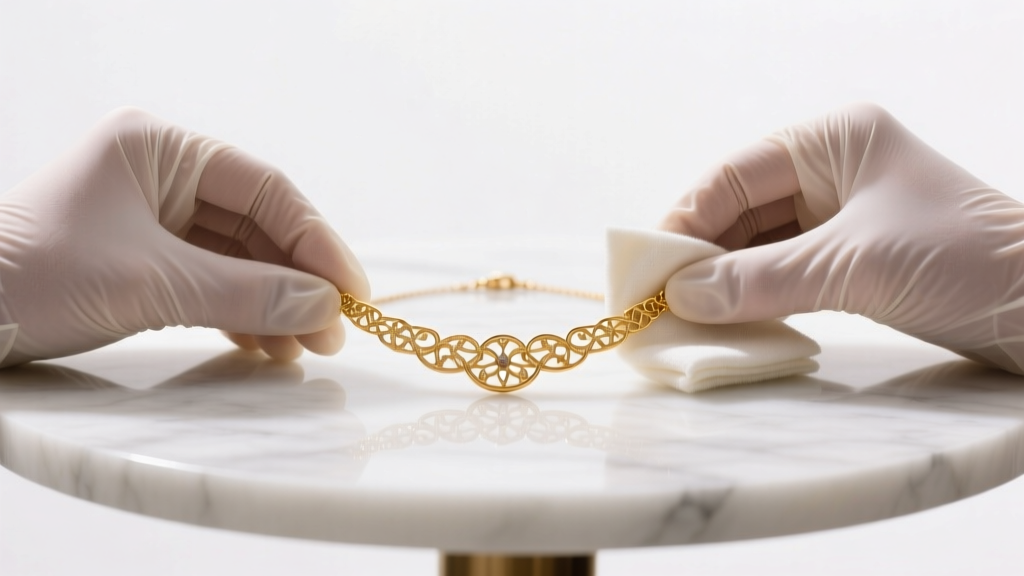
The Expert Cleaning Recipe:
- Mix 3 drops of pH-neutral dish soap (like Dawn Platinum) into 1 cup of lukewarm distilled water.
- Soak the jewelry for exactly 3 to 5 minutes to loosen sebum and lotions.
- Use a brand-new, ultra-soft baby toothbrush to gently agitate crevices.
- Rinse under a gentle stream of distilled water (tap water contains chlorine and hard minerals that can spot the gold).
- Pat dry with a lint-free microfiber cloth; never air dry, as water spots will etch into the finish over time.
PVD Coating vs. Traditional Electroplating
As of 2026, many brands marketing 'high quality gold plated jewelry' are actually using PVD (Physical Vapor Deposition). PVD involves vaporizing titanium nitride and gold in a vacuum chamber, bonding it to the base metal at a molecular level. PVD is up to 10 times more resistant to friction and sweat than traditional wet electroplating. If your piece is PVD coated, it will not flake or peel; it will only slowly fade over years of heavy wear. Troubleshooting PVD is limited to gentle cleaning, as it cannot be easily replated by standard jewelers due to the vacuum chamber requirements.
When to Replate: Costs and Logistics
When home maintenance fails, professional replating is the ultimate restoration tool. According to industry benchmarks from suppliers like the Gemological Institute of America (GIA), maintaining a piece via replating is highly sustainable. In 2026, expect to pay between $45 and $85 to replate a standard ring, and $120 to $200 for a complex chain or bracelet. Always specify to your jeweler that you want a minimum of 2.5 microns of 18k gold and request a hypoallergenic palladium strike layer instead of nickel, which is a common skin irritant. With proper diagnostic care and maintenance, high quality gold plated jewelry can easily provide a decade of flawless wear.


