Selling Gold Jewelry Cash Calculator: Beginner Guide
Learn how to use a selling gold jewelry cash calculator to determine melt value, understand karat weights, and get the best payout for your scrap gold.

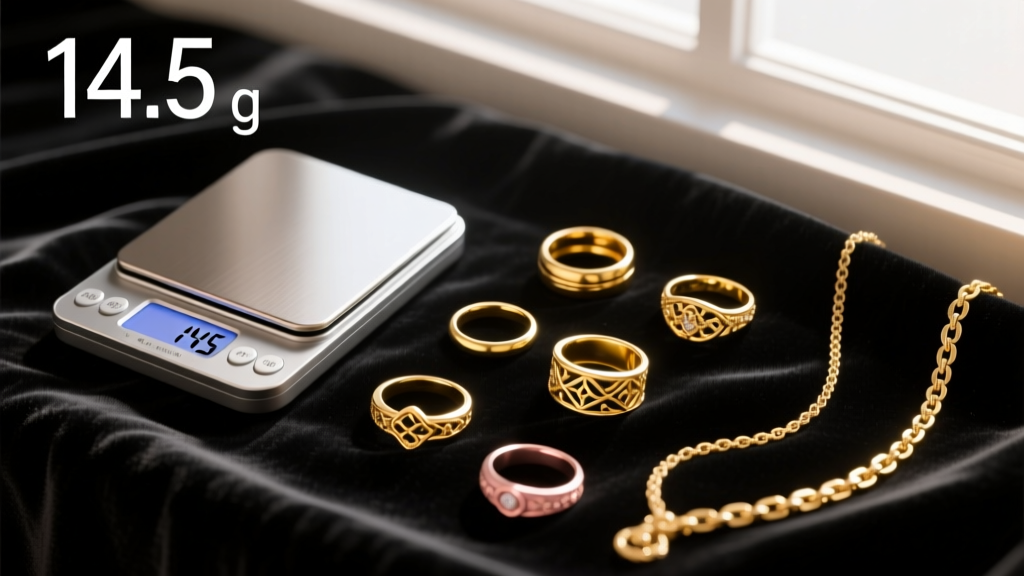
When you inherit a box of old jewelry or decide to liquidate pieces you no longer wear, the first question is always: How much is this actually worth? If you have started researching, you have likely encountered a selling gold jewelry cash calculator. These digital tools are your first line of defense against lowball offers, but they can be confusing if you do not understand the underlying math. Gold buyers use specific metrics—troy ounces, pennyweights, and karat decimals—that differ wildly from everyday measurements.
This beginner-friendly guide will demystify the calculator process, teach you how to weigh and grade your gold at home, and explain why the final cash offer in your hand will almost always be lower than the calculator's raw output.
The Basics: What a Selling Gold Jewelry Cash Calculator Actually Does
A gold cash calculator does not appraise the aesthetic, historical, or brand value of your jewelry. Unless you are selling a verified piece from a luxury house like Cartier or Tiffany & Co., buyers view your items as 'scrap' or 'melt' gold. The calculator's sole purpose is to determine the melt value—the exact cash value of the pure gold content inside your items based on the current live commodities market.
According to the Gemological Institute of America (GIA), gold jewelry is an alloy, meaning it is mixed with other metals like copper, silver, or zinc to increase durability. The calculator strips away the value of those alloy metals and focuses strictly on the pure gold weight.
Step 1: Weighing Your Gold (Avoiding the Ounce Trap)
The most common mistake beginners make is using a standard kitchen scale and measuring in regular (avoirdupois) ounces. The precious metals market does not use regular ounces; it uses Troy ounces and grams.

Grams vs. Pennyweights vs. Troy Ounces
Most online calculators will ask for your weight in grams, but some traditional pawn shops use pennyweights (dwt). Here is the exact conversion math you need to know before inputting your numbers:
- 1 Troy Ounce = 31.103 grams (Not 28.35g like a standard kitchen ounce)
- 1 Pennyweight (dwt) = 1.555 grams
- 1 Troy Ounce = 20 Pennyweights
Pro Tip: Invest in a cheap digital jewelry scale (usually under $15 online) that measures down to 0.01 grams. Kitchen scales are rarely accurate enough for small jewelry items and can skew your calculator results by several dollars.
Step 2: Identifying Karat Purity (The Multiplier Effect)
Once you have your precise weight in grams, you must identify the karat (k) purity. Pure gold is 24k, but it is too soft for everyday jewelry. Therefore, your items will be stamped with a hallmark indicating their purity. You will need to find this stamp using a jeweler's loupe or a strong magnifying glass.
The selling gold jewelry cash calculator uses a decimal multiplier to separate the pure gold from the alloy. Here is the master chart for standard jewelry purities:
| Karat Stamp | Purity Percentage | Calculator Decimal Multiplier | Common Jewelry Types |
|---|---|---|---|
| 10k (or 417) | 41.7% | 0.417 | Class rings, budget chains, durable everyday bands |
| 14k (or 585) | 58.3% | 0.583 | Most US engagement rings, standard chains, earrings |
| 18k (or 750) | 75.0% | 0.750 | High-end luxury jewelry, European wedding bands |
| 22k (or 916) | 91.6% | 0.916 | Indian and Middle Eastern bridal jewelry, coins |
| 24k (or 999) | 99.9% | 0.999 | Investment bullion, coins, very soft traditional pieces |
Step 3: Plugging the Numbers into the Calculator
Now that you have your weight and your multiplier, you are ready to use the calculator. To get an accurate result, you must input the current 'Spot Price' of gold. You can find the live spot price per gram on authoritative market trackers like Kitco.
The Melt Value Formula
If the calculator you are using doesn't do the math automatically, here is the exact formula buyers use behind the counter:
(Total Weight in Grams) × (Karat Decimal) × (Current Spot Price per Gram) = Melt Value
Real-World Example:
Let us say you have a 14k gold chain that weighs exactly 15.0 grams. The current spot price of gold is $65.00 per gram.
- 15.0 grams × 0.583 (14k multiplier) = 8.745 grams of pure gold.
- 8.745 grams × $65.00 (spot price) = $568.42 Melt Value.
This $568.42 is the absolute maximum theoretical value of the gold content. However, you will never receive this exact amount in cash. Here is why.

Why Your Cash Offer is Lower Than the Calculator Result
Beginners often feel cheated when a calculator spits out $568, but the buyer across the desk only offers $400. It is vital to understand that gold buyers are running a business. They must refine the gold, pay for overhead, and make a profit. The difference between the calculator melt value and your cash offer is the buyer's margin.
Understanding Buyer Margins by Category
Not all buyers take the same cut. Where you sell dictates how close to the calculator's result you will get:
- Pawn Shops & Mall Kiosks (30% to 50% Margin): These storefronts have high rent and staffing costs. They offer immediate cash but take the largest cut. Expect to receive 50% to 70% of the calculator's melt value.
- Online Mail-In Buyers (15% to 25% Margin): Companies that mail you a secure packet and assay your gold in a lab have lower overhead. They typically pay 75% to 85% of the melt value. The trade-off is waiting 5 to 10 days for payment.
- Direct Refineries & Precious Metal Exchanges (5% to 15% Margin): If you have a large volume of scrap gold (over 50 grams), selling directly to a refinery or a specialized precious metals exchange yields the highest payout, often 85% to 95% of the calculator result.
Pro Tips for Maximizing Your Cash Payout
To ensure you get as close to the selling gold jewelry cash calculator estimate as possible, follow these expert troubleshooting steps before you walk into a buyer's shop:
- Remove Non-Gold Components: If your jewelry features heavy gemstones, enamel, or steel clasps, the buyer will deduct weight or refuse the piece. If you have a gold chain with a heavy steel pendant, remove the pendant before weighing.
- Separate by Karat: Never hand a buyer a mixed bag of 10k, 14k, and 18k gold. They will likely weigh it all together and calculate the entire batch at the lowest purity (10k). Sort your items into separate piles and weigh them individually.
- Know the 'Acid Test' Reality: Buyers will scratch your gold on a testing stone and apply nitric acid to verify the karat. If your item is heavily worn or plated, the acid test might reveal it is gold-filled rather than solid gold, which drastically drops the calculator value.
- Get Three Quotes: Because margins vary wildly, take your pre-calculated melt value sheet to three different local buyers. Use the calculator result as leverage to negotiate a higher percentage.
Summary Checklist Before You Sell
Before you finalize any transaction, ensure you have completed this quick checklist:
- [ ] Weighed all items on a calibrated digital scale in grams.
- [ ] Verified the karat stamp on every single piece with a loupe.
- [ ] Checked the live daily spot price on a trusted financial site.
- [ ] Inputted the data into a selling gold jewelry cash calculator.
- [ ] Calculated a realistic expected offer (Melt Value minus 20% margin).
By understanding the mechanics behind the calculator, you transition from a vulnerable beginner to an informed seller. Gold is a highly liquid asset, and with the right data in hand, you can ensure you receive a fair, market-accurate payout for your unwanted jewelry.


