Gold & Silver Loans & Jewelry: 2026 Value Assessment Guide
Learn how to assess melt value, LTV ratios, and market rates for gold & silver loans & jewelry in 2026. Maximize your collateral budget today.


The Economics of Pawning: Melt Value vs. Retail Reality
When navigating the complex market of gold & silver loans & jewelry collateralization, the most critical mistake consumers make is conflating retail replacement value with intrinsic melt value. In 2026, with precious metal markets experiencing sustained volatility and gold spot prices hovering near historic highs, understanding the mechanics of Loan-to-Value (LTV) ratios is essential for anyone looking to leverage their collection for short-term liquidity.
Lenders and pawn brokers do not care about the brand name stamped on your clasp, the intricate craftsmanship of your chain, or the sentimental value of your heirloom pieces. Unless you are dealing with a specialized high-end luxury lender (who might recognize brands like Cartier, Van Cleef & Arpels, or Tiffany & Co.), your jewelry is evaluated strictly as raw commodity bullion. A 14k gold chain purchased at a retail mall for $2,500 may only contain $650 worth of actual gold. A standard collateral lender will then apply an LTV ratio of 40% to 60% against that melt value, offering you a loan of $260 to $390. Understanding this harsh mathematical reality is the first step in an accurate budget and value assessment.
Calculating Your Collateral: The Troy Ounce and Pennyweight Matrix
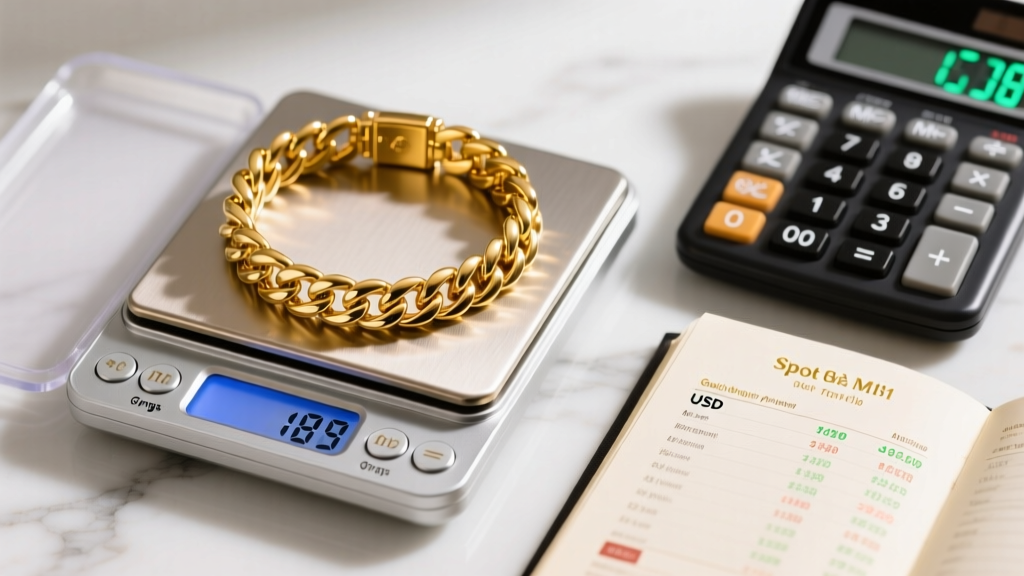
To accurately assess your budget before walking into a lending office, you must understand the units of measurement used in the precious metals trade. Jewelry is weighed in grams or pennyweights (dwt). There are exactly 31.1035 grams in one Troy Ounce, and 20 pennyweights in one Troy Ounce (meaning 1 dwt = 1.555 grams). Unscrupulous buyers may attempt to use standard avoirdupois ounces (28.34 grams) to shortchange sellers. Always verify that the digital scale on the counter is calibrated to grams or dwt.
Below is a 2026 assessment matrix based on a hypothetical spot price of $2,350 per Troy Ounce for gold and $29.00 for silver. This table illustrates the drastic drop from pure melt value to actual loan offers.
| Material & Purity | Gold/Silver Content | Est. Melt Value (Per Gram) | Typical Loan Offer (40-60% LTV) |
|---|---|---|---|
| 10k Gold (41.7%) | Lowest purity for 'solid gold' in US | $31.52 | $12.60 - $18.90 |
| 14k Gold (58.3%) | Standard US jewelry purity | $44.06 | $17.60 - $26.40 |
| 18k Gold (75.0%) | High-end / European standard | $56.67 | $22.65 - $34.00 |
| 925 Sterling Silver | 92.5% pure silver alloy | $0.86 | $0.30 - $0.50 |
Note: Live spot prices fluctuate daily. Always check authoritative commodity trackers like Kitco before negotiating a loan.
The Silver Dilemma: Volume vs. Liquidity
While gold remains a premium collateral asset, silver presents a unique logistical problem for lenders. Because silver's price-per-ounce is roughly 1/80th that of gold, it takes a massive volume of silver to secure a meaningful loan. To secure a $500 loan on 925 sterling silver, you would need to pawn over 1.5 kilograms (approx. 3.3 lbs) of metal. Most standard pawn shops lack the secure storage space and immediate liquidity to handle bulk silver, resulting in heavily suppressed LTV ratios—often as low as 20% to 30% of melt value. For budget assessments, silver jewelry is generally better suited for outright liquidation via private buyers or melting houses rather than collateralized loans.
How Lenders Test and Grade Your Pieces
Before any money changes hands, your jewelry must be authenticated. In 2026, the industry relies on a mix of traditional and advanced testing methodologies to weed out sophisticated counterfeits, gold-filled items, and thick vermeil plating.
XRF Spectrometry vs. Traditional Acid Tests
Historically, lenders used the scratch-and-acid method. A file is used to notch the metal, and nitric acid is applied to observe the color reaction. While cheap, this method is destructive and only tests the surface layer. Today, reputable lenders utilize X-Ray Fluorescence (XRF) spectrometry. An XRF gun fires x-rays into the metal and reads the fluorescent energy signatures bouncing back, providing an exact elemental breakdown (e.g., 58.1% gold, 35% copper, 6.9% zinc) in seconds without damaging the piece. If a lender relies solely on acid tests for high-value items, consider taking your business to a more technologically equipped buyer.
The Gemstone Deduction Penalty
One of the most painful realities of pawning diamond-encrusted gold jewelry is the 'gemstone deduction.' Melee diamonds (stones under 0.10 carats) possess virtually zero secondary market value for pawn brokers. When you hand over a heavy 14k gold tennis bracelet paved with small diamonds, the lender will estimate the total weight of the stones and subtract it from the gross weight before calculating your gold melt value. Unless your piece features a center stone of 1.00 carat or higher, accompanied by a GIA or AGS grading report, the diamonds will not increase your loan offer.
Strategic Alternatives to Collateralization
If your budget and value assessment reveals that a pawn loan will only net you 40% of your jewelry's intrinsic worth, consider these alternative liquidation and refinancing strategies:
- Direct-to-Consumer Marketplaces: Platforms like eBay or specialized jewelry forums allow you to capture closer to 80-90% of melt value, or even a slight premium for vintage designer pieces. This requires patience and an understanding of safe shipping and insurance protocols.
- Precious Metal Refineries: If you are liquidating broken or mismatched gold (scrap), bypass the pawn shop entirely and use a mail-in refinery. Reputable refineries charge a small processing fee but pay out 95% to 98% of the actual melt value, vastly outperforming pawn LTVs.
- Consignment Jewelers: For high-end pieces with recognizable brand cachet, local consignment shops will authenticate, clean, and display your item, taking a 20-30% commission only after the piece sells at near-retail secondary market prices.
Regulatory Protections and Final Negotiation Tactics
Before finalizing any loan, be aware of your consumer rights. According to the Federal Trade Commission (FTC) and various state-level pawn regulations, lenders are required to provide clear, written disclosures regarding interest rates, storage fees, and the exact grace period before your collateral is forfeited and sold. In 2026, many states have capped monthly pawn interest rates, but ancillary 'vault fees' can still inflate your repayment burden.
Always negotiate. Bring your own calibrated digital pocket scale to verify the weight of your items before the lender places them on their scale. Clean your jewelry thoroughly before your appointment; dirt, lotion, and grime can add up to 0.5 grams of dead weight to a heavy chain, and lenders will aggressively under-weigh items they suspect are dirty to protect their margins. By mastering the math of melt values, understanding the limitations of silver collateral, and leveraging modern testing expectations, you can confidently navigate gold & silver loans & jewelry markets while protecting your financial bottom line.


