Highest Karat Gold Jewelry: Troubleshooting Bends & Scratches
Is your highest karat gold jewelry bending or scratching? Discover expert troubleshooting tips to fix, protect, and maintain soft 22k and 24k gold pieces.

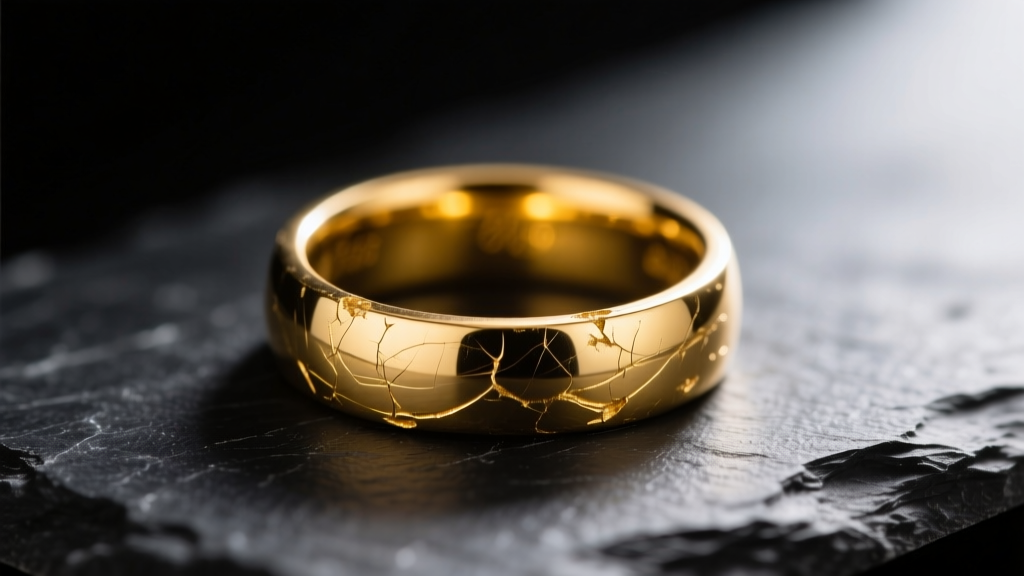
Owning the highest karat gold jewelry—typically 22k (91.6% pure) or 24k (99.9% pure)—is a statement of wealth, heritage, and investment. However, from a metallurgical and structural perspective, pure gold is a nightmare for daily wear. If you have inherited a 24k gold bangle that constantly warps, or a 22k signet ring that has lost its shape and gemstones, you are experiencing the inherent physical limitations of pure elemental gold. This guide moves beyond generic care advice and provides actionable, bench-level troubleshooting protocols for repairing, reinforcing, and maintaining high-karat gold pieces.
The Metallurgical Reality: Why Highest Karat Gold Fails
To troubleshoot high-karat jewelry, you must understand its crystalline structure. Pure gold (Au) possesses a face-centered cubic crystal lattice that allows its atomic planes to slide over one another with minimal resistance. This translates to extreme malleability and ductility, but exceptionally low hardness.
According to the Gemological Institute of America (GIA), pure 24k gold registers a mere 2.5 to 3 on the Mohs hardness scale—roughly the same hardness as a human fingernail. When we look at the Vickers Hardness (HV) scale, which is more precise for metals, the disparity becomes glaringly obvious:
- 24k Gold (99.9%): ~25-30 HV
- 22k Gold (91.6%): ~40-50 HV
- 18k Gold (75.0%): ~120-150 HV
- 14k Gold (58.3%): ~140-170 HV
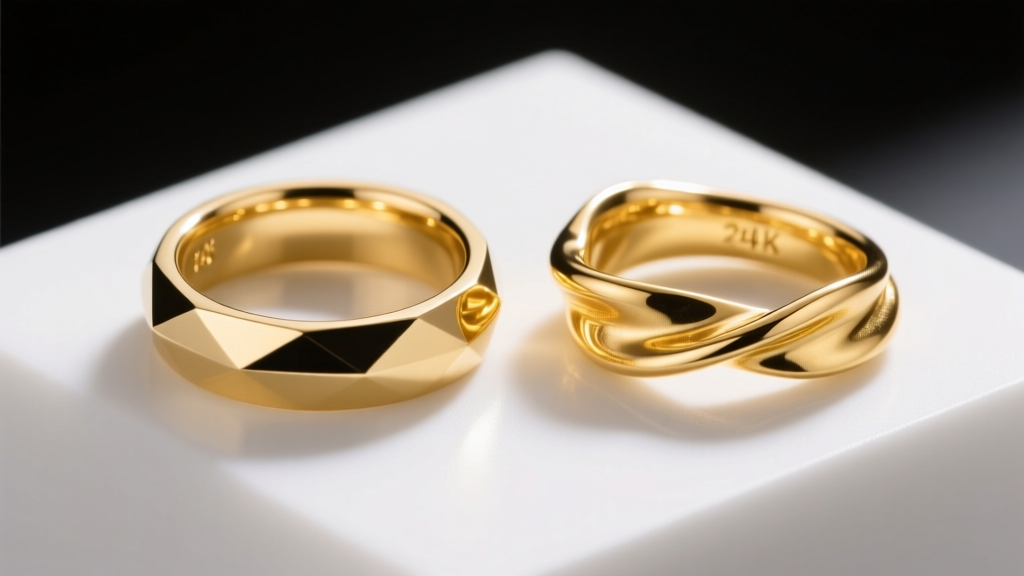
Because 24k and 22k gold lack the alloying metals (like copper, zinc, or nickel) that create rigid crystalline grain boundaries, any lateral force will cause the metal to yield, bend, or scratch rather than resist.
Troubleshooting Common 24K and 22K Gold Disasters
When high-karat jewelry fails, standard repair techniques used for 14k or 18k gold can actually destroy the piece. Here is how to properly troubleshoot the most frequent structural failures.
Problem 1: Warped and Oval-Shaped Ring Shanks
The Issue: A 24k gold ring will easily compress into an oval shape simply from gripping a steering wheel or carrying heavy grocery bags. The Standard Fix (Avoid): Forcing the ring back onto a steel mandrel and hammering it with a rawhide mallet. This causes "work-hardening." While work-hardening increases the HV slightly, doing this to 24k gold without proper thermal treatment will cause microscopic stress fractures, eventually leading to the shank snapping. The Expert Protocol: The jeweler must first anneal the ring. This involves heating the gold uniformly with a torch to a dull cherry red (approximately 1100°F / 593°C) and immediately quenching it in water. This realigns the crystal lattice, making it perfectly soft. Only then should it be gently reshaped on the mandrel. Finally, a light planishing (tapping) with a polished steel hammer will introduce just enough surface work-hardening to help it hold its new round shape without compromising the core integrity.
Problem 2: Loose Gemstones and Prong Failure
The Issue: Gemstones set in 22k or 24k prongs frequently fall out. The prongs simply peel back over the stone's girdle due to friction against clothing. The Standard Fix (Avoid): Re-tipping the prongs with 24k gold wire. The new tips will just bend again within months. The Expert Protocol: You must abandon prong settings for the highest karat gold jewelry. The permanent solution is a setting conversion. Have a master jeweler CAD-model and cast a custom bezel setting in 18k white gold or platinum, which is then laser-welded into the 22k/24k gold mounting. The 18k/PT bezel will securely grip the stone's girdle, while the laser weld prevents the surrounding high-karat gold from melting or losing its temper during the repair.
Problem 3: Deep Scratches and Loss of Luster
The Issue: High-karat gold scratches if it rubs against a brass key or even a harder plastic surface. Over time, the piece looks dull and heavily scuffed. The Standard Fix (Avoid): Motorized buffing with rouge. This removes significant layers of gold. On a 24k piece, aggressive buffing will alter the weight, melt delicate filigree, and destroy crisp hallmarks. The Expert Protocol: Hand burnishing. Using a highly polished agate or steel burnisher, the jeweler rubs the surface of the gold under high pressure. This does not remove metal; instead, it compresses the displaced gold back into the scratches, smoothing the surface and restoring a mirror-like, work-hardened finish that is slightly more resistant to future micro-scratches.
Structural Reinforcement: Design Modifications for Daily Wear
If you insist on wearing 22k or 24k gold rings daily, you must engineer structural redundancies into the design. Below are the most effective reinforcement methods utilized by high-end bespoke jewelers.
| Reinforcement Method | Application | Metallurgical Benefit | Estimated Cost (2026) |
|---|---|---|---|
| Euro-Shank / Inner Sleeve | Ring interiors | A spring-tempered 14k or 18k gold sleeve is fitted inside the 24k shank, bearing the structural load and preventing oval warping. | $150 - $350 |
| Alloyed Solder Joints | Chain links & clasps | Using 14k or 18k hard solder at the joints of a 22k chain prevents the links from pulling apart at their weakest stress points. | $45 - $90 |
| Titanium/PT Core Inserts | Hinged bangles & cuffs | A hidden titanium or platinum core wire provides rigid tensile strength while allowing the exterior to remain pure 24k gold. | $400 - $800+ |
Daily Maintenance and Preventative Care Framework
Preventing damage to high-karat gold requires a strict protocol. The World Gold Council notes that while pure gold is highly resistant to chemical tarnish and oxidation, its physical vulnerability requires meticulous handling.
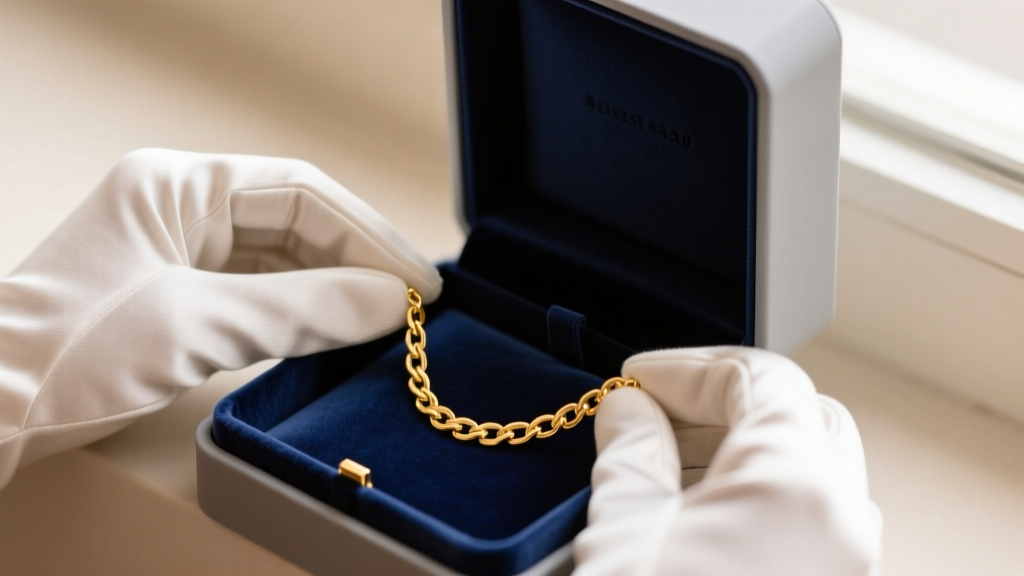
- Isolated Storage: Never store 24k or 22k jewelry in a communal box. The Vickers hardness of a standard diamond (10,000 HV) or even a sapphire (2,000 HV) will act like a knife against pure gold. Store each piece in an individual, soft velvet pouch or a fabric-lined compartment.
- The Ultrasonic Ban: Never put highest karat gold jewelry into an ultrasonic cleaner. The high-frequency cavitation bubbles can easily shake loose stones from soft high-karat prongs, and the vibrations can fatigue thin, soft gold wirework.
- Chemical Cleaning: Use only a mild, phosphate-free dish soap and lukewarm water. Clean with a baby-soft toothbrush. Avoid stiff bristles, which will leave micro-abrasions on the 24k surface.
- Wear Sequencing: Put your high-karat gold jewelry on after applying cosmetics, perfumes, and hairspray. While pure gold won't tarnish from these chemicals, the microscopic residue builds up in the soft scratches, creating a dull, grayish film that is difficult to remove without aggressive polishing.
When to Melt Down and Re-Alloy: The Last Resort
Sometimes, a piece of 24k gold jewelry is simply too structurally compromised to be saved. If a family heirloom 22k ring has been resized multiple times, suffers from severe porosity, or has a shank that is paper-thin from decades of wear, band-aid repairs are a waste of capital.
In these scenarios, the most practical troubleshooting step is to melt the piece down and re-alloy it. By introducing copper and silver, a master refiner can drop the purity to 18k (75%) or 14k (58.3%). While this technically reduces the "purity" of the gold, it exponentially increases the Vickers hardness, allowing the gold to be recast into a modern, structurally sound mounting that will actually survive daily wear. You retain the exact sentimental gold mass of the original piece, but transform it from a fragile museum artifact into a resilient, wearable asset.
Final Bench Notes
Troubleshooting the highest karat gold jewelry requires a departure from standard bench practices. It demands an understanding of thermal annealing, a willingness to integrate lower-karat or platinum structural supports, and a commitment to non-destructive finishing techniques like burnishing. By respecting the metallurgical limits of pure gold, you can preserve the immense value and heritage of these exceptional pieces without sacrificing their structural integrity.


