2026 Style Trends: Navigating a Gold and Jewelry Emporium
Discover 2026 gold jewelry trends and learn how to navigate a modern gold and jewelry emporium for the best karats, textures, and investment pieces.

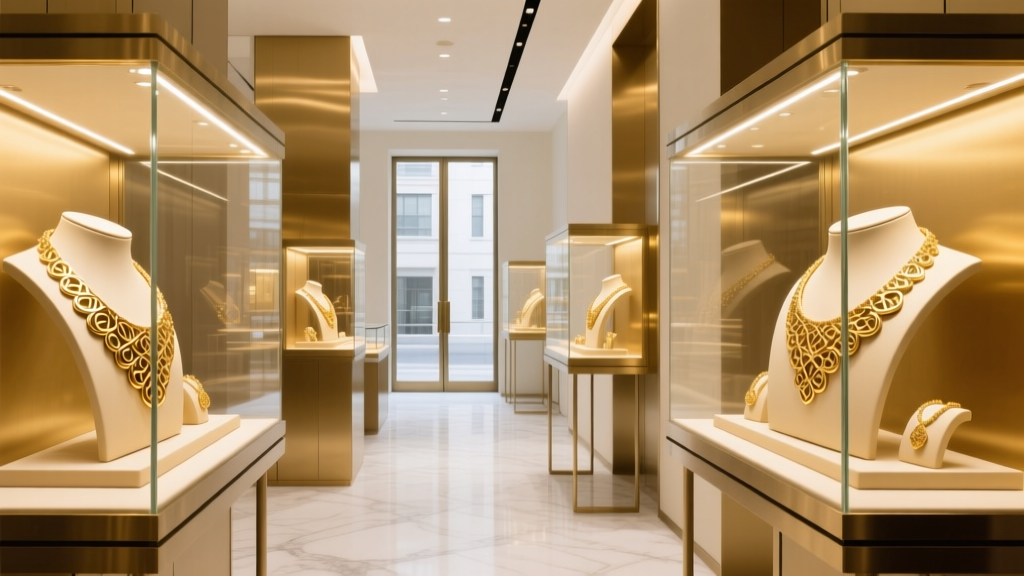
The Resurgence of the Curated Gold and Jewelry Emporium
In the landscape of 2026 fine accessories, the traditional single-brand boutique is being rapidly eclipsed by the modern gold and jewelry emporium. These expansive, highly curated retail ecosystems—both physical flagship galleries and elite digital aggregators—offer a cross-section of global gold trends, independent artisans, and heritage houses under one roof. For the serious collector and style enthusiast, navigating an emporium requires a shift in strategy. You are no longer just buying a piece of jewelry; you are navigating a complex matrix of karats, artisan premiums, and macro-trends.
According to market analyses by the World Gold Council, consumer demand for gold jewelry has pivoted heavily toward 'slow jewelry' and tactile, expressive pieces. The emporium model caters perfectly to this by offering side-by-side comparisons of mass-cast commercial gold and hand-forged artisanal works. To maximize your curation in 2026, you must understand the prevailing style movements and the structural metallurgy that supports them.
2026 Gold Trend Forecast: What to Look For
When stepping into a high-end emporium, the visual merchandising is designed to overwhelm. To cut through the noise, focus on the two dominant gold trends defining the 2026 sartorial landscape: mixed-karat alchemy and tactile surface textures.
1. Mixed-Karat Layering and Stacking
The days of strictly matching your 14k yellow gold chain to a 14k yellow gold pendant are over. The 2026 trend is 'Karat Alchemy'—intentionally mixing 10k, 14k, 18k, and even 22k gold within a single layering stack. The visual contrast is striking: the pale, slightly greenish undertone of 10k or 14k gold provides a modern, industrial backdrop that makes the buttery, saturated orange-yellow of 22k gold pop.
Styling Framework: Use 14k gold for your foundational, weight-bearing chains (like paperclip or Cuban links) due to its superior tensile strength. Reserve 18k and 22k gold for terminal beads, pendants, and decorative clasps where structural stress is minimal but visual impact is paramount.
2. Florentine, Bark, and Hammered Textures
High-polish, mirror-finish gold is taking a backseat to matte and heavily textured surfaces. The modern gold and jewelry emporium is currently dominated by pieces that look organic and ancient. The Gemological Institute of America (GIA) notes that surface finishing techniques are increasingly being used to mask micro-scratches and enhance the perceived depth of the gold's color.
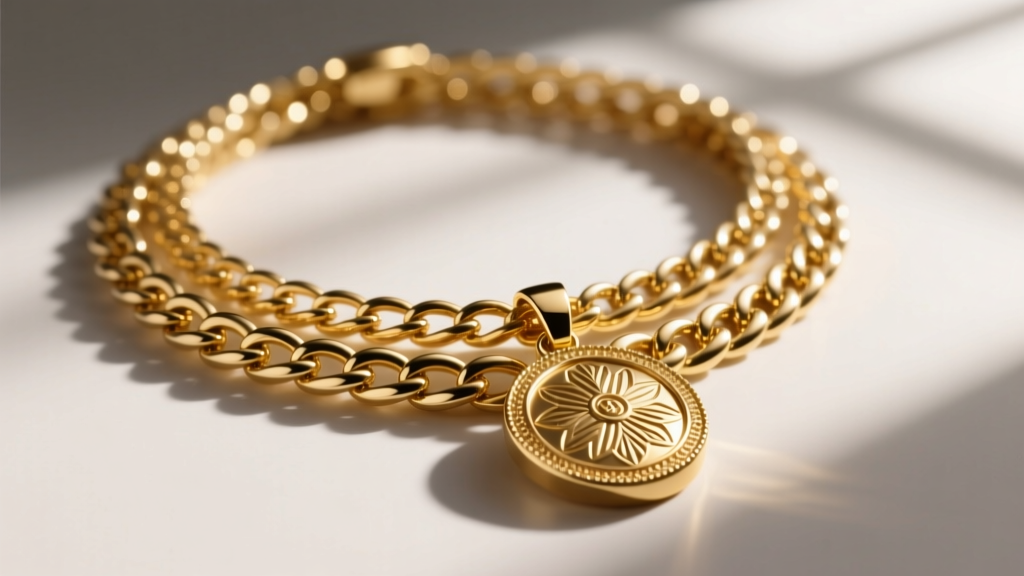
- Florentine Finish: Achieved by hand-engraving a cross-hatched pattern into the gold using a specialized burin. This technique scatters light, giving the metal a soft, woven, matte appearance that hides daily wear exceptionally well.
- Bark Texture: Created during the lost-wax casting process by pressing actual tree bark or organic materials into the wax mold before casting. The result is a rugged, wood-grain surface that appeals to the 2026 'earthy luxury' aesthetic.
- Planished Hammering: Overlapping, shallow hammer strikes that create a faceted, dimpled surface, catching the light in a fragmented, organic way.
Karat Selection Framework for Statement Pieces
An emporium will offer a vast array of purities. Understanding the Vickers Hardness (HV) scale is critical when selecting statement pieces that must endure daily wear. Pure gold is exceptionally soft, meaning alloying metals (copper, silver, zinc) are introduced not just for color, but for structural integrity.
| Karat | Purity | Vickers Hardness (Approx.) | Ideal 2026 Application | Emporium Availability |
|---|---|---|---|---|
| 10k | 41.7% | 135-145 HV | Heavy everyday chains, structural clasps | High (Commercial) |
| 14k | 58.3% | 120-130 HV | Versatile layering pieces, signet rings | Very High |
| 18k | 75.0% | 90-110 HV | Luxury statement rings, premium hoops | High (Curated) |
| 22k | 91.6% | 40-50 HV | Pendants, terminal beads, investment bangles | Moderate (Artisan) |
| 24k | 99.9% | 20-25 HV | Collectible art pieces, bezel-set accents | Low (Specialty) |
Pricing Metrics: Spot Price vs. Artisan Premium
When evaluating pieces in a gold and jewelry emporium, consumers must decouple the 'melt value' of the gold from the 'artisan premium.' The spot price of gold dictates the raw material cost, but the craftsmanship dictates the retail reality.
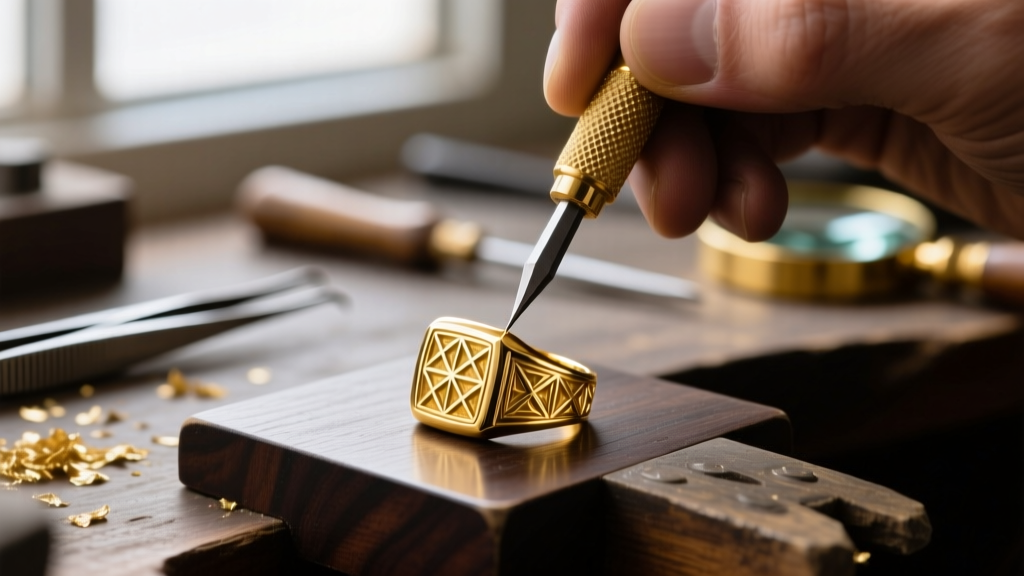
Consider a standard 10-gram 14k gold curb chain. Based on a hypothetical spot price of $2,400 per ounce, the raw gold value is roughly $450.
- Mass-Market Retail: Priced at $650 - $800 (a 40-75% premium for machine-casting, basic polishing, and brand overhead).
- Artisan Emporium Piece: A 10-gram 14k chain with hand-hammered links and a custom-forged S-clasp will routinely command $1,400 to $2,200. This 200-300% premium reflects the hours of bench work, the unique design IP, and the curated retail environment.
According to Jewelers of America, educated consumers are increasingly willing to pay these artisan premiums, viewing heavily textured, hand-finished gold not merely as adornment, but as wearable, liquid art that retains value better than mass-produced alternatives.
Authentication and Sourcing in Expansive Retail Spaces
The sheer volume of inventory in a modern emporium necessitates a rigorous approach to authentication. While reputable establishments guarantee their stock, the savvy buyer always verifies.
Expert Sourcing Rule: Never rely solely on the clasp tag for purity verification. Always inspect the interior of the ring shank or the underside of the pendant bail for the dual hallmark: the Maker's Mark (identifying the artisan or foundry) and the Purity Mark (e.g., 750 for 18k, 585 for 14k).
Top-tier physical emporiums in 2026 are now equipped with desktop XRF (X-ray Fluorescence) analyzers. This non-destructive testing method bounces X-rays off the metal to determine its exact elemental composition in seconds. If you are purchasing high-premium 22k or 24k investment pieces from an independent vendor within the emporium, request an XRF scan to ensure the piece has not been hollowed out or heavily soldered with lower-karat alloys, which can skew the overall purity.
Final Verdict: Building a 2026 Gold Portfolio
Navigating a gold and jewelry emporium is an exercise in curation, metallurgy, and trend forecasting. By prioritizing mixed-karat layering, seeking out tactile finishes like Florentine and bark textures, and understanding the true cost of artisan labor, you can build a gold jewelry collection that is both structurally sound and stylistically ahead of the curve. The emporium is no longer just a place to purchase; it is a landscape to be mastered.


