How to Read and Verify Gold Stamps on Jewelry Like a Pro
Learn how to read, decode, and verify gold stamps on jewelry. Our step-by-step guide covers karat marks, maker's symbols, and fake hallmarks.

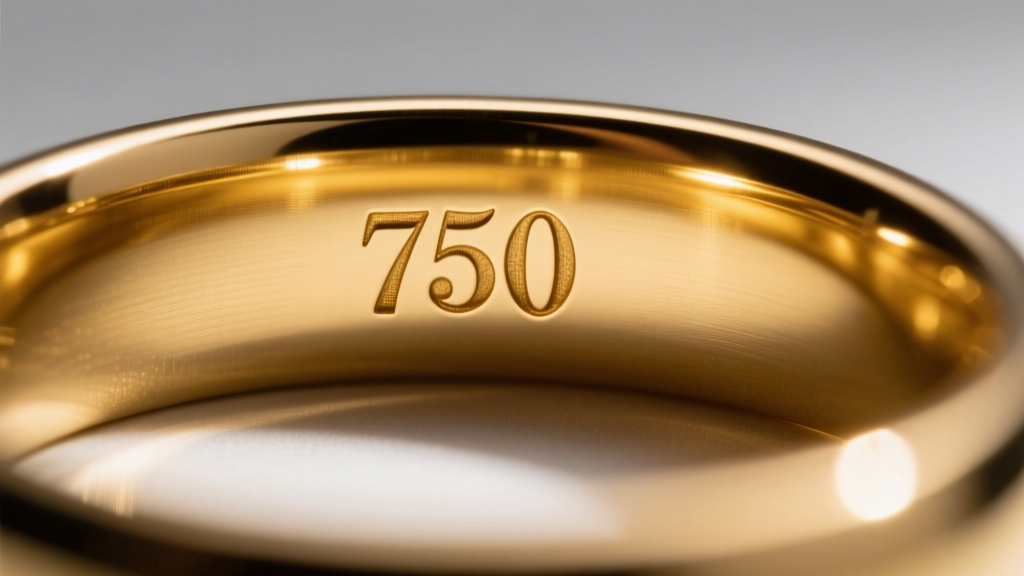
Whether you are inheriting a vintage piece, shopping at an estate sale, or simply trying to understand the value of your everyday accessories, knowing how to interpret gold stamps on jewelry is an essential skill. These tiny engravings, often called hallmarks or purity marks, act as the metal's fingerprint. They tell you exactly what the piece is made of, who made it, and sometimes even where it was assayed. However, not all stamps are created equal, and counterfeit markings are increasingly common in the secondary market.
In this comprehensive guide, we will walk you through the exact steps to locate, decode, and physically verify gold stamps on jewelry, ensuring you never get fooled by misleading markings again.
Step 1: Locate the Hallmark (Where to Look)
Before you can decode a stamp, you have to find it. Jewelers typically place hallmarks in discreet areas that do not interfere with the aesthetic design of the piece. You will need a 10x or 20x jeweler's loupe and a bright light source to spot these micro-engravings.

- Rings: Check the interior of the band. If the ring has been resized, the stamp may have been cut out or polished away.
- Necklaces and Bracelets: Inspect the back of the clasp, the jump ring connecting the clasp to the chain, or a small flat metal tag (often called a 'tag') near the closure.
- Earrings: Look at the back of the post (for stud earrings), the inside curve of the hoop, or the flat backing of a hinged closure.
- Pendants and Charms: Examine the bail (the loop that slides onto the chain) or the flat bottom edge of the piece.
Step 2: Decode the Karat and Fineness Numbers
Once you have located the stamp, the first set of numbers or letters indicates the gold purity. The United States primarily uses the Karat system (out of 24 parts), while Europe and many international markets use the Millesimal Fineness system (parts per thousand). According to the Federal Trade Commission Jewelry Guides, any item sold in the US as 'gold' must be at least 10 karats.
| Karat Stamp | Millesimal Stamp | Gold Purity | Common Use & Characteristics |
|---|---|---|---|
| 10K / 10kt | 417 | 41.7% | Highly durable, budget-friendly, pale yellow hue. The US minimum for solid gold. |
| 14K / 14kt | 585 | 58.3% | The US standard. Excellent balance of durability and rich color. Ideal for daily wear rings. |
| 18K / 18kt | 750 | 75.0% | Rich, deep yellow color. Softer than 14k, often used in high-end fine jewelry and European pieces. |
| 22K / 22kt | 916 | 91.6% | Very soft, vibrant orange-yellow. Common in Indian, Middle Eastern, and Southeast Asian traditional jewelry. |
| 24K / 24kt | 999 | 99.9% | Pure gold. Too soft for structural jewelry; mostly used in investment bullion or specific cultural pieces. |
Note: In the UK, 9K (stamped 375) is a legal and common standard for solid gold, though it is not recognized as 'gold' under US FTC guidelines.
Step 3: Identify Maker's Marks and Assay Symbols
Purity marks only tell half the story. Authentic, high-quality jewelry will often feature additional stamps that trace its origin.
The Maker's Mark
This is the registered trademark of the manufacturer or designer. In the US, the National Stamping Act mandates that if a piece bears a purity mark, it must also bear a registered maker's mark. This can be a brand name (e.g., 'TIFFANY & CO'), initials, or a unique pictorial symbol.
Assay Office Marks (International)
If you are dealing with European or British jewelry, you will encounter Assay marks. The Assay Office London, for instance, stamps a leopard's head to indicate the piece was tested and verified in London. Other UK offices include the anchor (Birmingham) and the rose (Sheffield). These guarantee the metal meets strict legal standards.
Step 4: Spotting Misleading and Fake Gold Stamps
Counterfeiters and unethical sellers often use stamps that mimic solid gold hallmarks but actually indicate gold-plated or gold-filled items. Knowing these deceptive acronyms will save you from costly mistakes.
Warning: A karat stamp followed by any of the letters below means the item is NOT solid gold. It is merely coated or layered with a thin sheet of gold.
- HGE / HGP: Heavy Gold Electroplate / Heavy Gold Plated. Often stamped as '18K HGE'. This is a base metal with a thick layer of plated gold. It holds no intrinsic gold melt value.
- GF: Gold Filled. E.g., '1/20 14K GF'. This means 1/20th of the item's total weight is 14k gold mechanically bonded to a brass core. It is durable but not solid gold.
- EP / EPNS: Electroplated / Electroplated Nickel Silver. The gold layer is microscopically thin and will wear off quickly.
- Vermeil: While vermeil is high-quality (gold plated over sterling silver), it is not solid gold. Look for a '925' stamp alongside the gold karat mark, which indicates a sterling silver base.
For a deeper dive into how plating differs from solid alloys, the Gemological Institute of America (GIA) provides excellent metallurgical breakdowns of gold treatments.
Step 5: Verify the Stamp with Physical Testing
Because stamps can be easily forged with a simple metal punch, a visual inspection is never enough to guarantee authenticity. You must pair the hallmark with physical testing.

The Acid Testing Method
Acid testing is the most reliable at-home method for verifying gold stamps on jewelry. You will need a jeweler's testing stone and a set of nitric acid solutions calibrated for 10k, 14k, 18k, and 22k.
- Make a Scratch: Rub the jewelry firmly against the testing stone to leave a visible streak of metal. Do this in an inconspicuous area if possible.
- Apply the Acid: Place a single drop of the corresponding acid on the streak. If you suspect the piece is 14k (stamped 585), start with the 14k acid.
- Observe the Reaction: If the streak remains bright and unchanged, the metal is at least that karat. If the streak dissolves, fades, or turns milky, the gold is either lower karat or completely fake (like brass or copper).
The Magnet Test (Quick Screen)
Gold is diamagnetic, meaning it is not attracted to magnets. Hold a strong neodymium magnet near the piece. If the jewelry snaps to the magnet, it is heavily alloyed with iron or nickel, or it is entirely counterfeit. Note that some authentic gold jewelry may have steel springs inside the clasps, so test the main body of the piece, not just the clasp.
Troubleshooting: What If There Is No Stamp?
Finding a piece of jewelry with no stamp is incredibly common, especially with vintage, antique, or custom-made items. Under US law, a stamp is technically required for retail sale, but decades of wear, polishing, and resizing can easily erase a shallow hallmark.
If your piece lacks a stamp, do not assume it is fake. Instead, rely on the physical testing methods outlined in Step 5. Take the piece to a certified gemologist or a reputable local jeweler who can perform an X-ray Fluorescence (XRF) scan. This non-destructive test penetrates the surface layer and provides an exact elemental breakdown of the metal alloy in seconds, giving you a definitive answer without relying on a faded stamp.
Final Thoughts
Understanding how to read gold stamps on jewelry empowers you to shop confidently and accurately assess the value of your collection. Always remember the golden rule of jewelry appraisal: a stamp is a claim, but physical testing is the proof. By combining a keen eye for hallmarks with rigorous acid or electronic testing, you can separate genuine heirlooms from clever imitations every single time.


