Safe Homemade Jewelry Cleaner Gold Recipes: A Beginner Guide
Discover safe, effective homemade jewelry cleaner gold recipes. Learn which DIY ingredients protect your solid, plated, and vermeil pieces from damage.

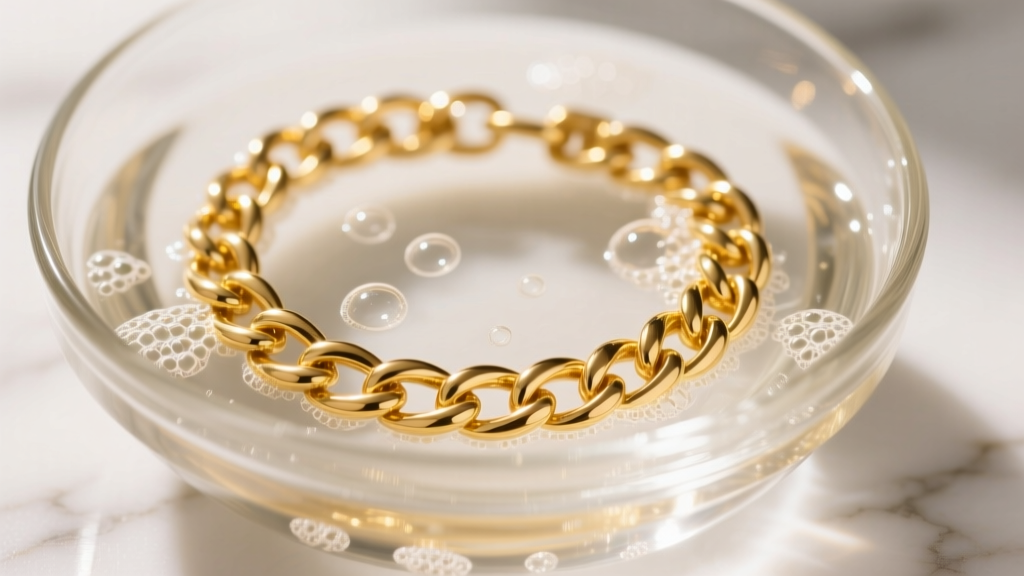
When it comes to maintaining the brilliant luster of your favorite accessories, finding a reliable, safe, and cost-effective cleaning method is essential. Commercial ultrasonic cleaners can sometimes shake delicate gemstones loose, and harsh chemical dips can strip the protective rhodium plating off white gold. This is why searching for a safe homemade jewelry cleaner gold solution is one of the smartest moves a beginner can make. However, not all DIY recipes found on the internet are safe for precious metals. Some popular household ingredients can cause irreversible micro-scratches or chemical corrosion.
In this comprehensive beginner-friendly guide, we will break down the exact chemistry of gold alloys, provide three scientifically sound DIY cleaning recipes, and outline the specific protocols for solid gold, gold vermeil, and gold-plated jewelry. By the end of this article, you will know exactly how to restore your jewelry's factory shine without risking damage.
The Chemistry of Gold: Why Karat Matters in DIY Cleaning
To understand why certain homemade cleaners work, you first need to understand what your jewelry is actually made of. Pure 24-karat gold is a noble metal, meaning it is highly unreactive and will not tarnish. However, 24k gold is too soft for everyday wear (rating just 2.5 to 3 on the Mohs hardness scale). To increase durability, jewelers alloy pure gold with metals like copper, silver, zinc, and nickel.
- 18k Gold: 75% pure gold, 25% alloy metals. Highly resistant to tarnish but can dull from skin oils and lotions.
- 14k Gold: 58.3% pure gold, 41.7% alloy metals. The most common standard for everyday jewelry; the copper and silver content makes it slightly susceptible to oxidation and tarnish over time.
- 10k Gold: 41.7% pure gold, 58.3% alloy metals. Highly durable but the most prone to tarnishing due to the high copper and zinc content.
According to the Gemological Institute of America (GIA), the alloy metals in lower-karat gold are what react with environmental sulfur, oxygen, and household chemicals to create that dark, tarnished film. Therefore, your homemade cleaner must be tough enough to lift this oxidation without attacking the underlying copper or zinc alloys.
3 Safe Homemade Jewelry Cleaner Gold Recipes
Below are three distinct, safe recipes tailored to different levels of dirt and types of gold jewelry. Always ensure your water is lukewarm (between 85°F and 95°F); extreme heat can fracture heat-treated gemstones often set in gold rings.
Recipe 1: The Phosphate-Free Soap & Seltzer Soak (Best for Everyday Solid Gold)
This is the gold standard (pun intended) for routine maintenance of solid 14k and 18k gold jewelry, including pieces with hard gemstones like diamonds, sapphires, and rubies.
- Add 3 drops of a mild, phosphate-free liquid dish soap (like Dawn Ultra) to a small glass bowl.
- Pour in 1/2 cup of lukewarm water and 1/4 cup of plain, unflavored seltzer water. The carbonation in the seltzer creates micro-bubbles that help mechanically lift dirt from intricate settings and prongs.
- Let the jewelry soak for exactly 15 minutes.
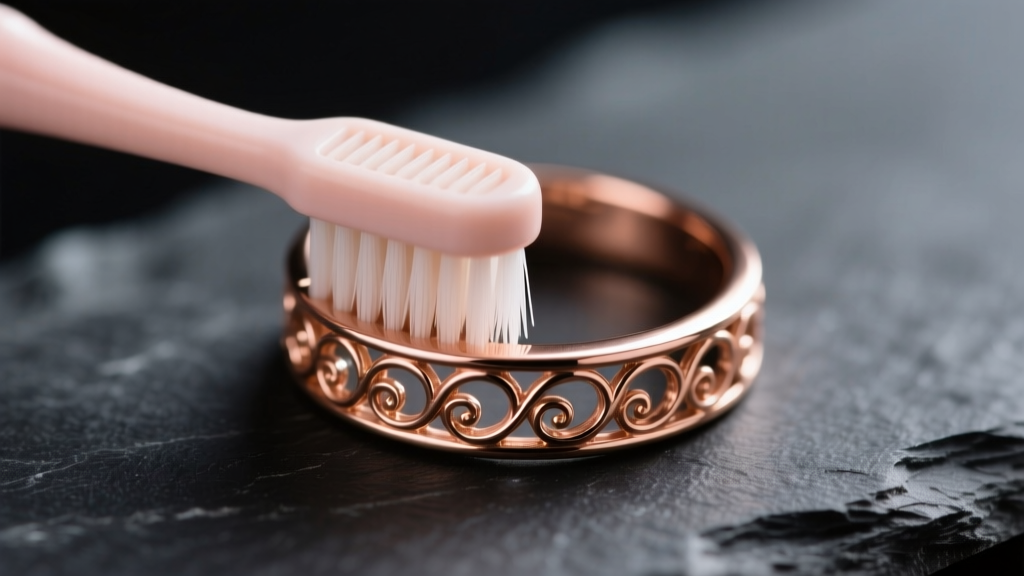
- Gently agitate with an extra-soft baby toothbrush (bristle diameter of 0.1mm or less).
- Rinse under a gentle stream of lukewarm tap water and dry immediately.
Recipe 2: The Galvanic Aluminum Foil Bath (Best for Heavy Tarnish on 10k/14k Gold)
If your lower-karat gold has developed a dark, stubborn tarnish, scrubbing it can cause micro-scratches. Instead, use a galvanic ion-exchange reaction to reverse the oxidation without touching the metal.
- Line the bottom of a glass baking dish with aluminum foil, shiny side up.
- Place your tarnished gold jewelry directly on the foil (it must be touching the metal).
- Sprinkle 1 tablespoon of baking soda and 1 tablespoon of non-iodized salt over the jewelry.
- Pour boiling water into the dish until the jewelry is submerged. You will see immediate bubbling as the galvanic reaction transfers the sulfur tarnish from the gold alloys to the aluminum foil.
- Leave for 2 to 5 minutes, then remove with wooden tongs, rinse, and dry.
Warning: Never use this method on jewelry featuring porous gems like pearls, opals, turquoise, or emeralds, as the boiling water and alkaline solution will destroy their crystalline structure.
Recipe 3: The Baby Shampoo Lather (Best for Delicate Gold Vermeil & Plated Pieces)
Gold vermeil and gold-plated pieces require extreme gentleness to prevent wearing through the microscopic outer layer of gold. Baby shampoo is pH-neutral and free of harsh degreasers that can strip plated finishes.
- Lather a pea-sized amount of baby shampoo between your fingertips with a few drops of room-temperature water.
- Gently massage the lather over the surface of the plated jewelry for 30 seconds. Do not use a brush.
- Rinse quickly in a bowl of clean water (avoid high-pressure faucet streams).
- Pat dry immediately with a lint-free microfiber cloth.
The "Do Not Use" List: Toxic DIY Ingredients for Gold
The internet is rife with dangerous cleaning hacks. The Federal Trade Commission (FTC) Jewelry Guides emphasize the importance of proper material care to maintain the integrity of precious metals. Below is a breakdown of popular DIY ingredients you must absolutely avoid.
| DIY Ingredient | The Chemical Reality | Damage Caused to Gold |
|---|---|---|
| Toothpaste | Contains hydrated silica (Mohs hardness 7). | Gold is Mohs 2.5-3. Toothpaste acts like liquid sandpaper, leaving thousands of permanent micro-scratches that dull the finish. |
| Bleach (Chlorine) | Sodium hypochlorite reacts with gold alloys. | Chlorine attacks the copper and zinc alloys, causing "stress corrosion cracking." It can literally cause prongs to snap and rings to shatter. |
| White Vinegar | Contains acetic acid (pH of roughly 2.5). | While safe for pure 24k, the acid aggressively eats away at the copper and silver alloys in 10k and 14k gold, leaving the surface pitted and porous. |
| Baking Soda Paste | Highly alkaline and physically abrasive. | When mixed into a thick paste and rubbed, the crystalline structure of baking soda scuffs high-polish and satin gold finishes. |
Step-by-Step Cleaning Protocol by Gold Type
Understanding the structural differences between solid gold, vermeil, and plated jewelry is crucial for long-term preservation. The FTC strictly regulates these definitions, and treating them interchangeably will ruin your accessories.
Solid Gold (10k, 14k, 18k, 24k)
Solid gold can withstand the most rigorous cleaning. You can safely use the Seltzer Soak (Recipe 1) weekly, and the Galvanic Foil Bath (Recipe 2) once a month for deep tarnish removal. Solid gold is impervious to water, so soaking is highly effective for loosening trapped lotions and dead skin cells from behind gemstone settings.
Gold Vermeil (Sterling Silver Base)
By definition, gold vermeil must have a sterling silver base and a gold coating of at least 2.5 microns thick. While more durable than standard plating, the gold layer can still wear away over time, exposing the silver beneath (which will then rapidly tarnish). Limit cleaning to the Baby Shampoo Lather (Recipe 3) and never soak vermeil jewelry for more than 60 seconds. Never use the aluminum foil bath, as the galvanic reaction will strip the gold layer from the silver base.
Gold Plated (Brass or Copper Base)
Gold-plated jewelry features a microscopic layer of gold (usually 0.5 microns or less) over a base metal like brass. This layer is incredibly fragile. Avoid soaking plated jewelry entirely. Instead, dampen a soft cotton swab with a tiny bit of soapy water, gently wipe the surface, and immediately dry it. Friction is the enemy of gold plating.
Drying and Polishing: The Final Crucial Steps
The cleaning process is only half the battle; how you dry your gold jewelry dictates its final shine. Air-drying gold jewelry is a common beginner mistake. Tap water contains dissolved minerals like calcium and magnesium. When the water evaporates, it leaves behind hard water spots that look like cloudy smudges on the gold's surface.
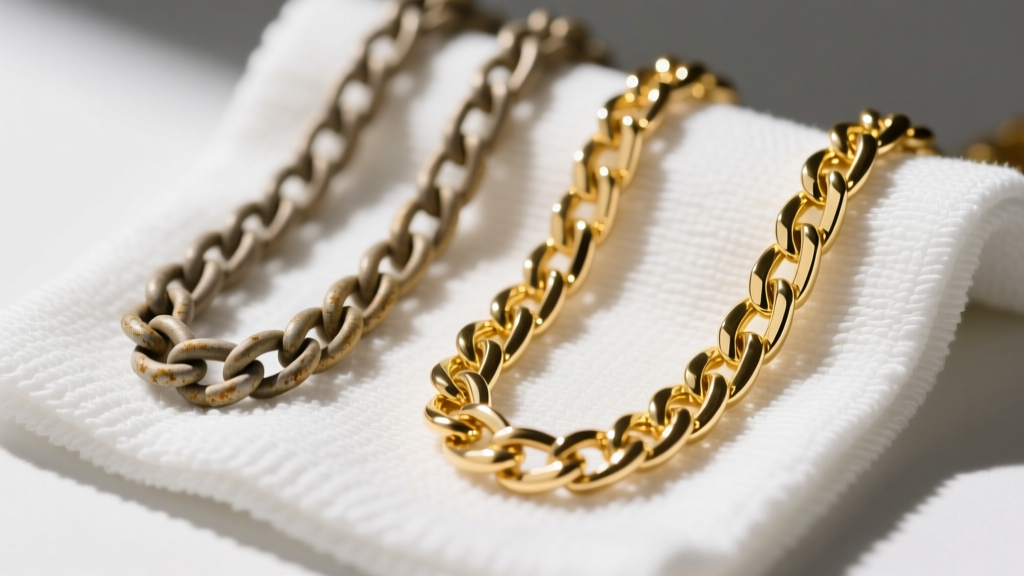
To achieve a flawless, mirror-like finish, follow these drying protocols:
- Ditch the Paper Towels: Paper towels and tissues are made from wood pulp. At a microscopic level, wood fibers are jagged and hard enough to inflict micro-scratches on high-polish gold.
- Use Lint-Free Microfiber: Invest in a dedicated, high-GSM (grams per square meter) optical-grade microfiber cloth. Gently pat the jewelry dry rather than rubbing it aggressively.
- The Final Buff: Once completely dry, use a clean, dry section of the microfiber cloth to gently buff the gold in a circular motion. This generates mild static electricity, which pulls away any remaining microscopic dust particles and aligns the surface molecules for maximum light reflection.
Conclusion: Consistency is Key
Maintaining the brilliance of your gold jewelry does not require expensive commercial chemicals or professional spa treatments every month. By understanding the metallurgical differences between gold karats and utilizing the correct homemade jewelry cleaner gold recipes, you can keep your collection looking brand new. Stick to phosphate-free soaps for daily wear, utilize galvanic reactions for heavy alloy tarnish, and always respect the delicate nature of gold vermeil and plating. With these beginner-friendly protocols in your arsenal, your gold pieces will retain their heirloom-quality luster for decades to come.


