What Does Gold Filled Mean in Jewelry? An Expert Technical Guide
Discover what gold filled means in jewelry. We break down FTC standards, base metals, karat weights, and how it compares to vermeil.

The Legal Definition: FTC Standards for Gold Filled Jewelry
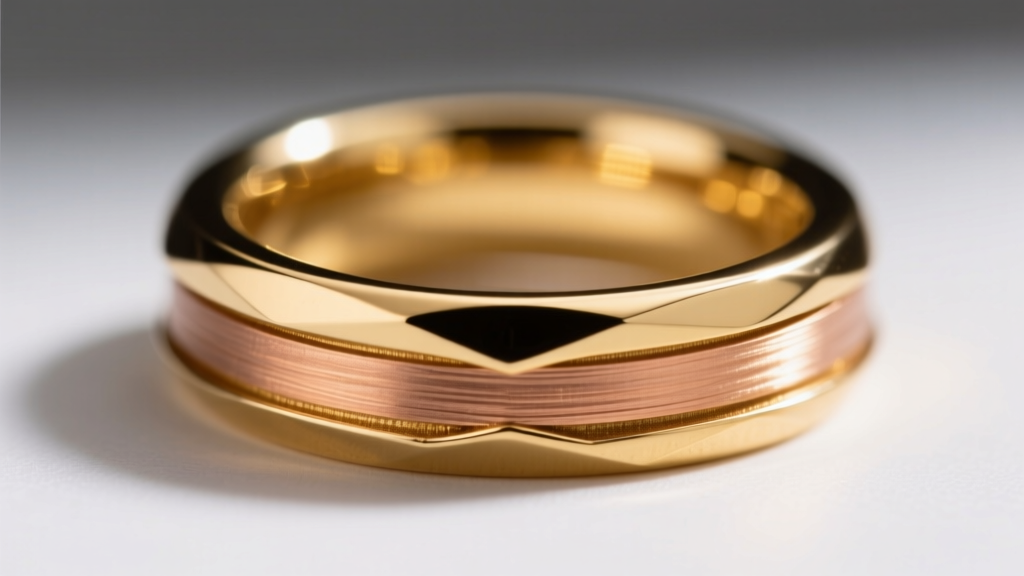
When consumers and jewelers ask, "what does gold filled mean in jewelry," the answer is not merely a marketing term; it is a strictly regulated metallurgical classification. In the United States, the Federal Trade Commission (FTC) dictates precise standards for any item stamped or sold as "gold filled." According to the FTC Guides for the Jewelry Industry, a gold filled item must consist of a base metal core that is mechanically bonded with a gold alloy outer layer. Crucially, this gold layer must constitute at least 1/20th (or 5%) of the total weight of the metal in the entire piece.
This 5% threshold is the defining line between gold filled and lesser alternatives. You will frequently see stamps such as "1/20 14K GF" or "1/20 12K GF" on the clasps of chains or the interior of bangles. This stamp is a legal guarantee of the item's composition. If a piece contains less than 5% gold by weight, it cannot legally be sold as gold filled in the US, regardless of how thick the plating appears to the naked eye. This regulatory framework protects buyers from deceptive practices and ensures a baseline of durability and intrinsic value.
The Manufacturing Process: Heat, Pressure, and Base Metals
Understanding what gold filled means in jewelry requires looking at the factory floor. Unlike electroplating, which uses electrical currents to deposit microscopic layers of gold onto a surface, gold filled material is created through intense mechanical bonding. The process begins with a billet or ingot of base metal—most commonly jeweler's brass, an alloy consisting of roughly 90% copper and 10% zinc. In some premium applications, a sterling silver core is used, though this is less common due to cost.
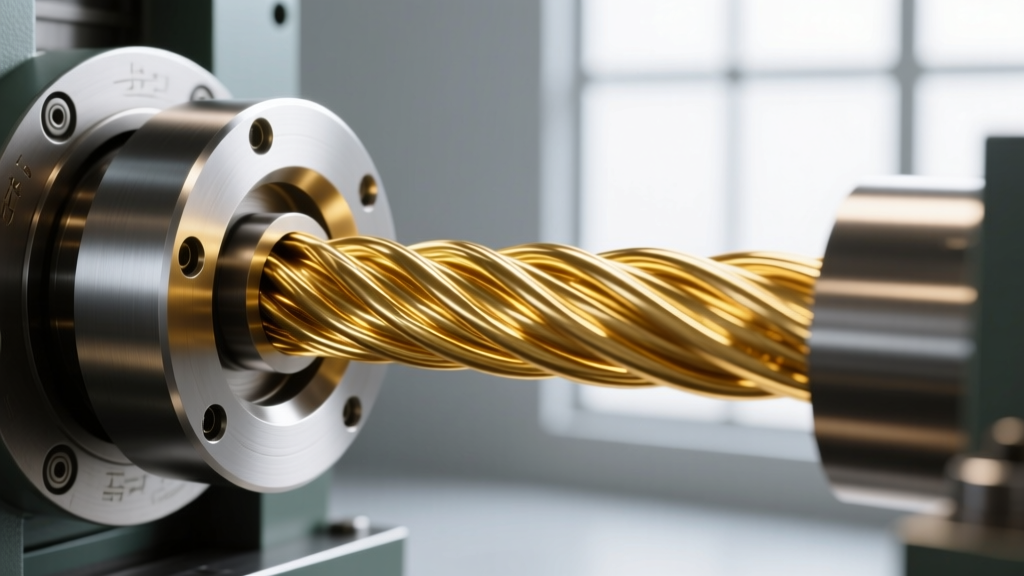
A sheet or tube of solid karat gold (usually 12k or 14k) is placed over or around the brass core. The assembly is then heated to high temperatures and passed through a series of steel draw plates or heavy rollers. This immense pressure and heat fuse the gold alloy to the brass at a molecular level. The metal is drawn down to the desired wire gauge or sheet thickness without the gold layer flaking or separating. For wire and tubing, the gold is "double clad," meaning it covers the entire exterior circumference. For flat sheet metal, it is often "single clad," with gold on only one visible side. According to technical resources from major suppliers like Rio Grande, this mechanical bonding creates a permanent union that will not blister, peel, or flake off under normal jewelry-making conditions.
Gold Filled vs. Gold Plated vs. Vermeil: A Technical Comparison
To fully grasp what gold filled means in jewelry, it must be contextualized against other common gold finishes. The primary differentiators are the base metal used, the method of application, and the actual thickness of the gold layer, usually measured in microns or mils.
| Metric | Gold Filled (GF) | Gold Vermeil | Standard Gold Plated | PVD Gold Coating |
|---|---|---|---|---|
| Base Metal | Jeweler's Brass (mostly) | Sterling Silver (.925) | Brass, Copper, or Nickel | Stainless Steel or Titanium |
| Application Method | Mechanical (Heat/Pressure) | Electroplating | Electroplating (Flash) | Physical Vapor Deposition |
| Gold Thickness | ~2.5 to 5.0+ microns (5% weight) | Minimum 2.5 microns | 0.1 to 0.5 microns | 0.5 to 2.0 microns |
| Durability (Daily Wear) | 10 to 30+ years | 2 to 5 years | 6 months to 2 years | 5 to 15 years |
| Average Wholesale Cost | Moderate | High | Very Low | Moderate to High |
As the table illustrates, gold filled offers a massive advantage in gold thickness compared to standard plating. While vermeil is highly regarded for its hypoallergenic sterling silver base, its electroplated gold layer is still vastly thinner than the mechanically bonded layer of a 1/20 14K gold filled wire. This makes gold filled the superior choice for items subjected to high friction, such as chain links, jump rings, and ring bands.
Common Failure Modes and Wear Testing
Despite its durability, gold filled jewelry is not indestructible. As a domain expert, I frequently analyze returned or degraded pieces to identify failure modes. The most common issue is not the gold wearing away, but rather "brass bleed" at high-friction joints. When a gold filled chain rubs against a steel clasp spring or another hard metal link for years, the mechanical abrasion can eventually wear through the 5% gold layer, exposing the copper-rich brass core.

Once the brass is exposed, galvanic corrosion can occur. Human sweat is mildly acidic and contains salts. When sweat acts as an electrolyte between the exposed brass and the surrounding gold, it accelerates the oxidation of the copper, resulting in a green or black tarnish that can stain the wearer's skin. This is not a sign of "fake" gold, but rather a localized failure of the gold filled cladding. Furthermore, attempting to solder gold filled wire with standard silver or gold solders will instantly burn away the gold layer, leaving a permanent, dark, oxidized brass joint. Jewelers must use specialized low-temperature laser welders or argon-arc welding to repair gold filled components without destroying the cladding.
How to Care for and Restore Gold Filled Pieces
Cleaning Protocols
Because the outer layer is solid karat gold, you can clean gold filled jewelry using many of the same methods used for solid gold. A mild solution of warm water and phosphate-free dish soap, agitated with a soft-bristled baby toothbrush, is highly effective for removing sebum, lotions, and environmental dust. However, you must strictly avoid ultrasonic cleaners if the piece has any exposed brass edges or if the mechanical bond has been compromised by deep scratches, as the high-frequency cavitation can cause the gold layer to delaminate.
Polishing Restrictions
Never use aggressive abrasive polishing compounds, such as heavy rouge or motorized buffing wheels, on gold filled jewelry. Because the gold layer, while thick compared to plating, is still finite (usually around 3 to 5 microns), aggressive machine polishing will strip the karat gold and expose the brass core in a matter of seconds. If a piece requires polishing, use a specialized, non-impregnated microfiber jewelry cloth and rub gently by hand. For deep scratches that have penetrated the gold layer, the piece cannot be polished out; it must be professionally re-plated or retired.
Final Verdict on Gold Filled Jewelry
So, what does gold filled mean in jewelry for the modern consumer and artisan? It represents the optimal intersection of affordability, ethical material use, and long-term durability. By adhering to strict FTC weight ratios and utilizing intense mechanical bonding, gold filled materials provide a lifetime of wear for a fraction of the cost of solid gold. When sourced from reputable mills and cared for with an understanding of its metallurgical limits, gold filled jewelry remains a cornerstone of high-quality, accessible adornment.


