How to Clean Gold Costume Jewelry Safely: A Step-by-Step Guide
Learn how to clean gold costume jewelry safely without stripping the plating. Follow our expert step-by-step guide to restore shine and prevent tarnish.

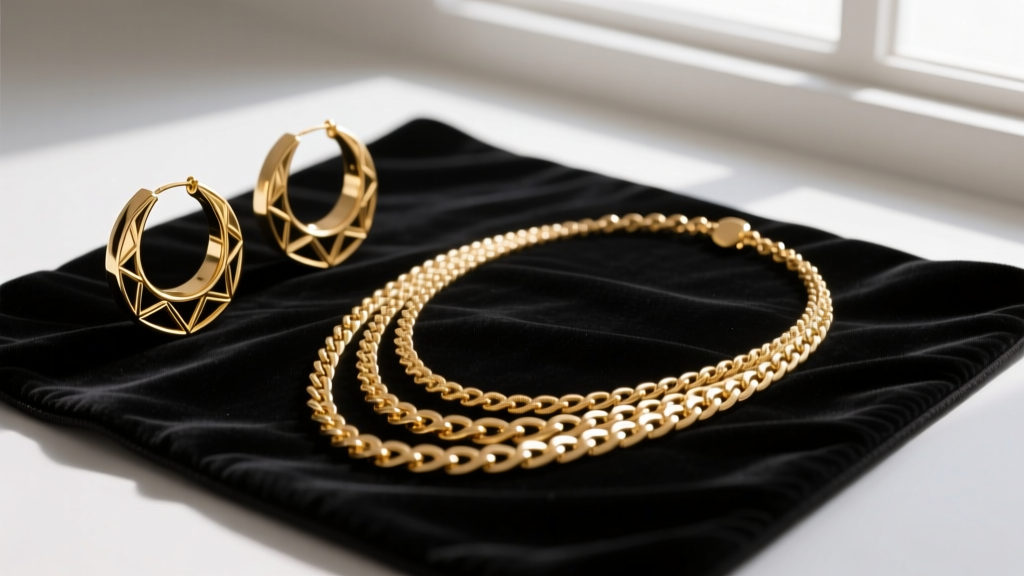
Gold costume jewelry offers the luxurious aesthetic of solid gold at a fraction of the price, making it a staple in modern accessory wardrobes. However, because these pieces rely on a delicate outer layer of gold over a base metal core, they require a highly specific approach to cleaning and maintenance. Using the wrong techniques can strip the finish in seconds, leaving you with dull, discolored brass or copper. As of 2026, while advances in PVD (Physical Vapor Deposition) and electroplating have improved the durability of fashion jewelry, the fundamental chemistry of gold plating remains vulnerable to harsh abrasives and improper moisture exposure.
This comprehensive, step-by-step guide will teach you exactly how to clean gold costume jewelry safely, restore its original luster, and protect the plating from premature wear.
The Anatomy of Gold Costume Jewelry: Why It Needs Special Care
To understand how to clean these pieces, you must first understand how they are constructed. According to the Federal Trade Commission Jewelry Guides, the terminology used to describe gold jewelry is strictly regulated based on the thickness of the gold layer and the base metal beneath it. Gold costume jewelry typically falls into three categories:
Understanding Plating Thickness and Base Metals
The base metal is usually brass, copper, or a zinc alloy. These metals are prone to oxidation (tarnish) when exposed to air and moisture. The gold layer acts as a protective shield, but its effectiveness depends entirely on its thickness, measured in microns (µm). The Gemological Institute of America (GIA) notes that pure gold is naturally soft, meaning ultra-thin layers are highly susceptible to micro-scratches that expose the reactive base metal below.
| Plating Type | Gold Thickness | Typical Base Metal | Cleaning Vulnerability |
|---|---|---|---|
| Flash Plated | < 0.5 microns | Zinc Alloy / Brass | Extremely High (wears off quickly) |
| Gold Electroplate | 0.5 - 2.5 microns | Brass / Copper | High (requires gentle wiping only) |
| Heavy Gold Electroplate (HGE) | 2.5+ microns | Brass / Nickel | Moderate (can withstand mild washing) |
| Gold Vermeil | 2.5+ microns | Sterling Silver | Low (safest to clean, silver base) |
What to Avoid: The "Cleaning Hacks" That Ruin Gold Plating
The internet is full of DIY jewelry cleaning hacks that are catastrophic for gold costume jewelry. Before you reach for your pantry staples, understand why these common methods will destroy your pieces:
- Baking Soda and Aluminum Foil: This creates an ion-exchange reaction that is excellent for removing tarnish from solid sterling silver, but it is far too abrasive and chemically aggressive for thin gold plating. It will strip the gold layer entirely.
- Toothpaste: Toothpaste contains silica and calcium carbonate, which are abrasive micro-particles. Scrubbing gold plating with toothpaste acts like sandpaper, creating microscopic grooves that dull the finish and accelerate future tarnishing.
- Ultrasonic Cleaners: High-frequency sound waves create microscopic cavitation bubbles in the cleaning solution. When these bubbles collapse against the jewelry, the shockwaves can cause micro-fractures in the gold plating, causing it to flake and peel.
- Commercial Silver Dips: These contain harsh acids (like thiourea) designed to dissolve silver sulfide. They will instantly corrode the base metals in costume jewelry if they penetrate any microscopic pinholes in the gold plating.
Step-by-Step Guide: How to Clean Gold Costume Jewelry Safely
For routine cleaning and the removal of body oils, lotions, and environmental dust, follow this gentle, non-abrasive protocol.
Step 1: The Dry Dusting
Before introducing any moisture, use a clean, dry, ultra-soft makeup brush or a specialized jewelry dusting brush to gently sweep away loose dirt and dust. This prevents you from rubbing abrasive environmental particles into the soft gold surface during the wet wash.
Step 2: Prepare the Cleaning Solution
In a small glass bowl, mix one cup of distilled water (never tap water, as hard water minerals can leave cloudy deposits) with two drops of a pH-neutral, lotion-free dish soap. Dawn Original is a reliable choice because it lacks the harsh degreasers and added moisturizers found in modern hand soaps.
Step 3: The Gentle Wipe
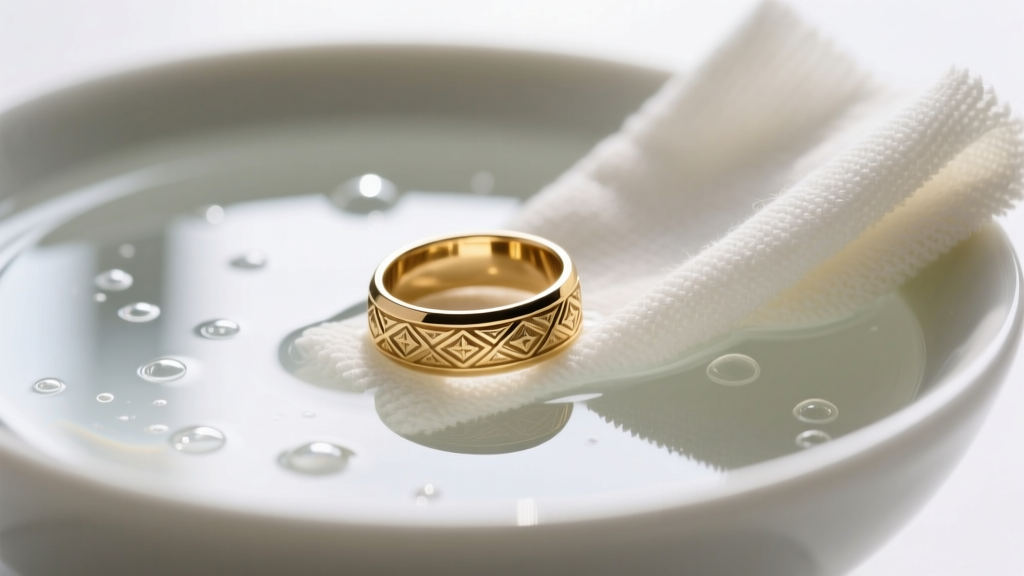
Do not soak gold costume jewelry. Prolonged water exposure can seep into the microscopic pores of the plating and reach the base metal, triggering oxidation from the inside out. Instead, dip a lint-free microfiber cloth into the soapy solution, wring it out until it is only slightly damp, and gently wipe the jewelry in straight, linear motions. Avoid circular scrubbing.
Step 4: The Rinse and Dry
Dampen a second microfiber cloth with plain distilled water and wipe the piece to remove any soap residue. Immediately pat the jewelry completely dry with a third, dry microfiber cloth. Allow it to air dry on a paper towel in a low-humidity room for 30 minutes before storing.
Troubleshooting Common Costume Jewelry Issues
Even with meticulous care, gold costume jewelry presents unique challenges due to its material composition. Here is how to handle the most frequent problems.
Preventing the "Green Skin" Effect
If your gold-plated rings or bracelets leave a green or black mark on your skin, the gold plating has worn thin, allowing your sweat (which contains salts and chlorides) to react with the copper or brass base metal. The Fix: Clean the inside of the band thoroughly with rubbing alcohol to remove existing oxidation. Once dry, apply a thin, even coat of clear, quick-dry topcoat nail polish or a specialized product like Jeweler's Skin Guard to the interior of the band. This creates an invisible, waterproof barrier between the reactive base metal and your skin.
Dealing with Tarnish Bleed-Through
If you notice dark spots appearing underneath the gold plating, the base metal is oxidizing from the inside. This usually happens when jewelry is stored while damp or exposed to high humidity. The Fix: Unfortunately, once tarnish bleeds through the plating, it cannot be cleaned off the surface. The piece will need to be professionally polished down to the bare base metal and re-plated by a jeweler who offers electroplating services for fashion accessories.
Long-Term Storage and Maintenance Protocols
How you store your gold costume jewelry is just as critical as how you clean it. The primary enemies of base metals are oxygen, humidity, and sulfur compounds in the air.
Expert Archival Tip: Never store multiple pieces of costume jewelry in the same compartment of a jewelry box. The friction between pieces will wear through the gold plating over time. Furthermore, standard felt-lined jewelry boxes often contain glues and dyes that emit sulfur gases, which accelerate tarnishing.
For optimal preservation, adopt the following storage framework:
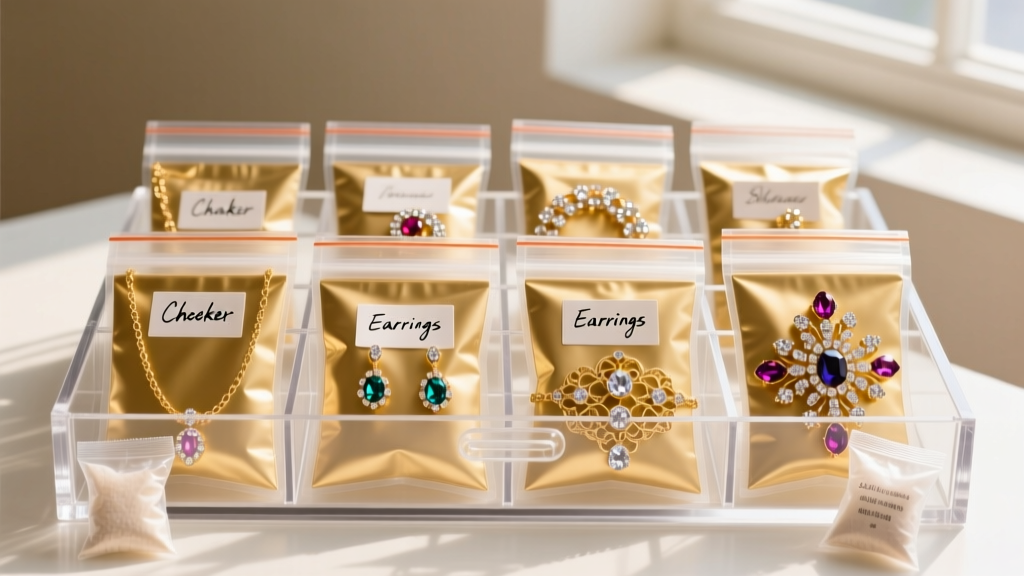
- Individual Isolation: Store each piece in its own airtight, zip-top polyethylene bag. Avoid PVC plastics, which can emit chemicals that degrade metal finishes.
- Moisture Control: Drop a small, jewelry-safe silica gel packet into each bag to absorb ambient moisture. Replace the packets every six months.
- Tarnish Inhibitors: Include a 3M Anti-Tarnish strip in your storage bags or jewelry box drawers. These strips absorb airborne sulfur compounds before they can react with the base metals.
- Climate Control: Keep your jewelry out of the bathroom. The fluctuating humidity and temperature from showers create the perfect environment for rapid base-metal oxidation.
By understanding the delicate nature of gold plating and adhering to these specific cleaning and storage protocols, you can significantly extend the lifespan of your gold costume jewelry, keeping it vibrant and luxurious for years to come.


