Navigating Gold Indian Jewelry Stores Near Me: 2026 Trends
Discover 2026 design trends, 22k purity standards, and pricing frameworks when searching for gold Indian jewelry stores near me.

The Evolution of the Local Diaspora Market
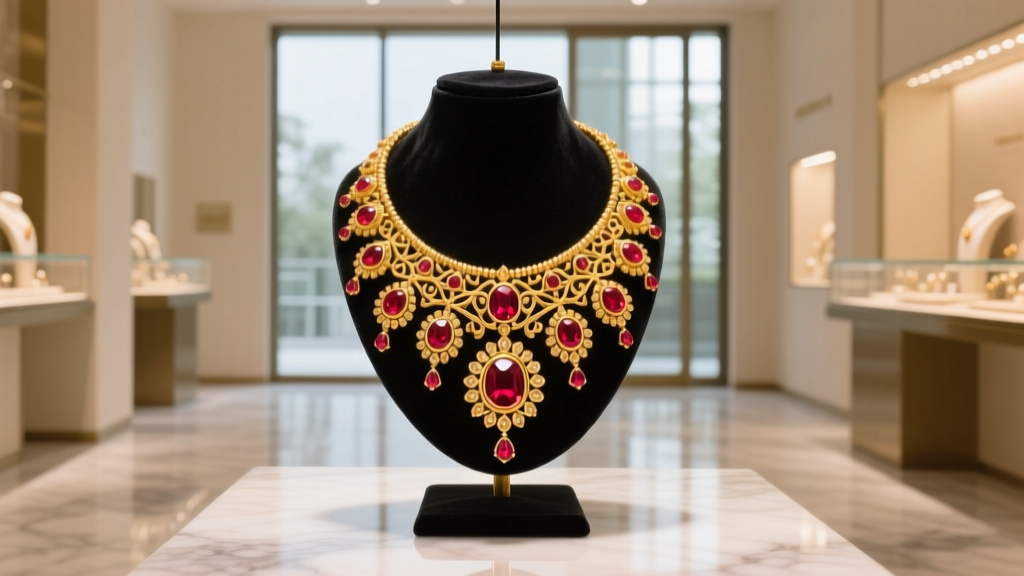
When you type gold indian jewelry stores near me into your search engine, the results reflect a massive shift in how South Asian diaspora communities consume luxury goods. Gone are the days when local boutiques solely imported heavy, traditional bridal sets meant for a single day of wear. In 2026, the most successful local Indian jewelers are operating as hybrid cultural hubs, blending ancestral craftsmanship with contemporary, everyday wearability. According to the World Gold Council, consumer demand for culturally significant gold jewelry in Western markets has surged, driven by a younger demographic seeking heritage pieces that integrate seamlessly into modern wardrobes.
However, navigating this localized market requires a sharp eye for authenticity, an understanding of international hallmarking standards, and a firm grasp of traditional pricing matrices. Whether you are hunting for a vintage-inspired Jadau choker or a minimalist 18k gold fusion bangle, knowing how to vet the artisans and retailers in your immediate vicinity is critical to making a sound investment.
2026 Design Trends Dominating Local Boutiques
The inventory at top-tier local Indian jewelry stores has evolved dramatically over the last three years. Store owners are now curating collections that reflect global luxury trends while maintaining regional authenticity.
The Rise of Wearable Heritage
Traditional Temple jewelry, characterized by its intricate depictions of deities and motifs inspired by South Indian architecture, is experiencing a renaissance. However, the 2026 iteration is distinctly lighter. Artisans are utilizing advanced CAD (Computer-Aided Design) modeling alongside hand-finishing to reduce the gold weight of these pieces by up to 30% without sacrificing the visual grandeur. This allows buyers to purchase statement necklaces that can be worn to corporate events or gallery openings, rather than being locked away for wedding seasons.
Matte Finishes and Uncut Polki
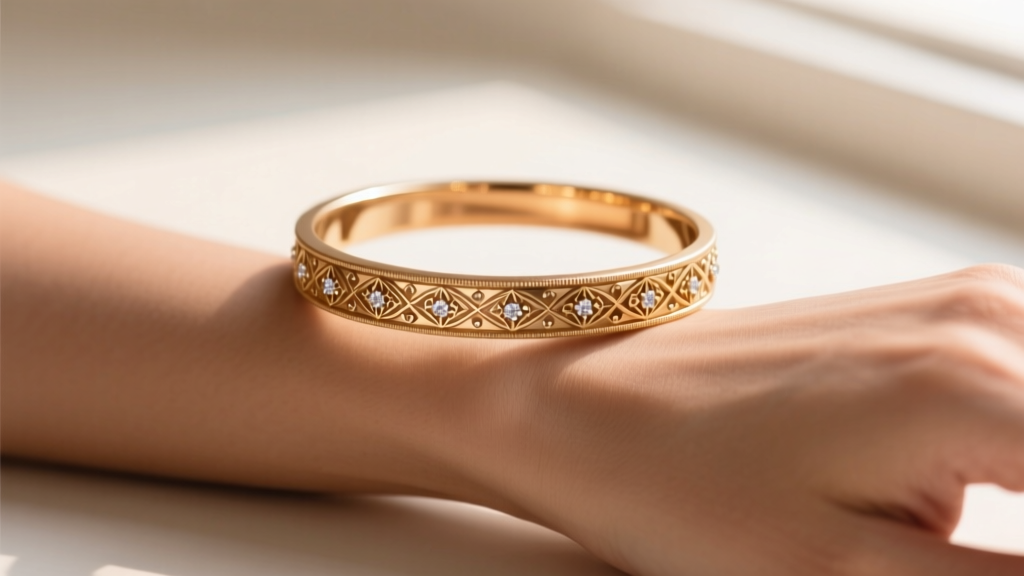
High-shine, mirror-polished yellow gold is sharing the spotlight with brushed, matte finishes. This textural shift is frequently paired with uncut Polki diamonds and raw emeralds. Local boutiques are increasingly sourcing 18k rose gold to set these uncut stones, creating a softer, more romantic aesthetic that appeals to buyers looking for fusion pieces. The contrast between the unpolished diamonds and the muted gold finish creates an organic, antique look that mimics centuries-old Mughal artifacts, yet feels entirely modern.
Decoding Purity: What to Expect In-Store
One of the most common pitfalls when visiting local ethnic jewelry districts is misunderstanding the purity standards applied to different types of Indian craftsmanship. The Bureau of Indian Standards (BIS) has strictly enforced hallmarking regulations in India, and reputable international importers now ensure these standards are translated for local markets.
| Purity Grade | Metal Composition | Best Use Case in Indian Jewelry | Durability & Care |
|---|---|---|---|
| 22k (91.6) | 91.6% Gold, 8.4% Alloy | Traditional bangles, plain gold chains, Temple jewelry | Soft; prone to scratching. Requires careful storage. |
| 18k (75.0) | 75.0% Gold, 25.0% Alloy | Polki, Kundan, Jadau, and diamond-set bridal pieces | Highly durable; securely holds heavy gemstone settings. |
| 14k (58.5) | 58.5% Gold, 41.5% Alloy | Contemporary fusion wear, everyday stackable rings | Very hard; resistant to warping, ideal for daily wear. |
It is vital to note that authentic, traditional Kundan and Jadau work is almost never set in 22k gold. The Gemological Institute of America (GIA) notes that 22k gold is far too malleable to securely hold the intricate lac (resin) and foil settings required for uncut stones. If a local store claims a heavily stone-studded Jadau necklace is solid 22k gold, proceed with extreme caution; the structural integrity of the piece is likely compromised, or the purity claim is false.
The Pricing Matrix: Making Charges and Stone Deductions
Unlike Western jewelry retailers that often price items with a flat markup, Indian gold jewelry stores utilize a transparent, albeit complex, pricing formula. Understanding this framework is essential when negotiating or comparing prices across different local boutiques.
The Golden Formula: Total Price = (Net Gold Weight × Daily Market Rate) + Making Charges (Majoori) + Stone/Gemstone Charges.
- Making Charges (Majoori): This is the labor cost. For simple machine-made chains or plain bangles, expect making charges to range from 8% to 12% of the gold value. For highly intricate, handcrafted antique or Temple jewelry, making charges can legally and reasonably span from 18% to 28%.
- Stone Deductions: This is where many inexperienced buyers lose money. If a bangle weighs 50 grams total, but contains 5 grams of ruby cabochons and enamel, you must ensure the store is calculating the gold price based on 45 grams, not 50 grams. Reputable stores will weigh the piece, estimate or extract the stone weight, and provide a net gold weight on the receipt.
- Wastage Charges: Historically, jewelers added a "wastage" percentage to cover gold lost during the melting and crafting process. In 2026, transparent boutiques have folded this into the flat making charge. If a store lists both a high making charge and a separate wastage charge, consider it a red flag for inflated pricing.
Verifying Authenticity and Craftsmanship On-Site
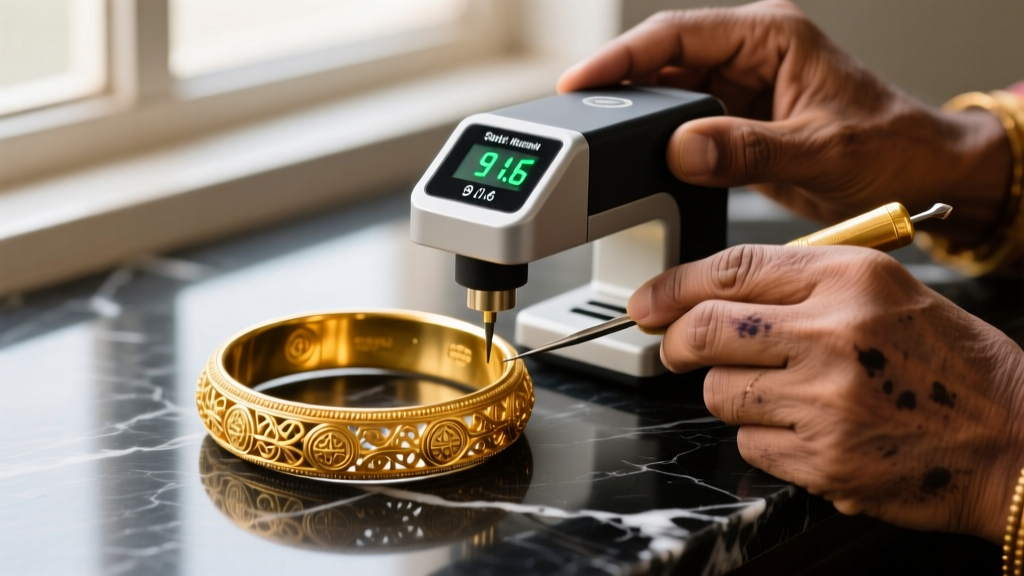
When you finally sit down at the counter of a prospective store, your vetting process should extend beyond the visual appeal of the display cases. True E-E-A-T (Experience, Expertise, Authoritativeness, and Trustworthiness) in a local jeweler is demonstrated by their willingness to verify their claims using modern technology.
First, ask to see the hallmark. If the store imports directly from India, look for the BIS Hallmark Unique Identification (HUID) code—a six-digit alphanumeric code stamped on the jewelry that can be verified via the official BIS Care app. If the jewelry is manufactured locally or assayed in the US/UK, look for the standard "916" or "22k" stamp alongside the maker's mark.
Second, observe their testing methods. A high-quality Indian jewelry store in 2026 will have an XRF (X-ray Fluorescence) spectrometer on-site. This non-destructive machine provides an exact elemental breakdown of the metal in seconds. If a store relies solely on the "acid test" or a magnetic slide test for high-value 22k pieces, they are operating with outdated methodologies that can damage the intricate finishes of heritage jewelry.
Finally, inspect the back of the jewelry. In authentic Indian craftsmanship, the reverse side of a pendant or necklace should be as meticulously finished as the front. Enamel work (Meenakari) should be smooth, free of pitting, and vibrant. Rough, porous, or unfinished backing is a primary indicator of mass-produced, low-quality casting masquerading as artisanal work. By combining a deep understanding of these 2026 trends, purity standards, and pricing frameworks, you can confidently navigate your local market and invest in pieces that honor tradition while embracing modern luxury.


