The Ultimate Gold Jewelry Box Buying Guide: Protect Your Collection
Learn how to choose the perfect gold jewelry box to protect 14k, 18k, and 24k pieces from scratches and tarnish in our expert buying guide.

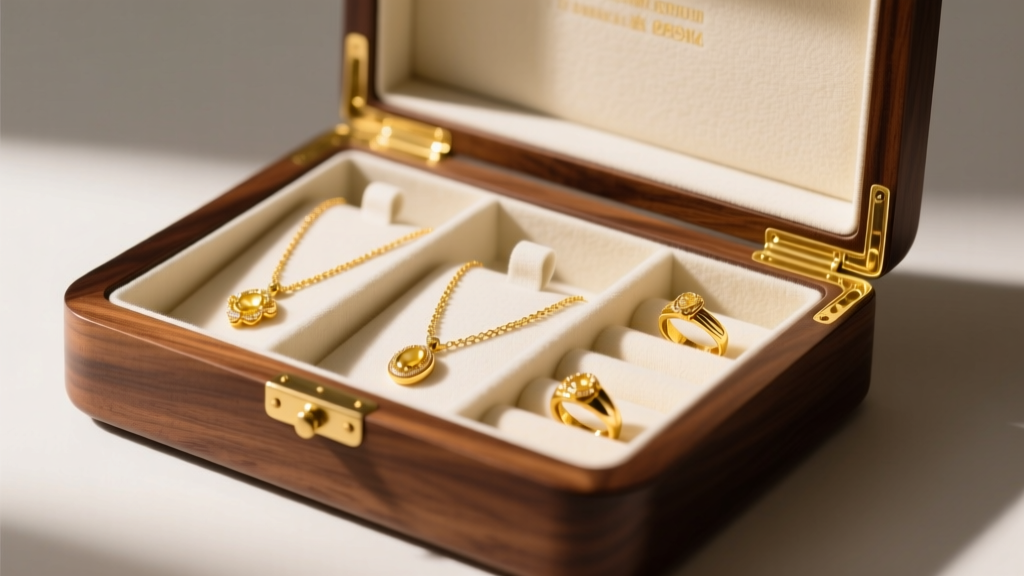
Investing in high-quality gold jewelry is a significant financial and emotional commitment. Whether you own heirloom 24k yellow gold bangles, everyday 14k white gold hoops, or heavy 18k rose gold Cuban link chains, proper storage is non-negotiable. Many collectors make the critical mistake of tossing their precious metals into generic, mass-market organizers. This leads to micro-scratches, tangled links, and even chemical tarnishing. Selecting the right gold jewelry box requires an understanding of metallurgy, material science, and spatial organization. In this comprehensive buying guide, we break down exactly what to look for to ensure your collection remains pristine for generations.
Why Your Gold Needs a Specialized Storage Environment
To understand why a specialized storage environment is necessary, we must first look at the physical properties of gold. According to the Gemological Institute of America (GIA), pure 24k gold is exceptionally soft, ranking just 2.5 to 3 on the Mohs hardness scale—roughly the same hardness as a human fingernail. While alloying gold with metals like copper, zinc, and nickel to create 14k or 18k variations increases its durability (bringing it up to a 3.5 or 4 on the Mohs scale), it remains highly susceptible to abrasion.
When gold pieces are stored loosely in a hard plastic container or a box with rough synthetic linings, they slide against one another during transit or drawer movement. This friction causes micro-scratches that dull the metal's natural luster over time. Furthermore, the alloy metals in rose and white gold can react negatively to environmental pollutants and off-gassing chemicals found in cheap manufacturing materials, leading to localized chemical spotting and tarnish.
Interior Linings: The Make-or-Break Factor
The interior lining of your gold jewelry box is the single most important feature to evaluate. The lining acts as the primary barrier between your precious metals and the outside world. Unfortunately, many commercially available boxes use materials that actively harm gold alloys.
Materials to Seek Out
- Untreated 100% Cotton Flannel: Soft, breathable, and free from harsh chemical treatments, high-grade cotton flannel provides a gentle resting place that prevents scratching while allowing the metal to breathe.
- Pacific Cloth (Anti-Tarnish): Originally developed to protect silver, Pacific cloth is treated with microscopic zinc or copper particles that absorb and neutralize airborne sulfur and hydrogen sulfide gases before they can reach your jewelry. This is highly recommended for storing rose gold, which contains high copper content and is prone to oxidation.
- Microfiber Suede: High-end luxury boxes often use ultra-fine microfiber suede. It mimics the softness of velvet but lacks the abrasive fibers and chemical dyes associated with cheap alternatives.
Materials to Avoid
- Sulfur-Dyed Velvets: Many inexpensive jewelry boxes use synthetic velvets dyed with sulfur-based compounds. As Jewelers of America notes, sulfur is the primary catalyst for tarnishing. Storing gold alloys in these environments will cause dark, stubborn spotting.
- Polyurethane Foams and PVC: These synthetic materials off-gas volatile organic compounds (VOCs) and plasticizers over time. These gases can create a cloudy, irreversible film on the surface of highly polished gold.
Compartment Sizing for Heavy Gold Chains and Bangles
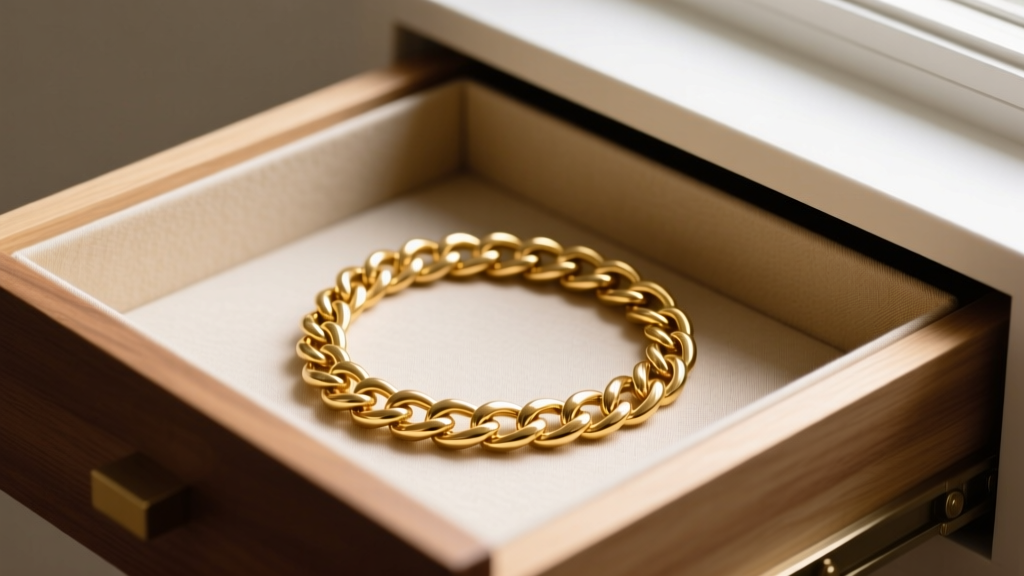
Gold jewelry, particularly chains and bangles, carries significant weight. A standard box designed for lightweight fashion jewelry will quickly fail under the stress of solid gold pieces. When evaluating a gold jewelry box, pay close attention to the dimensions and structural integrity of the compartments.
Hanging hooks are generally unsuitable for heavy gold chains. The gravitational pull on a heavy 18k gold rope chain can stress the individual links and the clasp over time, leading to metal fatigue and eventual snapping. Instead, opt for wide, flat drawers with adjustable dividers that allow chains to lay completely flat without folding or overlapping.
| Gold Chain / Piece Type | Recommended Compartment Style | Minimum Dimensions (L x W x D) |
|---|---|---|
| Heavy Cuban / Curb Links (8mm - 14mm) | Flat, open drawer with anti-tarnish base | 10" x 8" x 1.5" |
| Delicate Rope / Box Chains (1mm - 3mm) | Velvet-lined roll slots or shallow divided trays | 8" x 4" x 0.5" |
| Solid Gold Bangles & Cuffs | Cylindrical velvet pillows or wide open bays | 4" x 4" x 3" (per baffle) |
| Gold Signet & Band Rings | Individual finger rolls or wide ring slots | 2.5" x 2" x 1.5" (per slot) |
Exterior Finishes: Gold-Accented vs. Traditional Wood
While the interior protects your collection, the exterior dictates the box's longevity and aesthetic integration into your space. If you are specifically looking for a box that features a gold exterior finish—such as gold-leaf detailing, brushed brass hardware, or a metallic gold vegan leather wrap—you must evaluate the quality of the application.
Cheap gold-painted MDF (medium-density fiberboard) will chip and flake within a year, especially around the hinges and handles. Look for boxes constructed from kiln-dried hardwoods (like walnut, mahogany, or oak) that feature genuine gold-leaf inlay or solid brass hardware with a gold PVD (Physical Vapor Deposition) coating. PVD-coated brass hardware is highly resistant to tarnishing and scratching, ensuring the box's exterior remains as pristine as the gold jewelry inside.
Security and Climate Control Features
Humidity and Tarnish Prevention
Gold itself does not rust, but the alloys mixed with it (especially copper in rose gold and silver in some white gold formulations) can oxidize in high-humidity environments. A premium gold jewelry box should feature a tightly sealing lid with a felt or rubber gasket to minimize air exchange. Additionally, look for boxes that include a dedicated, discreet compartment for silica gel packets or activated charcoal pouches to regulate internal moisture levels.
Physical Security
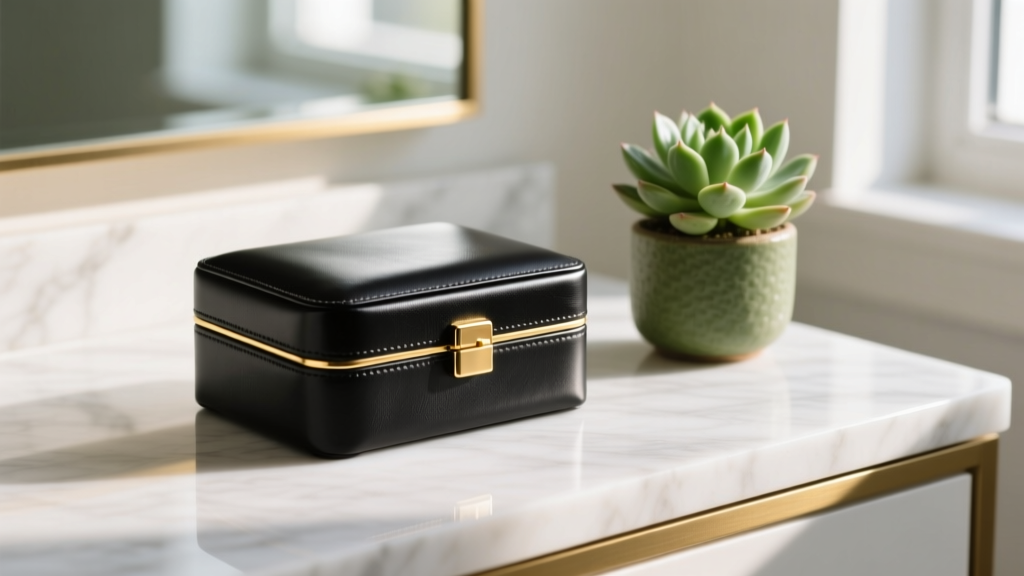
For high-value collections, physical security is paramount. Avoid boxes with simple decorative push-locks. Instead, seek out models featuring integrated brass barrel locks, biometric fingerprint scanners, or heavy-duty dual-key mechanisms. If the box will be stored in a closet or dressing room, ensure the base has pre-drilled mounting holes so it can be bolted directly to your furniture or wall studs.
Top Recommendations by Collection Size
- The Minimalist (Under 15 Pieces): Look for a single-tier, travel-friendly valet box wrapped in full-grain leather with a microfiber suede interior. Expected Price Range: $80 - $150.
- The Growing Collector (15 - 50 Pieces): A dual-tier wooden chest with a pull-out drawer for chains and a top lid featuring individual ring rolls and a watch pillow. Ensure the wood is finished with a non-off-gassing water-based lacquer. Expected Price Range: $200 - $450.
- The Archival Vault (50+ Pieces): A multi-drawer cabinet system featuring modular, stackable trays lined entirely in Pacific cloth. Look for models with soft-close drawer glides to prevent sudden jolts that can tangle delicate gold chains. Expected Price Range: $600 - $1,500+.
Maintenance Tips for Your Jewelry Box
Even the best gold jewelry box requires occasional maintenance. Every six months, remove all your jewelry and vacuum the interior crevices using a soft brush attachment to remove dust, dead skin cells, and microscopic debris that can act as an abrasive. Replace any silica gel packets or anti-tarnish strips annually, as their chemical absorption properties deplete over time. Finally, avoid placing your jewelry box in direct sunlight or near heating vents, as extreme temperature fluctuations can warp wooden frames and degrade adhesive linings, ultimately compromising the safety of your gold collection.