Navigating a Gold & Jewelry Emporium: Material Properties Guide
Master the metallurgy of the modern gold & jewelry emporium. Compare karat hardness, alloy compositions, and layered gold durability metrics.

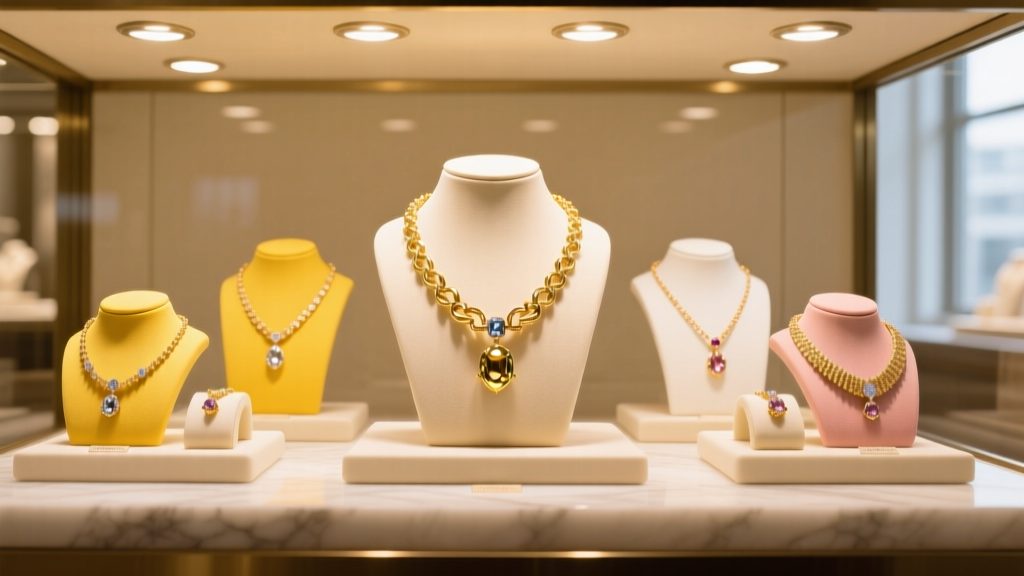
The Metallurgical Reality of the Modern Gold & Jewelry Emporium
Stepping into a sprawling gold & jewelry emporium—whether it is a high-end multi-brand boutique in Manhattan, a historic souk in Dubai, or a massive wholesale district in Los Angeles—can be a sensory overload. The lighting is calibrated to make every metal gleam, and the terminology thrown around by sales associates can be deliberately opaque. As a buyer in 2026, relying solely on visual appeal or the word "gold" is a fast track to buyer's remorse. To navigate these vast retail environments successfully, you must understand the underlying metallurgical properties, alloy compositions, and structural limitations of the pieces on display.
This guide strips away the marketing veneer and dives deep into the material science of gold jewelry. By understanding Vickers hardness ratings, micron thicknesses, and galvanic reactions, you can evaluate inventory in any gold & jewelry emporium with the precision of a master bench jeweler.
Solid Gold Karats: Hardness vs. Purity Trade-offs
Pure gold (24k) is inherently soft, malleable, and entirely unsuited for daily-wear jewelry. To create durable pieces, gold is alloyed with metals like copper, silver, zinc, and nickel. The karat system dictates the ratio of pure gold to alloying metals, but it also directly dictates the metal's structural integrity. According to the Gemological Institute of America (GIA), the specific alloy recipe not only changes the color but drastically alters the Vickers Hardness (HV) of the final piece.
| Karat | Gold Purity (%) | Approx. Vickers Hardness (HV) | Durability & Best Application |
|---|---|---|---|
| 24k | 99.9% | 25 - 30 HV | Extremely soft. Bends easily. Best for investment bars or ceremonial pieces. |
| 22k | 91.6% | 70 - 90 HV | Soft but holds shape. Ideal for plain bands and traditional cultural jewelry. |
| 18k | 75.0% | 115 - 135 HV | Excellent balance of rich color and durability. The standard for fine gemstone settings. |
| 14k | 58.3% | 135 - 160 HV | Highly durable and scratch-resistant. The premier choice for daily-wear engagement rings. |
| 10k | 41.7% | 160 - 180 HV | Maximum hardness, but prone to brittleness and tarnishing due to high base-metal content. |
When examining 18k versus 14k gold in an emporium, note that 14k gold's higher zinc and copper content makes it significantly more resistant to denting and prong wear. If you are purchasing a ring with a complex pavé diamond setting, 14k or 18k is mandatory; 22k prongs will eventually bend and lose stones.
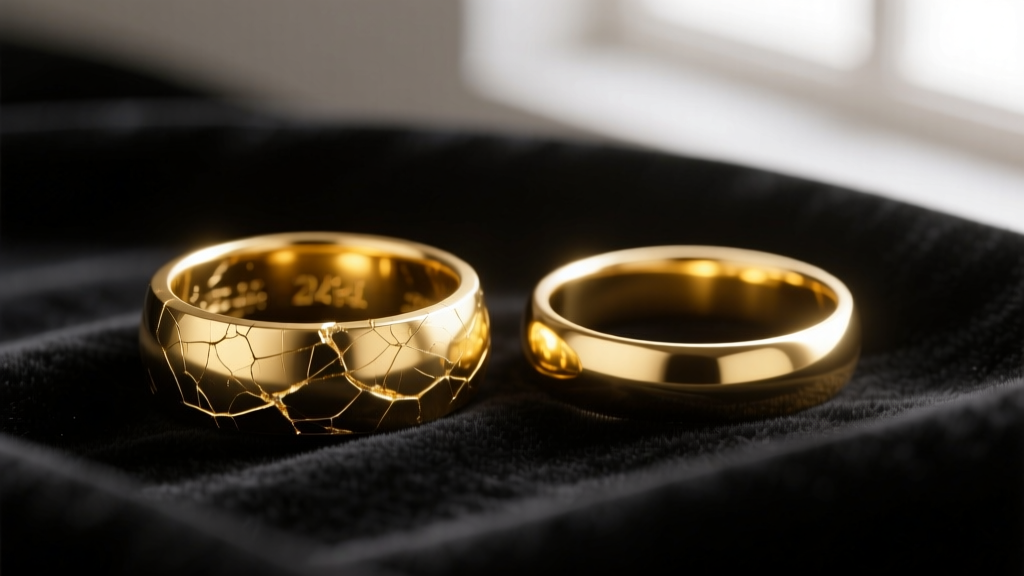
The Layered Illusion: Vermeil, Gold-Filled, and Plated
Not everything that gleams in a gold & jewelry emporium is solid gold. Layered gold materials are heavily marketed as affordable alternatives, but their material properties and failure modes vary wildly. The Federal Trade Commission (FTC) Jewelry Guides strictly define these terms, yet retail floor staff often conflate them.
Gold-Filled (Rolled Gold Plate)
Gold-filled material is created by mechanically bonding a thick layer of solid gold to a brass or copper core using heat and pressure. By FTC definition, the gold layer must constitute at least 5% (or 1/20th) of the total weight of the item.
- Thickness: Typically 5 to 25 microns.
- Durability: Can last 10 to 30 years with daily wear.
- Failure Mode: Eventually wears through at high-friction points (like chain clasps or ring shanks), exposing the brass core which will oxidize and turn the skin green.
Gold Vermeil
Vermeil (pronounced ver-may) is a specific type of plating where a thick layer of gold is electroplated over a Sterling Silver base.
- Thickness: Must be a minimum of 2.5 microns of at least 10k gold.
- Durability: 2 to 5 years of moderate wear.
- Failure Mode: Unlike brass, sterling silver does not turn skin green when exposed, making vermeil a safer hypoallergenic option once the gold wears away. However, silver is soft, so vermeil rings will dent easily.
Standard Gold Plated (GEP)
Standard plating involves a microscopically thin layer of gold (usually 0.5 microns or less) flashed over a base metal like brass or nickel. It offers almost zero structural longevity and will often wear through within weeks of daily friction. Avoid standard plated items in an emporium if you are seeking lasting value.
Color Alloys: The Science of Rose, White, and Yellow
The color of solid gold is entirely dependent on the alloying metals mixed with the pure 24k gold. Understanding these recipes helps you predict how the metal will age, tarnish, or react to your skin chemistry.
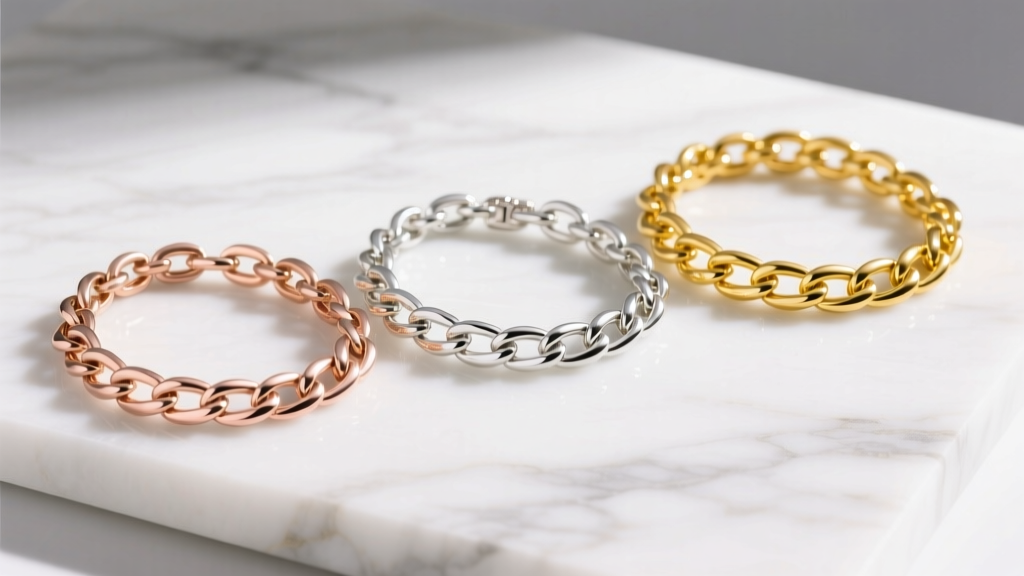
Yellow Gold
Classic yellow gold is alloyed with roughly equal parts silver and copper. In 18k yellow gold, the remaining 25% is typically 12.5% copper and 12.5% fine silver. This balance maintains a warm, buttery hue while preventing the copper from making the metal too reddish or brittle.
Rose Gold
The pinkish-red hue of rose gold comes from a heavily copper-dominant alloy. A standard 18k rose gold recipe consists of 75% pure gold, 22.25% copper, and just 2.75% silver. Because copper is a highly reactive metal, lower-karat rose gold (like 10k or 14k) can oxidize and darken over time, developing a patina that some buyers love but others mistake for tarnish.
White Gold and the Rhodium Reality
White gold does not exist in nature. It is created by alloying yellow gold with white metals like nickel, palladium, or manganese. However, the resulting alloy is actually a pale, slightly yellowish-gray. To achieve the brilliant, mirror-like chrome finish seen in emporium display cases, white gold is electroplated with Rhodium, a rare platinum-group metal.
- Nickel White Gold: Harder and cheaper, but a leading cause of contact dermatitis. Banned in some European markets.
- Palladium White Gold: Softer, more expensive, naturally whiter, and hypoallergenic.
- Rhodium Plating: Typically applied at 0.75 to 1.0 microns. It will wear off the high-friction areas of a ring within 12 to 18 months, requiring professional re-plating.
E-E-A-T Buying Framework for the Emporium Floor
When you are standing in a gold & jewelry emporium, you need actionable verification tactics. Do not rely solely on the salesperson's verbal assurances. Look for the following benchmarks:
- Hallmark Verification: Use a jeweler's loupe (10x magnification) to inspect the inner shank or clasp. Look for precise millesimal fineness marks: 750 (18k), 585 (14k), or 417 (10k). A simple "14k" stamp is common in the US, but millesimal marks are the global standard for authenticity.
- XRF Scanning: High-end, reputable emporiums will possess an X-Ray Fluorescence (XRF) spectrometer. This non-destructive machine shoots X-rays into the metal and reads the exact elemental composition in seconds. If a dealer refuses an XRF test on a high-ticket item, walk away.
- Magnet Test for Layered Gold: While gold is non-magnetic, some base metals used in counterfeit or heavily plated junk jewelry (like iron or certain steel alloys) are magnetic. If a heavy gold chain slightly pulls toward a neodymium magnet, it is heavily adulterated or fake.
"The modern jewelry buyer must act as their own metallurgist. Understanding the difference between a mechanically bonded gold-filled layer and a 0.5-micron flash plating is the difference between an heirloom piece and disposable fashion."
— Industry Guidelines on Precious Metal Durability, Jewelers Vigilance Committee
Conclusion
A gold & jewelry emporium is a treasure trove of craftsmanship, but it is also an environment where material ignorance is heavily taxed. By prioritizing Vickers hardness for daily-wear rings, demanding FTC-compliant micron thicknesses for layered pieces, and understanding the reactive nature of copper and rhodium, you transform from a passive shopper into an informed investor. The next time you step up to the glass counter, look past the sparkle and evaluate the science.


