The Metallurgy of Rose Gold and Gold Jewelry: An Expert Alloy Guide
Explore the exact metallurgical differences, alloy compositions, and durability factors of rose gold and gold jewelry for informed buying.

The Baseline: Why Pure Gold Fails in Daily Wear
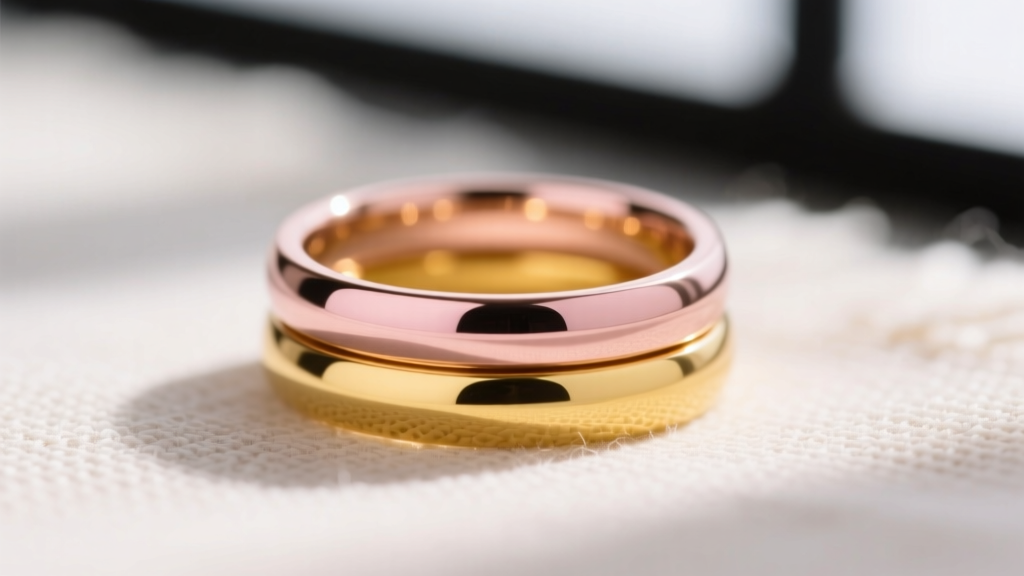
When collectors and everyday wearers begin exploring the market for fine accessories, the aesthetic appeal of different metal colors often overshadows the underlying material science. To truly understand the performance, longevity, and value of rose gold and gold jewelry, we must first look at the elemental baseline: 24-karat pure gold. Pure gold (99.9% Au) is a dense, noble metal with a distinct, warm yellow luster. However, its position on the Mohs hardness scale is a mere 2.5 to 3, making it roughly as soft as a human fingernail. In its pure state, gold is entirely unsuitable for the mechanical stresses of daily wear. Rings will warp, prongs will pull away from gemstones, and surfaces will accumulate deep, irreversible scratches within weeks.
To engineer durability, metallurgists and master jewelers introduce specific alloying metals. The karat system dictates the ratio of pure gold to these secondary metals. An 18-karat piece contains 75% pure gold, while a 14-karat piece contains 58.3% pure gold. The remaining percentage is where the magic—and the divergence between yellow, white, and rose gold—actually occurs. According to the Gemological Institute of America (GIA), the specific blend of copper, silver, zinc, and sometimes palladium dictates not only the final color but the tensile strength, melting point, and electrochemical stability of the finished piece.
The metallurgical engineering of these alloys also drastically alters their thermal properties. Pure 24k gold melts at exactly 1,064°C (1,947°F). By introducing copper, which has a melting point of 1,085°C, and silver, which melts at 961°C, the resulting liquidus temperature of the alloy drops significantly. An 18k rose gold alloy typically melts between 900°C and 950°C. This lower melting point is crucial for jewelers, as it reduces the thermal shock risk to any gemstones that may be present during sizing or repair work, though it still requires careful heat management to prevent localized oxidation of the copper content.
Deconstructing the Alloy Matrix: Copper, Silver, and Zinc
The primary distinction between traditional yellow gold and rose gold lies in the copper-to-silver ratio. Copper is the sole alloying metal responsible for the pinkish-red spectrum in gold alloys. By manipulating the copper content, jewelers can achieve everything from a subtle champagne blush to a deep, Russian-style red gold. Below is a precise metallurgical breakdown of standard industry formulations.
| Alloy Type | Pure Gold (Au) | Copper (Cu) | Silver (Ag) | Zinc (Zn) |
|---|---|---|---|---|
| 18k Yellow Gold | 75.0% | 12.5% | 12.5% | 0.0% |
| 18k Rose Gold | 75.0% | 20.0% | 5.0% | 0.0% |
| 14k Yellow Gold | 58.3% | 31.0% | 10.7% | Trace |
| 14k Rose Gold | 58.3% | 36.0% | 5.7% | Trace |
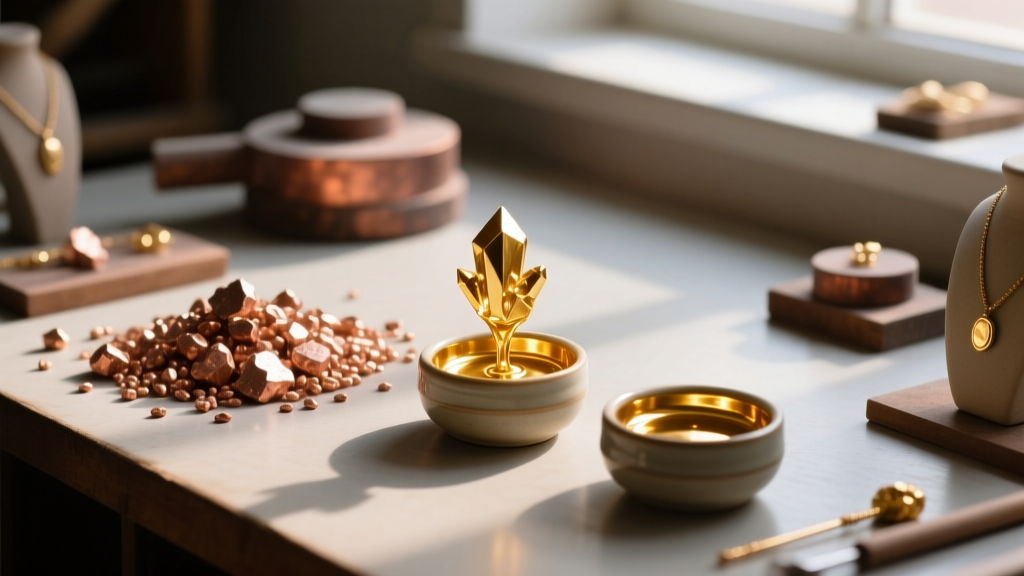
As the data illustrates, creating the signature blush of rose gold requires a significant increase in copper and a corresponding reduction in silver. In 14k rose gold, copper makes up over a third of the total metallic mass. This high copper content fundamentally alters the physical properties of the alloy, impacting everything from its casting temperature to its work-hardening behavior during the polishing process. The World Gold Council notes that copper-rich alloys require specialized fluxes during the melting phase to prevent oxidation, which can otherwise result in porous, brittle castings.
Vickers Hardness and Work-Hardening Dynamics
Durability in fine metals is measured using the Vickers Hardness (HV) scale, which assesses a material's resistance to localized plastic deformation. Because copper is inherently harder and more rigid than silver, rose gold alloys consistently outperform their yellow gold counterparts in scratch resistance and structural rigidity.
- 18k Yellow Gold: Approximately 125 HV. Highly malleable, prone to micro-scratching.
- 18k Rose Gold: Approximately 135-140 HV. Noticeably more resistant to surface abrasion.
- 14k Rose Gold: Approximately 150-160 HV. Exceptional durability, ideal for high-impact items like wedding bands and tension-set rings.
Furthermore, copper exhibits aggressive work-hardening characteristics. When a jeweler sizes a rose gold ring or burnishes its surface, the mechanical stress aligns the copper crystalline structure, rapidly increasing its surface hardness. While this makes 14k rose gold incredibly resilient, it also means that resizing or repairing rose gold and gold jewelry requires careful annealing (heating and quenching) to relieve internal stresses and prevent stress-corrosion cracking.
The Copper Factor: Skin Reactivity and Patina Development
Addressing the Green Skin Myth
A common concern among buyers is the potential for high-copper alloys to cause skin discoloration or contact dermatitis. When copper reacts with the acidic pH of human sweat, it can produce copper chloride, a green compound that transfers to the skin. However, in properly formulated 14k and 18k rose gold, the gold matrix encapsulates the copper atoms, significantly slowing this oxidation process. True allergic reactions to copper are exceedingly rare; most metal allergies in jewelry stem from nickel, which is entirely absent in authentic rose gold formulations.
The Evolution of Patina
Unlike white gold, which requires periodic rhodium plating to maintain its bright white appearance, rose gold is a solid, un-plated alloy. Over years of continuous wear, the high copper content will develop a subtle, darkened patina. Many vintage collectors actively seek out this oxidized layer, as it adds depth and character to the metal, but it can be easily removed by a professional ultrasonic cleaning and light polishing if a bright, factory-new finish is preferred.
Expert Insight: Never use harsh chemical dips or abrasive polishing cloths intended for silver on rose gold. These compounds can strip the copper from the surface layer, leaving behind a porous, pale yellow micro-surface that ruins the structural integrity of the finish.
Galvanic Corrosion in Stacked Pieces
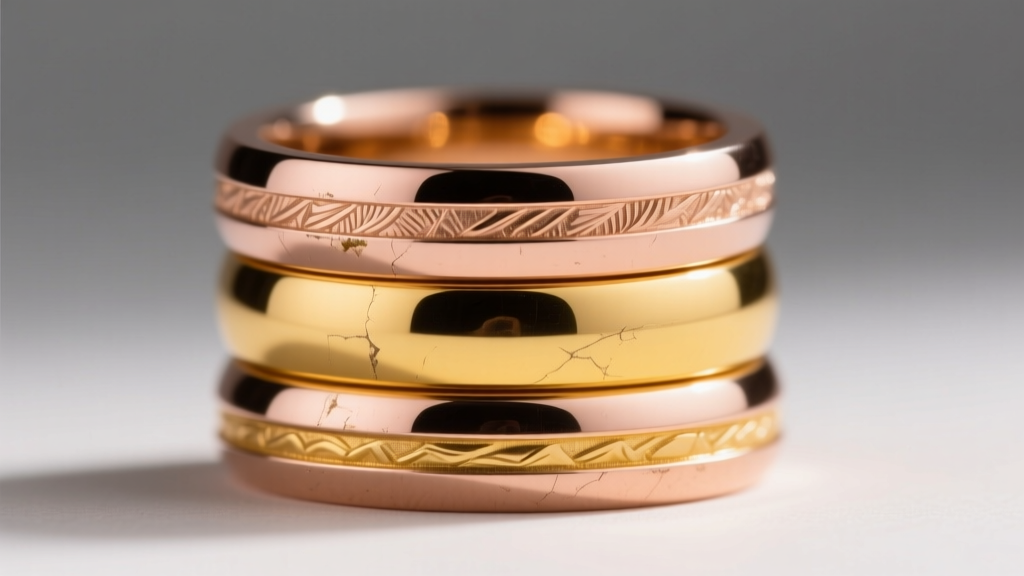
A major trend in contemporary styling is stacking bands of varying colors. However, mixing rose gold and gold jewelry on the same finger introduces a complex electrochemical environment. When two different metallic alloys are in constant physical contact, and a mild electrolyte (like sweat or hand lotion) is introduced, a microscopic galvanic cell is formed.
Because 14k rose gold (with its high copper content) has a different electrode potential than 14k yellow gold (with its higher silver and zinc content), the more anodic metal will corrode at an accelerated rate at the exact point of contact. Over a decade of daily wear, this galvanic friction can result in visible grooving or 'notching' where the rings rub together. To mitigate this, experts recommend using a hard, non-metallic spacer band between differing gold alloys, or opting for a single, multi-toned ring where the alloys are soldered together under controlled, high-temperature conditions that neutralize the galvanic gradient.
Preventative Maintenance for Stacked Sets
If you are committed to stacking different karats and colors, routine maintenance is non-negotiable. Jewelers recommend removing stacked rings before swimming in chlorinated pools or using household cleaning agents. Chlorine is highly reactive with copper and can cause rapid stress-corrosion cracking, particularly in the high-copper matrix of 14k rose gold. Furthermore, having a jeweler inspect the contact edges of your stacked rings every six months ensures that galvanic wear is caught before it compromises the structural thickness of the band.
Expert Verdict: Choosing the Right Karat for Daily Wear
Selecting between 14k and 18k rose gold ultimately depends on the wearer's lifestyle and aesthetic priorities. For heirloom pieces, intricate filigree work, or high-end horology, 18k rose gold offers a richer, warmer hue and the prestige of a higher precious metal content. However, for everyday wedding bands, active lifestyles, or tension-set gemstone mountings, 14k rose gold is the undisputed champion of durability. Its superior Vickers hardness, combined with a lower price point and zero requirement for rhodium maintenance, makes it one of the most practical and scientifically robust choices in modern fine jewelry.


