How to Read Gold Markings on Jewelry: A Step-by-Step Guide
Learn how to read gold markings on jewelry with our step-by-step guide. Decode karat stamps, millesimal numbers, and spot fake hallmarks easily.

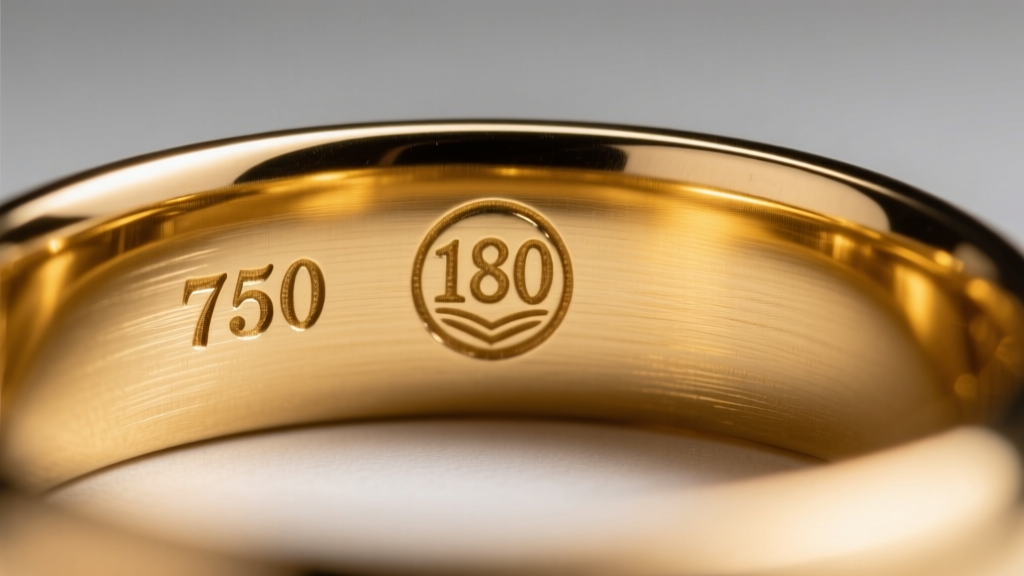
Whether you are inheriting a family piece, shopping at an estate sale, or simply verifying a recent purchase, understanding gold markings on jewelry is the single most important skill for any collector or consumer. These microscopic stamps are the DNA of your jewelry, revealing its exact metal composition, origin, and sometimes its creator. However, with varying international standards and a flood of misleading electroplated stamps on the market, deciphering these hallmarks can feel like reading a dead language.
In this comprehensive guide, we will walk you through the exact step-by-step process of locating, reading, and verifying gold markings on jewelry, ensuring you never mistake gold-filled brass for solid 18k gold again.
The Anatomy of Gold Markings on Jewelry
Before grabbing a magnifying glass, it is crucial to understand what you are actually looking for. In the United States, the Federal Trade Commission (FTC) mandates that any item stamped with a karat quality mark must also bear a registered manufacturer's trademark. In Europe and the UK, the system is far more rigorous, relying on independent Assay Offices. Generally, authentic gold markings fall into three categories:
- Purity Marks: Indicates the ratio of pure gold to alloy metals (e.g., 14k, 585, 750).
- Maker’s Marks: The registered trademark, initials, or logo of the manufacturing company or artisan.
- Assay Office Marks: Symbols indicating the specific government or independent office that tested and verified the metal (common in the UK and Europe).
Step 1: How to Locate Hidden Stamps
Gold markings on jewelry are intentionally placed in low-friction areas to prevent the stamp from wearing away over decades of use. To find them, you need the right tools: a 30x jeweler's loupe (a 10x is often insufficient for worn vintage pieces) and a focused LED pen light.

Where to Look by Jewelry Type
- Rings: Inspect the interior of the shank (the band). On older rings, the stamp may be stretched or partially worn away near the bottom where the finger rests.
- Necklaces and Bracelets: Check the flat side of the lobster clasp, the jump ring, or the small flat soldered tag (often called a "bean" or "tag") attached near the clasp.
- Earrings: Look at the base of the post (for studs) or the interior curve of the wire/hinge (for hoops). For heavy pieces, the stamp might be on the back of the main decorative face.
- Watch Cases: Open the case back or look inside the lugs where the strap attaches. Solid gold vintage watches often have hallmarks stamped on the exterior of the lugs or the inner case back.
Step 2: Decoding Purity Stamps (Karat vs. Millesimal)
Once you have located the stamp, you need to translate it. The US primarily uses the Karat system (out of 24 parts), while most of the world uses the Millesimal fineness system (parts per thousand). Understanding both is mandatory for reading international gold markings on jewelry.
| Karat Stamp | Millesimal Stamp | Gold Percentage | Durability & Best Use |
|---|---|---|---|
| 10k / 10kt | 417 | 41.7% | Highly durable, scratch-resistant. Ideal for everyday rings and class rings. |
| 14k / 14kt | 585 | 58.5% | The US standard. Excellent balance of rich color and structural integrity. |
| 18k / 18kt | 750 | 75.0% | Softer, richer yellow hue. Prone to scratching; best for earrings, necklaces, or low-impact rings. |
| 22k / 22kt | 916 | 91.6% | Very soft, distinct deep yellow/orange tone. Common in Indian and Middle Eastern bridal jewelry. |
| 24k / 24kt | 999 | 99.9% | Pure gold. Too soft for functional jewelry; used mostly for investment bullion or specific cultural pieces. |
Note: If you see a "P" after the karat mark (e.g., 14KP), it stands for "Plumb." This is an older US term guaranteeing the piece is at least the stated karat, not a fraction less. It does not mean "plated."
Step 3: Identifying Maker's Marks and Assay Symbols
A purity stamp alone is technically illegal in the US without a maker's mark, though enforcement on imported goods is lax. The maker's mark is usually a set of initials (e.g., "J.E." for a specific jeweler) or a tiny geometric logo. If you are examining European pieces, you will encounter the London Assay Office hallmarks (or their French/Swiss equivalents).
A full British hallmark consists of four distinct symbols:
- Sponsor’s Mark: The maker's registered initials.
- Traditional Fineness Mark: A crown for gold.
- Millesimal Fineness Mark: The numerical purity (e.g., 750 inside an oval shield for gold).
- Assay Office Mark: A leopard's head for London, an anchor for Birmingham.
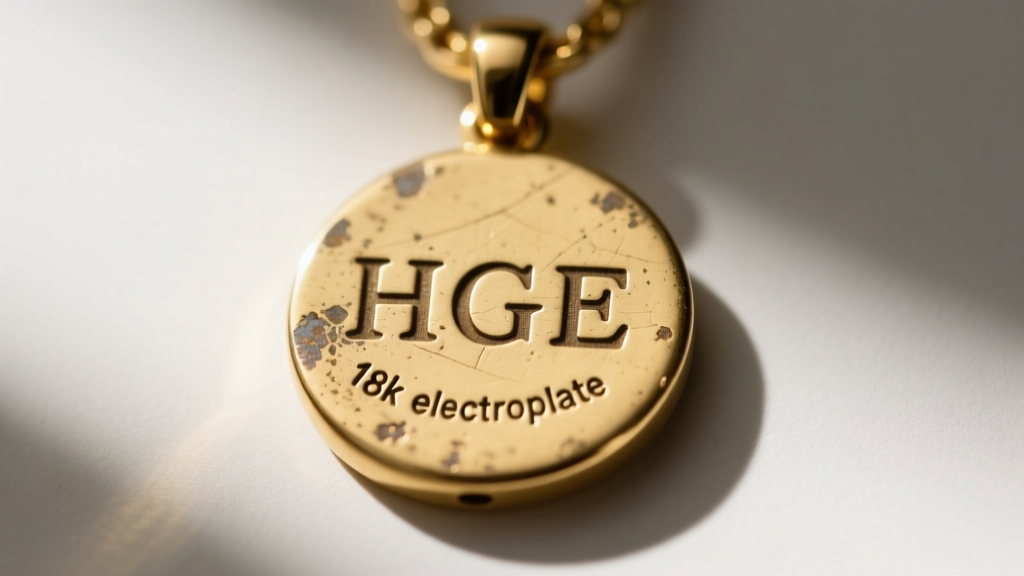
Red Flags: Spotting Fake or Misleading Gold Markings
The secondary market is flooded with items designed to deceive the untrained eye. When inspecting gold markings on jewelry, immediately downgrade your assessment if you spot any of the following abbreviations. These indicate that the piece is not solid gold, regardless of the karat number stamped next to them:
- HGE / HGP: Heavy Gold Electroplate / Heavy Gold Plated. Usually a very thin layer of gold over brass or copper.
- GF: Gold Filled. A thicker layer of gold mechanically bonded to a base metal. While durable, it is not solid gold and has minimal melt value.
- RGP: Rolled Gold Plate. Similar to gold-filled but with a much thinner gold layer.
- EP / EPNS: Electroplated / Electroplated Nickel Silver. Base metal with a microscopic gold wash.
- 1/20 14k GF: This means only 1/20th (5%) of the total weight of the item is 14k gold.
Pro-Tip: If a piece is stamped "18k HGE", the "18k" refers only to the purity of the microscopic plating layer, not the core metal. Never pay solid gold prices for HGE items.
Step 4: The Verification Framework (When Stamps Lie)
Stamps can be faked. A fraudulent seller can easily buy a set of steel hallmarking punches for a few dollars and stamp "18k" onto a brass ring. Therefore, reading gold markings on jewelry is only the first step in your authentication process. Follow this verification framework:
1. The Magnet Test
Gold is diamagnetic, meaning it is completely non-magnetic. Pass a strong neodymium magnet over the piece. If the clasp jumps to the magnet, or the ring feels a pull, the core is ferrous (steel or iron). Note: Some white gold alloys contain nickel, which can show a very weak reaction, and clasps often contain steel springs. Use this test to eliminate obvious fakes, not to confirm authenticity.
2. The Ceramic Streak Test
Gently drag the item across an unglazed ceramic tile. Real gold will leave a golden-yellow streak. Pyrite (fool's gold) or brass will leave a black or dark green streak. Be warned: this test is slightly destructive and will scratch your jewelry.
3. Electronic Gold Testers
For a non-destructive, highly accurate method, invest in an electronic gold tester (like the GemOro AurumTester). These devices measure the electrical conductivity of the metal to determine its exact karat weight, easily distinguishing between 14k and 18k without the mess of acid testing.
4. Professional Acid Testing
If you are buying high-value estate jewelry, take it to a certified gemologist or reputable jeweler. They will perform a scratch test on a touchstone and apply specific concentrations of nitric acid to observe the chemical reaction, providing a definitive answer on the gold's purity.
Final Thoughts on Gold Hallmarks
Mastering the ability to read gold markings on jewelry transforms you from a passive buyer into an informed collector. Always pair your visual inspection of the stamps with a logical assessment of the piece's weight, wear patterns, and color consistency. When in doubt, trust the metal, not the mark.


