Gold Rush Coins & Jewelry: The 2026 Heritage Trend Analysis
Explore the 2026 trend of gold rush coins & jewelry. Discover styling tips, authentication metrics, and mounting techniques for numismatic pendants.

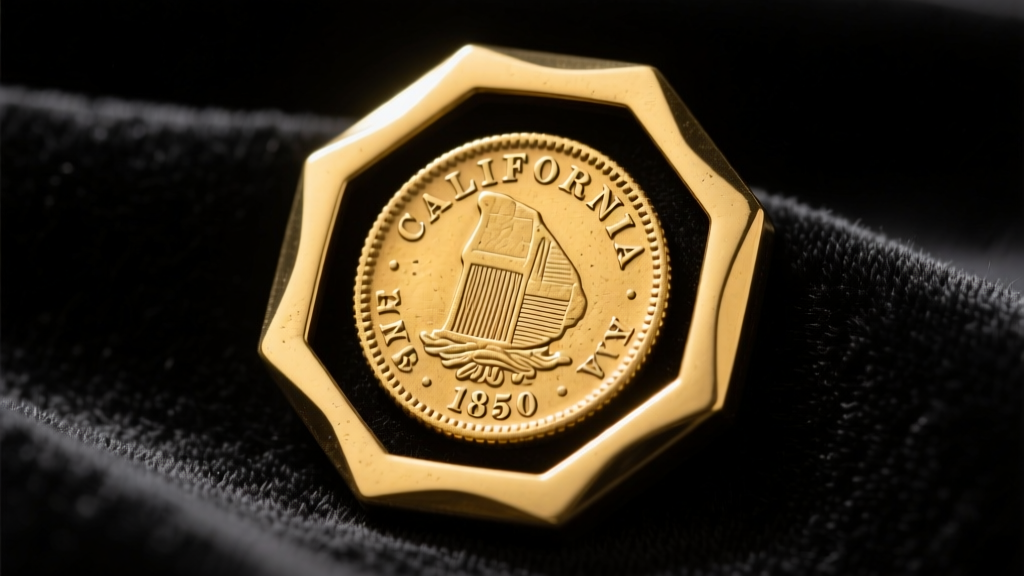
The Resurgence of Numismatic Jewelry in 2026
In the landscape of contemporary adornment, the pendulum has swung decisively away from stark, hyper-minimalist aesthetics toward pieces that carry historical weight and narrative depth. As we navigate the style landscape of 2026, the intersection of numismatics and fine accessories has emerged as a dominant force. Specifically, the market for gold rush coins & jewelry has experienced a massive surge, driven by a consumer desire for tangible history, intrinsic value, and unique silhouettes that mass-produced castings simply cannot replicate.
The California Gold Rush (1848–1855) left behind a fascinating legacy of private minting and federal coinage that is highly prized by modern jewelers. From the tiny, octagonal fractional gold pieces struck by private assayers in San Francisco to the majestic Liberty Head Double Eagles produced by the U.S. Mint, these artifacts offer a masterclass in vintage styling. However, transforming a historical artifact into a wearable piece of art requires a deep understanding of metallurgy, preservation ethics, and structural engineering. This guide breaks down the technical and stylistic nuances of the numismatic jewelry trend.
Decoding the Metallurgy of 19th-Century Gold
To properly style and mount these pieces, one must first understand the alloy composition of 19th-century gold. Modern jewelry typically utilizes 14k (58.3% gold) or 18k (75% gold) alloys, engineered for specific tensile strengths and color profiles. Historical coins, however, were minted under entirely different standards.
Federal Coinage Standards
Following the Coinage Act of 1837, standard U.S. gold coins—including the Quarter Eagle ($2.50), Half Eagle ($5.00), and the massive Double Eagle ($20.00)—were struck at exactly 90% gold and 10% copper. This equates to roughly 21.6 karats. The copper addition was critical; pure 24k gold is far too malleable for circulation and would wear down rapidly. This 90/10 alloy gives authentic federal gold rush coins a distinct, rich, slightly reddish-yellow hue that modern 22k jewelry alloys rarely mimic perfectly.
Private Fractional Gold Anomalies
Between 1852 and 1856, a severe shortage of small-denomination federal coinage in California led private jewelers and assayers (such as N.G. Naudet and M. Deriberpie) to strike their own fractional coins in 25-cent, 50-cent, and 1-dollar denominations. Because these private mints lacked rigorous assaying equipment, the purity of these coins varies wildly. Some test at a mere 14k (58% gold), while others approach 20k. This variance in hardness and melting point is a critical factor when a jeweler applies heat or pressure during the mounting process.
Authentic vs. Replica: Navigating the Market
When sourcing gold rush coins & jewelry, buyers must be acutely aware of the distinction between authentic numismatic artifacts and modern commemorative replicas. The pricing structures and material realities are vastly different.
- Authentic Federal Coins (1849-1860s): A circulated Liberty Head Quarter Eagle (17mm diameter) typically ranges from $450 to $900, depending on the mint mark and wear. The Double Eagle (34mm diameter) commands anywhere from $2,800 to over $15,000 for high-grade specimens.
- Authentic Fractional Gold: Due to their small size (often just 10mm to 14mm) and historical quirks, authentic fractional pieces range from $150 for heavily worn, low-purity octagons to $1,200+ for rare, high-karat round variants.
- Modern Replicas: Often cast in 10k or 14k solid gold, or heavily plated over brass. These lack the sharp strike details of a minted coin and usually feature a uniform, modern high-polish finish. Prices range from $60 to $250 based purely on the scrap gold weight and labor.
For the serious collector, the goal is to acquire authentic, problem-free coins that have not been harshly cleaned, as the natural patina acquired over 170 years is a vital component of the coin's value and aesthetic appeal.
Design Frameworks: Mounting Without Destroying Value
The most common mistake amateur jewelers make when working with numismatic pieces is compromising the coin's integrity. Soldering a bail directly onto the coin, drilling holes for jump rings, or using excessive pressure in a tight bezel can instantly strip a coin of its numismatic premium, reducing it to mere melt value. In 2026, the industry standard relies on non-destructive, reversible mounting techniques.
| Mounting Technique | Structural Description | Impact on Coin Value | Best Use Case |
|---|---|---|---|
| Full Bezel (Friction) | A custom-machined 14k or 18k gold collar that wraps entirely around the coin's edge, secured via internal tension or a burnished lip. | Minimal to None (if no adhesive or solder touches the coin) | High-relief coins, daily wear pendants |
| Scalloped / Half-Bezel | Leaves portions of the coin's edge and reeding exposed, using strategic pressure points at the top and bottom. | None (Highly favored by collectors) | Showcasing edge lettering or reeding |
| Prong Setting | Four to six individual wire prongs folded over the coin's rim using a burnisher. | None (Most reversible method) | Delicate fractional coins, intricate rings |
| Soldered Bail (Direct) | A loop of gold soldered directly to the top of the coin using a torch and hard solder. | Catastrophic (Destroys numismatic value) | Replica coins or scrap gold only |
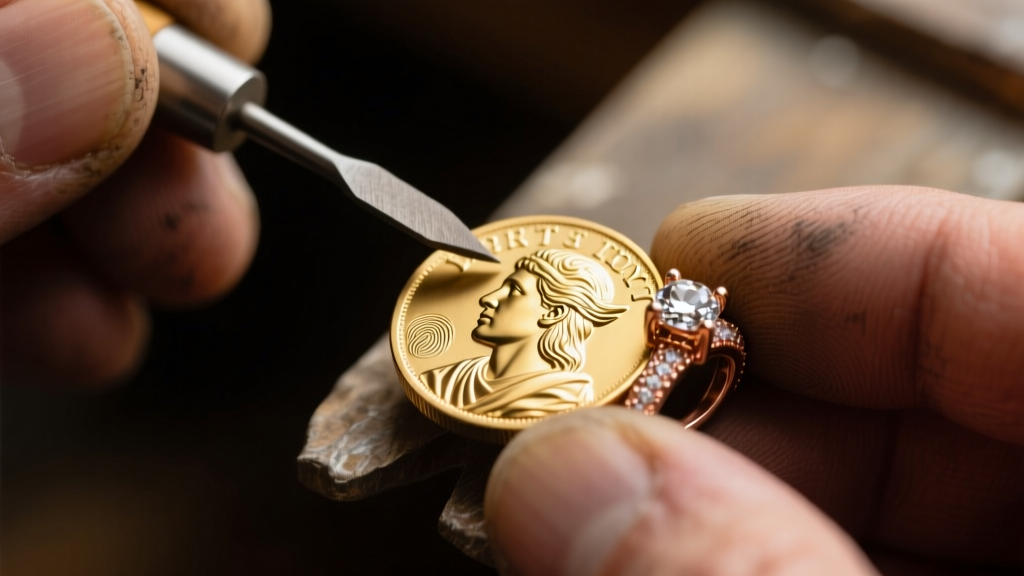
As seen in high-end bespoke workshops, the prong setting remains the gold standard for preserving the artifact. A skilled artisan will use a polished steel burnisher to gently fold the 18k gold prongs over the coin's rim, relying on the ductility of the mounting metal rather than applying destructive pressure to the historical artifact.
Styling Gold Rush Coins & Jewelry for Modern Wardrobes
Integrating a mid-19th-century artifact into a modern wardrobe requires a careful balancing of scale, chain gauge, and metal color coordination. The inherent warmth of the 90% gold/copper alloy pairs exceptionally well with specific chain styles and contemporary textiles.
Chain Gauge and Link Pairings
The physical dimensions of the coin dictate the necessary chain gauge. A chain that is too delicate will suffer from premature wear at the jump ring, while a chain that is too heavy will visually overwhelm a fractional piece.
- Fractional Coins (10mm - 14mm): Pair with a 1.2mm to 1.8mm Italian rope chain or a delicate box chain. The subtle twist of the rope chain complements the intricate, hand-engraved look of private mint dies.
- Quarter Eagles & Half Eagles (17mm - 21mm): Opt for a 2.5mm to 3.5mm Figaro or Cuban link chain. The alternating link patterns of a Figaro chain provide a vintage aesthetic that mirrors the historical nature of the pendant.
- Double Eagles (34mm): These massive, 33-gram coins require substantial support. A 4.5mm to 6.0mm solid Curb or thick Rope chain is mandatory. Ensure the clasp is a heavy-duty lobster claw or a custom machined box clasp; standard spring rings will fail under the dynamic weight of a Double Eagle.
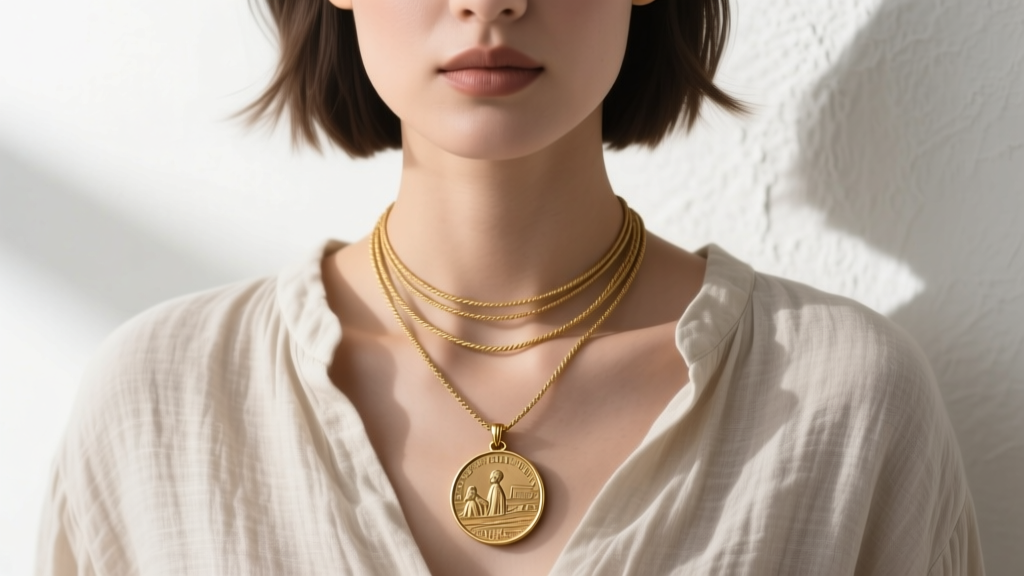
Color Coordination and Layering
Because historical gold rush coins possess a distinct, copper-tinged yellow hue, they contrast beautifully with modern white gold or platinum chains. This bi-metal approach highlights the coin's warmth and prevents the piece from looking like a monolithic, flat block of yellow metal. For those who prefer a monochromatic look, an 18k yellow gold chain with a matte or brushed finish will complement the circulated, slightly worn surface of an authentic 1850s coin without competing for visual dominance.
Authentication Metrics and Preservation Ethics
When investing in this niche, provenance and authentication are paramount. The secondary market is flooded with high-quality base-metal counterfeits, particularly of the $2.50 and $5.00 Liberty Head coins. Always cross-reference potential purchases with databases maintained by the Professional Coin Grading Service (PCGS) or the Numismatic Guaranty Company (NGC).
Crucially, standard jewelry authentication methods can be destructive to numismatic pieces. X-ray Fluorescence (XRF) testing is standard for verifying the karat of a gold ring, but the radiation and potential surface contamination can be a concern for pristine, uncirculated coins. Furthermore, you must never subject a historical coin to an ultrasonic cleaner or a steam cleaner. The microscopic cavitation bubbles can strip away decades of natural toning and patina, which is highly prized by serious numismatists.
Never polish a historical coin to make it look 'new' for jewelry mounting. The wear, the softening of the high points, and the natural oxidation in the recesses of the die are exactly what give the piece its soul and its market premium. Clean it only with a soft brush and distilled water if absolutely necessary.
Conclusion
The integration of gold rush coins & jewelry into the 2026 style zeitgeist represents a mature evolution in how we consume luxury. It is a rejection of the disposable and the mass-produced in favor of artifacts that have survived wars, depressions, and shifting empires. By understanding the precise metallurgy of 19th-century alloys, insisting on non-destructive mounting techniques, and carefully curating the accompanying chain gauges, collectors and style enthusiasts can wear a tangible piece of American history with absolute confidence and sartorial elegance.


