Guide to Selecting and Caring for 24k Gold Cremation Jewelry
Learn how to safely select, fill, and maintain 24k gold cremation jewelry. Expert steps for handling pure gold keepsakes and preserving ashes.

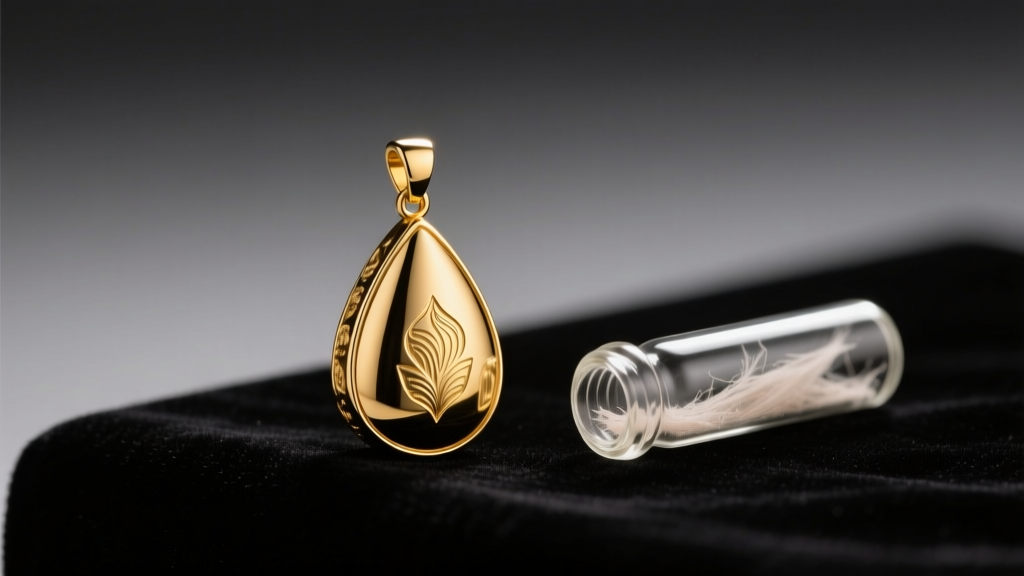
The Metallurgical Reality of 24k Gold in Memorial Keepsakes
Choosing 24k gold cremation jewelry is a profound way to honor a loved one. The rich, unmistakable yellow hue of 99.9% pure gold carries a weight and warmth that alloyed metals simply cannot replicate. However, from a metallurgical standpoint, pure gold presents unique engineering challenges that every buyer must understand before making a purchase.
According to the Gemological Institute of America (GIA), 24k gold is exceptionally soft. On the Mohs scale of mineral hardness, it ranks at just 2.5 to 3—roughly the same hardness as a human fingernail. In terms of Vickers hardness (HV), pure gold sits around 25 HV, compared to 140 HV for standard 14k gold. This extreme malleability means that 24k gold will scratch, dent, and deform under daily mechanical stress.
When applied to cremation jewelry, this softness dictates how the piece must be engineered. A pendant or ring that houses cremated remains requires a secure seal. If a manufacturer uses 24k gold for the internal threading of a screw-top cylinder, those threads will strip and fail after just a handful of openings. Therefore, high-quality 24k gold cremation jewelry must utilize specific design workarounds, such as stainless steel internal mechanisms, glass vials, or permanent resin seals, to ensure the ashes remain secure while the exterior boasts that flawless, pure gold finish.
Step-by-Step: How to Safely Fill Your Cremation Jewelry
Filling a memorial keepsake is an emotional and delicate process. Because 24k gold scratches easily, you must take precautions to protect the exterior metal while handling the interior compartment.
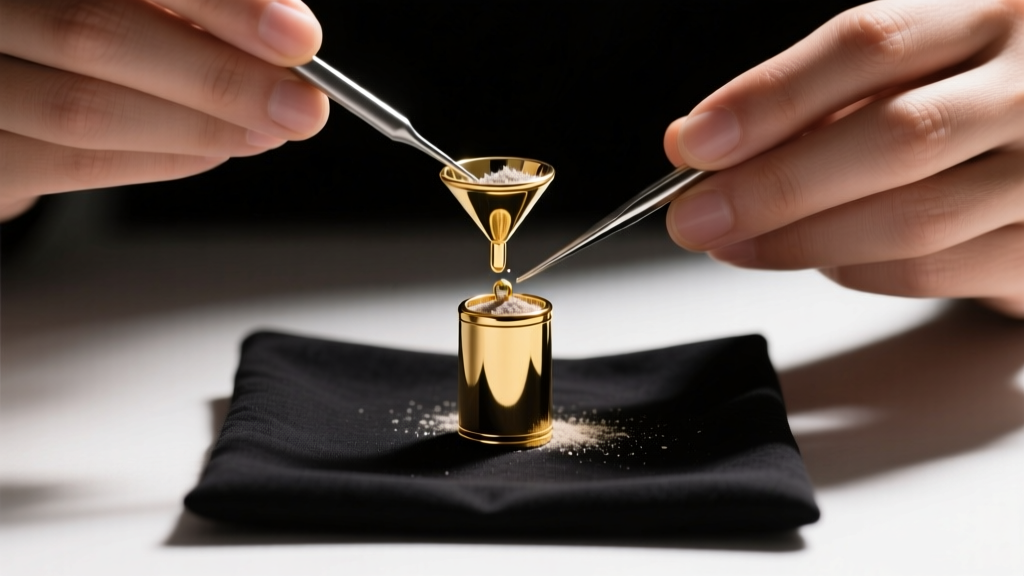
Step 1: Prepare Your Workspace
Never work over a hard surface like a tile floor or granite countertop. Lay down a dark, soft microfiber cloth or a specialized jewelry catching mat. This provides a high-contrast background to see the fine ash particles and a soft landing pad in case the pendant slips from your hands, preventing dents in the soft 24k gold.
Step 2: The Transfer Process
- Use the right tools: Utilize the micro-funnel and metal pin (or a wooden toothpick) provided in your jewelry kit. Avoid using metal tweezers to pick up the pendant, as steel will instantly scratch 24k gold.
- Measure carefully: Cremated remains are highly alkaline and granular. Scoop a tiny amount of ashes using the pin and gently guide them through the micro-funnel into the pendant's cavity.
- Do not overfill: Leave at least 2 to 3 millimeters of clearance at the top of the compartment. If ashes touch the threading or the sealing rim, the cap will not close properly, risking cross-threading and permanent damage to the gold.
Step 3: Compaction and Sealing
Once filled, gently tap the side of the pendant with the wooden end of your tool to settle the ashes. If your 24k gold piece requires a permanent seal (common for pure gold designs to avoid thread wear), apply a microscopic drop of two-part jeweler's epoxy to the inner rim before screwing or pressing the cap into place. Never use cyanoacrylate (super glue); it degrades over time, turns cloudy, and can release vapors that discolor the interior gold.
Comparing 24k Gold Cremation Jewelry Designs
Because of the softness of pure gold, manufacturers utilize different structural designs to house the ashes safely. Below is a comparison of the three most common 24k gold cremation jewelry formats available on the market today.
| Design Type | Structural Integrity | Best For | Maintenance Level |
|---|---|---|---|
| Resin-Sealed Cylinder | High (Permanent seal prevents thread wear) | Everyday wear, active lifestyles | Low (No mechanical parts to fail) |
| Glass Vial with 24k Bezel | Medium (Glass protects ashes; gold is decorative) | Visual keepsakes, occasional wear | Medium (Glass can crack if dropped) |
| Threaded 24k Gold Cap | Low (Pure gold threads will strip over time) | Safe storage, infrequent opening | High (Requires careful thread alignment) |
Daily Wear vs. Safe Storage: Managing Pure Gold Softness
If you intend to wear your 24k gold cremation jewelry daily, you must adjust your expectations regarding its appearance. Pure gold develops a 'patina' of micro-scratches very quickly. While some view this as a beautiful, lived-in testament to the love they carry, others prefer a pristine mirror finish.
To minimize deformation, avoid wearing 24k gold rings or bracelets while lifting weights, doing yard work, or washing dishes. The chlorine in tap water and household cleaners can cause a chemical reaction that permanently weakens the molecular bonds of the gold, leading to microscopic pitting. Furthermore, remove the jewelry before applying lotions, perfumes, or sunscreen, as the chemical compounds can dull the gold's natural luster over time.
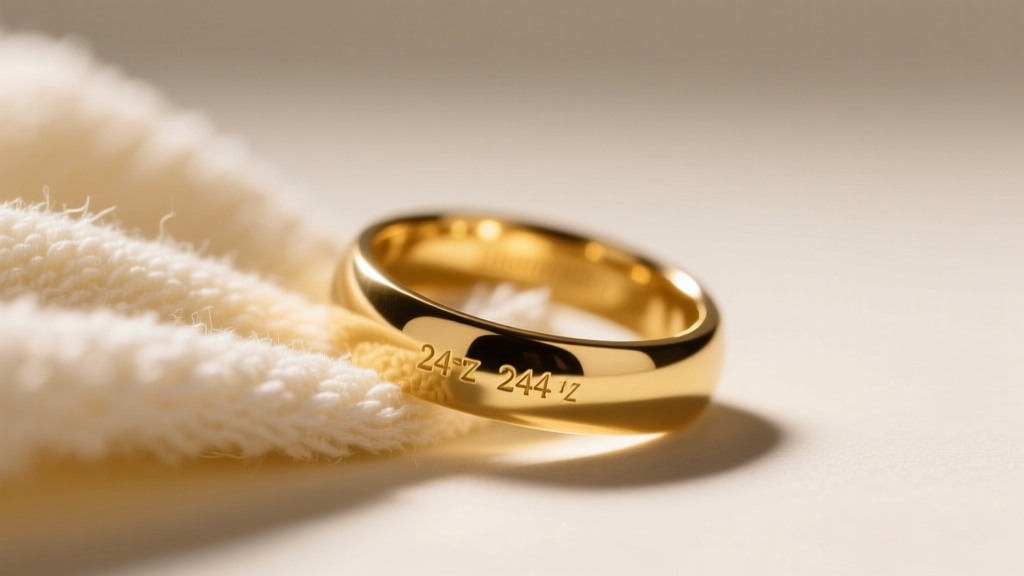
Step-by-Step Cleaning and Long-Term Maintenance
Proper cleaning is essential to maintain the radiant yellow color of your 24k gold cremation jewelry. The Federal Trade Commission (FTC) provides guidelines on gold purity and care, emphasizing that higher karat gold requires gentler cleaning methods than lower karat alloys.
- Mix a gentle solution: Combine a few drops of mild, phosphate-free dish soap (like Dawn) in a bowl of distilled water. Distilled water is crucial; tap water contains minerals that can leave hard water spots on pure gold.
- Soak briefly: Submerge the jewelry for no more than 3 to 5 minutes. This loosens body oils and environmental dust.
- Agitate softly: Use a baby-soft toothbrush or a dedicated jewelry cleaning brush to gently sweep the crevices. Never use stiff bristles, which will leave visible scratch marks on 24k gold.
- Rinse and dry: Rinse under a gentle stream of distilled water. Pat dry with a lint-free microfiber cloth. Do not rub aggressively.
Crucial Warning: Never place cremation jewelry in an ultrasonic cleaner. The high-frequency vibrations can compromise the epoxy seal, shatter internal glass vials, or rattle the ashes loose from their compacted state, causing them to leak.
Troubleshooting Common Issues
Cloudy Resin Seals
If your resin-sealed 24k gold pendant develops a cloudy appearance over the ash compartment, it is usually due to moisture trapped inside before sealing, or UV degradation of low-quality epoxy. Unfortunately, this requires a professional jeweler to carefully drill out the old resin, dry the ashes, and re-pour a UV-stable jeweler's resin.
Stripped or Stuck Threads
If a threaded 24k gold cap becomes stuck, do not use pliers. Pliers will crush the soft gold instantly. Instead, place the pendant in the refrigerator for 15 minutes. The slight thermal contraction of the metal can sometimes break the bond of dried skin oils or debris locking the threads. If the threads are already stripped, the piece must be converted to a permanent epoxy seal by a professional to ensure the ashes remain secure.
Final Thoughts on Honoring Your Loved One
Investing in 24k gold cremation jewelry is a deeply personal decision that blends emotional significance with material luxury. By understanding the physical limitations of pure gold and following these meticulous filling and care protocols, you ensure that your memorial keepsake remains a secure, beautiful, and lasting tribute for decades to come.


