The Best Homemade Jewelry Cleaner for Gold: Ingredient Buying Guide
Discover what to look for when sourcing ingredients for a homemade jewelry cleaner for gold. Expert tips on soaps, tools, and safe DIY recipes.

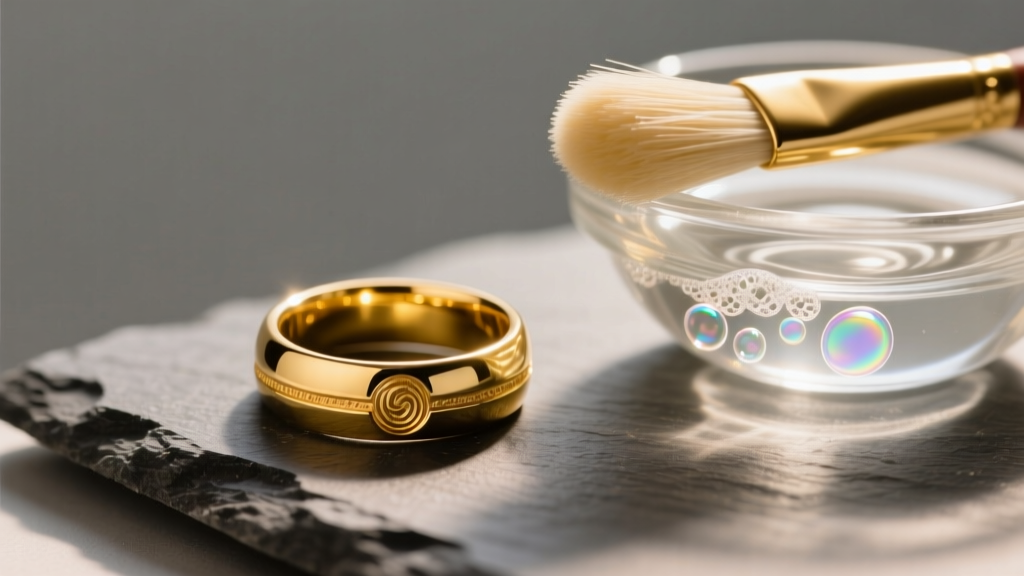
Gold jewelry is a timeless investment, but maintaining its brilliance requires more than just a quick wipe. When searching for the perfect homemade jewelry cleaner for gold, most consumers blindly mix pantry staples without understanding the underlying metallurgy or chemistry. As a buyer and curator of fine jewelry, your approach to DIY cleaning should mirror your approach to purchasing the gold itself: with an eye for material grades, chemical compatibility, and precise tooling.
This guide shifts the perspective from a simple recipe blog to a comprehensive buying guide for DIY cleaning components. We will break down exactly what to look for when sourcing surfactants, mechanical tools, and solvents to ensure your 10k, 14k, 18k, or 24k gold pieces are cleaned safely and effectively in 2026 and beyond.
The Metallurgy of Tarnish: Why Your Gold Needs Cleaning
To buy the right cleaning ingredients, you must first understand what you are cleaning. Pure 24k gold is highly unreactive and does not tarnish. However, it is also exceptionally soft (roughly 2.5 to 3 on the Mohs hardness scale). To create durable jewelry, gold is alloyed with metals like copper, silver, zinc, and nickel.
- 18k Gold (75% Gold): Contains 25% alloy. Prone to mild surface dulling from skin oils and environmental dust.
- 14k Gold (58.3% Gold): Contains 41.7% alloy. Highly susceptible to copper oxidation and silver sulfide tarnish, especially in high-humidity environments.
- 10k Gold (41.7% Gold): Contains 58.3% alloy. Tarnishes rapidly and requires more robust, yet carefully balanced, cleaning agents.
According to the Gemological Institute of America (GIA), the alloys in lower-karat gold react with sulfur and oxygen in the air, creating a dark, oxidized layer. Your homemade cleaner must be formulated to lift this layer without micro-scratching the relatively soft gold matrix.
Sourcing Surfactants: What to Look For in Dish Soap
The foundational ingredient in almost every homemade jewelry cleaner for gold is dish soap. However, not all dish soaps are created equal. When shopping for a surfactant to use on precious metals, you must read the label carefully.
What to Buy
Look for non-ionic or mild anionic surfactants that are phosphate-free and pH-neutral (around 7.0). The industry gold standard is original blue Dawn dish soap. Its specific blend of surfactants effectively breaks down sebum (skin oils) and cosmetic residues without leaving a film.
What to Avoid
- Citrus Extracts (d-limonene): Often added for grease-cutting power, citrus oils are highly acidic and can degrade the porous structure of gemstones frequently set in gold, such as turquoise, pearls, and opals.
- Moisturizing Additives: Soaps labeled 'with aloe' or 'moisturizing lotion' contain lipid-based conditioners that will leave a stubborn, cloudy film inside the intricate prongs and pavé settings of your rings.
- Heavy Dyes and Fragrances: These can become trapped in the microscopic crevices of cast gold, leading to long-term discoloration of the metal's under-gallery.
The Ingredient Compatibility Matrix
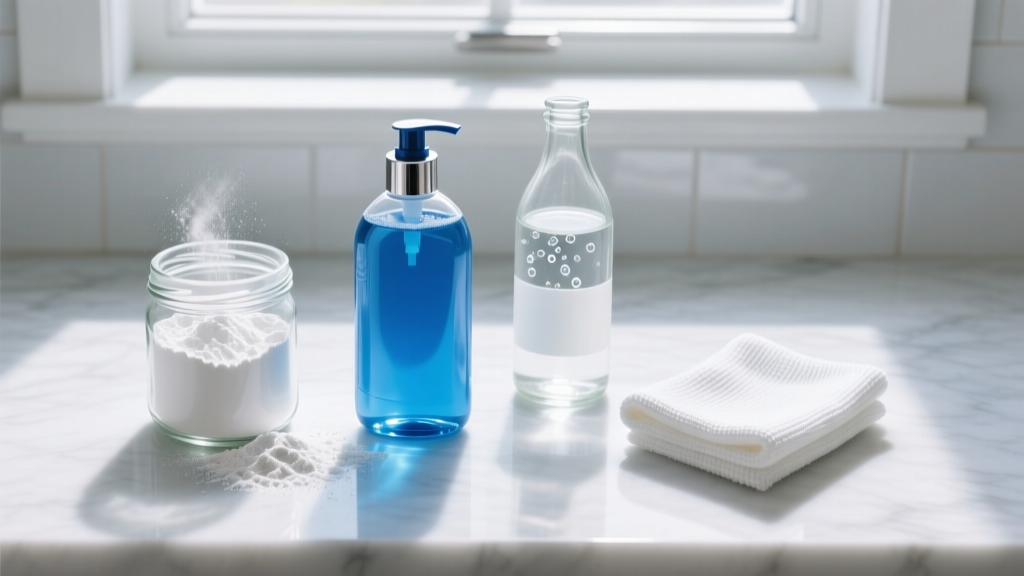
Before purchasing bulk ingredients for your DIY cleaning station, consult this matrix to ensure chemical compatibility with your specific gold karat and gemstone inclusions.
| Ingredient | Best For Gold Type | Gemstone Safety | Primary Function |
|---|---|---|---|
| Neutral Dish Soap | 10k, 14k, 18k, 24k | Safe for Diamonds, Sapphires, Rubies | Lipid and sebum removal |
| Baking Soda Paste | 10k, 14k (Solid only) | UNSAFE for all gemstones | Mild abrasive tarnish removal |
| White Vinegar | 14k, 18k (No pearls) | UNSAFE for Pearls, Opals, Emeralds | Dissolving hard water spots |
| Ammonia (Diluted) | 14k, 18k (Platinum) | Safe for Diamonds ONLY | Heavy grease cutting |
Note: Never use baking soda or vinegar on gold-filled or gold-plated jewelry, as the abrasive and acidic properties will strip the microscopic outer layer of gold.
Buying the Right Mechanical Tools
A chemical solution is only half the battle; mechanical agitation is required to dislodge particulate matter from pavé settings and milgrain detailing. When buying tools for your homemade jewelry cleaner for gold, specificity is paramount.
Detailing Brushes: The 0.05mm Rule
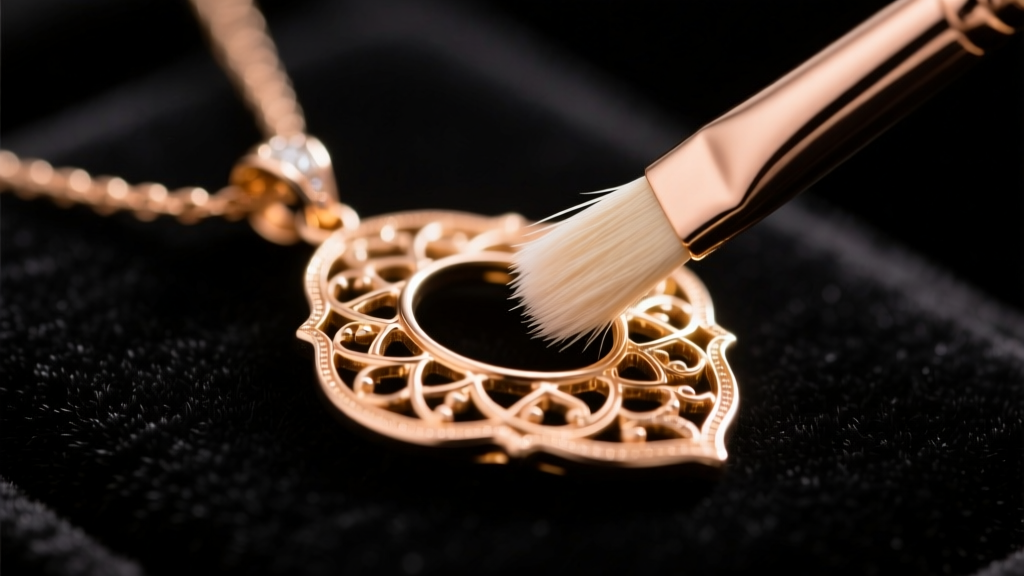
Do not use a standard toothbrush. Even 'soft' toothbrushes often feature nylon bristles that are too thick (0.15mm+) and can leave micro-scratches on 18k and 24k gold. Instead, purchase ultra-soft detailing brushes with a bristle diameter of 0.05mm or less. These are often sold for camera lens cleaning or precision watchmaking. The bristles must be flexible enough to bend into the under-gallery of a ring without applying lateral pressure to the prongs.
Microfiber Cloths: The 300 GSM Minimum
When buying polishing cloths, look for the GSM (grams per square meter) rating. Standard household microfiber cloths are usually 200 GSM, which is too thin and tends to push dust particles across the gold, causing abrasion. Purchase 300+ GSM split-fiber microfiber cloths. The split fibers create microscopic hooks that trap and lift dust away from the metal surface rather than dragging it. The American Gem Society highly recommends lint-free, high-pile microfiber for final drying and buffing.
Expert Formulations: 3 Tested DIY Recipes
Now that you have sourced the correct ingredients and tools, here are three targeted formulations based on the level of tarnish and the karat of your gold.
1. The Daily Maintenance Soak (Safe for Most Gemstones)
Best for: 14k and 18k gold rings worn daily, set with diamonds or corundum (sapphires/rubies).
- In a glass bowl, mix 1 cup of warm (not hot) distilled water with 3 drops of pH-neutral blue dish soap.
- Submerge the jewelry for exactly 15 minutes. (Prolonged soaking can weaken certain adhesive settings).
- Gently agitate with your 0.05mm detailing brush, focusing on the back of the stones where lotion builds up.
- Rinse under a gentle stream of lukewarm distilled water to prevent hard water calcium deposits.
- Pat dry with your 300 GSM microfiber cloth.
2. The Heavy Tarnish Paste (For Solid 10k and 14k Gold)
Best for: Solid gold chains or bangles with no gemstones that have developed dark copper oxidation.
- Create a paste using 2 parts baking soda and 1 part distilled water.
- Apply the paste to the gold using a cotton swab, avoiding any clasp mechanisms or springs.
- Let it sit for no more than 3 minutes.
- Use your detailing brush to gently work the paste into the chain links.
- Rinse thoroughly and buff to a high shine with a dry microfiber cloth.
Expert Warning: Never use the baking soda paste on gold vermeil or gold-plated items. The Mohs hardness of baking soda is roughly 2.5, which is hard enough to scour away the thin micron-layer of plated gold, exposing the base brass or sterling silver beneath.
3. The Ammonia Boost (For Extreme Sebum Buildup)
Best for: Diamond solitaire engagement rings in 14k or 18k white or yellow gold where the diamond appears cloudy from skin oils.
- Mix 1 part clear household ammonia (ensure it contains no added surfactants or dyes) with 6 parts cold water.
- Soak the ring for a maximum of 10 minutes. Ammonia is highly effective at breaking down the lipid bonds of skin oil trapped under the diamond's pavilion.
- Brush gently, rinse with cold distilled water, and dry immediately.
When to Abandon DIY and Buy Commercial Cleaners
While a homemade jewelry cleaner for gold is highly effective for routine maintenance and mild tarnish, there are specific scenarios where you must pivot to commercial products or professional services.
- Severe Silver Sulfide Tarnish: If your 10k or 14k gold has developed thick, black tarnish that baking soda cannot lift, you need a commercial thiourea-based dip. Warning: These are highly toxic and must be used in well-ventilated areas with strict adherence to safety data sheets.
- Porous Gemstones: If your gold is set with pearls, emeralds, opals, or turquoise, abandon all liquid DIY cleaners. Buy a specialized, waterless gemstone cleaning cloth that uses mild, dry polishing agents.
- Ultrasonic Cleaning: If you are buying an ultrasonic cleaner, do not use your homemade dish soap mixture. The cavitation process requires a commercial ultrasonic surfactant designed to lower the surface tension of water precisely; otherwise, the microscopic bubbles will not form correctly, and the cleaning will be ineffective.
Final Thoughts on Sourcing and Care
Creating the ultimate homemade jewelry cleaner for gold is less about the recipe and more about the quality of the ingredients you choose to buy. By investing in pH-neutral surfactants, 0.05mm detailing brushes, and high-GSM microfiber cloths, you elevate a simple kitchen chore into a professional-grade maintenance routine. Treat your gold's alloys and gemstone inclusions with the respect they demand, and your jewelry will retain its structural integrity and brilliant luster for generations.


