How Do You Clean Gold Plated Jewelry to Maximize Value?
Learn how do you clean gold plated jewelry safely to extend its lifespan, prevent base metal exposure, and maximize your budget investment.

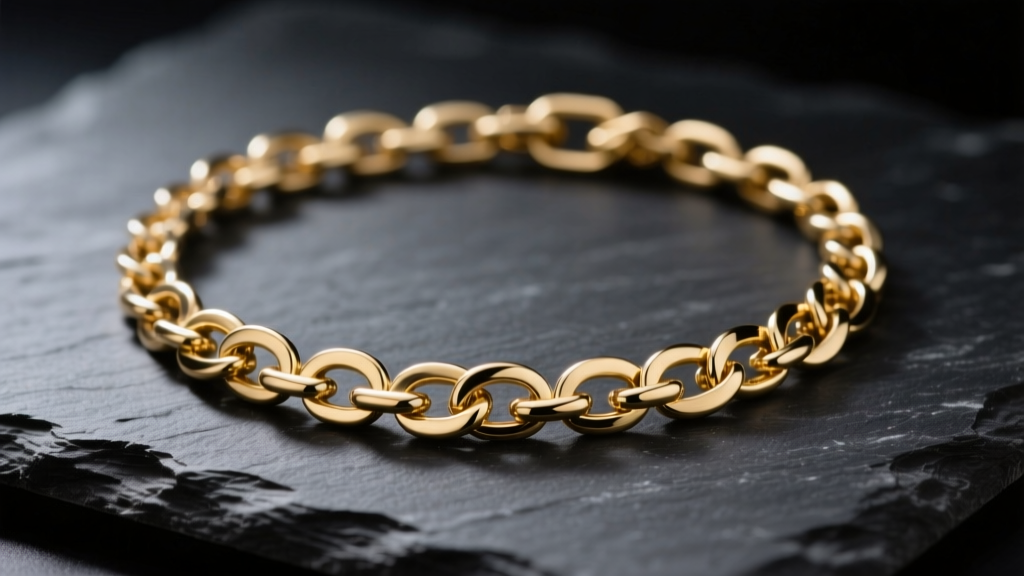
The True Cost of Gold Plated Jewelry: Care vs. Replacement
Gold-plated jewelry occupies a vital space in the modern accessorizing landscape, offering the luxurious aesthetic of solid 14k or 18k gold at a fraction of the cost. However, from a budget and value assessment perspective, the initial low price tag can be deceptive if the piece is not properly maintained. A $45 gold-plated brass ring worn 150 times over two years costs you $0.30 per wear. If improper cleaning methods strip the plating within a month, your cost-per-wear skyrockets to $4.50, entirely defeating the purpose of buying budget-friendly alternatives.
Understanding how do you clean gold plated jewelry is not merely about maintaining its shine; it is an active financial strategy to protect your investment, delay the inevitable wear-through, and avoid the recurring costs of constant replacement. In 2026, with the rising costs of raw precious metals, maximizing the lifespan of plated accessories is more economically critical than ever.
The Science of Plating: Why Traditional Cleaning Destroys Value
To clean gold-plated items effectively, you must first understand their structural vulnerability. Gold plating involves using an electrical current to bond a microscopic layer of gold over a base metal, typically brass, copper, or stainless steel. The thickness of this layer dictates the item's longevity and its resistance to cleaning agents.
According to the Federal Trade Commission (FTC) Jewelry Guides, a piece must have a minimum gold plating thickness of 0.5 microns to be legally marketed as 'gold plated.' Anything thinner is classified as 'gold flashed' or 'washed.'
Many budget brands utilize flash plating (0.1 to 0.3 microns) to keep retail prices under $30. At this thickness, the gold layer is measured in mere atoms. When consumers use popular DIY cleaning hacks, they inadvertently destroy this fragile galvanic bond:
- Baking Soda Pastes: Baking soda has a Mohs hardness of 2.5 and a highly alkaline pH of 9. Scrubbing a 0.5-micron gold layer with baking soda acts like sandpaper, instantly scouring away the gold and exposing the reactive brass underneath.
- Ultrasonic Cleaners: These devices use high-frequency sound waves to create microscopic cavitation bubbles. While excellent for solid gold and diamonds, the implosive force of these bubbles will literally blast thin gold plating off a brass core.
- Commercial Silver Dips: Formulated with harsh thiourea chemicals to strip silver sulfide (tarnish), these acidic solutions will chemically etch gold plating, leaving it porous, dull, and permanently discolored.
Step-by-Step: How Do You Clean Gold Plated Jewelry Safely?
To preserve the micron layer and maintain the piece's aesthetic and functional value, you must adopt a low-friction, pH-neutral cleaning protocol. Follow these exact steps to safely remove sebum, dead skin cells, and environmental pollutants without compromising the gold.
Step 1: Prepare a pH-Neutral Bath
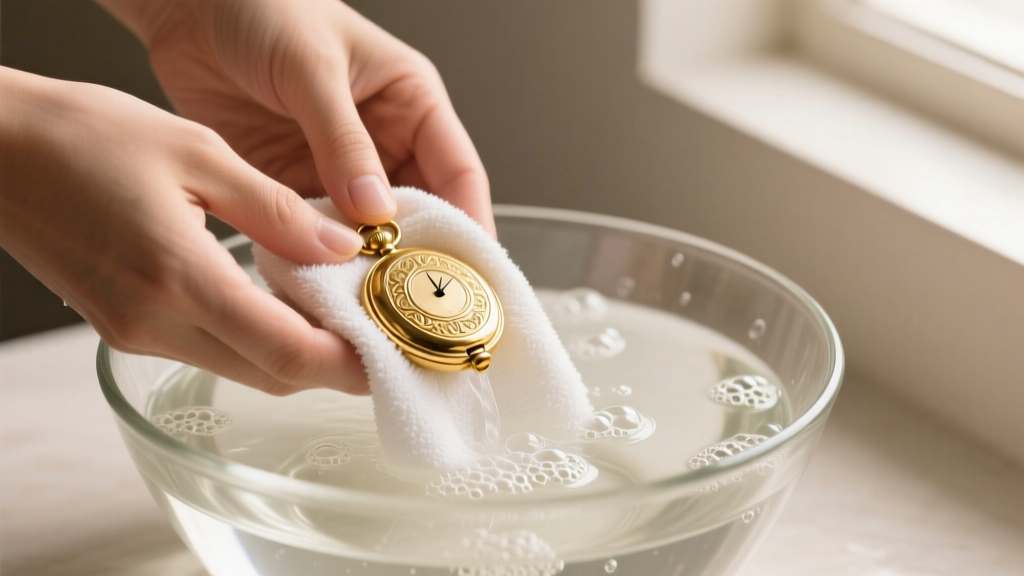
Fill a glass or ceramic bowl (avoid metal bowls to prevent galvanic transfer) with lukewarm water. Hot water causes the base metal to expand at a different rate than the gold layer, leading to micro-cracking and peeling. Add two drops of a mild, pH-neutral dish soap (like Dawn or a dedicated jewelry surfactant). Avoid soaps with added moisturizers or exfoliating beads.
Step 2: The 3-Minute Soak
Submerge the jewelry for no longer than three minutes. This brief window allows the surfactants to break down the lipid bonds of body oils without allowing water to penetrate any microscopic fissures in the plating and reach the base metal, which can cause internal oxidation.
Step 3: Targeted Agitation
Do not use a toothbrush. Even 'soft' bristles can accumulate microscopic silica particles from tap water or toothpaste, which will scratch the gold. Instead, use a lint-free microfiber cloth or a cosmetic cotton swab to gently wipe the surface. For intricate filigree or chain links, use a compressed air duster to blow out debris while the piece is still wet.
Step 4: The Pat-Dry Method
Never rub the jewelry dry. Rubbing creates friction that wears down the plating over time. Instead, place the piece on a dry microfiber towel and gently pat it. Allow it to air-dry completely in a low-humidity environment before storing it in an anti-tarnish pouch.
Value Assessment Matrix: When to Clean, Replate, or Retire
Not all wear can be reversed with cleaning. As a budget-conscious collector, you must objectively assess the state of your jewelry to decide whether it requires maintenance, professional restoration, or retirement. Use the following matrix to make financially sound decisions.
| Wear Stage | Visual Indicator | Recommended Action | Cost Estimate (2026) |
|---|---|---|---|
| Stage 1: Surface Dullness | Loss of high-gloss shine, slight smudging from oils. | Standard pH-neutral cleaning (DIY). | $0.05 (Soap cost) |
| Stage 2: Mild Tarnish | Slight darkening in crevices, base metal not visible. | Gentle polishing with a treated Sunshine cloth (use sparingly). | $0.50 per use |
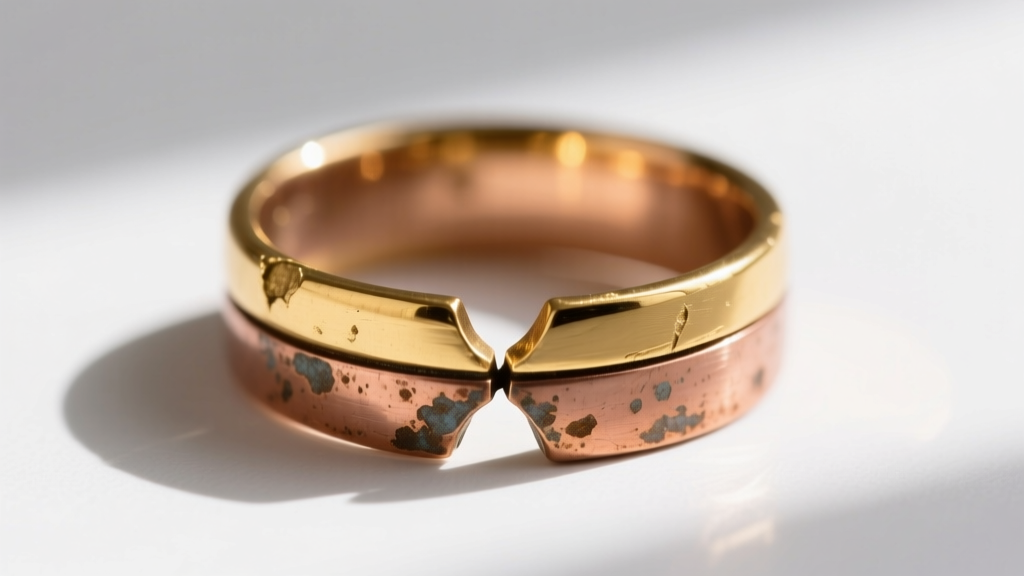
| Stage 3: Showthrough | Brass/copper base metal visible on high-friction edges. | Professional electroplating (Replating). | $35 - $65 |
| Stage 4: Severe Pitting | Base metal is oxidizing, causing green skin or flaking. | Retire piece; recycle base metal. | Replacement: $40+ |
Note: Replating is only financially viable if the base piece has high sentimental value or a heavy, durable brass construction. Replating a $15 fast-fashion ring that costs $45 to restore is a negative-value proposition.
Budget Alternatives: Vermeil vs. Gold Filled vs. Plated
If you find yourself frequently replacing gold-plated items due to wear, it is time to reassess your purchasing strategy. The Gemological Institute of America (GIA) notes that the longevity of gold jewelry is directly tied to the thickness and purity of the gold layer. When evaluating your next purchase, consider these higher-value budget alternatives:
Gold Vermeil (Pronounced Ver-May)
Vermeil requires a base of solid sterling silver (925) plated with a minimum of 2.5 microns of 10k, 14k, or 18k gold. Because silver is a precious metal, even if the gold eventually wears through, the underlying piece retains intrinsic melt value and will not turn your skin green. It is the ideal middle-ground for budget buyers seeking long-term value.
Gold Filled (GF)
Despite the name, gold-filled jewelry is not 'filled' with gold. It consists of a base metal core that is mechanically bonded with a thick outer layer of gold that must constitute at least 5% of the total weight of the item. A 14k gold-filled chain can easily last 10 to 30 years with proper care, offering a cost-per-wear that rivals solid gold, despite the initial $60-$120 price tag.
Expert Troubleshooting: Fixing Green Skin and Tarnish
The most common complaint that destroys the perceived value of gold-plated jewelry is the dreaded 'green skin' effect. This is not an allergic reaction to gold; it is a chemical reaction between the acids in your sweat (lactic acid and urea) and the copper or brass base metal that has been exposed through micro-fissures in the plating.
The Budget Fix: If a favorite ring is beginning to show through on the inner band, you can halt the oxidation process and protect your skin by applying a thin coat of clear, jewelry-safe polyurethane skin guard or even standard clear nail polish to the interior band. This creates a physical barrier between the reactive base metal and your skin's moisture, extending the wearable life of the piece by several months without requiring expensive replating.
Ultimately, knowing how do you clean gold plated jewelry is about respecting the material science of the piece. By avoiding abrasive DIY hacks, utilizing pH-neutral surfactants, and objectively assessing when a piece has reached the end of its lifecycle, you can stretch your jewelry budget further while maintaining a flawless, luxurious aesthetic.


