Gold Rush Coin & Jewelry: 2026 Value & Budget Guide
Evaluate gold rush coin & jewelry investments in 2026. Learn to balance melt value, numismatic premiums, and jewelry markups for smart buying.

The Intersection of Numismatics and Wearable Art
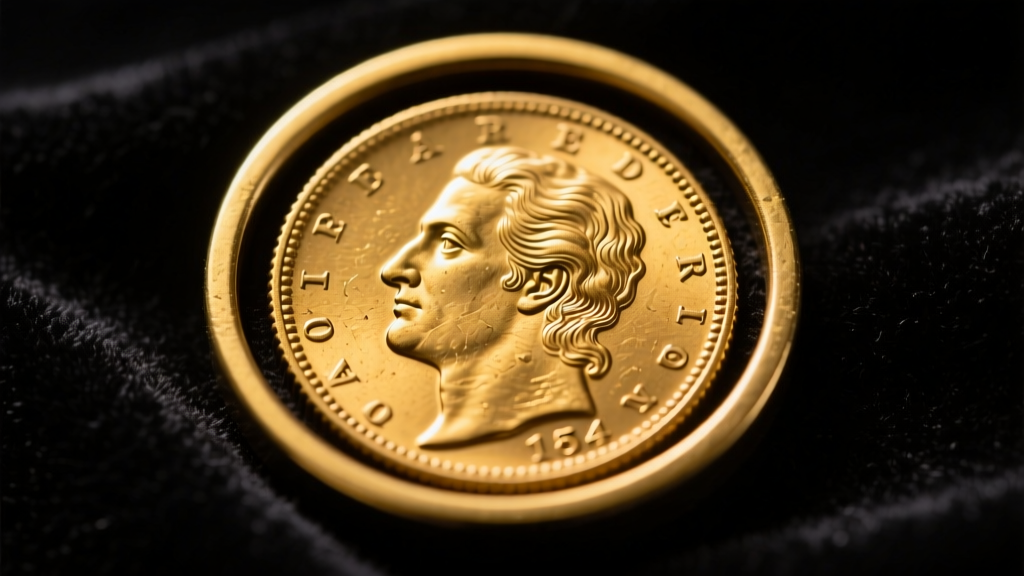
The market for gold rush coin & jewelry represents a fascinating intersection where historical numismatics meets everyday wearable art. Unlike standard gold jewelry, which is valued primarily by its karat weight and craftsmanship, coin jewelry requires a tripartite valuation framework. In 2026, collectors and fashion enthusiasts alike must assess the intrinsic melt value of the gold, the numismatic premium of the specific historical coin, and the jewelry markup applied by the setting and chain. Whether you are looking at an 1849 California fractional gold piece or a classic $20 Liberty Head Double Eagle, understanding these distinct value layers is critical to avoiding overpayment and ensuring your piece retains its investment viability.
The California Gold Rush (1848–1855) spawned a massive influx of gold into the global economy, leading to the creation of both official U.S. Mint coins and private territorial issues from minters like Kellogg & Co. and Moffat & Co. Today, these coins are frequently mounted in bezels and worn as pendants. However, the transition from a raw numismatic asset to a piece of jewelry introduces variables that can either preserve or completely destroy the coin's underlying value. This guide breaks down the exact economics of buying, setting, and wearing Gold Rush era coin jewelry in the current market.
Melt Value vs. Numismatic Premium: The Core Valuation Framework
To accurately budget for gold rush coin & jewelry, you must first separate the gold content from the historical premium. Gold prices have seen significant fluctuations over the past decade, and referencing real-time data from sources like Kitco Gold Charts is mandatory before any purchase. Below is a structural breakdown of common Gold Rush era coins used in jewelry, detailing their pure gold content and estimated baseline values in the 2026 market.
| Coin Type | Pure Gold Content | Base Melt Value (Approx.) | Numismatic Premium (VF/XF) | Total Raw Value |
|---|---|---|---|---|
| Cal. Fractional 25c | 0.012 oz | $28 | $150 - $300 | $178 - $328 |
| Cal. Fractional 50c | 0.024 oz | $56 | $250 - $600 | $306 - $656 |
| $1 Liberty Head | 0.0483 oz | $113 | $200 - $450 | $313 - $563 |
| $2.50 Quarter Eagle | 0.1209 oz | $282 | $150 - $400 | $432 - $682 |
| $5 Half Eagle | 0.2418 oz | $565 | $100 - $300 | $665 - $865 |
| $20 Double Eagle | 0.9675 oz | $2,260 | $200 - $800 | $2,460 - $3,060 |
Note: Melt values are estimates based on a $2,300+ per ounce gold spot price trend in early 2026. Numismatic premiums vary wildly based on mint marks (e.g., Charlotte 'C' or Dahlonega 'D' vs. Philadelphia) and exact grading. Always consult the NGC Price Guide or PCGS CoinFacts for specific issue valuations.
Assessing the Jewelry Markup: Bezels, Chains, and Craftsmanship
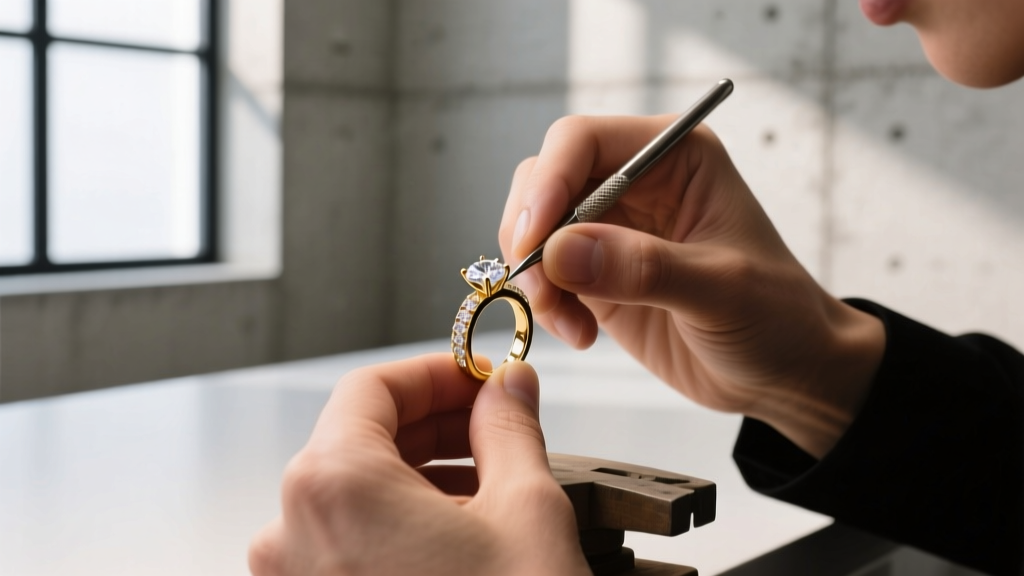
Once you have established the raw value of the coin, you must evaluate the jewelry setting. The markup for transforming a raw coin into a pendant typically ranges from $150 to over $1,200, depending on the karat of the bezel, the complexity of the design, and the weight of the accompanying chain.
The 'Soldered Ring' Trap: Value Destruction
The single most critical rule in gold rush coin & jewelry assessment is to avoid soldered settings. Historically, jewelers would solder a 14k gold ring directly onto the top edge of a coin to hang it from a chain. This process requires extreme heat and introduces foreign alloys to the coin's surface, instantly stripping it of its numismatic premium and reducing it to mere melt value. In 2026, only 'snap-over' or 'prong-set' bezels are acceptable for investment-grade coins. A high-quality snap bezel folds over the reeded edge of the coin using mechanical pressure, securing it firmly while allowing the coin to be removed unharmed by a professional jeweler in the future.
Chain Mechanics and Weight Distribution
A common budget mistake is pairing a heavy coin with an inadequate chain. A $20 Double Eagle in a solid 14k gold bezel can easily weigh over 40 grams. Using a standard 1mm cable chain with a spring-ring clasp is a recipe for a lost pendant. For coins exceeding 15 grams, you must budget for a 3mm to 4mm wheat, rope, or Figaro chain equipped with a heavy-duty lobster clasp. Expect to pay between $400 and $900 for a high-quality, solid 14k chain capable of safely supporting a Double Eagle pendant.
Budget Tiers for Gold Rush Coin & Jewelry Collectors
Navigating this niche requires aligning your budget with your primary goal: historical prestige, wearable fashion, or pure gold accumulation. Here is a practical decision framework for 2026 buyers.
- Entry-Level ($300 - $800): Focus on California fractional gold pieces (25-cent or 50-cent denominations) or heavily circulated $1 Liberty coins set in 10k or 14k gold snap bezels. These offer the 'Gold Rush' aesthetic and historical connection without requiring a massive capital outlay. Beware of modern replicas in this tier.
- Mid-Tier ($1,200 - $3,500): The sweet spot for most collectors. This budget secures a high-grade (XF or AU) $2.50 Quarter Eagle or $5 Half Eagle from the Charlotte or Dahlonega mints, housed in a custom 14k or 18k diamond-cut bezel. This tier balances numismatic rarity with a substantial, noticeable pendant size.
- High-End ($5,000 - $15,000+): Reserved for $10 and $20 Liberty or Saint-Gaudens Double Eagles, or extremely rare private territorial issues (e.g., Kellogg & Co. $20). Settings in this tier often feature 18k or 22k gold bezels with intricate milgrain detailing and are paired with heavy, artisan-crafted chains.
Authentication and Avoiding the 'California Gold' Token Trap
The most pervasive threat to budget-conscious buyers in the gold rush coin & jewelry market is the 'California Gold' token trap. Following the Gold Rush, private minters and later souvenir companies produced millions of brass or copper tokens stamped with 'California Gold' and a bear motif. These tokens were frequently gold-plated and sold to tourists. Today, they are routinely mounted in cheap gold-filled bezels and sold on secondary markets as authentic Gold Rush jewelry.
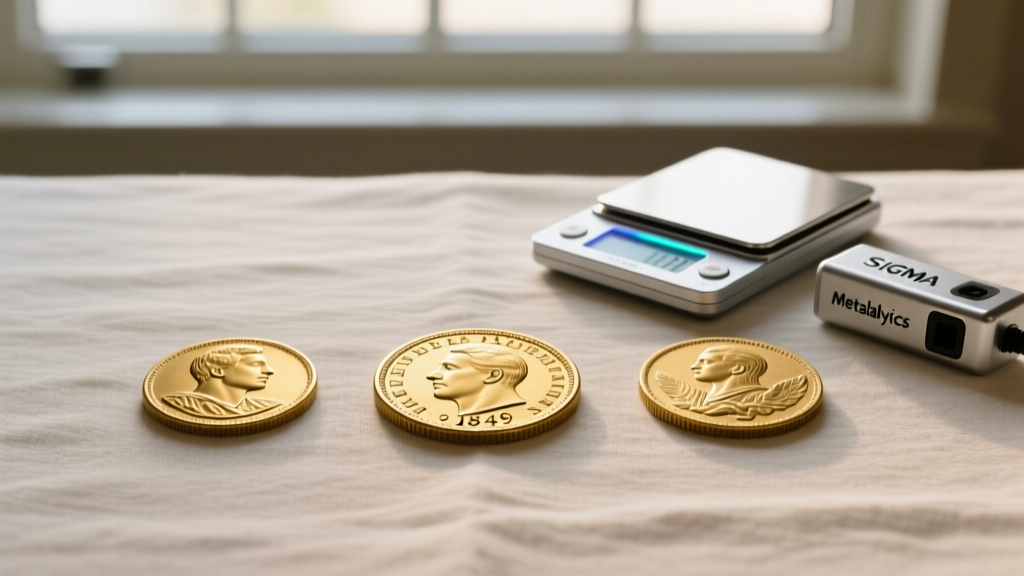
To protect your investment, authentication must go beyond visual inspection. Genuine Gold Rush coins will not attract a magnet, but neither will brass. You must verify the specific gravity of the piece or, preferably, have the jeweler test the exposed edge of the coin using a Sigma Metalytics precious metal verifier or X-ray fluorescence (XRF) spectrometer. Furthermore, authentic U.S. Mint Gold Rush coins will have precise reeding on the edge and exact weight tolerances. A genuine $1 gold dollar weighs exactly 1.672 grams; a deviation of more than 0.05 grams is a massive red flag indicating a counterfeit or a token.
Final Verdict: Is Gold Rush Coin Jewelry a Sound Investment?
Evaluating gold rush coin & jewelry requires a disciplined approach that separates emotional appeal from hard financial data. As a pure financial investment, the jewelry markup (the bezel and chain) is generally a sunk cost; you will rarely recoup the craftsmanship premium when reselling. However, as a strategy for acquiring historical, tangible assets that can be worn and enjoyed daily, it remains unparalleled. By insisting on snap-bezel settings, verifying authenticity with modern spectrometry, and targeting coins with established numismatic premiums like the Southern mint Quarter Eagles, collectors in 2026 can build a wearable portfolio that honors the legacy of the Gold Rush while preserving underlying capital.


