Beginner Guide to Olympia Jewelry Gold & Silver Coins
Discover how to buy, authenticate, and care for coin jewelry. Our beginner guide to Olympia Jewelry gold & silver coins covers karats, bezels, and purity.

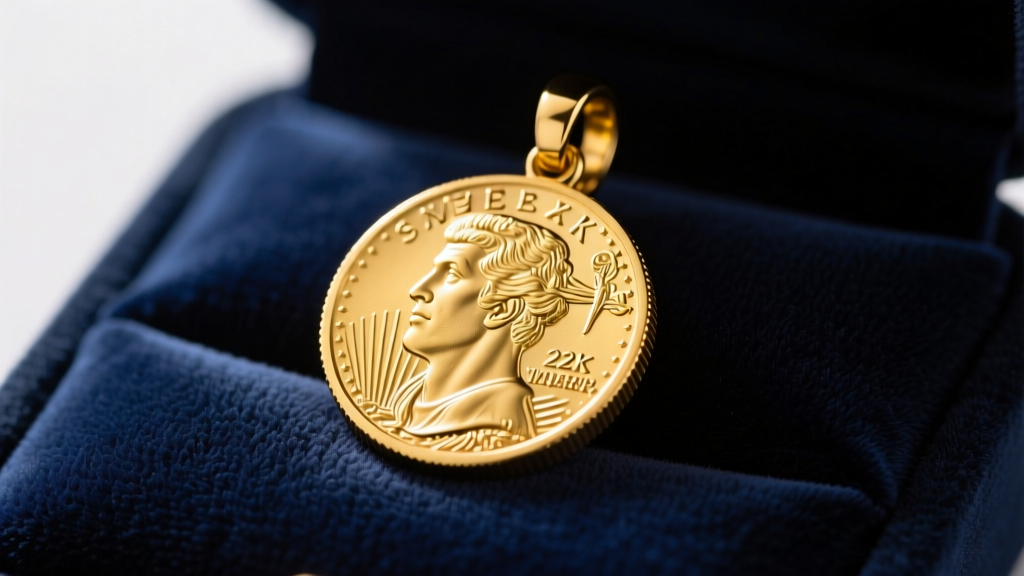
Wearing history around your neck is one of the most compelling aspects of numismatic fashion. Coin jewelry bridges the gap between tangible asset investment and personal adornment, offering a unique aesthetic that standard cast jewelry simply cannot replicate. However, transitioning from buying standard gold chains to investing in coin-based pieces requires a fundamental shift in how you understand metal purity, structural integrity, and long-term care.
When exploring curated collections like Olympia Jewelry gold & silver coins, beginners often notice a stark difference in how these pieces feel, wear, and age compared to traditional mall-bought jewelry. This guide will break down the exact metallurgical differences, the mechanics of protective bezels, and the specific maintenance routines required to keep high-purity bullion and vintage coins looking pristine for generations.
The Purity Gap: Why Coin Gold is Not Jewelry Gold
The most common mistake beginners make is assuming all gold is created equal. Standard jewelry is typically cast in 14k (58.3% pure gold) or 18k (75% pure gold). These alloys are mixed with metals like copper, zinc, and nickel to increase the Vickers Hardness (HV), making the jewelry resistant to daily scratches and bending.
Coins, on the other hand, are minted for bullion and numismatic value, meaning purity is paramount. According to the United States Mint, standard bullion coins like the American Gold Eagle are struck in 22k gold (91.67% pure), while others like the Canadian Maple Leaf are struck in 24k gold (99.99% pure). This extreme purity makes the coins incredibly soft. A 24k gold coin has a Vickers Hardness of roughly 25 HV, meaning it can be scratched by a copper penny or dented by simply dropping it on a hardwood floor. Understanding this softness is the first step in properly wearing and caring for coin jewelry.
Understanding the Appeal of Olympia Jewelry Gold & Silver Coins
Curated selections, such as the Olympia Jewelry gold & silver coins lineup, appeal to collectors because they solve the primary issue of coin jewelry: the marriage of a soft, high-value asset with a durable, wearable frame. A well-curated collection doesn't just offer raw coins; it provides historically significant or aesthetically striking pieces—like vintage Morgan silver dollars or modern fractional gold eagles—paired with precision-engineered settings.
The appeal lies in the dual-value proposition. You are wearing a piece of jewelry, but you are also carrying a globally recognized, liquid asset. Silver coins, particularly those struck in 90% silver (like vintage US Walking Liberties) or .999 fine silver, offer a brilliant, mirror-like contrast against yellow gold bezels, creating a striking two-tone aesthetic that is highly sought after in bespoke fashion.
Metallurgical Breakdown: Hardness and Purity
To truly grasp why specific settings are required for coin jewelry, we must look at the data. The table below illustrates the dramatic drop in structural durability as gold purity increases.
| Metal / Alloy | Purity (%) | Karat | Approx. Vickers Hardness (HV) | Primary Use |
|---|---|---|---|---|
| 14k Yellow Gold | 58.3% | 14k | 140 - 160 HV | Daily wear chains, prong settings |
| 18k Yellow Gold | 75.0% | 18k | 110 - 130 HV | Fine jewelry, luxury bezels |
| American Eagle (Alloyed) | 91.67% | 22k | 70 - 85 HV | Bullion coins, durable bezels required |
| Maple Leaf (Pure) | 99.99% | 24k | 20 - 30 HV | Investment, heavy protective frames |
| .999 Fine Silver | 99.9% | N/A | 25 - 35 HV | Bullion, highly prone to scratching |
As highlighted by the Professional Coin Grading Service (PCGS), even the slightest friction can cause micro-abrasions on 24k gold and fine silver. This is why the structural frame—the bezel—is just as important as the coin itself.
The Mechanics of Protection: Snap vs. Screw Bezels
Never allow a jeweler to drill holes into a bullion or numismatic coin to attach a bail. Drilling instantly destroys the coin's numismatic premium and significantly reduces its resale value. Instead, coins are housed in bezels. There are two primary types of bezels you will encounter:
- Snap Bezels: These feature a hinged back and a front frame that 'snaps' shut over the reeded edge of the coin. They are sleek and allow you to see both the obverse and reverse of the coin. However, if the gold or silver frame is too thin, the snap mechanism can warp over time, potentially allowing the soft coin to fall out.
- Screw-Top Bezels: The front and back of the frame thread together, clamping the coin securely inside. While slightly bulkier, screw-top bezels are the gold standard for high-value 24k gold coins and rare silver pieces, as they apply even pressure and cannot accidentally pop open.
- Prong Settings (Avoid): Some fashion jewelers use prongs to hold coins. Because 22k and 24k gold are so soft, prongs will eventually dig into the coin's surface, leaving permanent gouges. Always opt for a full-circumference bezel.
Care and Maintenance: The Tarnish Trap
Caring for gold coins is relatively straightforward, but silver coin jewelry requires strict maintenance protocols. Silver reacts with sulfur in the air to form silver sulfide, the black tarnish that dulls your jewelry. Beginners often panic when their silver coin pendant turns dark and reach for commercial 'silver dips'.
Critical Warning: Never use chemical silver dips (thiourea-based solutions) on numismatic or bullion coins. These chemicals strip the mint luster, leaving the coin with a flat, unnatural white appearance that instantly ruins its collector value.
Instead, maintain your silver and gold coin jewelry using these actionable steps:
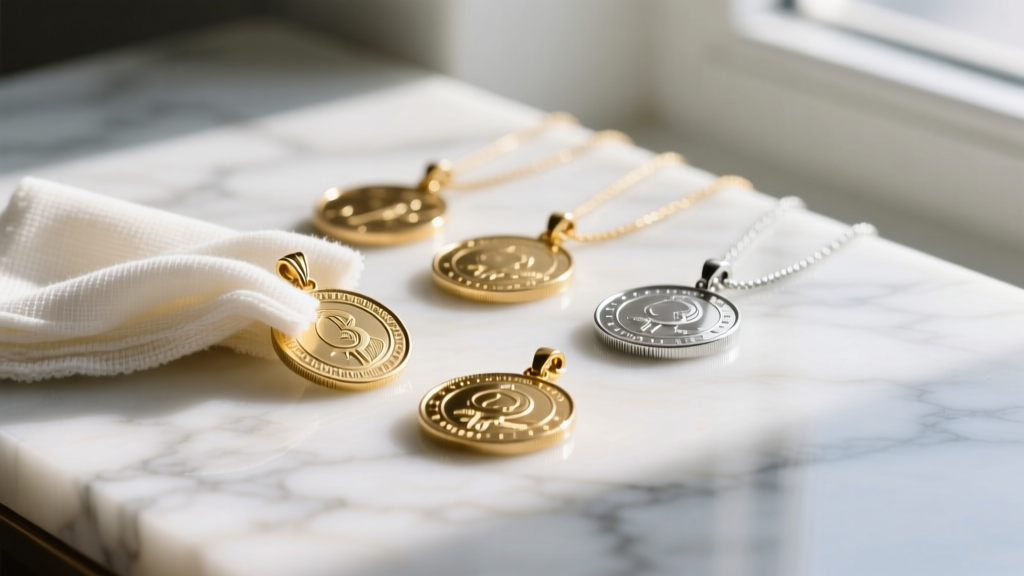
- Daily Wiping: After wearing, gently wipe the coin and the bezel with a clean, dry microfiber cloth to remove skin oils and environmental sulfur.
- Polishing the Bezel, Not the Coin: If the 14k or 18k gold bezel tarnishes or scratches, use a jeweler's polishing cloth on the frame only. Avoid aggressively rubbing the coin itself, especially if it has a proof or brilliant uncirculated finish.
- Storage: Store coin pendants in anti-tarnish bags (impregnated with activated charcoal or zinc) to absorb airborne sulfur before it can reach the silver.
Authenticating Your Pieces: Avoiding the Vermeil Trap
Because gold and silver prices fluctuate, the market is flooded with counterfeit coin jewelry. When shopping for pieces similar to those found in premium collections, you must verify both the coin and the setting.
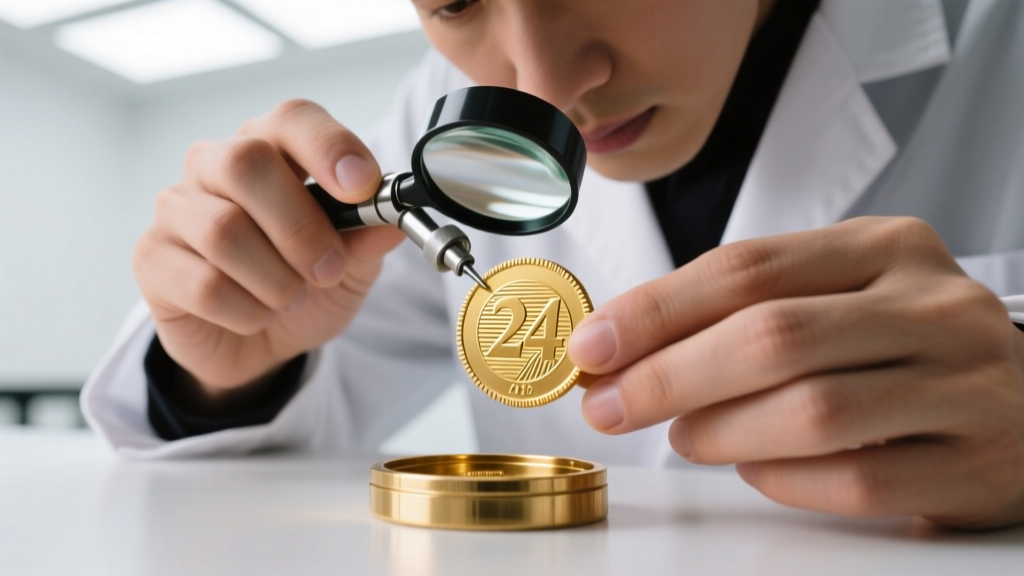
First, check the hallmarks on the bezel. A genuine setting will be stamped with '14k', '18k', or '925' (for sterling silver frames). If you see 'GP' (Gold Plated), 'GEP' (Gold Electroplated), or 'Vermeil', you are buying a base metal or silver frame with a microscopic layer of gold. While vermeil is acceptable for fashion jewelry, it is entirely inappropriate for framing high-value bullion, as the plating will eventually wear off, requiring expensive re-plating that risks chemical damage to the coin inside.
Second, verify the coin's specifications. Use a digital caliper to measure the diameter and thickness, and a precision scale to weigh the piece. Compare these metrics against the official mint specifications. For example, a standard 1 oz American Silver Eagle must weigh exactly 31.103 grams and measure 40.6 mm in diameter. Any deviation is an immediate red flag for a base-metal counterfeit.
Final Thoughts on Building a Collection
Transitioning into the world of coin jewelry is a rewarding endeavor that merges financial prudence with sartorial elegance. By understanding the extreme softness of 22k and 24k metals, insisting on high-quality screw or heavy-snap bezels, and strictly avoiding chemical cleaners, you ensure that your pieces remain both beautiful and valuable. Whether you are drawn to the historical weight of vintage silver or the brilliant shine of modern fractional gold, treating your jewelry as a protected asset rather than a mere accessory will guarantee it stands the test of time.


