Silver vs Gold Jewelry: 2026 Trend Analysis & Styling Guide
Discover the 2026 silver vs gold jewelry trends. Learn how to choose, mix, and layer metals based on skin undertones and wardrobe styling.

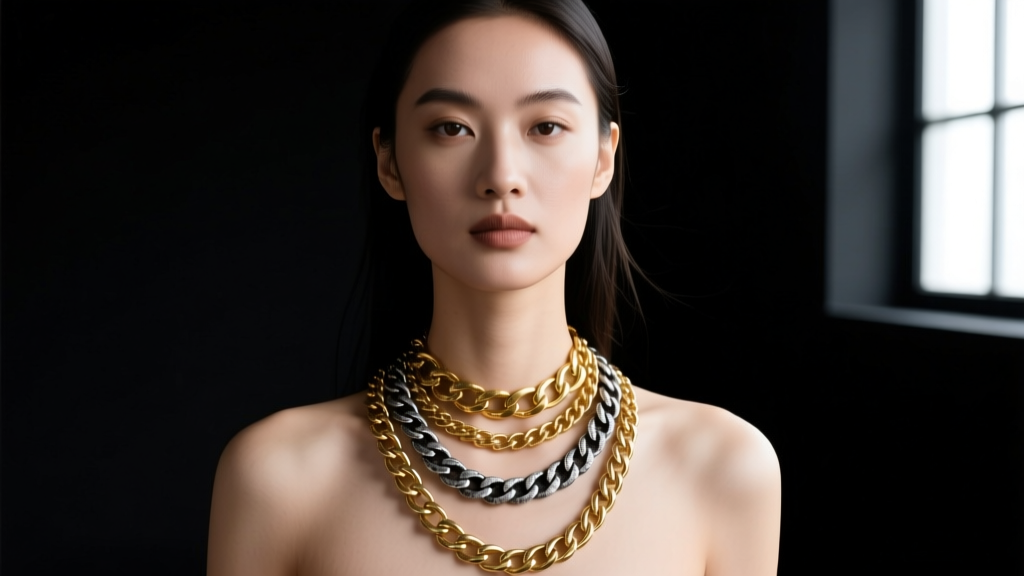
The 2026 Metal Renaissance: Why Silver vs Gold Jewelry is No Longer an 'Either/Or'
For decades, the fashion industry enforced a rigid dichotomy: you were either a gold person or a silver person. Mixing the two was widely considered a sartorial faux pas. However, as we navigate the style landscape of 2026, the debate of silver vs gold jewelry has evolved from a strict choice into a dynamic styling opportunity. The modern jewelry capsule is defined by intentional contrast, bimetallic draping, and the 'liquid metal' aesthetic that dominated recent runway shows.
According to Vogue's fine jewelry trend archives, the shift toward mixed-metal styling is driven by a desire for personalization and vintage-inspired eclecticism. Designers are no longer forcing consumers to pick a lane. Instead, they are releasing two-tone signet rings, mixed-metal chainmail chokers, and dual-finish hoops that bridge the gap between warm and cool tones. Understanding how to navigate this silver vs gold jewelry landscape requires a deep dive into metallurgy, skin undertones, and structural layering frameworks.
Undertone Mapping: The Science of Metal Selection
Before embracing the mixed-metal trend, it is crucial to understand your baseline. The traditional rule of thumb dictates that warm skin undertones pair best with yellow gold, while cool undertones shine in silver or white gold. But how do you accurately identify your undertone in a way that translates to jewelry purchases?
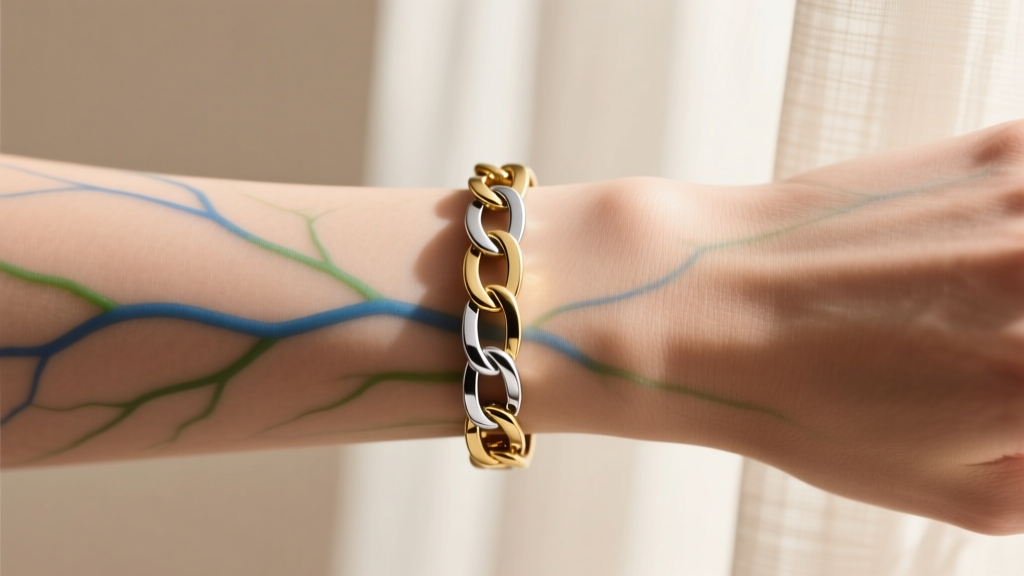
The Vascular and Contrast Tests
- The Vein Test: Examine the veins on the inside of your wrist under natural sunlight. If they appear distinctly blue or purple, you likely have cool undertones (favoring sterling silver, white gold, and platinum). If they appear greenish or olive, you have warm undertones (favoring 14k or 18k yellow gold). If you cannot clearly distinguish between the two, you possess neutral undertones, making you the ideal candidate for mixing silver and gold.
- The Foil Test: Stand in front of a mirror with a bare face and hold a piece of silver aluminum foil and a piece of gold foil near your jawline. The metal that makes your skin look bright and awake (rather than washed out or sallow) indicates your dominant undertone.
While these tests provide a baseline, the 2026 styling ethos encourages breaking these rules. A cool-toned individual can wear 18k yellow gold by keeping the jewelry away from the face (e.g., stacked rings or ankle bracelets) or by opting for rose gold, which contains copper alloys that bridge the warm-cool divide.
Wardrobe Integration Framework
The metals you choose should act as an extension of your wardrobe's color palette and fabric textures. The interplay between silver vs gold jewelry changes drastically depending on the textiles you wear. Below is a strategic framework for pairing metals with your core wardrobe staples.
| Fabric & Texture | Color Palette | Optimal Metal Choice | Styling Example |
|---|---|---|---|
| Heavy Knits & Wool | Earth tones, rust, olive, mustard | 14k Yellow Gold (Matte finish) | Chunky 4mm gold herringbone chain layered over a charcoal turtleneck. |
| Silk & Satin | Jewel tones, emerald, sapphire, black | Sterling Silver or White Gold | Delicate 1.2mm silver cable chains with a sapphire drop pendant. |
| Denim & Canvas | Indigo, faded blue, crisp white | Mixed Metals (Two-Tone) | Bimetallic paperclip chain bracelet and mixed-metal hoop earrings. |
| Linen & Cotton | Neutrals, beige, cream, pastel | Rose Gold or Oxidized Silver | Textured oxidized silver cuff bracelet against a cream linen sleeve. |
As noted by Forbes Jewelry & Watch insights, consumers are increasingly viewing jewelry as a modular component of their wardrobe rather than an isolated accessory. Matching the visual 'weight' of your metal to the visual 'weight' of your fabric is just as important as the color itself.
The Mixed-Metal Matrix: How to Layer Silver and Gold in 2026
If you are ready to combine silver and gold, you must avoid the 'jewelry box dump' look. Haphazardly throwing on every chain you own results in visual clutter. Professional stylists use the Anchor-Bridge-Accent framework to create cohesive, mixed-metal necklaces and bracelet stacks.
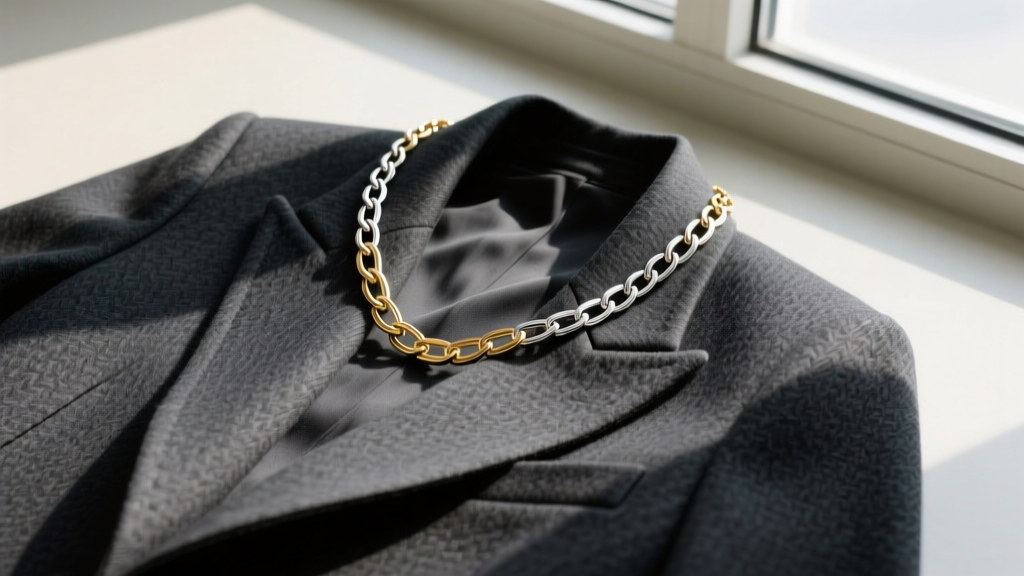
Step 1: The Anchor (60% of the Stack)
Choose your dominant metal based on your undertone or the primary color of your outfit. This piece should be the thickest and sit closest to the skin. For a necklace stack, this might be a 16-inch, 2.5mm 14k yellow gold Cuban link chain. For a wrist stack, it could be a solid gold bangle.
Step 2: The Bridge (25% of the Stack)
The bridge piece physically connects the two metals. This is where two-tone jewelry shines. A 20-inch chain featuring alternating 14k gold and rhodium-plated sterling silver links serves as the perfect transitional element, signaling to the viewer that the mix of metals is intentional.
Step 3: The Accent (15% of the Stack)
The accent is your contrasting metal, usually featuring a pendant, charm, or distinct texture. If your anchor is gold, your accent should be silver. A 24-inch, 1.0mm oxidized sterling silver snake chain with a geometric pendant provides depth and prevents the stack from looking flat. Ensure there is at least a 2-inch gap between chain lengths to prevent tangling and metal friction.
Investment & Longevity: Sterling Silver vs. Solid Gold
When analyzing silver vs gold jewelry from an investment and longevity perspective, the metallurgical differences dictate how these pieces age, wear, and retain value. Understanding these factors is critical for building a sustainable jewelry collection.
Durability and the Vickers Hardness Scale
Pure 24k gold is incredibly soft, which is why it is alloyed for jewelry. 14k gold (58.5% pure gold) registers around 120-140 on the Vickers hardness scale, making it highly resistant to scratching and ideal for everyday rings and bracelets. 18k gold (75% pure gold) is softer (around 100-120 HV) and more prone to scuffing but offers a richer, deeper yellow hue.
Standard 925 sterling silver (92.5% silver, 7.5% copper) is significantly softer, registering between 60-70 HV. This makes silver highly susceptible to micro-scratches and deformation over time. However, the introduction of Argentium silver—which replaces some of the copper with germanium—has revolutionized the silver market. Argentium is highly tarnish-resistant and slightly harder than traditional sterling, making it a superior choice for mixed-metal stacks where friction is inevitable.
Tarnish, Patina, and Maintenance
The copper alloyed into sterling silver reacts with sulfur in the air and moisture on the skin, creating silver sulfide (tarnish). While some collectors appreciate the dark, moody look of oxidized silver, it requires regular polishing with a microfiber cloth and anti-tarnish strips for storage. Gold, conversely, does not tarnish. According to the Gemological Institute of America (GIA), the stability of gold alloys is precisely why gold has been the standard for heirloom jewelry for millennia. While silver requires maintenance, its lower entry price point allows collectors to acquire larger, more sculptural statement pieces that would be cost-prohibitive in solid gold.
Final Verdict: Building Your Core Metal Capsule
The silver vs gold jewelry conversation in 2026 is no longer about declaring a winner; it is about mastering contrast. To build a future-proof jewelry capsule, start by investing in high-quality, solid 14k gold anchor pieces that will last a lifetime without tarnishing. Supplement these with sterling silver or Argentium accent pieces that allow you to experiment with edgier, oxidized, or highly textured designs without the massive financial commitment of solid gold.
By understanding your skin's undertones, utilizing the Anchor-Bridge-Accent layering framework, and respecting the metallurgical properties of your pieces, you can seamlessly blend warm and cool tones. The ultimate flex in modern styling is not wearing head-to-toe gold or silver—it is the quiet confidence of mixing both with absolute intentionality.


