How to Perform a Reliable Silver or Gold Jewelry Test
Discover how to perform a reliable silver or gold jewelry test at home. Learn acid, magnetic, and density troubleshooting to spot fakes.

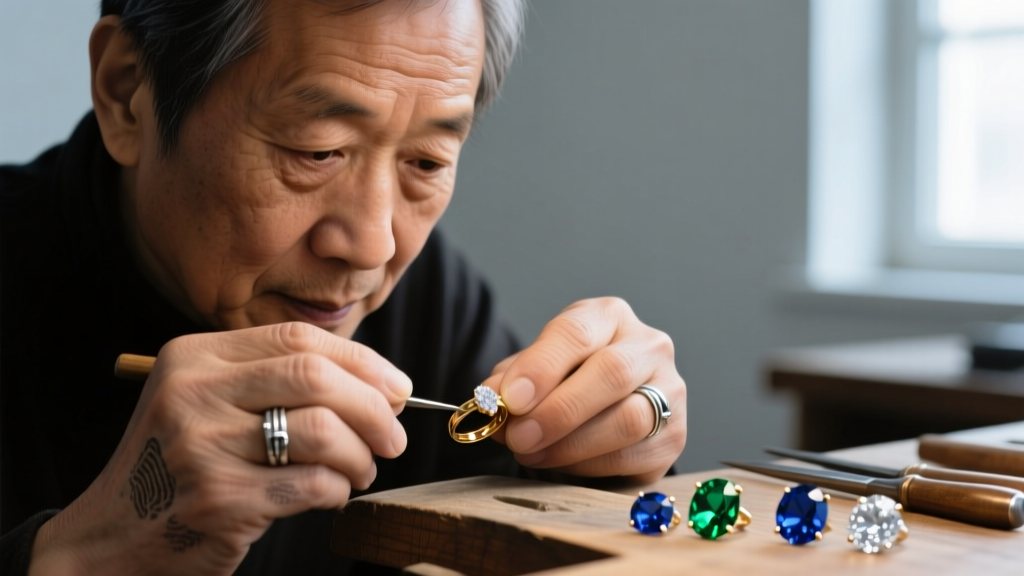
Inheriting an unmarked estate piece or buying a "bargain" gold chain from an online marketplace often leads to the same pressing question: is it real? As counterfeit manufacturing becomes increasingly sophisticated, relying on visual inspection alone is no longer sufficient. Modern fakes, including tungsten-core gold-plated chains and rhodium-plated brass rings, can easily deceive the untrained eye. To protect your investments and avoid severe allergic reactions from base metals, you need a systematic diagnostic approach.
This guide provides a comprehensive troubleshooting framework to perform a reliable silver or gold jewelry test at home. We will move from non-destructive triage methods to advanced chemical and physical diagnostics, ensuring you can definitively identify your jewelry's true metallurgical composition.
Phase 1: Visual Triage and Magnetic Diagnostics
Before applying chemicals or submerging your jewelry in water, start with non-destructive troubleshooting. The first step is hallmark verification, but you must understand the limitations of stamped markings.
Troubleshooting Misleading Hallmarks
Counterfeiters frequently stamp base metals with fake purity marks. However, legitimate stamps can also be confusing. For instance, if you see a "925" stamp on a yellow gold ring, you are not looking at solid gold. According to the Federal Trade Commission Jewelry Guides, this indicates gold vermeil—a sterling silver base plated with gold. Similarly, stamps like "HGE" (Heavy Gold Electroplate) or "GP" (Gold Plated) mean the item contains only microscopic layers of gold over a base metal core. Use a 30x jeweler's loupe to inspect the stamp; genuine hallmarks are usually crisp, deeply struck, and perfectly aligned, whereas fake stamps often appear shallow, blurred, or laser-etched.
The Neodymium Magnet Test
Gold and silver are diamagnetic, meaning they are slightly repelled by magnetic fields rather than attracted to them. However, a standard refrigerator magnet (ferrite) is far too weak to provide a reliable diagnosis. To properly execute the magnetic silver or gold jewelry test, you must use an N52-grade neodymium magnet.
- The Pull Test: Hold the N52 magnet near the jewelry. If the piece snaps to the magnet or exhibits any noticeable pull, it contains ferromagnetic metals like iron, steel, or nickel. It is definitively not solid gold or silver.
- The Clasp Caveat: Be aware that the internal springs inside lobster clasps and watch mechanisms are often made of steel. A slight magnetic pull at the clasp is normal; the pull should only be a red flag if it occurs on the main body or links of the chain.
Phase 2: The Acid and Scratch Troubleshooting Matrix
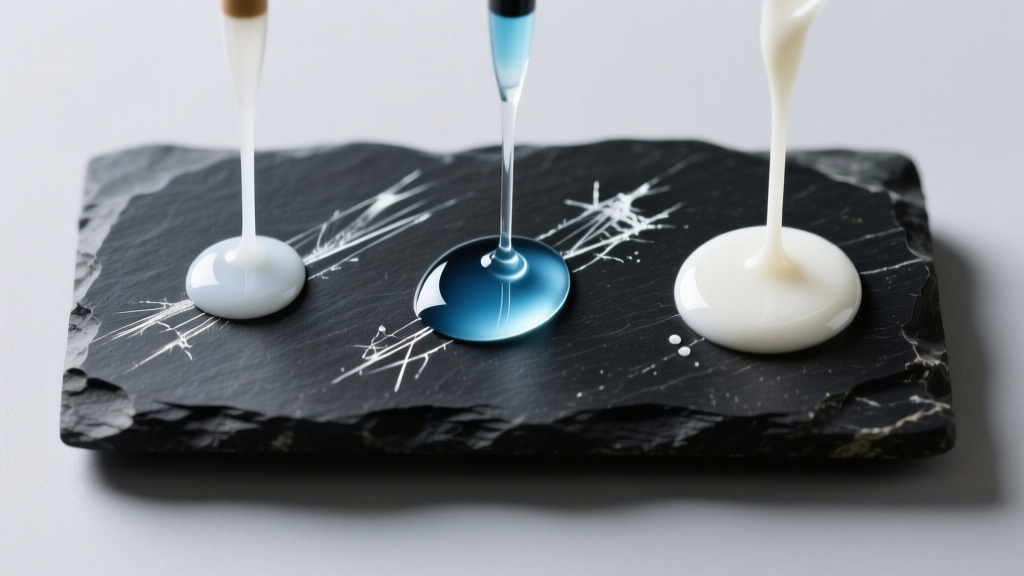
When visual and magnetic tests yield inconclusive results, it is time for chemical diagnostics. An acid testing kit is the most reliable at-home method for determining karat purity and distinguishing between gold, silver, and plated fakes. You will need a black testing stone, a jeweler's file, and bottled nitric acid solutions formulated for 10k, 14k, 18k, and silver.
Executing the Scratch Test Safely
Never apply acid directly to the jewelry, as it will permanently etch the surface. Instead, rub the item firmly back and forth across the black testing stone to leave a visible metallic streak. If you suspect the item is heavily plated, use a jeweler's file to make a tiny, discreet notch in an inconspicuous area, and rub the exposed inner metal onto the stone. Apply a single drop of testing acid to the streak and observe the reaction time and color change.
Acid Reaction Diagnostic Table
Use the following matrix to interpret your chemical silver or gold jewelry test results. Note that reactions occur within 2 to 5 seconds.
| Testing Acid Used | Streak Disappears / Turns Green | Streak Turns Milky / Cloudy | Streak Remains Unchanged | Streak Fades Slowly / Turns Brown |
|---|---|---|---|---|
| 14K Gold Acid | Base Metal / Fake | Sterling Silver (925) | 14K, 18K, or 24K Solid Gold | 10K Solid Gold |
| 18K Gold Acid | Base Metal / Fake | Sterling Silver (925) | 18K or 24K Solid Gold | 14K Solid Gold (Fades slightly) |
| Silver Acid | Base Metal / Fake | 925 Sterling Silver | Fine Silver (999) | 800 or Coin Silver |
Expert Troubleshooting Tip: If the acid immediately bubbles violently and turns dark green, you are likely dealing with brass or copper. If the streak turns a milky white, you have successfully identified sterling silver, even if the piece was disguised with a yellow gold-colored rhodium or PVD coating.
Phase 3: Thermal and Density Diagnostics
Chemical tests can sometimes be thwarted by exceptionally thick gold plating (often referred to as "gold filled" or heavy electroplate). To bypass surface-level deception, we must test the physical properties of the metal's core.
The Ice Cube Thermal Conductivity Test (Silver Specific)
Silver possesses the highest thermal conductivity of any common metal. To perform this rapid silver or gold jewelry test, place an ice cube on a flat surface and press the suspected silver item directly on top of it. Genuine sterling silver will instantly draw the heat from the ice, causing it to melt rapidly and the silver piece to become freezing cold to the touch within seconds. Base metals like stainless steel or brass will melt the ice at a standard, much slower rate. While this does not work for gold (which has lower thermal conductivity), it is an excellent, non-destructive triage tool for silver.
Specific Gravity Water Displacement (Gold & Silver)
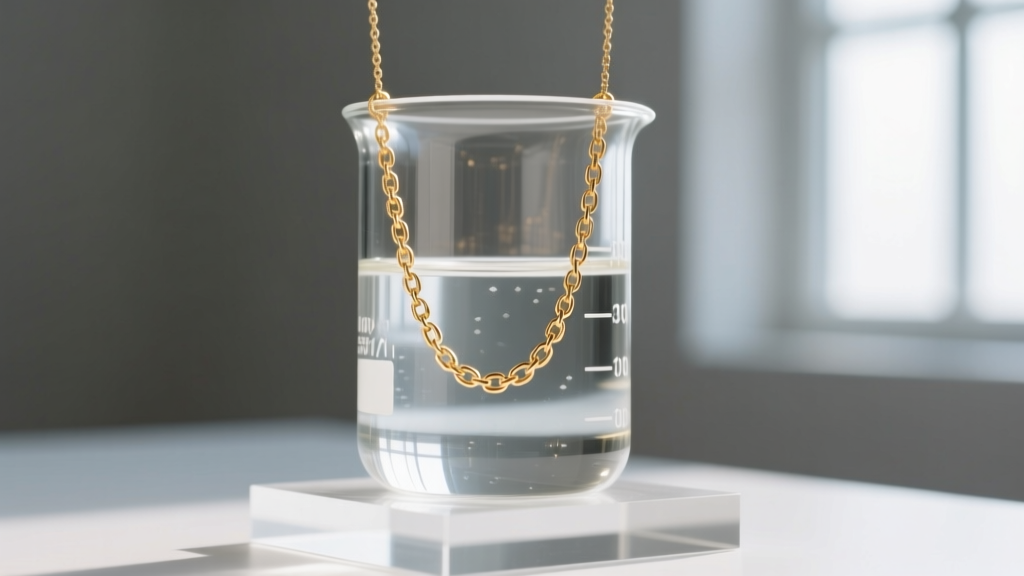
Density is a fundamental metallurgical property that cannot be faked by surface plating. Pure 24k gold has a density of 19.32 g/cm³, 14k gold ranges from 12.9 to 14.6 g/cm³ (depending on the alloy mix), and sterling silver sits at 10.49 g/cm³. You can calculate the specific gravity (SG) of your jewelry using a digital pocket scale and a cup of water.
- Weigh Dry: Place the jewelry on the scale and record its dry mass in grams (e.g., 20.0g).
- Weigh Wet: Place a small cup of water on the scale and tare it to zero. Tie a piece of sewing thread to your jewelry and suspend it completely underwater, ensuring it does not touch the bottom or sides of the cup. Record the displaced water weight (e.g., 2.5g).
- Calculate Density: Divide the dry mass by the wet mass (20.0 / 2.5 = 8.0 g/cm³).
Troubleshooting the Density Test: If your calculation yields a density of 8.0 g/cm³, the item is definitively not solid gold or silver (it is likely brass or copper). However, be aware of the "Tungsten Trap." Tungsten has a density of 19.25 g/cm³, nearly identical to 24k gold. Counterfeiters use tungsten cores coated in thick gold to pass both the acid scratch test (if not filed deeply) and the density test. If a heavy gold chain passes the density test but feels unusually rigid or produces a dull "thud" rather than a high-pitched ring when dropped, suspect a tungsten core.
When At-Home Tests Fail: Professional Verification
While the at-home silver or gold jewelry test methods outlined above will resolve 95% of authentication issues, highly sophisticated counterfeits require laboratory-grade equipment. If you are dealing with high-value bullion, thick vintage chains, or suspect tungsten-core fakes, seek professional verification.
Reputable jewelers and assayers utilize X-Ray Fluorescence (XRF) spectrometers. XRF technology shoots X-rays into the metal and reads the fluorescent energy emitted, providing an exact elemental breakdown of the alloy without damaging the piece. Furthermore, for thick gold-plated items, professionals use ultrasonic testing devices (like the Sigma Metalytics verifier), which send sound waves through the metal to detect inconsistencies in acoustic velocity, instantly exposing tungsten or lead cores hidden beneath thick gold plating.
By systematically applying visual, magnetic, chemical, and physical diagnostics, you can confidently authenticate your precious metals, ensuring your collection is built on genuine quality rather than clever deception.


