Silver or Gold Jewelry Skin Tone Matching: A Technical Deep Dive
Discover the science behind silver or gold jewelry skin tone matching. Expert analysis of alloys, reflectance, and the Fitzpatrick scale for perfect pairing.

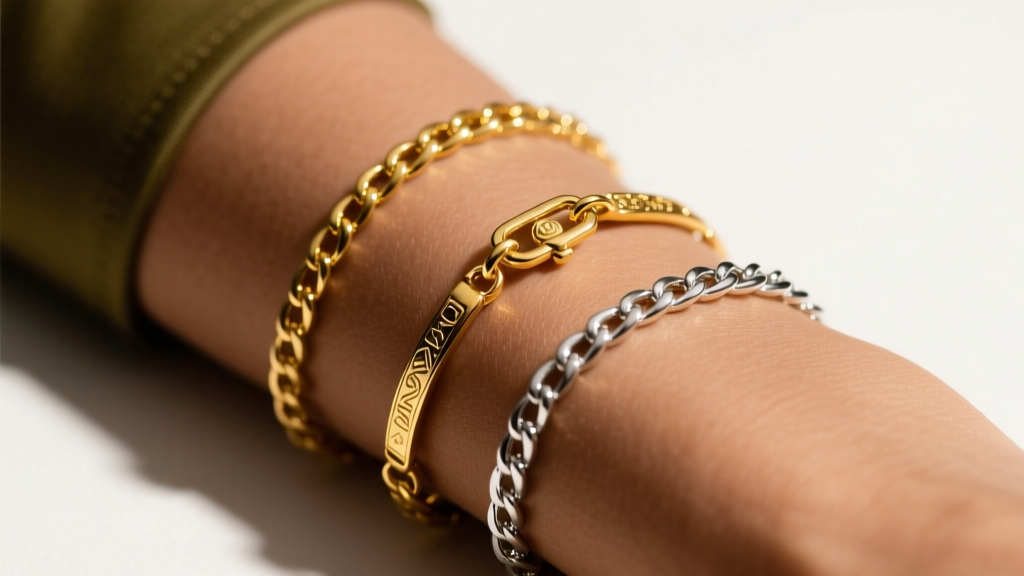
The Fallacy of the Vein Test: A Dermatological Approach
For decades, the jewelry industry has relied on the rudimentary "vein test" to determine whether a client should wear silver or gold. If your veins appear green, you are supposedly warm-toned and should wear yellow gold; if they appear blue or purple, you are cool-toned and should wear silver. From a clinical and metallurgical perspective, this is a gross oversimplification. The debate surrounding silver or gold jewelry skin tone compatibility requires a much deeper understanding of dermatological light scattering and the precise spectrophotometric reflectance of precious metal alloys.
Human skin color is not a single pigment but a complex optical illusion created by the interplay of three primary chromophores: melanin (brown/black), hemoglobin (red/blue), and carotene (yellow). The Tyndall effect and Rayleigh scattering dictate how light penetrates the epidermis, scatter through the dermis, and reflect back to the observer. When we evaluate how a metal complements the skin, we are actually analyzing how the specific nanometer wavelengths reflected by the metal interact with the subsurface scattering of hemoglobin and the surface absorption of eumelanin and pheomelanin. To truly master metal selection, we must discard arbitrary seasonal color palettes and look at the empirical data.
Spectrophotometry and Metal Reflectance
Every metal reflects light across the visible spectrum differently, and this reflectance profile fundamentally alters how it sits against various melanin densities. Pure 24-karat gold has a distinct reflectance peak in the yellow-orange spectrum, specifically around 580 to 600 nanometers. This high-wavelength reflectance naturally amplifies the presence of carotene and pheomelanin in the epidermis, creating a harmonious optical blend with skin types that possess higher concentrations of these pigments.
Conversely, sterling silver (an alloy of 92.5% silver and 7.5% copper) possesses a broad, highly specular reflectance across the entire visible spectrum, with a slight bias toward the blue-green range (450-500 nm). This high-energy, short-wavelength reflectance creates a stark visual contrast against high-melanin skin, making the metal appear exceptionally bright and crisp. However, against skin with high surface erythema (redness from hemoglobin), the cool reflectance of silver can sometimes exacerbate the appearance of inflammation or ruddiness. Understanding these light physics is crucial for high-end jewelry styling and bespoke metal casting.
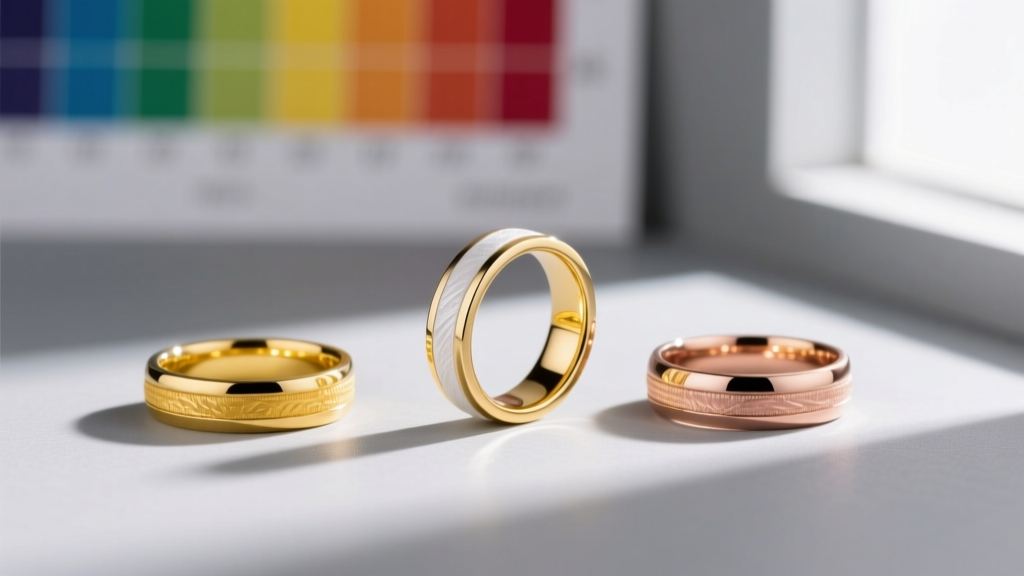
The Alloy Factor: Why Karat Weight Changes the Rules
One of the most critical, yet frequently ignored, variables in metal-to-skin matching is the alloy composition. Pure gold is rarely used in structural jewelry due to its Mohs hardness of 2.5. Therefore, the "gold" you are wearing is actually a complex matrix of gold, silver, copper, zinc, and sometimes palladium or nickel. According to the Gemological Institute of America (GIA), the specific ratios of these base metals drastically alter the alloy's surface color temperature and its interaction with skin undertones.
Metallurgical Breakdown of 14k Gold Alloys
- 14k Yellow Gold: Typically 58.5% Au, 25% Ag, and 16.5% Cu. The higher silver content softens the yellow, making it universally flattering but particularly effective on Fitzpatrick Types III and IV (olive to moderate brown skin).
- 14k Rose Gold: Typically 58.5% Au, 33.5% Cu, and 8% Ag. The massive copper content shifts the reflectance into the red spectrum (620+ nm). This creates a stunning harmony with warm, peachy undertones but can severely clash with cool, ruddy complexions by amplifying surface redness.
- 14k White Gold: Typically 58.5% Au, mixed with palladium or nickel, and plated in rhodium. The rhodium plating (a platinum group metal) provides a mirror-like, neutral-white reflectance that mimics platinum. This is the ultimate high-contrast metal for Fitzpatrick Types I and II (fair, cool skin).
Data Matrix: Metal Selection by Fitzpatrick Skin Type
The Fitzpatrick scale, originally developed for dermatological UV response testing, is the most scientifically valid framework for categorizing human skin. The National Center for Biotechnology Information (NCBI) outlines six distinct types based on melanin density. Below is our proprietary technical matrix mapping these types to optimal precious metals and specific karat weights.
| Fitzpatrick Type | Melanin / Hemoglobin Profile | Optimal Primary Metal | Recommended Karat / Alloy | Metals to Avoid |
|---|---|---|---|---|
| Type I & II | Low eumelanin, high visible hemoglobin (fair, cool/rosy) | White Gold / Platinum | 18k White Gold (Rhodium plated) | High-copper Rose Gold (amplifies redness) |
| Type III | Moderate melanin, balanced hemoglobin (olive, neutral) | Yellow Gold | 14k or 18k Yellow Gold | Low-karat (10k) white gold (appears muddy) |
| Type IV | High eumelanin, low surface erythema (moderate brown, warm) | Yellow Gold / Rose Gold | 18k Yellow Gold, 14k Rose Gold | Oxidized Sterling Silver (creates harsh contrast) |
| Type V & VI | Very high eumelanin (dark brown to deep brown) | Sterling Silver / High-Karat Gold | 22k/24k Gold, Bright Polished Silver | Matte-finish white gold (lacks necessary contrast) |
Troubleshooting Mismatches: Oxidation and pH Reactions
A frequent failure mode in jewelry styling occurs when a theoretically perfect metal match turns the skin green or dulls rapidly. This is not an allergy, but a galvanic and chemical reaction dictated by the wearer's skin pH and the alloy's copper content. The human acid mantle typically sits at a pH of 4.5 to 5.5. However, individuals with highly acidic sweat (pH < 5.0) will rapidly oxidize the copper and zinc present in both sterling silver and rose gold.
When 14k rose gold (33.5% copper) is exposed to acidic perspiration, the copper oxidizes to form copper chloride and copper sulfate, leaving a green or black residue on the epidermis. This is particularly prevalent in Type III and IV skin types who live in high-humidity environments. To mitigate this, experts recommend stepping up to 18k rose gold (which drops the copper content to roughly 22%) or applying a microscopic barrier of clear polyurethane to the inner shank of rings. For sterling silver, the 7.5% copper alloy is the culprit for tarnish; switching to Argentium silver (which replaces some copper with germanium) virtually eliminates this oxidation failure mode while maintaining the exact same cool-toned reflectance.
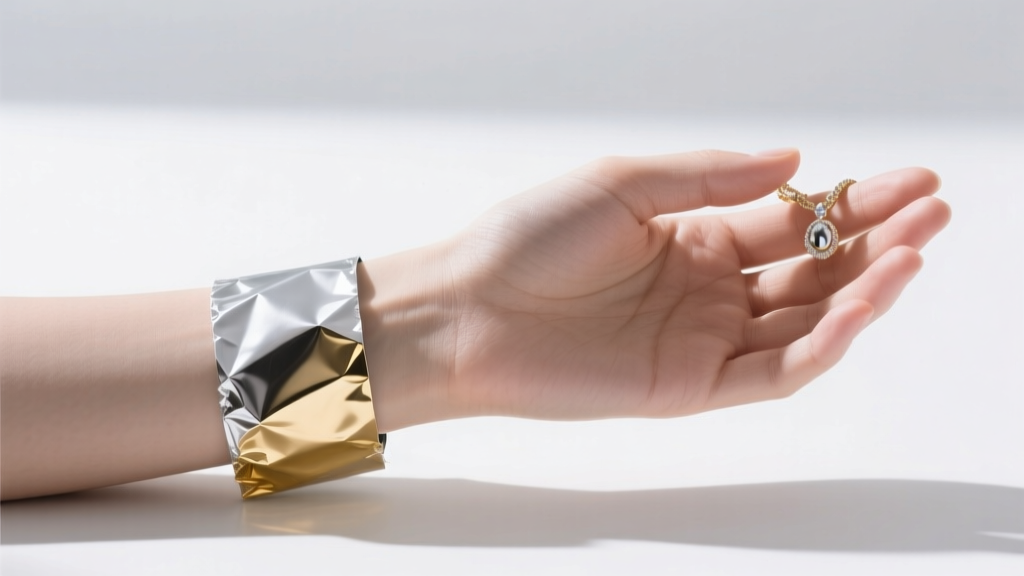
Advanced Testing: The Foil Draping Method
If you must determine a client's exact metal affinity in a retail or bespoke design setting, abandon the vein test entirely. Instead, utilize the Foil Draping Method under controlled lighting (ideally 5000K daylight-balanced LEDs).
- Preparation: Remove all makeup and skincare products from the client's face and neck. Skincare containing zinc oxide or titanium dioxide will artificially alter surface reflectance.
- The Draping: Drape a piece of raw, unpolished 24k gold foil on one side of the neck, and a piece of raw 999 fine silver foil on the other.
- Observation: Do not look at the metal; look at the skin. The correct metal will act as a natural reflector board, neutralizing shadows under the eyes, softening the nasolabial folds, and making the hemoglobin in the cheeks appear vibrant rather than ruddy or sallow.
- The Verdict: If the gold foil makes the skin look jaundiced or emphasizes hyperpigmentation, the client has a cool, hemoglobin-dominant undertone and requires white metals. If the silver foil makes the skin look gray, washed out, or emphasizes dark circles, the client has a warm, carotene/melanin-dominant undertone and requires yellow or rose alloys.
Expert Takeaway: The intersection of metallurgy and dermatology proves that matching metals to skin tone is not about arbitrary fashion rules, but about the physics of light reflectance and alloy composition. By understanding the exact karat weights, copper ratios, and Fitzpatrick profiles, you can engineer a jewelry wardrobe that optically enhances the wearer's natural biology. For further reading on global gold standards and alloy integrity, consult the World Gold Council technical archives.


