How to Find Gold Jewelry Inexpensive Yet Real: Step-by-Step
Learn how to find gold jewelry inexpensive yet authentic. Our step-by-step guide covers karats, gold-filled vs. plated, and testing methods.

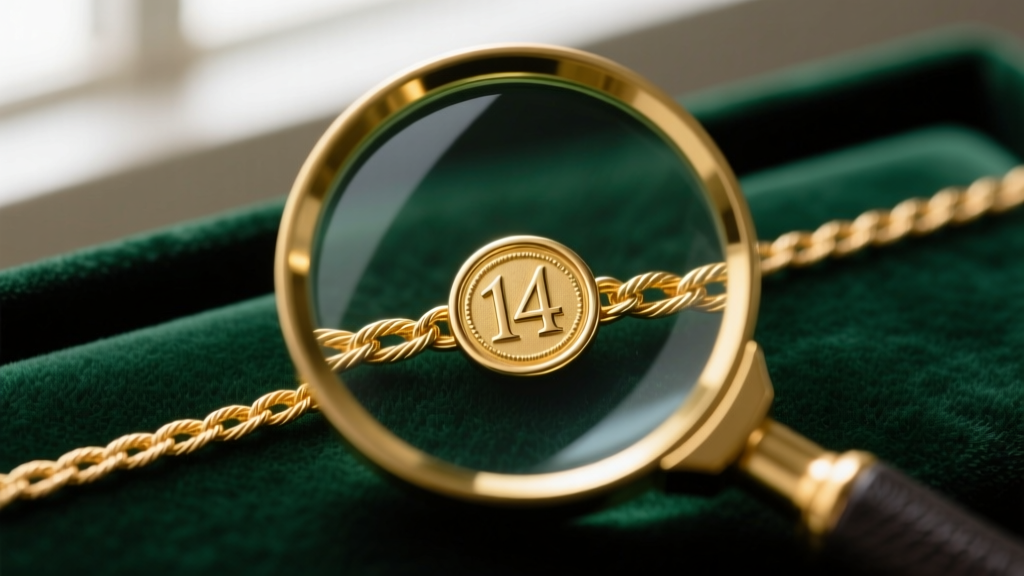
With precious metal markets experiencing historic volatility through 2026, the demand for budget-friendly accessories has never been higher. However, when consumers search for gold jewelry inexpensive enough for everyday wear, they often fall into a trap of misleading marketing, flash-plated brass, and rapid tarnishing. Finding authentic, durable gold on a budget is entirely possible, but it requires a strategic approach to material science, hallmark decoding, and vendor verification.
This step-by-step guide will teach you how to navigate the budget gold market, differentiate between genuine low-karat solids and high-quality gold-filled alternatives, and avoid the common pitfalls that lead to green skin and flaking metal.
Step 1: Decode the Budget Gold Hierarchy
The first rule of buying affordable gold is understanding that 'cheap' and 'inexpensive' are not synonyms. True budget gold relies on specific manufacturing techniques that maximize the appearance and longevity of gold without the premium of 18k or 24k solid pieces. According to the Gemological Institute of America (GIA), the value and durability of gold jewelry are dictated by its karatage and construction method.
| Material Type | Gold Layer / Purity | Base Metal Core | Expected Lifespan | 2026 Price Range (18" Chain) |
|---|---|---|---|---|
| 10k Solid Gold | 41.7% Pure Gold (Solid) | N/A (Alloyed with Cu/Zn) | Lifetime | $85 - $140 |
| 14k Gold-Filled (GF) | 5% of total weight (14k) | Jeweler's Brass | 10 - 30 Years | $45 - $75 |
| Gold Vermeil | Min. 2.5 microns (14k/18k) | 925 Sterling Silver | 2 - 5 Years | $50 - $90 |
| Gold Plated (HGE/GEP) | 0.1 - 0.5 microns | Brass, Copper, or Steel | 3 - 12 Months | $15 - $30 |
The Takeaway: If you want gold jewelry inexpensive enough for a tight budget but capable of lasting years, 14k Gold-Filled and 10k Solid Gold are your primary targets. Avoid standard gold-plated items for everyday wear, as the microscopic gold layer will quickly wear through to the reactive base metal.
Step 2: Calculate the Actual Gold Content
Many budget shoppers are misled by the term 'Gold-Filled.' It does not mean the item is filled with gold; rather, it means a thick sheet of karat gold is mechanically bonded to a brass core using extreme heat and pressure. The Federal Trade Commission (FTC) Jewelry Guides strictly regulate this terminology.
The 1/20th Rule
By law, an item stamped '1/20 14k GF' must contain a gold layer that makes up at least 5% (1/20th) of the total weight of the item. Let us break down the math for a standard 10-gram gold-filled chain:
- Total weight: 10 grams
- Gold weight: 0.5 grams of 14k gold
- 14k gold is 58.3% pure, meaning there is 0.29 grams of 24k pure gold in the chain.
While 0.29 grams of pure gold is a small fraction of an ounce, it is hundreds of times thicker than standard electroplating. This thickness is what allows gold-filled jewelry to withstand daily friction, sweat, and water exposure without flaking. If a vendor cannot verify the 1/20th weight ratio, you are likely looking at heavy gold electroplate (HGE), which is legally permitted to be much thinner.
Step 3: Inspect Hallmarks and Stamps Like a Pro
When evaluating gold jewelry inexpensive options online or in vintage shops, the hallmark is your first line of defense. You will need a 10x or 20x jeweler's loupe to read the micro-stamps usually located on the back of clasps or the inner bands of rings.
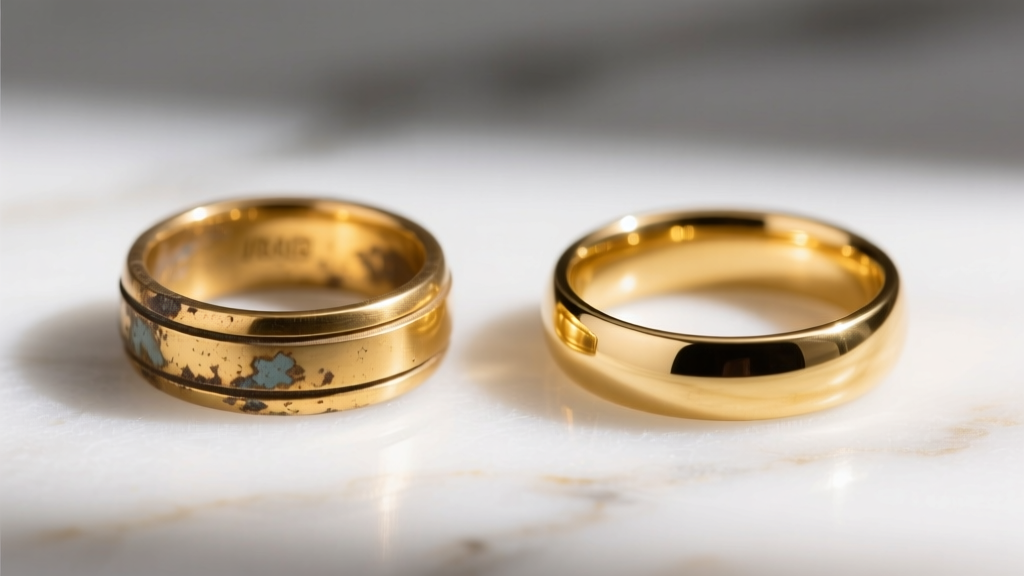
Warning: A stamp of '18K HGE' or '18K GE' does not mean solid 18k gold. HGE stands for Heavy Gold Electroplate. While it may contain a slightly thicker layer of gold than flash plating, it is still a surface treatment over a base metal and will eventually tarnish.
Legitimate Budget Hallmarks to Look For:
- 10K, 10KT, or 417: Indicates solid 10-karat gold (41.7% pure). Highly durable and the most affordable solid gold option.
- 1/20 14K GF or 14/20 GF: The legal standard for 14k gold-filled items.
- 925 (with a gold exterior): Indicates Gold Vermeil. The 925 stamp proves the core is sterling silver, making it a safer option for those with nickel or brass allergies.
Step 4: Perform Safe At-Home Authenticity Tests
If you are buying secondhand or from an unverified marketplace, you must test the metal. Destructive tests like the acid test or the ceramic scratch test can ruin gold-filled and vermeil pieces by stripping their outer layers. Instead, rely on these non-destructive methods.
The N52 Neodymium Magnet Test
Pure gold and standard gold alloys (like copper, silver, and zinc) are diamagnetic, meaning they are slightly repelled by magnets, or at the very least, entirely non-magnetic. Purchase an N52-grade neodymium magnet. If your 10k solid chain or 14k gold-filled clasp snaps to the magnet, it contains a ferromagnetic core (like steel or iron) and is a counterfeit. Note: The internal steel springs inside lobster clasps will attract the magnet; test the chain links or the main body of the ring instead.
The Skin pH Reaction Test
Why does cheap gold turn your skin green? It is a chemical reaction between the copper alloys in the base metal and the acidic pH of your sweat (which typically ranges from 4.5 to 7.0). If you wear a piece continuously for 48 hours and notice a green or black oxidation ring on your skin, the gold layer has either worn through or was never thick enough to act as a barrier. Genuine 10k solid gold or properly maintained 14k gold-filled jewelry will not cause this reaction.
Step 5: Maintenance Rules for Budget Gold
The longevity of inexpensive gold jewelry is directly tied to how you maintain it. While 10k solid gold can survive almost anything, gold-filled and vermeil pieces require specific care protocols to prevent the base metals from oxidizing through microscopic pores in the gold layer.
What to Avoid:
- Ultrasonic Cleaners: The high-frequency vibrations can cause the mechanically bonded gold layer on gold-filled items to delaminate or peel.
- Chlorine and Sulfur: Swimming pools (chlorine) and hot springs (sulfur) will aggressively attack the copper and silver alloys in 10k gold and vermeil, causing irreversible blackening.
- Commercial Silver Polishes: Never use abrasive tarnish-removing dips on gold vermeil; they will strip the 2.5-micron gold layer instantly.
The Proper Cleaning Protocol:
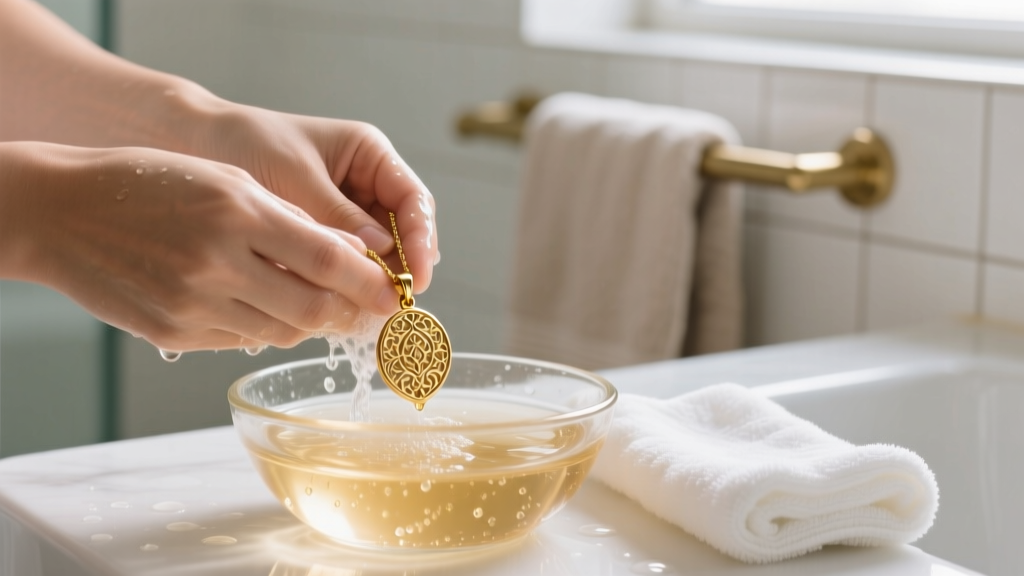
- Mix a few drops of phosphate-free dish soap (like Dawn) into a bowl of lukewarm distilled water.
- Soak the jewelry for 3 to 5 minutes to loosen sebum and lotion buildup.
- Gently agitate with an ultra-soft baby toothbrush or a microfiber cloth.
- Rinse under distilled water and pat completely dry. Moisture trapped against the skin accelerates alloy oxidation.
Final Thoughts on Sourcing Budget Gold
Finding gold jewelry inexpensive enough to fit a modest budget does not mean you have to sacrifice quality or authenticity. By targeting 10k solid gold for lifetime durability, or 1/20 14k gold-filled for a luxurious finish at a fraction of the cost, you can build a high-quality collection. Always verify the FTC-regulated hallmarks, perform non-destructive magnet tests on secondhand finds, and adhere to strict cleaning protocols to ensure your budget-friendly gold remains radiant for years to come.


