Is GLD Jewelry Real Gold? The Truth About Stamps & Brands
Wondering if GLD jewelry is real gold? We break down the GLD Shop brand, what a GLD stamp means, and how to test your gold authenticity.


The "GLD" Confusion: Brand vs. Hallmark Stamp
If you are browsing the secondary market, unboxing a gift, or shopping for hip-hop-inspired chains, you have likely asked yourself: is gld jewelry real gold? The answer is not a simple yes or no, because "GLD" means two entirely different things in the jewelry world. It can refer to The GLD Shop, a massively popular online retailer known for iced-out chains and pendants, or it can refer to a physical "GLD" stamp etched into the clasp of a vintage or costume piece.
As a senior jewelry analyst tracking market trends into 2026, I see buyers get burned by confusing brand names with purity hallmarks. Understanding the difference between a manufacturer's trademark and a federally regulated karat stamp is the first step to protecting your wallet. Let us break down exactly what you are looking at, how much it is actually worth, and how to test it.
The GLD Shop: Are Their Chains and Pendants Real Gold?
The GLD Shop built its empire by offering the flashy, diamond-drenched aesthetic of hip-hop moguls at a fraction of the cost of traditional fine jewelers. But what is the actual metal underneath the shine?
Gold Plated vs. Solid Gold Lines
The vast majority of The GLD Shop's catalog is not solid gold. Their standard pieces are crafted from a base metal—typically jeweler's brass or 316L stainless steel—and then plated with real gold. In 2026, the industry standard for high-quality fashion jewelry relies heavily on PVD (Physical Vapor Deposition) or thick electroplating (2 to 3 microns of 14k or 18k gold) over a brass core. While there is a microscopic layer of real gold on the surface, the intrinsic melt value of the piece is essentially zero.
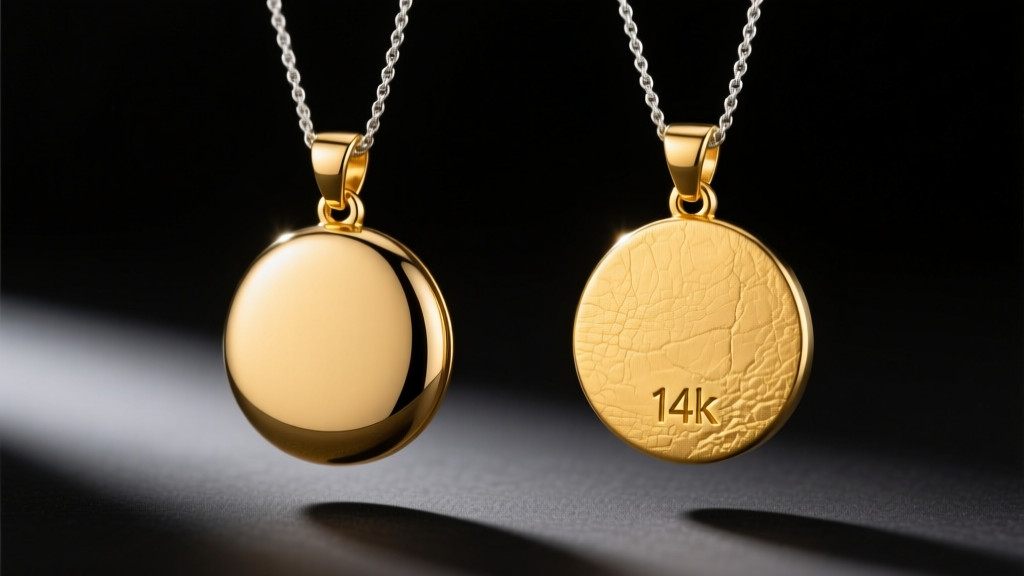
However, to answer the question accurately: The GLD Shop does offer a dedicated "Solid Gold" collection. These pieces are cast in solid 10k, 14k, or 18k gold. The difference is immediately obvious in the pricing. A standard 12mm gold-plated Cuban link chain might cost $75, while the exact same design in solid 14k gold will cost upward of $3,500.
Material Breakdown & Pricing Matrix (2026 Estimates)
| Material Type | Base Metal | Gold Layer | Price Range (10mm Cuban) | Lifespan |
|---|---|---|---|---|
| Standard Plated | Brass | 1-2 Microns (14k/18k) | $50 - $90 | 6 - 18 Months |
| Premium PVD | Stainless Steel | PVD Gold Coating | $90 - $150 | 2 - 5 Years |
| Solid 10k Gold | None (Solid Alloy) | 100% Solid 10k | $1,800 - $2,500 | Lifetime |
| Solid 14k Gold | None (Solid Alloy) | 100% Solid 14k | $3,000 - $4,500+ | Lifetime |
What If Your Jewelry is Stamped "GLD"?
If you found a ring or a chain at an estate sale or pawn shop and see "GLD" stamped on the inside of the band or the lobster clasp, your spidey senses should be tingling.
Maker's Marks vs. Purity Stamps
According to the Federal Trade Commission (FTC) guidelines on precious metals, a purity stamp must indicate the exact karatage of the gold, such as 10K, 14K, 18K, or the decimal equivalents like 585 or 750. A stamp that simply reads "GLD" is not a recognized purity mark.
Instead, a "GLD" stamp usually indicates one of two things:
- A Maker's Mark: It is the registered trademark of the manufacturer or designer who made the piece, not a guarantee of the metal's content.
- Costume Jewelry Shorthand: In the mid-to-late 20th century, some overseas manufacturers stamped cheap, gold-toned alloy jewelry with "GLD" to mimic the look of a hallmark and deceive unsavvy buyers. If there is no accompanying karat number (e.g., "14K GLD"), you should assume the piece is gold-plated base metal or gold-toned brass.
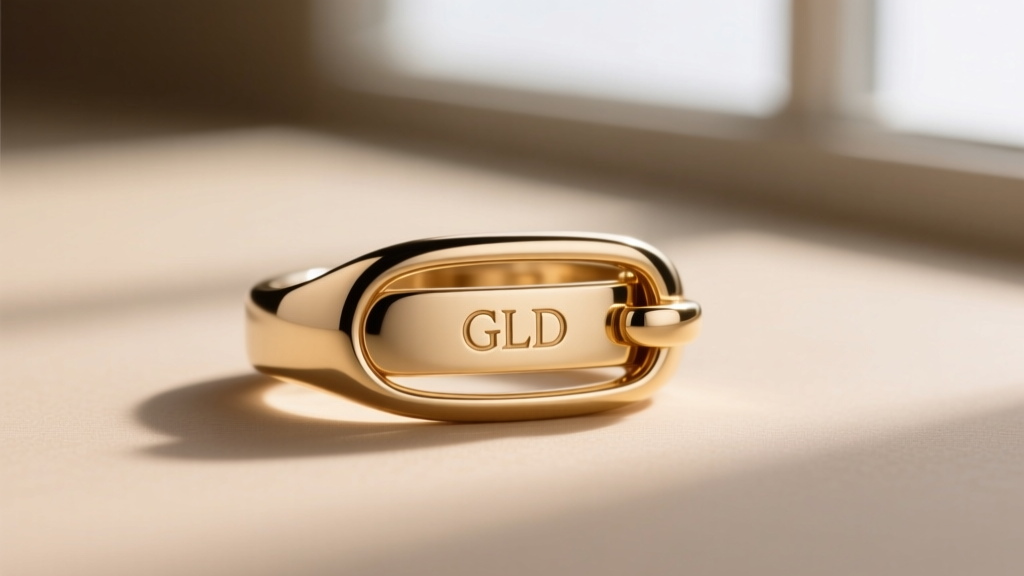
The Gemological Institute of America (GIA) maintains strict charts on international hallmarks. If a piece is solid gold, it will almost always bear a numeric stamp. Relying on letters alone is a fast track to overpaying for costume jewelry.
3 Foolproof Ways to Test Your Gold at Home
Whether you are trying to verify a piece from The GLD Shop or decode a mysterious hallmark, you can perform these non-destructive tests at home before taking your jewelry to a professional appraiser.
1. The Neodymium Magnet Test
Real gold is entirely non-magnetic. Buy a strong neodymium magnet (not a standard fridge magnet) and hold it near the clasp and the links. If the chain jumps to the magnet or sticks firmly, it contains a ferrous base metal like steel or iron. Note: The internal spring inside a lobster clasp is usually made of steel, so the clasp might show slight magnetic pull, but the chain itself should not.
2. The Skin Oxidation Test
Wear the piece tightly against your skin for a few hours, especially if you are sweating. If the jewelry leaves a green or black smudge on your skin, you are dealing with a copper or brass base metal that is reacting to your body's acids. Solid gold (10k and above) will never turn your skin green.
3. The Ceramic Scratch Test
Take an unglazed ceramic plate or the unglazed bottom of a ceramic mug. Gently drag the gold item across the surface. If it leaves a black or gray streak, the item is pyrite (fool's gold) or a base metal. If it leaves a distinct golden-yellow streak, it is highly likely to be real gold. Be warned: this test is mildly abrasive and can scratch plated jewelry, exposing the base metal underneath.
Final Verdict: Should You Buy GLD Jewelry?
So, is gld jewelry real gold? If you are buying from The GLD Shop for fashion, daily wear, and the "iced out" aesthetic, their gold-plated and PVD pieces offer excellent value for the price—just know you are paying for the design, not the melt value. If you are looking for an heirloom investment or intrinsic financial value, you must specifically filter for their "Solid Gold" collections or buy from a traditional fine jeweler.
If you are holding a vintage piece stamped only with "GLD", treat it as costume jewelry unless an acid test or X-ray fluorescence (XRF) scan at a local jeweler proves otherwise. Never pay solid-gold prices for a piece that lacks a proper numeric karat hallmark.


