The Science of Jewelry Gold Color: Alloy Properties Compared
Discover how alloy metals dictate your jewelry gold color. Compare yellow, white, and rose gold properties, durability, and skin safety.

The Metallurgy Behind Jewelry Gold Color
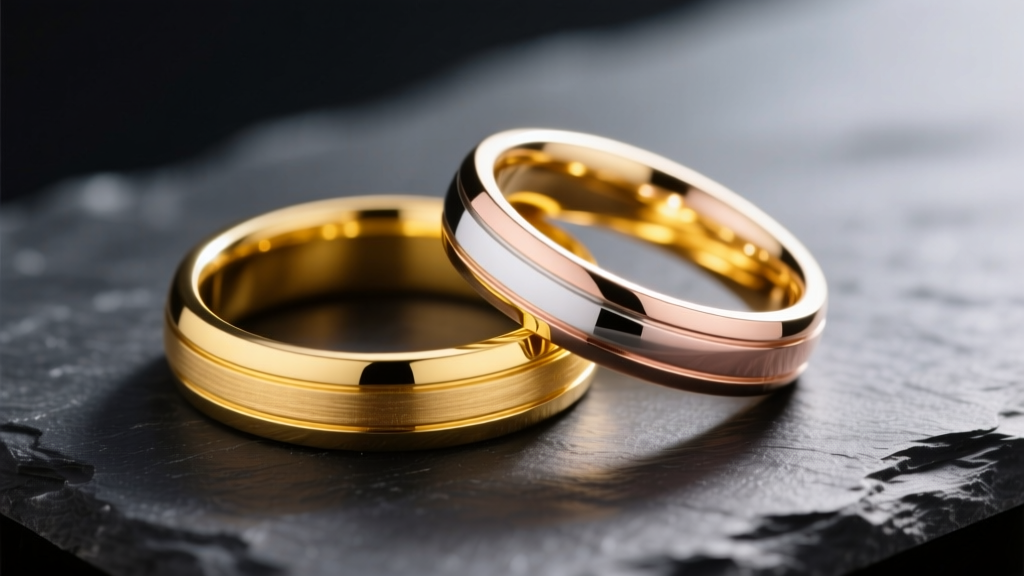
When evaluating fine jewelry, consumers often fixate on karat weight, assuming it is the sole indicator of quality and value. However, the specific jewelry gold color you see is entirely dictated by metallurgical alloying. Pure 24-karat gold (99.9% Au) possesses a distinct, rich orange-yellow hue and a Vickers hardness (HV) of roughly 25. This extreme malleability makes it entirely unsuitable for daily-wear jewelry, as it will scratch, bend, and deform under minimal mechanical stress.
To achieve structural integrity and alter the optical properties of the metal, master jewelers introduce specific alloy metals—primarily copper, silver, zinc, palladium, and nickel. These elemental additions not only increase the tensile strength and hardness of the gold (pushing 14k gold alloys to a Vickers hardness of 120-140 HV) but also fundamentally shift the light absorption spectrum of the metal, creating the diverse palette of gold colors available on the market today. According to the Gemological Institute of America (GIA), understanding these alloy compositions is critical for predicting a piece's long-term durability, tarnish resistance, and biocompatibility.
Yellow Gold: The Classic Baseline
Yellow gold is the most traditional alloy, designed to mimic and enhance the natural warmth of pure gold while providing necessary rigidity. The exact shade of yellow depends heavily on the copper-to-silver ratio.
- 18k Yellow Gold (75% Au): Typically alloyed with 12.5% copper and 12.5% silver. The equal balance of copper (which adds red) and silver (which adds green/white) maintains a deep, saturated yellow hue. It remains relatively soft (approx. 125 HV) and is highly resistant to tarnish due to the high gold content and noble nature of silver.
- 14k Yellow Gold (58.3% Au): Contains a higher percentage of copper, silver, and often zinc. Zinc is introduced as a deoxidizer during the casting process and helps lighten the color slightly, preventing the alloy from looking overly brassy or reddish. 14k yellow is noticeably paler than 18k but offers superior scratch resistance (approx. 135 HV).
Because yellow gold alloys rely on silver and copper, they are generally hypoallergenic, provided the manufacturer avoids trace nickel contaminants. However, lower-karat yellow golds (10k or 14k) can develop a slight patina over decades of wear due to copper oxidation.
White Gold: Rhodium, Palladium, and Nickel Alloys
White gold does not exist in nature. It is an optical illusion achieved by bleaching the yellow hue of pure gold using white metals. The resulting alloy is never truly 'white'; it inherently retains a faint yellowish or grayish undertone, which is why the jewelry industry relies heavily on surface treatments.
Nickel vs. Palladium Bleaching Agents
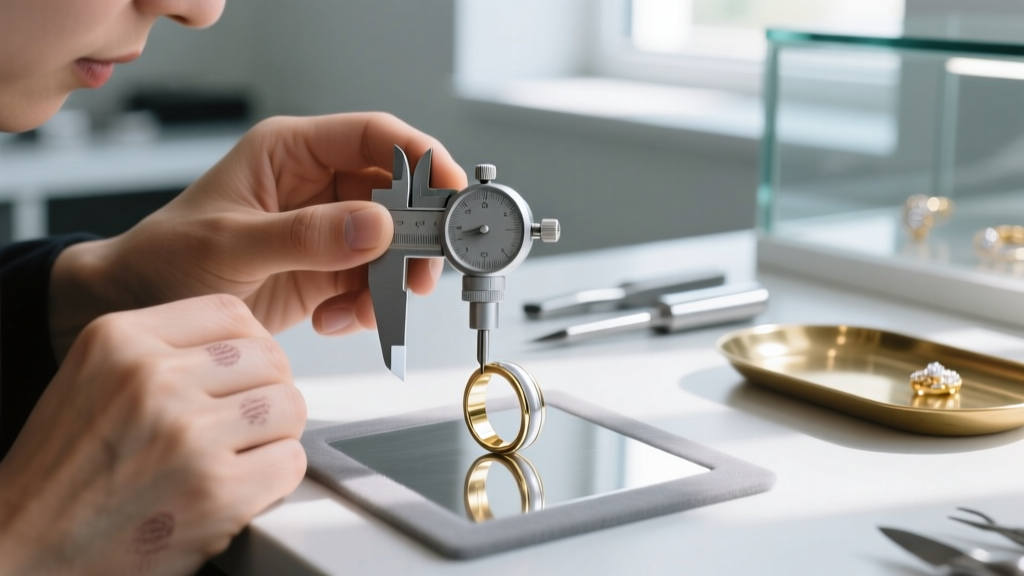
Historically, nickel was the primary bleaching agent due to its low cost and high hardening effect. However, nickel is a severe contact allergen. The European Union's Nickel Directive strictly limits nickel release from jewelry to 0.5 micrograms per square centimeter per week. Consequently, the modern luxury market has pivoted toward palladium white gold.
Palladium is a platinum group metal (PGM) that is naturally hypoallergenic and highly resistant to corrosion. An 18k palladium white gold alloy (75% Au, 25% Pd) yields a dense, heavy ring with a warmer, darker gray undertone compared to nickel alloys. While more expensive, palladium white gold is vastly superior for sensitive skin and maintains its structural integrity without becoming brittle over time.
The Necessity of Rhodium Plating
Regardless of the bleaching agent used, almost all commercial white gold is electroplated with rhodium, a brilliant, hard, and highly reflective PGM. A standard high-quality rhodium plating thickness ranges from 0.75 to 1.5 microns. Over time, friction and exposure to skin acids will wear through this microscopic layer, revealing the underlying grayish-yellow alloy. This requires periodic re-plating by a professional jeweler to maintain the stark white aesthetic.
Rose Gold: Copper Content and Patina
The romantic, warm blush of rose gold is achieved by dramatically increasing the copper content in the alloy while reducing or eliminating silver. Copper is a highly reactive base metal, which gives rose gold its unique color but also alters its maintenance profile.
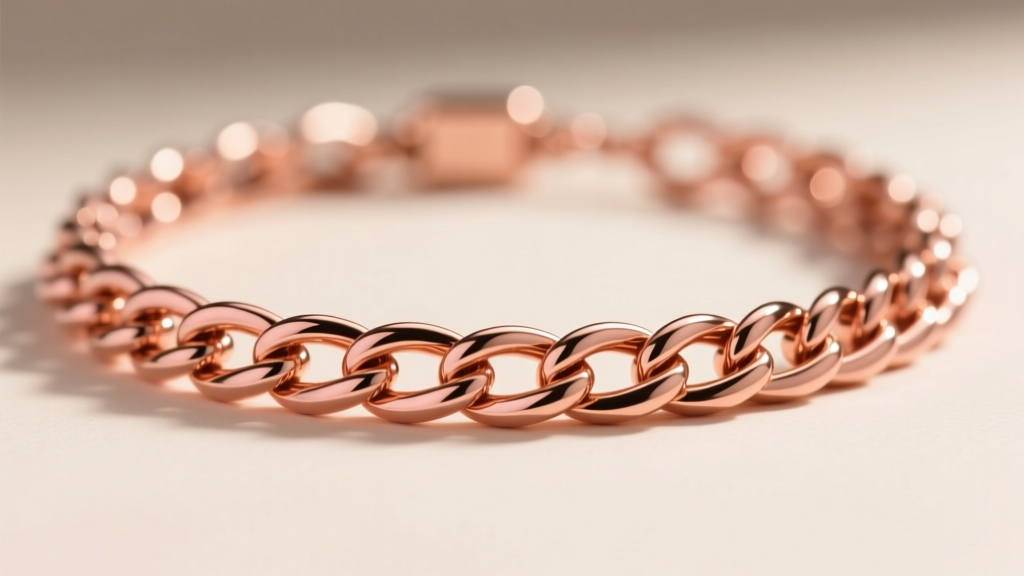
- 18k Rose Gold (75% Au): Usually composed of 22.25% copper and 2.75% silver. The high gold content mellows the copper, resulting in a soft, elegant pink-peach tone. It is highly prized in high-end watchmaking and luxury bridal jewelry.
- 14k Rose Gold (58.3% Au): Contains roughly 41.7% copper and silver. Because the copper concentration is significantly higher, 14k rose gold exhibits a much deeper, more intense 'red' or 'strawberry' gold color. It is also noticeably harder and more durable than 18k rose gold due to the hardening properties of copper.
Expert Insight: Unlike yellow or white gold, rose gold will naturally darken and develop a rich patina over years of wear as the copper reacts with oxygen and sulfur in the environment. Many collectors prize this vintage oxidation, but it can be easily polished away by a jeweler to restore the original bright pink hue.
Exotic Hues: Green and Purple Gold Properties
Beyond the primary triad, advanced metallurgy has produced exotic gold colors, though they come with severe structural compromises.
Green Gold (Electrum): An ancient alloy consisting of gold, silver, and occasionally trace amounts of cadmium or zinc. Modern 18k green gold typically uses 75% Au, 25% Ag (or a mix of Ag and Zn to avoid cadmium toxicity). It yields a subtle, yellowish-green hue but is relatively soft and prone to scratching.
Purple Gold (Amethyst Gold): This is not a traditional alloy but an intermetallic compound composed of roughly 79% gold and 21% aluminum (18k). While the purple color is striking and permanent, the crystalline structure of the AuAl2 compound makes the metal exceptionally brittle. Purple gold cannot be drawn into wire or hammered into thin sheets; it must be cast and is usually set as a stone-like inlay within a stronger metal matrix, as a solid purple gold ring would shatter if dropped on a hard floor.
Comprehensive Alloy Property Comparison
The following table synthesizes the critical material properties of standard gold alloys to aid in informed purchasing decisions.
| Gold Color | Karat | Primary Alloying Metals | Vickers Hardness (Approx) | Tarnish Risk | Allergy Risk |
|---|---|---|---|---|---|
| Yellow | 18k | Cu, Ag, Zn | 120 - 135 HV | Very Low | None |
| Yellow | 14k | Cu, Ag, Zn | 135 - 150 HV | Low | Very Low |
| White (Ni) | 14k | Ni, Cu, Zn | 140 - 160 HV | Low (Rhodium dependent) | High |
| White (Pd) | 18k | Pd, Ag, Cu | 125 - 140 HV | None | None |
| Rose | 18k | Cu, Ag | 130 - 145 HV | Moderate (Patina) | Very Low |
| Rose | 14k | Cu, Ag | 150 - 165 HV | Moderate (Patina) | Low |
| Purple | 18k | Aluminum | N/A (Brittle) | None | None |
Skin Sensitivities, Tarnish, and Maintenance
Understanding the metallurgical reality of your jewelry gold color is essential for long-term care and wearability. The presence of base metals like copper and silver introduces specific vulnerabilities that pure gold does not possess.
Stress Corrosion Cracking
One of the most catastrophic failure modes for lower-karat gold jewelry (10k and 14k) is stress corrosion cracking (SCC). When copper and silver alloys are exposed to halogens—specifically chlorine found in swimming pools, hot tubs, and harsh household bleach—the chemicals attack the alloy metals at a microscopic level. If the jewelry is under mechanical tension (such as a tight ring or a clasped chain), this chemical attack can cause the metal to suddenly fracture and snap. The World Gold Council strongly advises removing all alloyed gold jewelry before exposure to chlorinated water.
Managing Contact Dermatitis
If you experience green or black marks on your skin, or localized itching and redness, you are likely reacting to the copper oxidation or nickel in your alloy, not the gold itself. For individuals with known metal sensitivities, transitioning to 18k palladium white gold, 18k yellow gold, or high-purity 22k/24k gold is the only reliable method to eliminate contact dermatitis. Avoid 'hypoallergenic' marketing claims on 10k or 14k white gold unless the manufacturer explicitly certifies a nickel-free, palladium-based master alloy.
Pro Tip: To safely remove copper oxidation and restore the original luster of rose or yellow gold without damaging the metal, soak the piece in a mild solution of warm water and a few drops of phosphate-free dish soap, gently agitating with a soft-bristled baby toothbrush. Never use abrasive toothpaste or ultrasonic cleaners on porous gemstones set in alloyed gold.


